
Modified on: 30/07/2026
Product care starts before the drawer
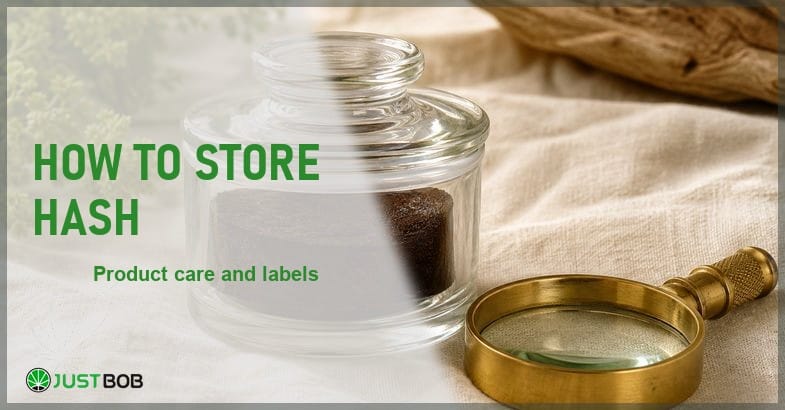
How to store hash should feel like tidy product care, not a mysterious ritual. Read sensibly, it is a question about keeping a collector or technical item in good order: packaging, light and a clear label. This guide keeps the topic there, on ordinary care and the paperwork that goes with it, and it leaves anything beyond storage to one side, because the useful part is plainer than it sounds.
-
 Max CBDAMNESIA CBD BOOSTStarting from: 0,85 €/g
Glasshouse | CBD<40%
Grams5 10 20 50 100 200 400 -
Max CBDAK47 CBD BOOST
Indoor | CBD<47%
Starting from:HALLOWEEN SALE -10%
1,45 €1,30 €/gGrams5 10 20 50 100 200 -
Max CBDCHARAS
CBD HASH | CBD<45%
Starting from:HALLOWEEN SALE -10%
0,90 €0,80 €/gGrams5 10 20 50 100 200 -
JB OIL 25%Starting from: 14,90 €
CBD Oil 25%

Picture a cupboard with a wrapped piece on a shelf, its label and certificate beside it. That is the honest setting for the question. Storing a product well is mostly ordinary good sense, kept dark, cool and closed, paired with a label a reader can still read later, rather than any special technique that the product was never meant to need.
How to store hash
How to store hash is best read as ordinary product care. Like any pressed plant material, CBD hash keeps its look and aroma better when it is held away from heat, strong light and open air, drawn from Cannabis sativa L. grown as an agricultural crop. Read plainly, the question is about keeping a piece in good condition as an object, with its label and document kept alongside it.
Kept at that level, the topic stays steady. Good storage simply means a closed wrapper, a cool and dark spot, and a label that stays legible, which is ordinary care rather than anything more. The job of this page is to describe that care and to point a reader toward the CBD hash category, where fresh listings carry their own current documents.
Packaging and light
Packaging is the first piece of care. A piece kept wrapped or in a closed container, away from open air, tends to hold its look and aroma longer than one left exposed. These are descriptive notes about keeping a product in good order, the kind of plain step a reader can take without any special equipment.
Light and heat are the companions to packaging. A cool, dark spot is gentler on a pressed item than a warm, bright one, and that is simply sensible storage rather than a technique. Read this way, packaging and light are ordinary care notes, and they sit beside the label and the batch number as part of keeping the product readable over time.
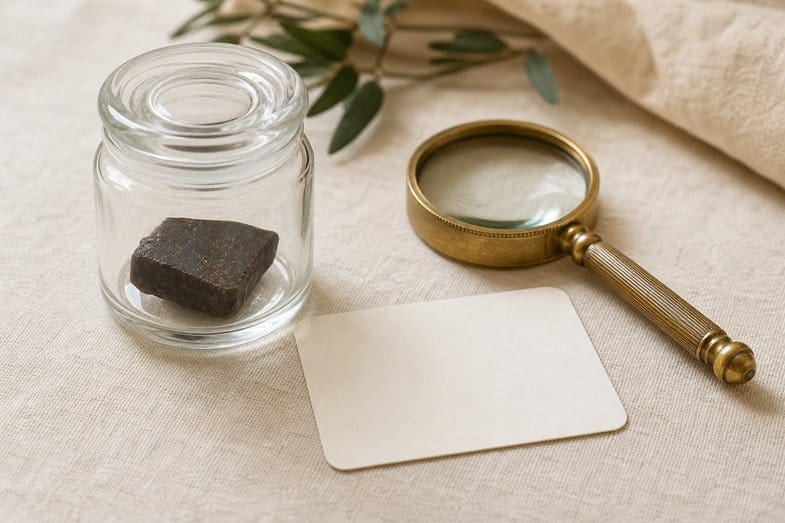
Texture notes
Texture is a useful sign of how care is going. A well-kept piece tends to hold an even surface, while one left open may read as drier at the edges. These are descriptive observations about appearance over time, the kind of detail a reader can confirm against a product card rather than guess at.
Read this way, texture and storage fit together. How a product has been kept helps explain how it now looks, and a reader can set those observations beside the date and batch on the label. The point is to keep the product readable, with the visible notes and the paperwork in agreement, rather than relying on memory of when it was last handled.
What a herbarium keeps
The idea that plant material lasts when it is stored with care is an old one. Botanical herbaria have preserved pressed plant specimens for centuries by keeping them cool, dark and dry, each mounted on a labelled sheet, and well-kept examples from the eighteenth century remain legible today. The care was ordinary; the label was what let a specimen be found and read long afterwards.
A product page works on the same plain principle. Storing CBD hash well is the same ordinary care, dark, dry and closed, and the label is what lets a reader place the piece against its record later. The herbarium kept specimens readable for generations with sensible storage and a clear label; a product page asks no more than that of a reader keeping a piece in good order.
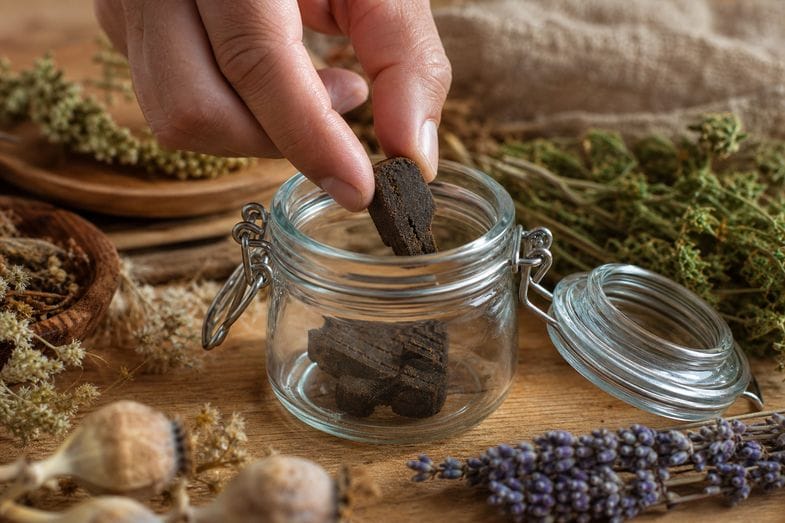
Labels and documents
Care only reads clearly if the record backs it. On a product page, the label carries the date and batch number, and the certificate of analysis confirms the figures for the lot. The label records; the document measures; the batch number ties the two together, so the piece a reader keeps can be placed against the paper that describes it.
This is why a care note ends at the document. A label is read against the certificate, where the THC figure is checked against the 0.3 percent threshold harmonised at European level, and the CBD figure is stated as indicative. Our legal hemp note covers the framework these products sit within, and for an official overview the Food Standards Agency CBD guidance sets out how CBD products are handled.
Storing hash on a Justbob page
On a Justbob CBD hash page, the care note does a narrow job: the date and batch on the label, the figures stated as indicative, and the certificate that confirms them. Every commercialised product is analysed and each batch is checked, with the document available on the product page, so the piece a reader keeps can be traced to the row that records it.
Every product is produced by selected EU hemp partners and sits inside the EU industrial hemp framework, with THC kept at or below the 0.3 percent threshold harmonised at European level. Each one is offered for technical, scientific and ornamental purposes only. Read this way, on a Justbob page how to store hash is answered by ordinary care and a label you can still read.
Frequently asked questions about how to store hash
How to store hash?
Read as product care, CBD hash keeps its look and aroma better when it is held wrapped or closed, in a cool and dark spot away from heat and open air. That is true of any pressed plant material drawn from Cannabis sativa L. grown as an agricultural crop. That is ordinary care for keeping a collector or technical item in good order. The product is kept alongside its label and the certificate of analysis for the batch, so a reader can place the piece against the record rather than relying on memory.
Is this a use guide?
No. This is a care and storage guide that describes how to keep a product in good order and read its label. It stays on packaging, light and the document, and it deliberately leaves anything beyond storage to one side. The page reads storage as ordinary product care, which keeps the topic on keeping the piece and its paperwork readable.
Why check the product label?
Because the label is what ties the piece to its record. It carries the date and batch number, and the certificate of analysis measures the contents for the lot, including the THC reading checked against the 0.3 percent threshold. Keeping the label legible and reading it against the document is how a reader confirms what they are holding, rather than relying on a guess about how long it has been stored.