Published on: 12/08/2026
Three questions behind one label
Let us start with the part most pages leave out. Justbob does not hold a halal certification for any of its products, and the catalogue is not sold in that register in the first place. If you were looking for a shop to tell you its range is approved, this is not that page.
-
 Max CBDAMNESIA CBD BOOSTStarting from: 0,85€/g
Glasshouse | CBD<40%
Grams5 10 20 50 100 200 400 -
Max CBDAK47 CBD BOOSTStarting from: 1,45€/g
Indoor | CBD<47%
Grams5 10 20 50 100 200 -
Max CBDCHARAS
CBD HASH | CBD<45%
Starting from:FLASH SALE -10%
0,90€0,80€/gGrams5 10 20 50 100 200 -
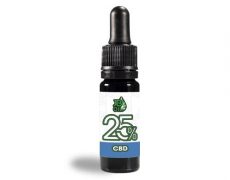
JB OIL 25%Starting from: 14,90€
CBD Oil 25%
What this guide can do is more useful anyway: set out what certifying bodies actually examine when they assess a hemp product, why the answer differs from one body to another, and where European rules sit alongside all of it. Nothing here is a religious ruling. That is not ours to give, and scholars and certifiers reach different conclusions on parts of it.
What the question is really asking
“Is CBD halal” bundles three separate questions that get answered one at a time.
- The plant. Whether a hemp-derived compound is acceptable in itself.
- The intoxication rule. Whether the product carries anything covered by the prohibition on intoxicants.
- Everything else in the jar. Solvents, carriers, capsule shells and what shared equipment may have left behind.
Most disagreement lives in the first two. Most certification work happens in the third.
Read also: CBD Oil COA Fields: Reading The Document Box By Box
The plant, and where opinions divide
Hemp is an agricultural plant, grown from varieties registered in the EU common catalogue, and the compounds discussed here are constituents of it. That much is not contested.
What is contested is how the classical prohibition on intoxicants applies to a plant of this family and to compounds isolated from it. Some scholars assess an isolated compound on its own merits, separately from the plant it came from. Others regard the botanical family itself as the relevant category. Certifying bodies inherit that disagreement, which is one reason their criteria do not match.
What a certifier actually examines
Set the theology aside and the audit becomes concrete. These are the points a certification body works through.
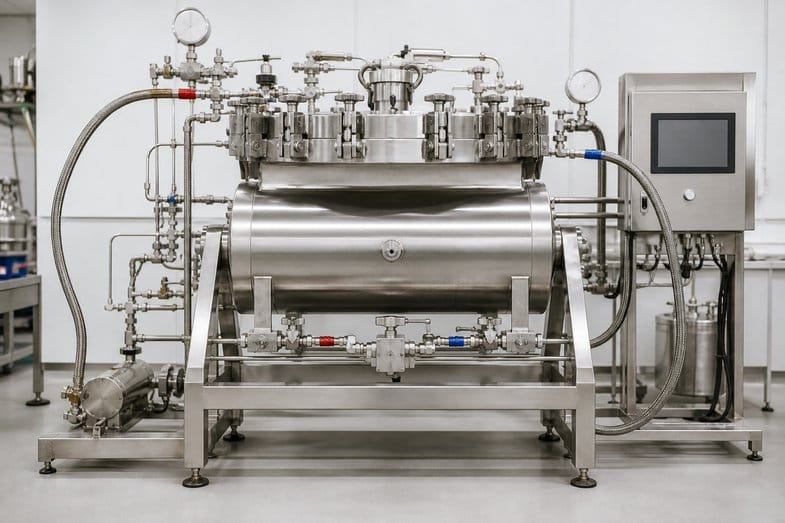
- Extraction solvent. Supercritical CO2 is generally treated as leaving no solvent residue, though co-solvents and process detail still have to be documented. Ethanol extraction raises a question that has to be answered with data rather than assurance.
- Residual solvent figures. The certificate of analysis, not the marketing copy, is where that answer lives.
- The carrier. An extract is suspended in something, and what that something is matters. Our guide to reading the base oil on a label covers how carriers are declared.
- Shell and casing materials. Where a product is presented as a capsule, gelatine is animal-derived and its origin is one of the first things checked.
- Shared equipment. A line that also runs non-compliant material has to be documented and cleaned to a standard, or the audit fails on cross-contamination alone.
Four of those five are documentation questions, not questions of belief.
There is no single halal standard
This is the part that surprises people, and it explains most of the contradictions you will find searching the phrase.
Halal certification is issued by certifying bodies, and there are many of them, operating under different national schemes and different scholarly traditions. A mark from one is not automatically recognised by another, and criteria that are decisive for one body may count as secondary elsewhere. When two websites give you opposite answers, they are often both reporting accurately about different certifiers.
The practical consequence is simple. A certification is a statement by a named body under a named standard, and it is worth exactly as much as your confidence in that body.
Read also: What Is CBD Isolate? A Simple Guide To This Extract Format
Where European rules sit alongside
There is a second framework running in parallel, and confusing the two muddies the answer.
In the European Union, ingestible products of this kind are handled through the novel food process, which is an authorisation route with its own evidence requirements. The EFSA overview of novel food explains how that assessment works. It has nothing to do with halal criteria and everything to do with why the ingestible market in Europe is far smaller than the search results suggest.
Our own position, stated plainly
We hold no halal certification, and we are not going to imply one by describing our sourcing in flattering terms. It is also worth repeating that the CBD extracts range, like the rest of our catalogue, is sold for technical, scientific and ornamental purposes. The halal question is normally asked about food and drink, so for our catalogue it lands somewhat beside the point.
If certification does matter to you, the thing to ask a seller for is not reassurance. It is the name of the certifying body, the standard it certified against, and the certificate itself.
The short version
There is no universal answer to whether CBD is halal, because there is no universal halal standard and no single scholarly position on the plant. What exists is a set of checkable facts: the extraction solvent, the residual figures on the certificate, the carrier, the casing, and the cleaning regime behind them.
Every lot in the Justbob catalogue has an analysis behind it, so those figures exist and can be read. What does not exist, and we would rather say so, is a halal certificate.
Frequently asked questions about CBD and halal certification
Is CBD halal?
There is no single answer, because there is no single halal standard. Certification is issued by individual bodies working under different national schemes and scholarly traditions, and their criteria differ. Scholars also differ on how the prohibition on intoxicants applies to this plant family and to compounds isolated from it, which is upstream of any certificate.
What does a halal certifier look at in a hemp product?
Mainly documentation. First the extraction solvent, since supercritical CO2 is generally treated as leaving no residue while ethanol raises a question to be answered with figures. Then the residual solvent values on the certificate of analysis, the carrier the extract is suspended in, and the material of any capsule shell, gelatine being animal-derived. Last, whether shared production equipment is documented and cleaned to a defined standard.
Are Justbob products halal certified?
No. We hold no halal certification for any product, and we prefer to state that rather than imply otherwise. The catalogue is also sold for technical, scientific and ornamental purposes, while the halal question is normally asked about food and drink.
Why do websites give contradictory answers?
Usually because they are describing different certifying bodies without saying so. A mark issued under one national scheme is not automatically recognised under another, and a criterion that decides the matter for one body may be secondary for another. Asking which body certified, and against which standard, resolves most of the apparent contradiction.