
Published on: 11/11/2026
Cookies strain: the dessert-named cannabis line and the GSC family behind it
Say cookies strain to two people and you may get two different plants in reply. For most breeder catalogues the name points at one specific cultivar, Girl Scout Cookies, and at the whole family that grew out of it. This is a variety sheet for that reference plant: where the name comes from, what the listings agree on, and where they quietly disagree.
-
 Max CBDAMNESIA CBD BOOST
Glasshouse | CBD<40%
Starting from:BLACK MONTH -15%
0,85 €0,70 €/gGrams5 10 20 50 100 200 400 -
Max CBDAK47 CBD BOOSTStarting from: 1,45 €/g
Indoor | CBD<47%
Grams5 10 20 50 100 200 -
Max CBDCHARASStarting from: 0,90 €/g
CBD HASH | CBD<45%
Grams5 10 20 50 100 200 -
JB OIL 25%Starting from: 14,90 €
CBD Oil 25%
Where the cookies strain comes from
The origin story most strain databases settle on is a Californian one. The plant now sold as Cookies, or GSC, is credited to a Bay Area growing circle in the early 2010s, and the cross written under it almost everywhere is OG Kush crossed with Durban Poison. Some listings add a third parent or an unnamed selection, which is where the accounts start to drift, but the OG Kush and Durban Poison pairing is the version you will see most often.
That parentage explains a lot of what follows. Databases that trace the parents describe OG Kush as the heavy, fuel-and-earth base and Durban Poison, a pure landrace sativa, as the sweet edge and the vigour. A hybrid built from those two, in the way those catalogues frame it, tends to get described as a fruit-and-dough cross, several notes at once.
Where the accounts split is over how much of the plant sold today is the original. By most catalogue accounts the earliest Cookies circulated as a clone-only cut passed between growers, so the seed versions released later are described as fresh selections that reintroduce some variation. That is why two packs carrying the same name can read a little differently, and why careful breeders specify a named phenotype rather than trust the bare word. The lineage is a family tree, not a fixed recipe.
Read also: California weed strains: the origin of the best cannabis strains
Girl Scout Cookies, GSC and why the family shares one name
The naming is the first thing to clear up. Cookies, GSC and Girl Scout Cookies all point at the same original plant in most catalogues, with GSC widely reported as the trademark-safe short form the growers adopted once the original name drew legal attention. From there the word became a family label. When a listing says a variety is part of the Cookies line, it usually means the plant descends from that GSC cross or was selected inside the same breeding circle.
That dessert theme runs across many of the neighbouring names as well. The family branched into a long shelf of relatives, and the ones the catalogues name most often are Thin Mint, Sunset Sherbet, Cereal Milk and Cookies Kush. Some are fresh crosses and some are selected phenotypes, so a plain cookies sheet is best read as the parent description the others are measured against.

Cookies strain flavour profile and the terpenes behind it
The aroma is the whole reason the name stuck, and it is where the descriptions line up most tightly. Breeder catalogues and grower reviews reach for the same shortlist: a sweet, baked note the listings often write down as dough or fresh biscuit, a mint-and-herb top, and an earthy, slightly fuel-like base underneath from the OG Kush side. The sweetness is what separates it on the nose from the plainer kush plants it grew out of.
Across those write-ups, caryophyllene is named most often, with limonene and humulene close behind. Those aromas are terpenes the plant builds as it grows, not anything added later. The enzymes that assemble those terpenes have been mapped in real detail. Research on terpene synthases in Cannabis sativa describes an expanded family of synthase genes, many of them flexible about which terpene they build. That breadth is what produces the very wide spread of scents found across varieties. If the mechanism is what interests you, our guide to what terpenes are covers it without the lab notes.
What the buds look like
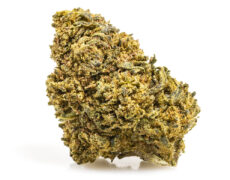
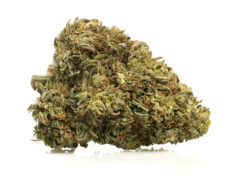
You can place this plant by sight before you read a single label. Photographs published under the name show dense, colourful flowers with the compact, chunky build the Cookies line is known for. The calyxes stack tightly, so the bud reads as solid, with bright orange pistils threading through the surface.
Colour is the other signature. Listings note that many of the best-known phenotypes throw deep purple tones across the leaves when nights turn cold late in flower, set against a heavy coat of resin that lends the flower a frosted, sugared look. It is the sort of coverage that photographs well and, more practically, marks out where the aromatic glands sit, since that is where the terpenes are concentrated.

Read also: Purple cannabis: here are all the varieties
What grower reviews report about the effects
Everything in this section refers to the recreational cannabis variety as strain databases, breeder catalogues and grower reviews report it. It is not a description of any product sold here, and it is not health information of any kind.
The reported profile leans on the potency figures more than anything. Catalogues place Cookies at 19 to 28 per cent THC, with most listings settling in the low-to-mid twenties, and CBD recorded at under one per cent. Reviewers writing about the recreational plant describe it in the register you would expect from an indica-leaning hybrid, reaching for words like relaxing, euphoric and uplifting. As with the genetics, the accounts do not all line up, and individual reviews pull in different directions.
Those figures are also exactly where the boundary sits. They belong to recreational plants recorded in databases and breeder catalogues, grown without the constraints a European crop works under. European hemp is a different product: grown from EU Common Catalogue varieties, kept under the legal THC threshold, and described by its batch analysis rather than by a strain sheet. None of the reported experience above carries across to it.
Flowering time and how the plant behaves
On the growing notes the listings are steadier than they are on effects. Cookies is generally described as an indica dominant hybrid with a flowering window of about nine to ten weeks indoors, and an outdoor harvest in the middle of autumn in the northern hemisphere. Plant shape follows the indica lean: medium height, a sturdy frame and tight internodal spacing.
Growers report moderate yields and tend to agree the plant rewards care over scale. Most write-ups recommend opening up the lower branches, since the dense flower structure leaves the inner plant short of light. These are the numbers recreational growers report for the variety, not specifications for anything on sale here.
Cookies next to Thin Mint, Sunset Sherbet and Cereal Milk
Because the family is large, the useful question is how a plain cookies sheet differs from its close relatives. Catalogues treat Thin Mint as a selected phenotype of GSC itself, picked for a cleaner, mintier expression. Sunset Sherbet is a GSC descendant crossed onward, which growers describe as sweeter and more fruit-forward than the doughy original. Cereal Milk sits in the same Cookies circle, creamy and lactic rather than minty in the write-ups. Cookies Kush leans back towards the OG Kush parent, heavier and more earth-driven by most accounts.
A name in this family tells you which lineage and aroma family you are looking at, and nothing numerical. Many of the modifier names you meet, the coloured and flavoured cookies variants, are separate crosses with their own sheets. A blue, an orange or an animal cookies is not this plant with a filter over it; it is a different pairing that kept the family surname. The cross written underneath a listing matters far more than the word on top.
What a cookies name means on a European hemp label
All of the above describes recreational genetics recorded abroad. On a European hemp label the same vocabulary is used very differently. Here a variety name is a pointer to an aroma family and an appearance, attached to flower that is grown from certified EU Common Catalogue seed and described by its lab analysis, not by a recreational strain sheet.
That is the frame to keep in mind when a cookies name appears next to a European product. Our CBD flower listings, for instance, describe hemp by its aroma and its batch figures rather than by the reported effects of a recreational plant.
Smaller formats carry identical paperwork. The small buds grade is the compact flower from those batches, so the lab figure on the label is what describes it, and no strain sheet is involved.
The short version
Cookies, or GSC, is widely traced to a Bay Area cross of OG Kush and Durban Poison, and it gave a whole dessert-named family its name. The listings agree on a sweet, doughy, minty aroma over an earthy base, on dense and often purple buds under heavy resin, and on an indica-leaning growth habit with a nine to ten week flower. Where they disagree is at the edges of the family tree, so check the cross under any listing, because the name alone will not tell you.
Frequently asked questions about the cookies strain
What is the cookies strain?
Cookies, usually written GSC or Girl Scout Cookies, is a Californian cannabis variety that strain databases trace to a cross of OG Kush and Durban Poison. Most breeder catalogues place its origin with a Bay Area growing circle in the early 2010s. The name has since become a family label. It now covers a long list of related plants that either descend from that original cross or were selected inside the same breeding circle.
Is the cookies strain indica or sativa?
Breeder listings generally describe Cookies as an indica dominant hybrid, a note about heritage and plant shape rather than a precise measured split. The reviews that discuss it are not unanimous, and some sheets lean closer to a balanced hybrid. Everything here refers to the recreational variety recorded in strain databases abroad. It does not describe any product sold on this site.
What does the cookies strain smell and taste like?
Reviews and breeder catalogues describe a sweet, baked, biscuit-like aroma, a minty herbal top note and an earthy, faintly fuel-like base inherited from the OG Kush parent. Across those write-ups caryophyllene is the terpene named most often, with limonene and humulene close behind. These notes are reported for the recreational variety. A European hemp product is described instead by its own aroma and by the analysis of its batch.
How much THC does the cookies strain have?
Strain databases record recreational Cookies at roughly 19 to 28 per cent THC, with most listings settling in the low-to-mid twenties and CBD kept under one per cent. Those figures are reported by catalogues for recreational plants grown abroad. They do not describe European hemp, which is grown from EU Common Catalogue varieties, kept under the legal THC threshold, and sold by its batch analysis rather than by a recreational strain sheet.
What other strains belong to the cookies family?
The Cookies line has branched widely, and the relatives you meet most often in catalogues are Thin Mint, Sunset Sherbet, Cereal Milk and Cookies Kush. Girl Scout Cookies sits at the head of the line, while Gelato is often grouped in as a close cousin through the Sunset Sherbet side. Some are selected phenotypes of the original plant, others are fresh crosses that kept the family name. Each one carries its own sheet, and the parents listed on it are the reliable part.