Modified on: 30/07/2026
The base oil detail that keeps labels readable
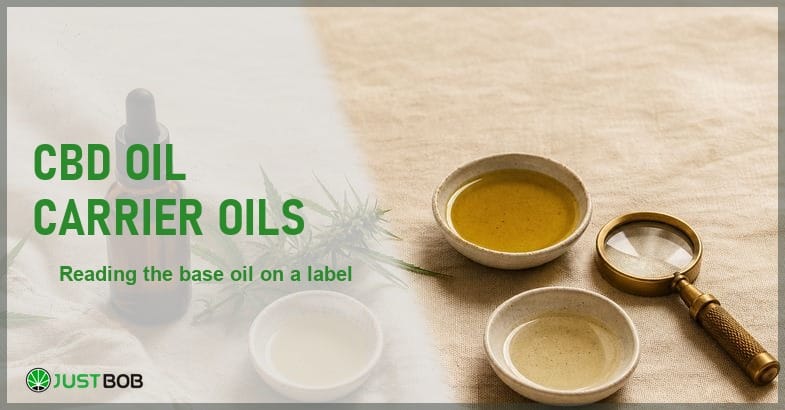
On a CBD oil label, the first ingredient is usually not the CBD at all. It is the carrier oil, the base liquid the hemp extract is blended into, and it takes up most of the bottle. Across Justbob oil pages, carrier oils are read as exactly that: what they are, which ones you will see named on a label, and how the carrier sits next to the batch and the document. It stays on label reading only.
-
 Max CBDAMNESIA CBD BOOSTStarting from: 0,85€/g
Glasshouse | CBD<40%
Grams5 10 20 50 100 200 400 -
Max CBDAK47 CBD BOOSTStarting from: 1,45€/g
Indoor | CBD<47%
Grams5 10 20 50 100 200 -
Max CBDCHARAS
CBD HASH | CBD<45%
Starting from:FLASH SALE -10%
0,90€0,80€/gGrams5 10 20 50 100 200 -
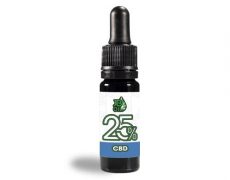
JB OIL 25%Starting from: 14,90€
CBD Oil 25%
The plan is simple: name the oils, then learn to spot them on a label. After that, the ingredient line on a CBD oil reads less like fine print and more like a short, plain list.
What a carrier oil actually is
A carrier oil is the base liquid a CBD extract is mixed into. On its own, a hemp extract is concentrated and awkward to measure into a bottle, so it is blended into a neutral oil that makes up the bulk of the product. That base is the carrier, and the name is literal: the oil carries the extract.
On a label, this matters because the carrier is usually the largest ingredient by volume. Reading it first tells you what the product is mostly made of, before any figure about CBD comes into the picture.
The oils you will see named
A short list covers almost every carrier on a 2026 label:
- MCT oil: medium-chain triglycerides, a light fraction drawn from coconut oil; the most common carrier today.
- Hemp seed oil: oil pressed from hemp seeds, sometimes chosen so the base shares the plant of origin.
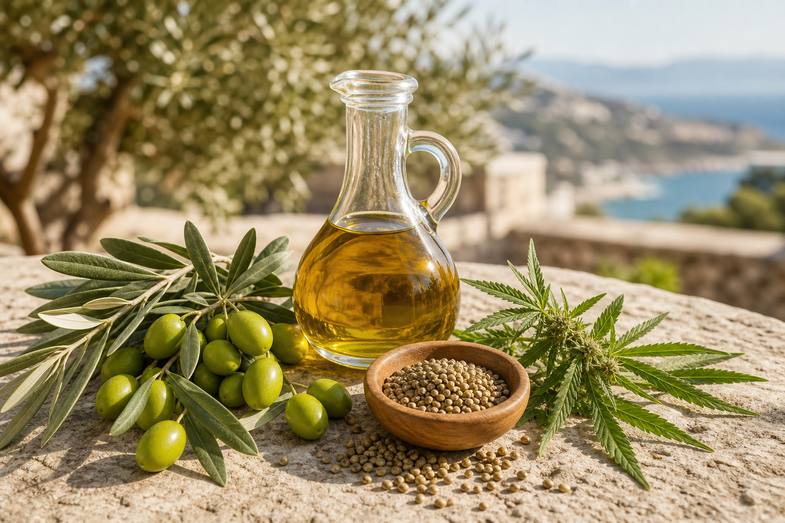
- Olive oil: a heavier, classic base with a long kitchen history.
- Coconut oil: the parent oil MCT is drawn from, occasionally used whole.
Each of these is simply a base. A label naming MCT and a label naming hemp seed oil are describing the carrier, not ranking one product above another.
Spectrum words that share the label
Next to the carrier, a label usually names the extract type, and three words cover it. Full spectrum keeps the wider range of hemp compounds; broad spectrum keeps that range while removing THC; isolate is CBD on its own. The carrier and the spectrum word work as a pair: one is the base, the other is what sits in it.
Reading them together answers a plain question, what is in the bottle and what is it carried in, without needing a single number yet.

Read also: What is CBD Oil?
Why MCT is named so precisely
MCT oil is a relatively modern base. Medium-chain triglycerides were concentrated into a standalone oil in the 1950s, when chemists learned to fractionate coconut oil into its lighter fats. Before that you simply had coconut oil; afterwards you had a specific, lighter fraction with its own name.
That history explains why an ingredient line can say MCT so precisely. The word points to a particular fraction of coconut oil, not just any coconut product, which is exactly the kind of exact label a careful reader values.
Reading the carrier on a label
On a product page, the carrier oil sits in the ingredient list, usually first or second. Around it, the label names the CBD figure, the registered hemp source and the batch code. The CBD oil listings carry all of this on one page, so the carrier, the figure and the document line up where you can compare them.
For the carrier most often used, our guide on MCT Carrier Oil In CBD: Label Reading Guide looks at MCT on its own, field by field.
Read also: How to store CBD oil properly
What the carrier oil does not tell you
A carrier oil names the base, and that is the whole of its job. It is not a grade, not a measure of the CBD figure, and not a verdict on the product. A bottle with MCT and a bottle with hemp seed oil differ in their base, not in some ranking of one above the other.
So the carrier stays in its lane: it tells you what the extract is blended into. The number that describes the CBD, and the document that confirms the batch, do the rest of the talking.
Carrier oils on a Justbob page
Each CBD oil Justbob commercialises is analysed batch by batch, and its certificate is kept inside the product page. A reader who wants to confirm the carrier, the CBD figure or the batch identity can open the document straight from the listing.
Every CBD oil sits inside the EU industrial hemp framework, with THC kept at or below the 0.3 percent threshold harmonised at European level, and the products are offered for technical, scientific and ornamental purposes only. The carrier oil is read here as a label ingredient, nothing more. Outside the shop, the Food Standards Agency CBD guidance lays out the public regulatory backdrop, which is why it is worth a look alongside any single product.
Frequently asked questions about cbd oil carrier oils
What are CBD oil carrier oils?
Carrier oils are the base liquids a CBD extract is blended into, making up most of a bottle. The common ones are MCT oil (a light fraction of coconut oil), hemp seed oil, olive oil and sometimes coconut oil. On a label, the carrier is usually the first or largest ingredient, so it describes what the product is mostly made of rather than ranking it.
Why do carrier oils appear on labels?
Because the carrier is the largest ingredient by volume, an honest ingredient line names it. Reading the carrier tells you the base the hemp extract sits in, alongside the spectrum word (full spectrum, broad spectrum or isolate), the CBD figure and the batch code. Together these turn a label into a short, readable list.
Where are Justbob documents found?
On the Justbob catalog, each commercialised product is analysed batch by batch, and the certificate of analysis is kept inside the product page. A reader can open it from the listing to confirm the carrier, the CBD figure, the THC reading against the 0.3 percent threshold harmonised at European level, and the batch identity.