
Published on: 22/04/2026
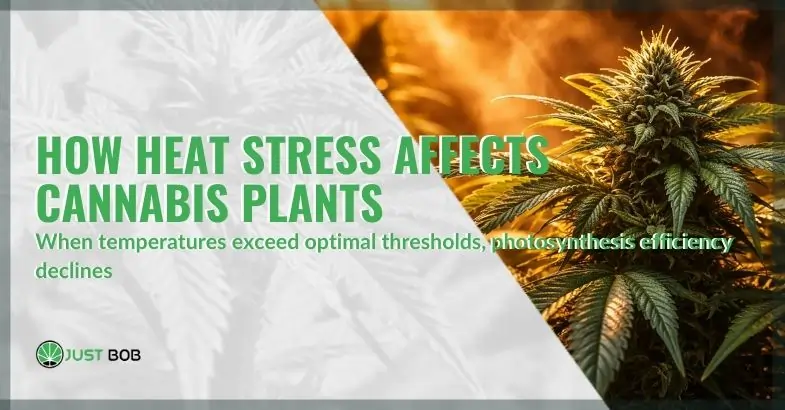
When temperatures exceed optimal thresholds, photosynthesis efficiency declines, trichomes degrade and water loss accelerates
There is a threshold beyond which warmth stops nurturing life and begins to erode it. For cannabis, one of the most studied and cultivated plants on the planet, that threshold is precise, measurable, and consequential in ways that reach far beyond wilted leaves or stunted growth.
Heat stress in cannabis cultivation represents one of the most insidious challenges a grower can face, precisely because its damage is rarely immediate and obvious. It unfolds gradually, silently compromising the plant’s biochemistry, its terpene profile, its cannabinoid expression, and ultimately its yield, long before the naked eye registers any visible alarm.
-
 Max CBDAMNESIA CBD BOOSTStarting from: 0,85€/g
Glasshouse | CBD<40%
Grams5 10 20 50 100 200 400 -
Max CBDAK47 CBD BOOSTStarting from: 1,45€/g
Indoor | CBD<47%
Grams5 10 20 50 100 200 -
Max CBDCHARAS
CBD HASH | CBD<45%
Starting from:FLASH SALE -10%
0,90€0,80€/gGrams5 10 20 50 100 200 -
JB OIL 25%Starting from: 14,90€
CBD Oil 25%

As global temperatures continue to climb and indoor cultivation operations scale to meet rising demand for legal hemp products across Europe and beyond, understanding what heat does to cannabis at a cellular level, and what modern growers do to counteract it, has never been more relevant. If you are curious about the science behind the CBD cannabis products you find on the market, this guide offers a rigorous, detailed exploration of a subject that sits at the intersection of botany, agronomy, and biochemistry.
This article covers the physiology of heat stress in depth, examining the molecular mechanisms at play, the visual and chemical symptoms that signal a plant in distress, the compounding interaction between heat and other environmental variables, the agronomic strategies growers deploy to mitigate damage, and the role that genetics plays in determining heat resilience.
By the end, you will have a thorough understanding of why temperature management is not merely a matter of comfort for the plant: it is the foundation upon which quality cultivation is built.
The physiology of heat: what happens inside a cannabis plant above optimal temperature
Cannabis thrives within a well-defined thermal window. During the vegetative phase, most varieties perform optimally between 20°C and 28°C; during flowering, the ideal range typically narrows to 18°C–26°C, with many cultivators aiming for the lower end of that spectrum to protect volatile aromatic compounds.
The moment temperatures consistently exceed 30°C, and especially when they push past 35°C, a cascade of physiological disruptions begins to unfold inside the plant.
The first and most critical target of heat stress is photosynthesis. The enzymes responsible for the Calvin cycle, particularly RuBisCO (ribulose-1,5-bisphosphate carboxylase/oxygenase), begin to lose functional efficiency at elevated temperatures. RuBisCO is sensitive to heat because its tertiary protein structure (the precise three-dimensional folding that makes it catalytically active) starts to denature when sustained heat disrupts hydrogen bonds and hydrophobic interactions.
As a result, the plant’s capacity to fix atmospheric carbon dioxide into sugars diminishes, even when light intensity is optimal. The plant is essentially being asked to perform complex metabolic work with progressively degraded tools.
Simultaneously, the plant’s cellular membranes (the lipid bilayers that regulate what enters and exits each cell) become more fluid under heat. This increased fluidity disrupts membrane-bound protein complexes, particularly those in the thylakoid membranes of chloroplasts, where the light-dependent reactions of photosynthesis occur.
The efficiency of electron transport chains drops, reactive oxygen species (ROS) accumulate, and oxidative stress compounds the thermal damage already underway. At the level of the cultivation ecosystem, this is why legal cannabis crops grown outdoors during heatwaves can show rapid decline even when soil moisture is adequate: the problem is internal, not just environmental.
There is also the matter of transpiration.
Plants regulate their internal temperature partly through the evaporation of water through stomata (tiny pores on leaf surfaces). Under heat stress, stomata open wide to maximize cooling through transpiration, but this strategy carries a cost: it massively increases the plant’s demand for water and, critically, accelerates water loss.
If root water uptake cannot keep pace with transpirational demand, turgor pressure drops, cells become flaccid, and wilting ensues even in well-irrigated soil. This is a condition sometimes called hydraulic failure, and it is one of the more paradoxical expressions of heat stress, a plant that appears drought-stressed despite adequate watering.
Read also: How marijuana is grown in winter: challenges, techniques and environmental factors
Visible symptoms and chemical signatures: how heat stress manifests
Recognizing heat stress before it becomes irreversible is both an art and a science.
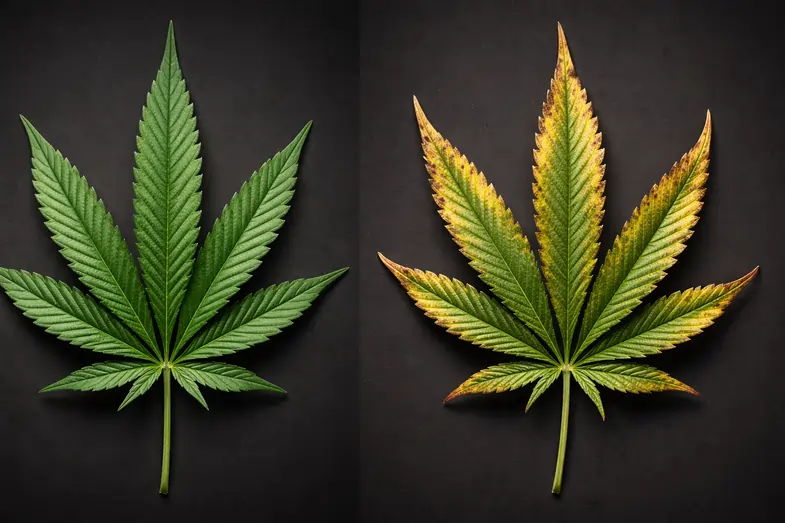
Visually, the early signs can be subtle and are frequently mistaken for nutrient deficiencies or overwatering. The leaves of a heat-stressed cannabis plant often exhibit upward curling at the edges, a response sometimes called “taco-ing” by cultivators, as the plant attempts to reduce its surface area exposed to heat and direct light. This is followed by a general yellowing or bleaching of leaves nearest to the light source, and in severe cases, the formation of brown, crispy margins that spread inward from the leaf edges.
In the flowering stage, the impact of heat becomes particularly damaging and economically significant. When cannabis plants are exposed to sustained high temperatures during bud development, resin glands, the trichomes that produce cannabinoids and terpenes, can degrade or fail to develop properly.
Terpenes, the aromatic compounds responsible for the complex olfactory profiles we associate with premium CBD flowers, are especially heat-sensitive because many are highly volatile. Monoterpenes like myrcene, limonene, and pinene begin to evaporate at temperatures that a poorly climate-controlled grow room might easily reach, leaving behind buds that are structurally intact but aromatically diminished.
From a chemical standpoint, heat stress also appears to influence the THCA-to-CBDA decarboxylation ratio. At elevated temperatures, the enzymatic pathways that convert precursor cannabinoids into their acid forms can be disrupted, subtly altering the final cannabinoid profile of the plant.
For producers of CBD products who need consistent, certifiable cannabinoid concentrations, this biochemical variability represents a quality control challenge with direct commercial implications. Studies in plant heat stress biology also indicate upregulation of specific heat shock proteins (HSPs), molecular chaperones that attempt to refold denatured proteins, which, while a protective mechanism, diverts metabolic resources away from growth and resin production.
Compounding factors: how humidity, light, and VPD interact with heat
Heat rarely acts in isolation. Its damaging effects on cannabis are dramatically amplified or modulated by the interaction with other environmental variables, most notably relative humidity (RH) and the concept of Vapour Pressure Deficit (VPD). Understanding these interactions is essential for professional cultivation and explains why a temperature reading alone tells only part of the story.
VPD is a measurement that captures the drying power of the air, the difference between the moisture the air could potentially hold at a given temperature and the moisture it actually contains. At high temperatures, air can hold much more water vapour, so VPD rises sharply unless humidity rises in parallel.
A high VPD means the air is aggressively pulling water from plant tissues through transpiration. When combined with heat stress, a high VPD essentially forces the plant into a state of chronic hydraulic stress, accelerating all the damaging mechanisms described above. Conversely, if a grower responds to heat by raising humidity too aggressively, they risk creating conditions favorable for fungal pathogens like Botrytis cinerea, a constant threat in dense production.
Light intensity compounds the problem in a direct physical way: photons carry energy, and high-intensity lighting raises leaf surface temperatures well above ambient air temperature, sometimes by 3°C to 6°C or more. This is why LED grow lights have revolutionized indoor cannabis and hemp cultivation.
Unlike HPS (High Pressure Sodium) fixtures, LEDs generate significantly less radiant heat, allowing growers to maintain intense, photosynthetically optimal light without proportionally increasing canopy temperature. In outdoor growing scenarios, this dynamic translates to the importance of monitoring not just shade temperature but direct solar exposure during peak hours, particularly in Mediterranean climates increasingly characterized by extreme summer heat events.
Root zone temperature is another frequently overlooked compounding factor. Cannabis roots have their own optimal thermal range (typically 18°C–22°C) and when substrate temperatures rise above 26°C, root function deteriorates. Nutrient and water uptake efficiency declines, beneficial microbial communities in living soil substrates are disrupted, and the root’s ability to supply the rest of the plant with the resources it needs to combat aerial heat stress is compromised precisely when that supply is most critical.
Agronomic strategies: what serious growers do to prevent and manage heat stress
The most effective approach to heat stress management in cannabis cultivation is a layered one, combining proactive environmental design with reactive monitoring and cultivar selection. No single strategy is sufficient in isolation; the cultivation environments producing the finest CBD weed in Europe today are the result of integrated systems thinking applied to climate control.
In indoor operations, the cornerstone of heat prevention is HVAC engineering.
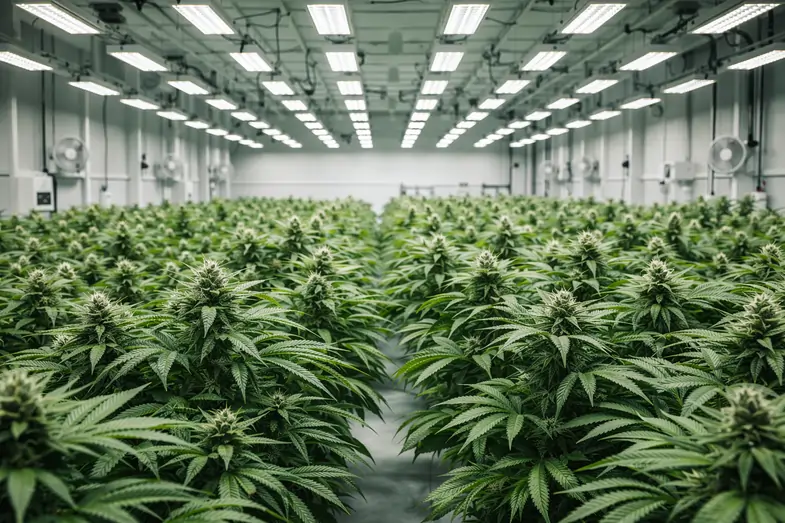
Professional grow facilities invest heavily in split-system air conditioning, precision-controlled airflow patterns, and dehumidification units capable of maintaining VPD within a narrow, optimal band regardless of the heat generated by lighting and metabolic plant activity.
Oscillating fans at canopy level are standard practice, not merely for temperature reduction but because moving air strengthens stems, reduces hot spots, and improves CO₂ distribution, all of which help the plant maintain metabolic efficiency under thermal load. CO₂ supplementation, interestingly, also has a partial protective effect: elevated CO₂ concentrations allow stomata to operate at reduced aperture, decreasing water loss even as photosynthesis continues.
Training techniques play an important role as well. Methods such as Screen of Green (SCROG), Low Stress Training (LST), and strategic defoliation work to improve canopy airflow and reduce the density of plant material that can trap heat.
A well-trained canopy allows air to circulate freely, prevents microclimatic hot spots from developing in shaded interior zones, and ensures light penetration reaches lower bud sites without creating temperature differentials that stress specific plant regions.
For growers cultivating cannabis outdoors or in greenhouse structures, shade netting with appropriate light-reduction ratings (commonly 30–50%) is deployed during peak summer heat to reduce direct solar load on the canopy without sacrificing the photoperiod integrity the plant needs to remain in vegetative or flowering phase.
Irrigation management is recalibrated significantly during heat events. Experienced cultivators shift watering schedules to early morning or late evening hours, reducing evaporative losses and ensuring root zone moisture at the moments of highest thermal stress during midday.
Mulching substrate surfaces in outdoor beds, using straw, wood chips, or other organic materials, can reduce soil temperature by several degrees through insulation and reflected heat reduction. Some advanced operations employ chilled water reservoirs to cool nutrient solution temperatures in hydroponic systems, directly targeting root zone temperature as a point of intervention.
Silica supplementation has also gained attention in professional circles, with studies suggesting that silicon deposition in cell walls confers additional structural rigidity that improves heat tolerance and reduces water loss under stress conditions.
The genetics of resilience: why cultivar choice is the first line of defence
Ultimately, the most elegant form of heat stress management is selecting genetics that are inherently equipped to handle thermal pressure. This is not a new insight: it is encoded in the evolutionary history of cannabis itself.
The species Cannabis sativa L. originated and diversified across an extraordinary range of climates, from the hot, arid highlands of Central Asia to the humid tropics of Southeast Asia and the cooler, continental climates of northern Europe. The result is a species with remarkable intraspecific genetic diversity, including traits directly related to heat tolerance.
Sativa-dominant varieties, particularly those with landrace ancestry from equatorial regions, think traditional varieties from Thailand, Colombia, or coastal Africa, have evolved over millennia in environments where daily temperatures routinely exceed what most European-bred varieties consider comfortable. These plants tend to feature narrower leaflets (reducing surface area for heat absorption), longer internodal spacing (improving airflow through the canopy), and biochemical adaptations in their terpene and fatty acid synthesis pathways that maintain membrane fluidity across a wider thermal range.
Today, breeders are actively crossing these heat-tolerant genetics into commercially desirable CBD-dominant strains to produce lines that deliver strong cannabinoid profiles even in challenging climates.
The emergence of certified legal hemp varieties bred specifically for European agricultural conditions has introduced another dimension to this conversation. Regulatory frameworks in the EU require that industrial hemp cultivars maintain THC concentrations below 0.3%, and breeders operating within these constraints are simultaneously selecting for agronomic robustness, including heat resilience.
Autoflowering varieties, which complete their life cycle based on age rather than photoperiod, offer growers additional tactical flexibility: they can be timed to avoid the most extreme heat windows of the growing season, reaching harvest before late summer temperatures peak.
At a molecular level, researchers are beginning to map the specific gene networks activated during heat stress in cannabis. Studies have identified heat shock transcription factors (HSFs) that orchestrate the cellular stress response, as well as genes involved in osmotic adjustment, the accumulation of compatible solutes that help cells maintain function under water stress conditions exacerbated by heat. As genomic tools become more accessible to hemp breeders, the prospect of marker-assisted selection for heat tolerance traits is becoming increasingly realistic, promising a future where cultivar design is as precisely calibrated to climate resilience as it is to cannabinoid yield.
Read also: What is grafting of cannabis and how is it used in modern cultivation techniques
Temperature is not Just a number, it is the architecture of quality
Heat stress in cannabis is a topic of remarkable depth. What begins as a question of temperature management unfolds into a layered understanding of plant physiology, biochemistry, vapour pressure dynamics, root biology, genetic adaptation, and agronomic systems design.
The key takeaway is unambiguous: temperature is not merely a comfort parameter for cannabis plants: it is a primary determinant of quality, yield, cannabinoid concentration, and terpene integrity. Above the optimal thermal window, every degree represents a measurable degradation of the plant’s metabolic efficiency, beginning with photosynthetic enzyme dysfunction and cascading into membrane disruption, oxidative stress, trichome degradation, and hydraulic failure.
The growers producing exceptional CBD cannabis flowers and legal hemp today understand this deeply.
They invest in precision climate control, study VPD curves with the same rigour an oenologist applies to fermentation temperature, train their canopies to maximize airflow, select genetics built for resilience, and monitor root zone conditions as attentively as they monitor the air above ground. These are not the habits of enthusiasts: they are the operational standards of a maturing agricultural industry that takes quality seriously.
Heat stress management is also, by extension, a story about the broader future of cannabis cultivation in a warming world. As climate change reshapes growing seasons and introduces more frequent extreme weather events across Europe and beyond, the agronomic intelligence being developed in the hemp and CBD sectors will have relevance that extends well past this single crop. The lessons are universal: respect the thermal biology of the plant, engineer environments that support rather than challenge its physiology, and never underestimate the compounding effects of interacting stressors.
If this deep dive into the world of cannabis cultivation has sparked your curiosity about the kind of quality that emerges when growers truly master their environment, we invite you to explore the JustBob shop. There you’ll find a curated selection of premium products, all sourced from cultivators who take temperature, genetics, and plant health as seriously as any of the science discussed in this guide. Take a look and discover what genuine attention to quality actually tastes, smells, and feels like.
Heat stress in cannabis plant: takeaways
- Excessive heat disrupts the plant’s core biological processes. Once temperatures consistently exceed 30°C, cannabis enters a physiological stress zone where photosynthesis efficiency declines, key enzymes such as RuBisCO begin to lose functionality, and cellular membranes become unstable. This triggers a cascade of effects, including the accumulation of reactive oxygen species and reduced carbon fixation. In practical terms, the plant continues to receive light and energy but gradually loses the ability to convert them into growth and valuable metabolites.
- Heat stress affects more than appearance: it undermines chemical quality and yield. Early visual sign, such as upward leaf curling (“taco-ing”), yellowing, or scorched leaf edges, are only surface indicators of deeper metabolic disruption. During flowering, prolonged heat can degrade trichomes and cause volatile terpenes to evaporate, reducing the aromatic complexity associated with high-quality cannabis. At the same time, heat can interfere with cannabinoid biosynthesis pathways, making it more difficult for producers to maintain consistent chemical profiles.
- Effective heat management requires a systemic cultivation strategy. Professional growers address heat stress through integrated environmental control systems: HVAC climate regulation, careful VPD management through balanced temperature and humidity, LED lighting that emits less radiant heat, canopy training techniques that improve airflow, and irrigation schedules adapted to cooler hours of the day. Equally important is genetic selection. Varieties originating from warm climates, or modern cultivars bred specifically for thermal resilience, represent the first and most reliable line of defense against heat stress.
Heat stress in cannabis plant: FAQ
What is heat stress in cannabis plants?
Heat stress occurs when cannabis plants are exposed to temperatures above their optimal growing range, typically above 30°C. At these levels, key physiological processes begin to break down. Photosynthesis becomes less efficient because enzymes such as RuBisCO lose functionality, cellular membranes become unstable, and reactive oxygen species accumulate. The plant increases transpiration to cool itself, which accelerates water loss and can lead to hydraulic stress even when soil moisture is adequate. Over time, these disruptions reduce growth, yield, terpene production and cannabinoid expression.
What are the main signs of heat stress in cannabis plants?
Early signs of heat stress often appear in the leaves. Cannabis plants may show upward curling at the edges, a phenomenon commonly called taco-ing, as the plant tries to reduce surface exposure to heat and light. Leaves may also become pale, yellowed, or bleached near strong light sources. In more severe cases, brown and crispy edges develop. During the flowering stage, heat stress can damage trichomes and reduce terpene production, resulting in buds that appear structurally normal but have weaker aroma and altered cannabinoid profiles.
How do growers prevent heat stress in cannabis cultivation?
Professional growers prevent heat stress through a combination of environmental control and cultivation techniques. Indoor facilities rely on HVAC systems, airflow management, and dehumidification to keep temperature and vapour pressure deficit within optimal ranges. LED grow lights help reduce radiant heat compared to traditional HPS lamps. Growers also improve canopy airflow through plant training methods such as SCROG or low-stress training. In outdoor or greenhouse cultivation, shade nets, optimized irrigation schedules, mulching, and careful monitoring of root-zone temperature are commonly used to protect plants from excessive heat.