

Published on: 12/08/2026
Arrived through a gap, closed by a treaty
HHC vs THC is usually typed as a shopping question. In 2026 the honest answer is a regulatory one, so that is the answer this guide gives. Hexahydrocannabinol is a semi-synthetic cannabinoid that appeared on European shelves around 2022, spread on the strength of not being listed anywhere, and was scheduled internationally in March 2025. It has never been part of the Justbob catalogue, and that decision does not make it a candidate.
-
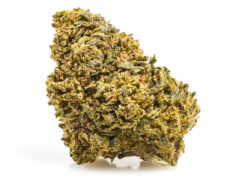
 Max CBDAMNESIA CBD BOOSTStarting from: 0,85€/g
Glasshouse | CBD<40%
Grams5 10 20 50 100 200 400 -
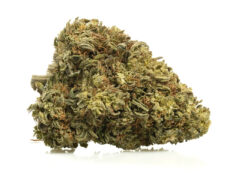
Max CBDAK47 CBD BOOSTStarting from: 1,45€/g
Indoor | CBD<47%
Grams5 10 20 50 100 200 -
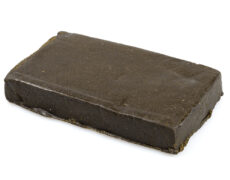
Max CBDCHARAS
CBD HASH | CBD<45%
Starting from:FLASH SALE -10%
0,90€0,80€/gGrams5 10 20 50 100 200 -
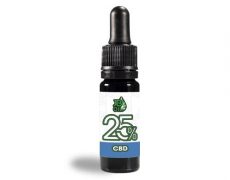
JB OIL 25%Starting from: 14,90€
CBD Oil 25%
What follows is the structural difference between the two molecules, the regulatory gap that explains the whole episode, and why hemp and CBD sit in a completely separate conversation. No claims about what either substance does: that is not our subject and not our business.
What hexahydrocannabinol actually is
HHC is what you get when THC is hydrogenated. Hydrogen is added across a double bond in the molecule, the same class of reaction that turns a liquid oil into a solid fat, and the result is a related but distinct compound. The PubChem entry for hexahydrocannabinol lists its structure and identifiers.
The important word is semi-synthetic. HHC has been detected in the plant only in traces far too small to be worth anything commercially, so every HHC product that reached a European shelf was made in a reactor from something else.
Read also: Minor Cannabinoids Guide: Hemp Acronyms Made Clear
The structural difference, and a naming curiosity
Set the two skeletons side by side and the difference is that one double bond. THC has it; HHC, after hydrogenation, does not.
Which breaks the naming convention everyone uses. The numbers in delta-9 and delta-8 refer to exactly where that double bond sits in the ring. Remove the bond and there is no position left to number, which is why nobody writes delta-anything before HHC. The gap in the vocabulary is a direct read-out of the gap in the chemistry, and our guide to cannabinoid abbreviations covers how the rest of that shorthand is built.
The gap it arrived through
HHC reached the European market at scale around 2022, and the reason was administrative rather than scientific. Control schedules list substances by name. HHC was not on them, because until it turned up in commerce nobody had needed to put it there.
That is the entire mechanism behind the boom. A compound with no entry in the schedules is, for a period, outside them, and a market can grow in the interval between a substance appearing and a regulator naming it. The interval is what was being sold.
March 2025, when the treaty caught up
The interval closed at the top. In March 2025 the United Nations Commission on Narcotic Drugs added HHC to Schedule II of the 1971 Convention on Psychotropic Substances.
That is not a national decision and not an EU one. A scheduling decision commits the treaty’s signatory states, which include the European ones, to bring the substance under control for anything beyond scientific, medical and industrial use. It is not self-executing: notification, entry into force and national implementation each follow their own timetable, and the detail of how a state applies it remains a national matter.
Read also: What Is CBDP? A Careful Cannabinoid Guide
The European map in 2026
National measures had in fact started earlier, which is why the map looked patchy for a while. France, Ireland, Belgium, Austria, Poland, Estonia, Finland and Bulgaria had all closed the door, and several member states including Germany, Italy, Luxembourg and Sweden had classified compounds of this family outright.
The Netherlands was the last significant market where sale continued, and in January 2026 it added HHC to List I of the Opium Act. The patchwork has narrowed considerably as a result, though the exact treatment still varies from one state to the next.

Why hemp is a separate conversation
It is worth being precise about this, because the two stories get told as though they were one.
Industrial hemp is an agricultural crop. It is grown from varieties registered in the EU common catalogue, cultivated under national registration schemes, and kept at or below the 0.3 percent THC limit set for those varieties. CBD is a natural constituent of that crop, recorded on a certificate rather than manufactured from anything else.
HHC is the opposite case on every count: a compound produced by chemical modification, never registered as anything, and now scheduled internationally. A CBD flower listing and an HHC product were never the same category of object, whatever the shelves of 2023 suggested.
Where that leaves the question
HHC vs THC, asked in 2026, has a short answer. They differ by one hydrogenation step, HHC is made rather than grown, and since March 2025 it has been scheduled internationally alongside the substance it was derived from.
The more useful answer is about timing. A molecule circulated for roughly three years because no list had caught up with it, and the shelves emptied when the paperwork moved rather than when the chemistry did. That is worth remembering the next time an unfamiliar acronym turns up: the question worth asking is not how new it sounds, but whether anyone has written it down yet.
For the record, and to save anyone the search: HHC has never appeared in the Justbob catalogue, before or after that decision. Our range is hemp, sold for technical and scientific purposes.
Frequently asked questions about HHC and THC
What is the difference between HHC and THC?
One hydrogenation step. HHC, hexahydrocannabinol, is produced by adding hydrogen across a double bond in the THC molecule, which leaves a related but structurally distinct compound. It is classed as semi-synthetic because it is manufactured rather than extracted: the amounts found naturally in the plant are traces, far below anything commercially useful.
Why is HHC never called delta-9 or delta-8?
Because those numbers describe where a double bond sits in the ring, and hydrogenation removes that bond. With no double bond there is no position to number, so the delta prefix simply does not apply to HHC. It is a small piece of nomenclature that happens to state the chemical difference exactly.
What changed in March 2025?
The United Nations Commission on Narcotic Drugs added HHC to Schedule II of the 1971 Convention on Psychotropic Substances. Signatory states, which include the European ones, commit to bringing scheduled substances under control for anything beyond scientific, medical and industrial use. The decision is not self-executing: notification and national implementation follow their own timetable, and several European states had already acted before that date.
Does this affect hemp and CBD?
No. Industrial hemp is an agricultural crop, grown from varieties registered in the EU common catalogue and kept at or below the 0.3 percent THC limit set for those varieties. CBD is a natural constituent of it, recorded on a certificate of analysis. HHC is a manufactured compound with a separate regulatory history. The two are distinct categories and always were.