

Modified on: 24/07/2026
What CBDP Means in a Cannabinoid Glossary
CBDP is one of the minor cannabinoids that occasionally appear in the long list of reported in laboratory analyses of hemp lots. It is listed alongside to better-known cannabinoids like CBD, CBG, CBN and THCV, but for many readers, the acronym is first encountered on a chromatographic report rather than on a product label. This Justbob guide explains what CBDP stands for, how it was first isolated, and how the acronym may appear in the documentation accompanying a CBD product.
-
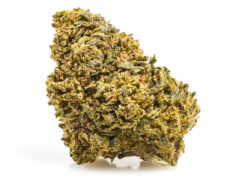
 Max CBDAMNESIA CBD BOOSTStarting from: 0,85€/g
Glasshouse | CBD<40%
Grams5 10 20 50 100 200 400 -
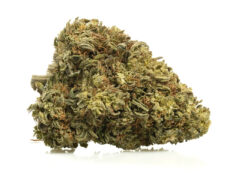
Max CBDAK47 CBD BOOSTStarting from: 1,45€/g
Indoor | CBD<47%
Grams5 10 20 50 100 200 -
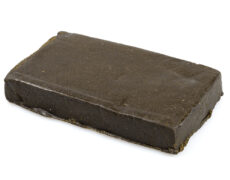
Max CBDCHARAS
CBD HASH | CBD<45%
Starting from:FLASH SALE -10%
0,90€0,80€/gGrams5 10 20 50 100 200 -
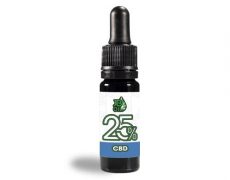
JB OIL 25%Starting from: 14,90€
CBD Oil 25%
The aim is to provide glossary-level clarity. After reading these sections, a CBDP reference in a lab report should be immediately understandable, allowing readers to recognise what the acronym describes and, just as importantly, what it does not.
CBDP at a glance: the acronym and what it covers
CBDP stands for cannabidiphorol, a hemp-derived cannabinoid belonging to the same family as cannabidiol (CBD). The “P” comes from the Greek root “phorol”, which refers to the molecule’s longer side chain. While CBD contains a five-carbon (pentyl) side chain, CBDP contains a seven-carbon (heptyl) side chain attached to the same core structure.
When encountering the acronym on a CBD hash certificate or a flower lab report, readers can consider it a structural variant of CBD. The molecule shares the same fundamental backbone, with the difference lying in the side chain that determines its classification in the laboratory report.
Read also: EU Industrial Hemp Catalogue: What It Means
Where CBDP sits in the hemp cannabinoid family
The cannabinoid family in industrial hemp includes more than 120 molecules, most of which are present only in trace amounts. The most widely cited members of the family are CBD, THC, CBG, CBN, CBC and CBDA, which usually appear in the cannabinoid profile of a certificate. CBDP belongs to the second tier, alongside lesser-know acronyms like CBDV, CBL, CBT and THCP, which are detected only when the laboratory protocol is detailed enough to identify them.
Looking at these cannabinoids as part of a single chemical family is useful. They share the same biosynthetic origin from cannabigerolic acid (CBGA) and differ from one another through small structural variations, such as side chain length, saturation pattern, or the cyclisation step that closes the ring system. CBDP is the heptyl-side-chain version of CBD, in the same way that THCP is the heptyl-side-chain version of THC.
How CBDP was first isolated and characterised
CBDP entered the scientific literature in late 2019. A research group led by Cinzia Citti and Giuseppe Cannazza, working between the University of Modena and Reggio Emilia, the Council for Agricultural Research and Economics (CREA-CIN), and Sapienza University of Rome, reported the isolation of two new phytocannabinoids from a research-grade Cannabis sativa variety: a heptyl analogue of THC (named THCP) and the corresponding heptyl analogue of CBD (named CBDP). The study was published in Scientific Reports, a journal of the Nature group, on 30 December 2019.
The team used high-resolution liquid chromatography combined with mass spectrometry to separate the heptyl analogues from the rest of the cannabinoid fraction. This research added two new molecules to the public catalogue of identified phytocannabinoids and highlighted the importance of the heptyl side chain in the broader landscape of hemp chemistry.
For readers using this as a glossary reference, the date is significant. CBDP is a relatively recent discovery: it does not appear in older textbooks, and many laboratories still do not include it in the standard cannabinoid panel used for a certificate of analysis.
The CBDP acronym next to its more famous siblings
Placing CBDP alongside to its better-known siblings helps make the acronym easier to understand. CBD (cannabidiol) is the leading cannabinoid for industrial hemp and the main reference point on most catalog pages. CBG (cannabigerol) is the metabolic precursor of CBD, often present in trace amounts. CBN (cannabinol) is a degradation product of THC that builds up with time and exposure. CBC (cannabichromene) shares the same biosynthetic family.
CBDP fits into this group as a structural variant of CBD with a longer side chain. The acronym is not a marketing label or a separate product category; it refers to a specific molecule name and appears on a laboratory document when the analytical method is sufficiently detailed to detect heptyl-side-chain cannabinoids.
Why CBDP rarely appears on a product label
CBDP is present at trace levels in hemp varieties registered in the EU industrial hemp catalogue. The 2019 isolation study measured CBDP in parts per million range, far below the percentages reported for CBD on a standard certificate of analysis. This low natural abundance is one of the main reasons CBDP rarely appears on the front of a product label. Rather than being one of the headline cannabinoids, it remains part of the background cannabinoid profile identified through laboratory analysis.

A second reason is the analytical method itself. Detecting heptyl-side-chain cannabinoids requires high-sensitivity liquid chromatography coupled with mass spectrometry. A routine certificate of analysis often reports only the main cannabinoid panel—CBD, THC, CBG, CBN, CBC, and selected cannabinoid acids. A CBDP entry is generally included only when the laboratory has been asked to extend the analysis to cover the minor cannabinoid panel.
How CBDP relates to THCP in the same discovery
THCP and CBDP were introduced together in the 2019 paper by Citti and colleagues. The two molecules share the same heptyl side chain on the cannabinoid backbone, differing only in the ring system: THCP has a tetrahydrocannabinol structure, while CBDP has a cannabidiol structure. The study presented both molecules as part of the same discovery, so readers who encounter one acronym in a scientific paper or laboratory report will often find the other listed alongside it.
For glossary purposes, CBDP and THCP are best understood as closely related counterparts. They were identified in the same research, named in the same publication, and belong to the same heptyl branch of the phytocannabinoid family. To date, discussion of both molecules has remained largely within the scientific literature, with limited commercial relevance compared with the better-known cannabinoids.
A useful glossary cross-reference here is CBD vs THC: The Clear Difference In Product Language, which sits beside this article for readers who want a refresh on the two main cannabinoid acronyms before diving into the minor ones.
What a CBDP entry on a certificate of analysis can look like
A certificate of analysis that includes CBDP will typically list it in the minor cannabinoid section of the report, with a concentration expressed either as a percentage or in parts per million (ppm) depending on the laboratory’s reporting convention. The acronym usually appears in a single row alongside a numerical value and, in some cases, a limit-of-quantification (LOQ) flag when the measured concentration is close to the analytical detection threshold.

Some certificates report CBDP as “n.d.” (not detected) or “below LOQ” (below limit of quantification). Both notations indicate that the laboratory tested for the molecule but did not detect it at a quantifiable level. Even so, the entry remains informative, as it confirms that the heptyl analogue was included in the analytical testing panel.
Reading a cannabinoid acronym list with care
A cannabinoid acronym list may appear as a long sequence of three or four letter codes followed by numerical values. Reading it carefully means looking beyond the headline figures. The minor cannabinoids provide additional insight into the chemical profile of the lot, and acronyms such as CBDP, THCP, CBDV, and CBT add further detail to the cannabinoid fingerprint, even when they are present only in small amounts.
Our view is that the minor cannabinoid section is the part of the report that reveals the differences between EU-registered hemp varieties at a molecular level. Two lots may show similar CBD percentages while displaying very different minor cannabinoid profiles, and these variations contribute to the specific chemical identity of the lot as recorded on the certificate.
For readers interested in understanding how laboratory data, product information, and cannabinoid-related claims are connected, further guidance is available through this additional resource on evaluating hemp product information and claims.
Where Justbob documents CBDP and other cannabinoid presence
Justbob carries out constant analyses on all commercialised products and on every batch. The relevant documents are available directly on each commercialised product page, allowing readers to verify the cannabinoid profile, THC threshold compliance, or the presence of minor cannabinoids (when included in the laboratory panel) for a specific lot by accessing the certificate of analysis without leaving the catalogue.
The minor cannabinoid panel is not included in every certificate, as the analytical depth depends on the laboratory protocol selected for the batch. The product page provides access to the relevant document, while the document itself indicates whether the analysis was extended to include heptyl-side-chain cannabinoids such as CBDP.
This approach keeps the lot-specific information transparent and accessible to readers. A CBDP entry on a certificate provides additional information when available; its absence from a standard panel does not indicate a compliance issue, but rather reflects the level of analytical detail applied during testing.
Compliance-safe wording for a cannabinoid glossary topic
Compliance-safe wording for a CBDP glossary page should remain strictly descriptive and factual. The statement “CBDP, a heptyl-side-chain analogue of CBD, identified in 2019 by Citti et al. and reported at trace levels on extended cannabinoid panels” describes the molecule itself. By contrast, wording such as “CBDP, the next-generation cannabinoid you cannot miss” shifts from scientific description into marketing language. The first approach informs the reader; the second introduces promotional framing that may raise compliance concerns.
Hemp products are sold for technical, scientific and ornamental purposes only, in accordance with the EU industrial hemp framework. A cannabinoid acronym such as CBDP belongs to the chemical vocabulary used to interpret laboratory data and understand a lot’s profile. It is not a directive, not a claimed benefit, and not an alternative to other regulated product categories.
The distinction is straightforward: if the CBDP reference helps readers understand the document, the acronym is being used as glossary terminology. If the reference encourages readers to take action with the product, the page moves beyond a descriptive and compliance-safe approach.
Closing a CBDP read with the document in hand
A CBDP reading is a simple analytical exercise. Start by locating the acronym in the minor cannabinoid section of the certificate; check whether the reported value is a number, “n.d.” (not detected), or “below LOQ” (below the limit of quantification); compare CBDP with the more familiar CBD value shown in the main section of the document; and review the laboratory method to confirm whether the analysis included an extended heptyl-side-chain cannabinoid panel. Finally, interpret the results within the context of the EU-registered hemp variety from which the lot originates. Once the main cannabinoid acronyms become familiar, this verification process takes only a short time and helps readers better understand the information reported in a laboratory document.
🌿At Justbob, transparency starts with detailed product information and documented cannabinoid profiles. Explore the available CBD extracts and discover products selected with a focus on quality, traceability, and clear laboratory references.
Frequently asked questions about what is cbdp
What does the acronym CBDP stand for?
CBDP stands for cannabidiphorol, a heptyl-side-chain analogue of cannabidiol (CBD). The “P” in the acronym signals the longer seven-carbon side chain on the molecule, where standard CBD carries a five-carbon pentyl side chain on the same core structure.
When was CBDP discovered?
CBDP was first isolated and characterised by a research group led by Cinzia Citti and Giuseppe Cannazza, working between the University of Modena and Reggio Emilia, CREA-CIN and Sapienza University of Rome. The result was published in Scientific Reports (Nature group) on 30 December 2019, alongside the related cannabinoid THCP.
Why does CBDP rarely appear on a product label?
CBDP sits in the minor cannabinoid section of a hemp variety, usually at parts-per-million order levels rather than at the percentages reported for CBD. Detecting it also requires a sensitive liquid-chromatography and mass-spectrometry method, so it appears on a certificate only when the laboratory protocol extends to the minor cannabinoid panel.