
Modified on: 26/08/2026
EU Industrial Hemp Catalogue: What It Means for a CBD Product Page
The EU industrial hemp catalogue is an important reference for understanding the European hemp sector, even though it is rarely mentioned explicitly on individual product pages. More formally known as the Common Catalogue of Varieties of Agricultural Plant Species, it provides the framework for identifying agricultural plant varieties that can be marketed for cultivation within the European Union.
This guide from Justbob explains what the EU industrial hemp catalogue is, why it matters for hemp and CBD products, and how readers can use it as a reference when evaluating information on a CBD product page.
-
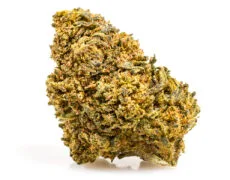
 Max CBDAMNESIA CBD BOOSTStarting from: 0,85€/g
Glasshouse | CBD<40%
Grams5 10 20 50 100 200 400 -
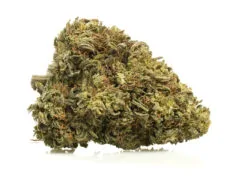
Max CBDAK47 CBD BOOSTStarting from: 1,45€/g
Indoor | CBD<47%
Grams5 10 20 50 100 200 -
Max CBDCHARAS
CBD HASH | CBD<45%
Starting from:FLASH SALE -10%
0,90€0,80€/gGrams5 10 20 50 100 200 -
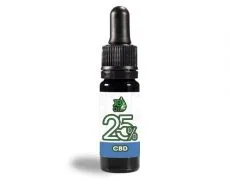
JB OIL 25%Starting from: 14,90€
CBD Oil 25%

The objective is to make a technical source easier to understand without presenting this article as a substitute for the official documentation. The catalogue itself is technical, but the basic principles for reading and verifying it are relatively straightforward.
What is the EU industrial hemp catalogue?
The EU industrial hemp catalogue, formally known as the Common Catalogue of Varieties of Agricultural Plant Species, is the official EU-level catalogue of plant varieties that may be marketed for agricultural cultivation within the European Union. It covers a wide range of agricultural species, including hemp (Cannabis sativa L.), alongside cereals, oil seeds, forage plants and other crops.
For hemp, the catalogue identifies registered varieties that meet the applicable agricultural requirements of the EU framework. The catalogue is therefore an important reference when determining whether a particular hemp variety is recognised within the European agricultural system.
For readers, the catalogue can be understood as a reference directory of recognised agricultural varieties. When a CBD product page identifies a particular hemp variety, checking the relevant catalogue or applicable national register can provide useful information about the variety’s agricultural status.
It is important, however, to distinguish recognition of a hemp variety for cultivation from the legal status of a finished CBD product. Being listed in an agricultural catalogue does not, by itself, determine every requirement applicable to the processing, marketing or sale of a CBD product.
Read also: CBD Flower Legal Framework: The Rules Behind The Label
How the catalogue interacts with Regulation (EU) 2021/2115
The EU industrial hemp catalogue does not operate in isolation. It forms part of a broader European agricultural framework, including Regulation (EU) 2021/2115, which established the current Common Agricultural Policy framework and replaced the previous CAP legislation.
This regulation sets out the wider conditions applicable to hemp cultivation within the CAP framework and refers to the relevant catalogue of agricultural plant varieties. It also establishes the applicable THC threshold for hemp qualifying for CAP-related support, subject to the conditions set out in the legislation. Under the current CAP framework, the relevant threshold is less than 0.3% THC for eligible hemp cultivation. However, this agricultural threshold should not be interpreted as a universal rule governing every CBD product placed on the European market.
For a CBD product page, the practical distinction is therefore important: the registered hemp variety provides information about the plant’s agricultural status, while laboratory analysis provides product- or batch-specific information about its actual cannabinoid profile. In simple terms, the catalogue identifies the recognised variety; analytical documentation provides information about the specific product or batch. These are complementary references, but they should not be treated as interchangeable.
Registered hemp seed varieties: structure of the list
The list of registered hemp varieties forms part of the broader EU agricultural framework and provides information that can help identify recognised hemp varieties. Entries are organised according to the applicable catalogue structure and may include details such as the variety name, the responsible maintainer and registration information.
Well-known names appearing in European hemp documentation include Finola, Fedora, Felina, Futura, Ferimon, Carmagnola and Tiborszallasi, among others. Each variety has its own agricultural characteristics and history.
The catalogue and related official lists are updated periodically. Varieties may be added following the applicable registration procedures, while entries can also be modified or removed when the relevant requirements are no longer met. Readers should therefore consult the latest version of the official European and national registers rather than relying on an old catalogue or secondary source.
For a CBD product page, this means that the hemp variety should be treated as a traceable piece of agricultural information, rather than simply as a marketing name. Where a variety is identified, readers can use the official catalogue or relevant national register to verify the information.
A few recognisable varieties illustrate the diversity of European hemp cultivation. Finola is a Finnish variety historically associated with seed production and other agricultural uses. Fedora, Felina and Futura are French varieties with an established place in European hemp cultivation. Carmagnola is an Italian variety historically associated with the country’s fibre-hemp tradition, while Tiborszallasi is a Hungarian variety.
Each variety has its own agronomic characteristics, cultivation history and typical applications. However, the presence of a variety in the catalogue does not by itself establish the legal status of a finished CBD product. For that reason, readers should distinguish between variety registration, cultivation requirements and product-specific compliance.
The THC threshold: 0.3 percent at harvest
The 0.3% THC threshold is an important reference point within the current EU Common Agricultural Policy framework for eligible industrial hemp cultivation. Under the applicable rules, the relevant THC limit is assessed according to the total THC content of the hemp crop at the prescribed stage of testing, taking into account the applicable methodology.
This threshold belongs to the agricultural and CAP framework and should not automatically be interpreted as a universal THC limit for every CBD product sold in Europe. National rules and product-specific requirements may apply separately, depending on the type of product and the market concerned.
For readers evaluating a CBD product page, the distinction is therefore important. A statement that a product originates from EU industrial hemp refers to its agricultural background, while laboratory analysis provides product (or batch) specific information about its cannabinoid profile.
In practical terms, the catalogue and cultivation rules provide the regulatory background for the hemp variety, while analytical documentation helps readers assess the specific product or batch. These sources complement one another and should be considered separately when evaluating CBD product information.
Why the catalogue matters for CBD products
The EU industrial hemp catalogue provides an important agricultural reference point for hemp-derived CBD products. When a product originates from eligible EU industrial hemp, the relevant framework connects the recognised hemp variety, the applicable cultivation requirements and product-specific analytical documentation.
These elements should nevertheless be kept distinct. The catalogue identifies recognised agricultural varieties; cultivation rules establish the conditions applicable to eligible hemp cultivation; and laboratory analysis provides information about a specific product or batch. Together, they help readers understand the agricultural background and analytical profile of a CBD product.
For example, when a CBD flower page identifies a particular hemp variety such as Finola, Fedora, Carmagnola or Tiborszallasi, readers can use the relevant official catalogue or national register to verify the variety’s agricultural status. Similarly, a reference to EU industrial hemp points towards the European agricultural framework behind the cultivation of the hemp used as the raw material. However, catalogue registration alone does not determine the complete legal status of a finished CBD product. Additional EU and national rules may apply depending on the product category and market.
For readers, the catalogue is therefore best understood as one part of the wider regulatory map. It helps anchor the cultivation and variety information, while national legislation and product-specific documentation provide the additional context needed to assess a CBD product more fully.
Reading a registered variety on a CBD flower label
A CBD flower label may identify the hemp variety used for the product, for example by stating “from the Finola variety,” “Fedora 17” or “Carmagnola.” The variety name provides a useful reference point for understanding the agricultural origin of the hemp and, where applicable, for cross-checking the variety against the relevant official register.
Readers who want to verify the information can consult the EU Common Catalogue of Varieties of Agricultural Plant Species or the corresponding national register. This can help confirm whether a particular variety is registered and provide additional information about its country of registration and responsible maintainer.
This type of verification can be particularly useful when hemp is cultivated in one EU Member State and the resulting product is marketed in another, as the relevant variety may appear in the register associated with its country of registration.
For everyday product comparison, however, consulting the catalogue for every product is generally unnecessary. A clearly identified variety, combined with reliable product information and relevant analytical documentation, can provide a useful basis for understanding the product. The catalogue remains a reference for the agricultural variety, rather than a substitute for the complete regulatory or analytical documentation applicable to the finished CBD product.
For the wider regulatory background, the European Commission hemp page is the natural entry point. It links to the catalogue, the Regulation (EU) 2021/2115 framework and the related agricultural documentation.
Common Catalogue history: 1972 origins
The history of the Common Catalogue of Varieties of Agricultural Plant Species goes back to 1972, when the European Economic Community introduced legislation aimed at harmonising the registration and marketing of agricultural plant varieties across Member States. Although the framework has been substantially updated through subsequent directives and regulations, its central principle has remained consistent: establishing a common system for recognising agricultural plant varieties within the European market.
Industrial hemp became part of this broader agricultural framework alongside other crop species. Over the following decades, the catalogue evolved in response to developments in plant breeding, agricultural practices and European agricultural policy, resulting in the system used today.
For readers researching CBD and industrial hemp, this history provides useful context. The Common Catalogue is not a recent initiative created specifically for the CBD market; it is part of a much older European agricultural system that has developed over more than five decades.
Referencing the catalogue on a CBD product page therefore connects information about a modern hemp product with a longstanding European framework for the registration and recognition of agricultural plant varieties.
Read also: Hemp Biofuel: Here’s How Things Stand

How Justbob references the catalogue on product pages
At Justbob, products are subject to ongoing analysis, including batch-specific testing, with relevant analytical documentation made available on the corresponding product pages. This allows readers to consult information about a specific product or batch, including its cannabinoid profile and available THC data, alongside the product information provided on the page.
The EU industrial hemp catalogue and laboratory documentation serve different purposes. The catalogue provides an agricultural reference for recognised hemp varieties, while an analytical document provides information relating to a specific product or batch. The product page brings these different types of information together, with the variety name providing a useful link between the product and its agricultural background.
For readers, this connection makes the EU industrial hemp catalogue easier to understand in a practical context. A variety name on a product page can be used as a starting point for checking the relevant agricultural register, while the available analytical documentation provides additional information about the specific product.
A closing reading habit for the EU industrial hemp catalogue
The EU industrial hemp catalogue is one element of the wider regulatory framework behind hemp-derived CBD products in Europe. When a product page identifies a registered hemp variety, that name can be traced back to the relevant agricultural register. When a page refers to the EU industrial hemp framework, the catalogue provides part of the context behind that reference.
For consumers who want to explore different hemp-derived products, checking the product information, variety details and available analytical documentation is a simple way to make a more informed choice.
🌿If you are interested in discovering different CBD formats, you can explore Justbob’s CBD hash and consult the information provided for each product before making your choice.
This article provides general information about the EU industrial hemp catalogue and is not legal advice. Always consult current official sources for the rules applicable to a specific product or situation.
Frequently asked questions about EU industrial hemp catalogue
What is the EU industrial hemp catalogue?
The EU industrial hemp catalogue is the official list of hemp varieties that can be marketed for cultivation in the European Union under the Common Agricultural Policy framework. It sits inside the wider Common Catalogue of Varieties of Agricultural Plant Species.
What THC threshold applies to varieties on the catalogue?
The current EU rule for industrial hemp cultivation under CAP support is a total THC content of less than 0.3 percent at harvest. The varieties on the catalogue have been verified to respect this threshold.
Why does the catalogue matter for CBD products?
CBD products derived from EU industrial hemp use raw material from registered varieties on the catalogue, with the THC threshold applied at the cultivation level. The variety name on the product label connects back to the catalogue as the institutional baseline.