
Modified on: 17/09/2026
Minor Cannabinoids: A practical Guide for Reading Hemp Lab Reports
Hemp labels and analytical documents share a small zoo of acronyms: CBD, CBG, CBN, CBC, CBDV and a few more. The bigger ones are familiar; the smaller ones are where readers often slow down. This minor cannabinoids guide walks through what those smaller acronyms mean, how they are listed in a certificate of analysis and how to read the percentages without over-interpreting them.
-
 Max CBDAMNESIA CBD BOOSTStarting from: 0,85€/g
Glasshouse | CBD<40%
Grams5 10 20 50 100 200 400 -
Max CBDAK47 CBD BOOSTStarting from: 1,45€/g
Indoor | CBD<47%
Grams5 10 20 50 100 200 -
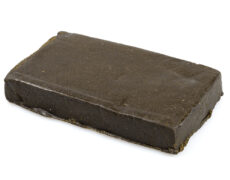
Max CBDCHARAS
CBD HASH | CBD<45%
Starting from:FLASH SALE -10%
0,90€0,80€/gGrams5 10 20 50 100 200 -
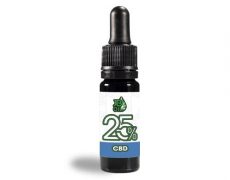
JB OIL 25%Starting from: 14,90€
CBD Oil 25%
The aim is practical. After reading this guide, opening a lab report for a CBD product, for example a CBD flower or CBD extracts, should feel less like decoding and more like skimming a familiar spreadsheet.
Minor cannabinoids: what do they represent on a hemp label?
In a hemp context, minor cannabinoids usually refers to all the cannabinoids in the plant other than CBD and THC, which carry most of the regulatory and commercial attention. The most important ones are CBG, CBN, CBC, CBDV and a handful of less common names live under this label.
The word “minor” describes the typical concentration, not the importance. In any given CBD flower or CBD extract, minor cannabinoids may appear in trace amounts (fractions of a percent), low amounts (single-digit percentages) or, more rarely, higher amounts when a registered hemp variety has been selected for that specific profile.
On a label, minor cannabinoids are often grouped under a generic “cannabinoid profile” heading; on a lab report, they usually appear as separate rows with their own percentage values.
CBG (cannabigerol): the precursor in the family
CBG, short for cannabigerol, is the cannabinoid most often called “the mother of all cannabinoids” in plant chemistry literature. The acidic form CBGA is found in young cannabis plants before the plant’s enzymes have converted it into the acidic precursors of CBD, THC and CBC. By the time the flower is harvested, most of the CBGA has been converted, which is why CBG often appears as a small percentage on the lab report.
In a certificate of analysis, CBG is usually listed by name with a percentage value. Typical ranges for a CBD-focused registered hemp variety are between 0.1 percent and a few percent, with the exact value depending on the variety and the harvest moment. Some niche varieties are selected to keep more CBG, and those products will show higher values.
For the reader, CBG is the most common minor cannabinoid to appear in plain percentages on hemp labels. It is also the one most likely to have its own product line, with CBG-rich flowers or extracts marketed under their own name.
CBN (cannabinol): the oxidation marker
CBN, short for cannabinol, is a slightly different case from CBG. It does not appear in significant amounts on a fresh flower; it forms over time as THC oxidises. The longer the plant material has been stored, especially in warmer or more exposed conditions, the more CBN can appear on the analytical document.
In a certificate of analysis, CBN is therefore often read as an indirect age marker. A product with a relatively higher CBN value, against a low THC value, may indicate that the lot has been stored for a longer time. This is not a quality judgment; it is simply a chemistry signal.
For the reader, CBN is the cannabinoid most likely to vary between two lots of the same variety based on when the analytical sample was taken. Newer batches show less CBN; older batches show more.

CBC (cannabichromene): the less-discussed cousin
CBC, short for cannabichromene, was isolated in 1966 by Yehiel Gaoni and Raphael Mechoulam, in the same wave of Israeli laboratory work that clarified the structure of CBD and THC. It is part of the same chemical family but receives less commercial attention than CBG or CBN.
On the analytical document, CBC usually appears as a small percentage, often below one percent. Some registered hemp varieties produce more CBC than others, but it is rarely the headline number on a CBD product page.
For the reader, CBC is a useful cross-check. When CBC is listed at a recognisable percentage on the lab report, the document is reporting a more complete cannabinoid profile rather than the bare minimum.
CBDV (cannabidivarin) and other smaller acronyms
CBDV, short for cannabidivarin, is structurally related to CBD but with a slightly different side chain. It is a less common minor cannabinoid, appearing in smaller amounts in most registered hemp varieties. The acronym pops up more often in scientific literature than on product labels.
Beyond CBDV, the longer list includes THCV (tetrahydrocannabivarin), CBL (cannabicyclol), CBT (cannabitriol) and others. These appear only in some analytical documents, depending on how detailed the laboratory test was and which compounds the analytical method tracked.
For the reader, this longer list is mostly background. The headline minor cannabinoids on a CBD product page are usually CBG, CBN and CBC. The rest is reading material for anyone who wants to understand the full chemical neighbourhood.
How a certificate of analysis lists minor cannabinoids
A certificate of analysis usually presents minor cannabinoids in a small table. Each row names a compound (by acronym and often by full name), a percentage value, sometimes a milligram-per-gram value and the analytical method used (typically HPLC, high-performance liquid chromatography).
The table is usually structured from major to minor. CBD sits at the top with the largest value, THC sits below the regulatory threshold (less than 0.3 percent in the EU industrial hemp framework), then CBG, CBN, CBC and sometimes CBDV follow in descending order. The exact list depends on the laboratory; not every certificate measures every cannabinoid.
For the reader, this layout is consistent enough that scanning two certificates from different laboratories is straightforward. Once the table format is familiar, the same comparison can be done across products in a few seconds. For a wider scientific reference, the PubMed Central review on cannabinoids and terpenes is a useful background reading on how these compounds are discussed in the scientific literature.

Reading the percentages: typical ranges to expect
For a CBD-focused registered hemp variety, the percentages on a certificate of analysis tend to fall into recognisable ranges. CBD often sits between 5 and 20 percent for hemp flowers, higher for extracts. THC stays below 0.3 percent by definition of the EU industrial hemp framework. CBG usually appears between 0.1 and 2 percent for flowers, occasionally higher in selected varieties. CBN starts low on a fresh batch and grows slowly over time. CBC sits in similar low-single-digit territory.
These are typical ranges, not rules. Some lots will sit at the lower end, some at the upper end, and some will include compounds the laboratory did not measure on other lots. The point of looking at the percentages is to confirm that the page description matches the document, not to set a fixed expectation.
For the reader, the practical question is whether the analytical document and the product page agree. When the page calls a flower CBG-rich, the lab report should show a CBG percentage above the typical range. When the page describes a cured-and-aged product, a slightly higher CBN can be consistent with that description.
A short worked example helps. Imagine a CBD flower lab report that shows CBD at 12.4 percent, THC at 0.1 percent, CBG at 0.7 percent, CBN at 0.05 percent and CBC at 0.3 percent. Reading this document, the registered hemp variety has a recognisable CBD-dominant profile, sits well within the EU industrial hemp THC threshold, carries a measurable CBG fraction and a small CBC presence, and shows the low CBN value of a recently cured batch. Each percentage on the page should map to a row in the certificate, and each row should sit in the expected range for that compound.
Where minor cannabinoids fit in CBD product copy
In product copy, minor cannabinoids are usually mentioned as part of the broader cannabinoid profile rather than as standalone promises. A careful page might describe “a hemp flower with a recognisable cannabinoid profile that includes CBG and CBC alongside the dominant CBD”. That kind of wording invites the reader to open the document and confirm the values.
Less careful copy turns minor cannabinoid names into headlines without supporting documentation. When CBG, CBN or CBC are promoted as features but the analytical document does not list them at meaningful values, the page is borrowing the credibility of the acronym without earning it.
For the reader, the cleanest test is the simplest one: when a product page mentions a minor cannabinoid by name, check the certificate of analysis. If the document confirms the claim, the page is reading honestly.
Compliance-safe language around minor cannabinoids
Compliance-safe language for minor cannabinoids describes what is in the product, not what the product is supposed to do for the reader. “Lab report shows a recognisable CBG fraction alongside the dominant CBD” describes a fact about the lot; “CBG-rich hemp flower for [a specific outcome]” steps outside the boundary.
The same principle applies across all minor cannabinoids. The acronym belongs to plant chemistry and to laboratory documentation; the outcome promises belong to a category of marketing that hemp product pages should leave alone.
How Justbob makes minor cannabinoid data visible
Justbob carries out constant analyses on all commercialised products and on every batch. The relevant documents are available inside each commercialised product page, so a reader who wants to check the CBG, CBN, CBC or CBDV values for a specific lot can open the certificate of analysis without leaving the catalog.
That habit changes the way minor cannabinoids are read. The acronym on the page does not need to convince anyone; the document supports it directly. For minor cannabinoids in particular, where percentages can vary significantly between lots, the lot-specific document is the only reliable reference.
Conclusion: read the data and choose with confidence
Minor cannabinoids may be called “minor”, but they can add useful context to the overall cannabinoid profile of a hemp product. CBG, CBN, CBC, CBDV and other compounds each contribute another piece of information to the laboratory picture.
The key is to avoid reading these percentages in isolation. A cannabinoid value only makes sense when considered alongside the full certificate of analysis, the product description and the specific batch being tested. This is especially important because cannabinoid concentrations can vary from one harvest or batch to another. A product page can provide a useful overview, but the lab report remains the most reliable reference for checking what is actually present.
For consumers, the process can therefore be simple: identify the cannabinoids mentioned on the product page, open the corresponding analysis and compare the reported values. This turns unfamiliar acronyms into clear, verifiable information. Choose based on the data, understand what you are reading, and let the laboratory report be your starting point.
Ready to explore hemp products with their cannabinoid profiles and laboratory analyses? Visit Justbob, browse the available products and check the relevant certificates of analysis before making your choice.
Frequently asked questions about minor cannabinoids guide
What are minor cannabinoids in hemp?
Minor cannabinoids are all the cannabinoids in the plant other than CBD and THC. The most often discussed are CBG, CBN, CBC and CBDV, with a longer list of less common compounds in scientific literature.
How do I read minor cannabinoids on a lab report?
A certificate of analysis usually lists each cannabinoid as a separate row with a percentage value and the analytical method used. Compare the values with the description on the product page and check whether they agree.
Why do minor cannabinoid percentages vary between lots?
Different harvests, registered hemp varieties and storage histories all change the cannabinoid profile of the same product family. The lot-specific certificate of analysis is the only reliable reference for a given batch.