
Modified on: 17/09/2026
Rosemary Aroma Notes in Hemp: a Botanical Scent Vocabulary
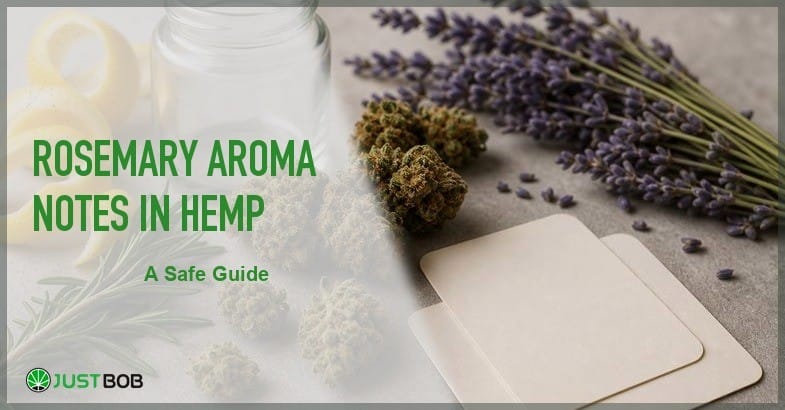
Some hemp flower descriptions use expressions such as “rosemary notes” to help readers understand the aroma profile of a product. The comparison refers exclusively to sensory characteristics: it is a familiar botanical reference that can make an otherwise complex scent profile easier to visualise.
This Justbob guide explains what rosemary aroma notes in hemp mean, which aromatic compounds are associated with this scent profile, and how readers can interpret this type of vocabulary when exploring hemp products.
-
 Max CBDAMNESIA CBD BOOST
Glasshouse | CBD<40%
Starting from:FLASH SALE -10%
0,85 €0,75 €/gGrams5 10 20 50 100 200 400 -
Max CBDAK47 CBD BOOSTStarting from: 1,45 €/g
Indoor | CBD<47%
Grams5 10 20 50 100 200 -
Max CBDCHARASStarting from: 0,90 €/g
CBD HASH | CBD<45%
Grams5 10 20 50 100 200 -
JB OIL 25%Starting from: 14,90 €
CBD Oil 25%
The aim is to keep the comparison clear and factual. A rosemary note is an aroma reference, not an indication that rosemary has been added to the hemp flower.
What “rosemary aroma notes in hemp” means
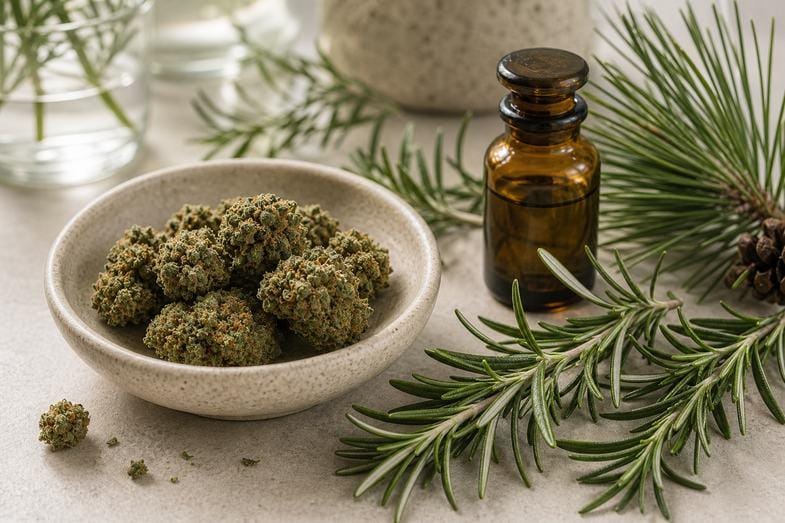
When a hemp flower description mentions rosemary, it is referring to the product’s aromatic profile, not to the presence of rosemary as an ingredient. The comparison indicates that certain aromatic compounds in the hemp may create a scent reminiscent of the familiar herbal, fresh or camphoraceous character associated with rosemary.
For readers exploring a CBD product, familiar botanical references can make aroma descriptions easier to understand. Describing a flower as “rosemary-like” or “rosemary-leaning” gives the reader an immediately recognisable reference point without requiring detailed knowledge of individual terpenes.
This type of vocabulary is particularly useful when a product page needs to describe complex aromas in accessible language. The comparison remains purely descriptive and sensory, helping readers understand what kind of aromatic profile they might find in the product.
Read also: Hemp Flower Aroma Notes: A Clear Scent Vocabulary
The terpenes behind Rosemary scent: Pinene, Cineole, Camphor
Rosemary’s characteristic aroma comes from a complex combination of volatile compounds, including alpha-pinene, beta-pinene and 1,8-cineole (eucalyptol). Other compounds, such as camphor, borneol, linalool and verbenone, can also contribute to its distinctive aromatic profile.
Pinene is commonly associated with fresh, pine-like and resinous notes, while 1,8-cineole can contribute a bright, herbal and eucalyptus-like character. Camphor adds another distinctive aromatic dimension, often perceived as cool and penetrating.
Some of these compounds can also occur naturally in Cannabis sativa L. The precise terpene composition varies according to the hemp variety, growing conditions, harvest and storage conditions, meaning that two flowers can have noticeably different aromatic profiles.
This chemical overlap helps explain why certain hemp flowers may be described as having rosemary-like, herbal or piney notes. Similar aromatic compounds occur naturally across many plant species, including rosemary, pine, sage and thyme.
For readers, however, “rosemary aroma” should be understood as a sensory comparison, not as a chemical identification. The precise composition of an individual hemp product can only be established through appropriate laboratory analysis.
Why these terpenes also appear in hemp varieties
Hemp plants produce a wide range of terpenes in their trichomes, the resin-producing structures found on the surface of the flowers. The resulting aromatic profile can vary significantly according to the genetics of the variety, cultivation conditions and harvest timing.
Some hemp varieties may present more citrus-oriented aromas, often associated with compounds such as limonene, while others may show more earthy, herbal, woody or resinous characteristics. Varieties containing appreciable amounts of pinene and other herbal aromatic compounds may therefore produce a profile that readers perceive as reminiscent of rosemary.
For a CBD flower page, the variety name and available analytical information can provide useful context for this description. The sensory description explains how the aroma is perceived, while laboratory data provides the analytical picture of the product or batch.
How rosemary aroma reads on a CBD flower page
On a well-structured CBD flower page, a rosemary reference works best when it is presented as part of a broader aroma profile. For example, a description might refer to a “fresh herbal aroma with rosemary and pine notes”, alongside relevant information about the variety and available analytical documentation.
This creates several layers of information: the general aroma family, the familiar botanical reference and, where available, the analytical information about the product’s terpene profile.
By contrast, rosemary should not be presented as a claim about what the product will do or how it will affect the consumer. It is simply a descriptive reference for the aroma.
This distinction makes product descriptions clearer and more responsible: the sensory vocabulary describes the flower, while the analytical documentation provides the supporting technical information.
Other herbal aroma neighbours: Sage, Thyme, Basil
Rosemary belongs to a broader family of familiar herbal aroma references. Sage, thyme and basil can also appear in hemp aroma descriptions because different plants may share some of the same volatile compounds. Sage can be associated with cineole and camphor, thyme with thymol and carvacrol, while basil can contain notable amounts of linalool and other aromatic compounds. For this reason, a hemp flower with a fresh, herbal profile may be described using references such as rosemary, sage, thyme or “Mediterranean herbal notes.”
These botanical references provide readers with an accessible vocabulary for describing complex aromatic profiles, without suggesting that the hemp flower contains these herbs or their extracts. Rosemary, sage and thyme also have a long history in Mediterranean culinary and herbal traditions, while hemp has a different historical background, traditionally associated in particular with fibre and seed production. The similarity between their aromas is therefore best understood as a botanical phenomenon resulting from different plants producing some overlapping volatile compounds.
For the reader, a rosemary, sage or thyme reference on a hemp flower page is simply a familiar way to communicate its aromatic character. The flower is not being presented as an herb; rather, botanical scent vocabulary helps make the product’s aroma easier to recognise, understand and compare.
Reading the terpene profile on a lab report
When a CBD flower laboratory report includes a terpene profile, readers can use the available data to better understand the aromatic description. A measurable presence of pinene, for example, may be consistent with fresh, pine-like or herbal notes, while the presence of 1,8-cineole (eucalyptol) can contribute additional herbal or camphoraceous characteristics.
However, terpene concentrations should not be interpreted as a simple formula for determining aroma. Different compounds can contribute to the overall scent, and their perception depends on the complete chemical profile of the flower. Laboratory methodologies also vary, and not every laboratory analyses the same range of terpenes.
For this reason, a rosemary reference on a product page can remain a sensory description even when a complete terpene analysis is not available. Where analytical data is provided, it offers additional context and helps readers understand the compounds contributing to the reported aroma.
The terpene profile therefore acts as a useful link between descriptive language and analytical information. It does not replace the sensory description, but it can provide a more technical perspective on the aromatic characteristics of a specific batch.
For wider scientific context on cannabinoids and terpenes, the PubMed Central review on cannabinoids and terpenes is a useful reference. It discusses how the same compounds behind a hemp flower’s herbal scent appear across many plants in the scientific literature.
When “Rosemary” is a description, not a use directive
On a CBD flower page, there is an important distinction between describing an aroma and suggesting a use. A phrase such as “fresh herbal aroma with rosemary notes” describes a sensory characteristic of the product. It does not indicate that rosemary is an ingredient or suggest any particular way of using the product.
For compliance-oriented CBD content, product descriptions should remain focused on observable characteristics, product information and analytical data, without making claims about personal effects or encouraging a particular use.
This principle applies not only to rosemary but to all botanical aroma references. Citrus, pine, sage, thyme, floral and earthy are useful descriptive terms when they accurately communicate an aromatic profile.
For the reader, the distinction is straightforward: if the botanical reference helps describe what the product smells like, it is sensory vocabulary; if it is used to suggest an action or personal outcome, it moves beyond simple product description.
How Justbob documents hemp aroma profiles
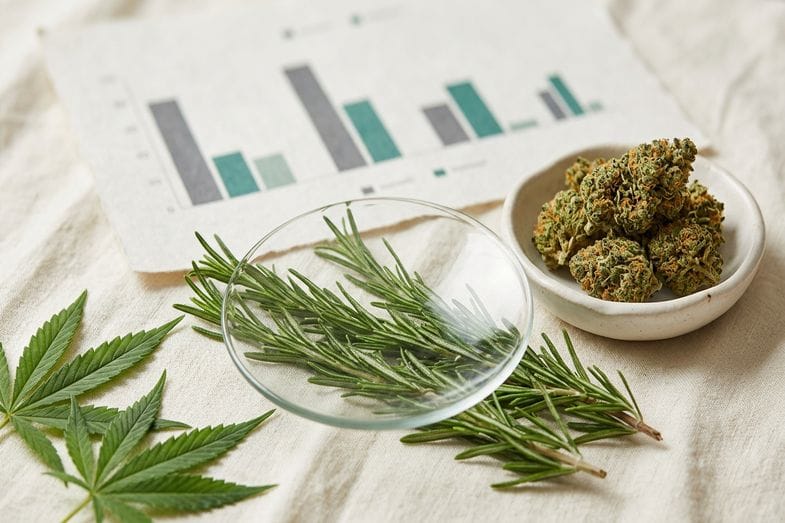
At Justbob, products are subject to ongoing analysis, including batch-specific testing, with the relevant documentation made available on the corresponding product pages. Where terpene information is available, readers can consult the analytical documentation to gain a more detailed understanding of the compounds associated with a product’s aromatic profile.
This can be particularly useful when a CBD flower is described using familiar botanical references such as rosemary, pine, sage or citrus. The sensory description provides an accessible way to communicate the aroma, while the available laboratory data can provide additional analytical context for the specific batch.
The same reading approach can be applied across different products. Compare the aroma description with the available product information and, where provided, consult the laboratory analysis to better understand the profile being described.
For the reader, this combination of descriptive language and batch-specific documentation makes aroma information easier to evaluate. The product page describes the sensory profile; the analytical documentation adds the technical context.
Read also: CBD Flower Aroma Profile: How to Read Scent Notes
A clear way to read Rosemary aroma notes in hemp
Rosemary aroma notes in hemp are ultimately a simple way of describing a familiar sensory profile. By looking at the aroma description, hemp variety and available analytical documentation, readers can move from a general botanical comparison to a clearer understanding of the product’s characteristics.
A rosemary-like profile does not mean that rosemary has been added to the flower: it refers to similarities in the aromatic compounds naturally present in the hemp. This makes botanical references useful as long as they remain descriptive, precise and consistent with the information available for the product.
If you want to explore different aromatic profiles for yourself, take a look at the CBD flower collection from Justbob. Compare the varieties, aroma descriptions and available product documentation to discover the profiles that interest you most.
🌿Explore the collection and find the CBD flower with the aromatic profile that best matches your preferences.
Frequently asked questions about rosemary aroma notes in hemp
What does “rosemary aroma notes in hemp” mean?
It means the hemp flower has a scent that overlaps with rosemary, usually because the variety produces a pinene-led terpene profile with a cineole secondary note. The phrase describes the aroma, not a botanical additive.
Which terpenes are behind the rosemary scent?
Rosemary scent comes mainly from pinene (alpha and beta), 1,8-cineole (eucalyptol) and camphor, with smaller fractions of linalool and borneol. Pinene and cineole are the terpenes most often shared with hemp varieties.
Does a “rosemary note” suggest a particular product use?
No. CBD flower products are sold for technical, scientific and ornamental purposes only. The rosemary reference is purely a scent description, with no implied product action.