
Modified on: 25/07/2026
Aroma Notes, Without the Guesswork
Some product pages are easier to remember through scent descriptions than through numbers. A good aroma note can feel like opening a clean drawer filled with dried herbs, paper labels, and small glass jars: citrus on one side, pine on another, and a softer floral note somewhere in the middle. This is the useful world of a CBD flower aroma profile. It gives readers a vocabulary for CBD flowers without drifting into claims or personal interpretations.
On Justbob, aroma should be understood as product-description language. It helps people compare CBD flowers through scent families, freshness cues, visual context, and terpene terminology. It does not promise a personal result. It does not turn a product page into a personal promise. It simply makes the flower easier to understand.
-
 Max CBDAMNESIA CBD BOOSTStarting from: 0,85 €/g
Glasshouse | CBD<40%
Grams5 10 20 50 100 200 400 -
Max CBDAK47 CBD BOOST
Indoor | CBD<47%
Starting from:HALLOWEEN SALE -10%
1,45 €1,30 €/gGrams5 10 20 50 100 200 -
Max CBDCHARAS
CBD HASH | CBD<45%
Starting from:HALLOWEEN SALE -10%
0,90 €0,80 €/gGrams5 10 20 50 100 200 -
JB OIL 25%Starting from: 14,90 €
CBD Oil 25%
This matters because older cannabis-related writing often treated aroma as a shortcut to exaggerated claims. Here, the approach is more straightforward. A scent note can be descriptive, precise, and useful, but it should remain within its purpose. A flower may smell like citrus peel, dry pine needles, or a freshly opened herb drawer. However, that aroma should not be transformed into something it cannot demonstrate. Think of an aroma profile as the small card next to a fragrance sample. It helps guide your perception, but it does not need to shout. The best aroma descriptions are specific, simple, and slightly tactile.
What a CBD flower aroma profile means
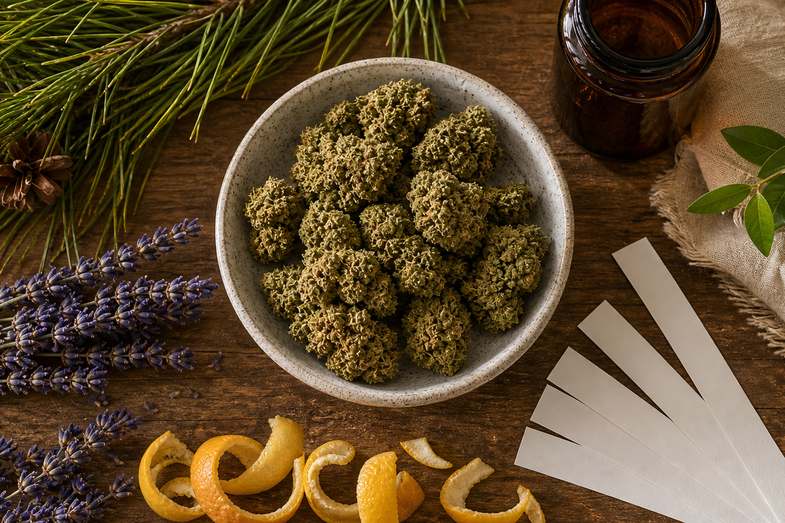
A CBD flower aroma profile is a structured way to describe the scent of hemp flowers. It usually brings together the most noticeable notes: herbal, citrus, floral, woody, earthy, resinous, fresh, or fruity. A profile can also mention whether the fragrance is delicate, layered, sharp, rounded, or more discreet.
The word profile is useful because aroma rarely appears as a single note. A CBD hemp flower may open with a bright scent and then reveal a drier herbal side after a moment. Another flower may show pine and resin notes first, with a softer floral trace in the background. Good product descriptions should help readers recognise these layers without suggesting that scent is a laboratory result.
The aroma profile is also different from the cannabinoid profile. One belongs to the sensory description of the flower; the other belongs to analysis and documentation. Both can appear on the same product page, but they serve different purposes. Keeping them separate helps avoid confusion.
For readers, the practical question is simple: does the description explain what the flower is like, or is it trying to sell an unrealistic idea? We prefer the first approach. It remains clearer, more useful, and more honest over time.
Why CBD flowers can smell different
CBD flowers can smell different because the plant material is naturally complex. Variety, cultivation process, drying, curing, storage and time can all influence the final scent. Even two hemp flowers that sit in the same broad family can have different aromatic details.
Terpenes are one part of that story. They are volatile compounds found in many plants, and in cannabis they are closely connected with fragrance. A scientific review on cannabinoids and terpenes in Cannabis sativa describes terpenes as molecules involved in flower aroma and lists examples such as limonene, linalool, myrcene and pinene. For a shopper, the useful takeaway is simple: terpene vocabulary helps explain why one flower may smell more citrusy while another leans woody or floral.
Common terpenes should be treated as aroma markers, not as promises. In CBD flowers, terpenes can help explain why one product description talks about lemon peel while another talks about pine, lavender or a deeper earthy note. In hemp flowers, terpenes are part of the botanical character, but they are still only one part of the full product description.
That is why a good CBD flower aroma profile should not list terpenes as if they were magic words. It should translate terpenes into ordinary scent language. Limonene can support a citrus note. Pinene can support pine language. Linalool can support floral language. Myrcene can sit closer to herbal or earthy wording. The reader gets a better map, and the copy stays honest.
The plant surface matters too. Trichomes, resin and the visible structure of the flower can contribute to how aromatic a flower appears. This does not mean that a shiny flower is automatically better, or that a faint scent is automatically worse. It means aroma should be read together with appearance, storage and documentation. That little pause is important. A good CBD flower aroma profile is not a race to the loudest scent. Sometimes the neatest product description is the one that says exactly enough.
Common scent families in hemp flowers
Common terpenes often sit behind familiar scent families, but a product page does not need to become a chemistry wall to be useful. The reader mainly needs clear language.
Citrus notes may suggest lemon peel, orange zest or a bright fresh edge. Pine notes may suggest resin, needles, forest floor or a cleaner woody line. Floral notes may bring lavender-like softness or a sweeter botanical impression. Earthy notes can smell like dry soil, roots, bark or a dark herb cupboard. Woody notes can feel warmer and quieter. Fruity notes are usually rounder, while herbal notes may feel greener and more direct. A resinous scent can be dense, sticky or balsamic in the way it is described, without needing any dramatic promise attached to it.
The phrase hemp flower smell can sound casual, but it is actually useful when handled with care. Many people start with the question “what does this flower smell like?” before they can compare anything else. The answer should stay grounded: this one is citrus and fresh, this one is pine and resinous, this one is floral and soft, this one is earthy and woody. Small sensory examples help because they make the description easy to picture. A citrus note can be like zest on your fingers after peeling an orange. A pine note can be like opening a drawer with cedar blocks. A floral note can be like walking past a dry lavender bundle. No performance, no magic, just a better scent map.
Not all hemp flowers need the same vocabulary. Some hemp flowers are built around fresh green notes. Other hemp flowers lean into resin, wood or a rounder fruity impression. CBD flowers can also shift in scent level after storage, which is why the product page should keep aroma, image and documentation in conversation with each other.
CBD hemp flower aroma, from terpenes to trichomes
The aroma of a CBD hemp flower is not only a list of terpenes. It is also the way those notes sit together in the real flower. Limonene may be associated with citrus language, pinene with pine language, myrcene with herbal or earthy language, and linalool with floral language. In a real product description, those words work best as cues, not as a rigid formula.
This is especially useful when comparing CBD flowers in the same catalogue. Two CBD flowers can share a similar format and still have different terpene profiles. One may be described through citrus and pine. Another may be described through floral, woody and earthy notes. Terpenes help name the difference, while the finished aroma profile keeps the language readable.
Trichomes add another visual clue. They are often discussed because they are connected with the resinous surface of the flower. If a CBD flower looks carefully handled and still has a clear aromatic identity, the description can mention both the visible and sensory sides. But again, the aroma profile should not pretend to be a certificate of analysis.
Lab reports and scent notes can happily live on the same page. The lab report documents measurable values. The aroma profile gives the reader a way to recognise the character of the flower. One is analytical, the other is sensory. The page becomes stronger when those two roles stay separate. For Justbob readers, that distinction keeps the article and the catalogue cleaner. Aroma can be pleasant, botanical and memorable. The analysis documents remain the place for batch details and product controls.
What the hemp flower smell can and cannot tell you
The hemp flower smell can tell you something about character. It can suggest whether a flower reads as fresh, dry, herbal, citrus, woody or resinous. It can also help you compare two CBD flowers that look similar in a photo but have different product descriptions.
What it cannot do is promise a personal outcome. Aroma notes are not a personal promise, not a handling tip and not a way to guess how a product may behave for a person. That line may sound strict, but it is the line that keeps the writing honest. A scent can be beautiful without becoming a claim. Freshness also needs careful language. A clean, recognisable fragrance can support the impression of a well-kept flower, especially when the description matches the appearance and the product documentation. But freshness is not only a smell word. Storage, batch information, product handling and analysis all matter too.
There is a nice little rule here: if an aroma note sounds like something you could find in a fragrance notebook, it is probably useful. If it starts sounding like a personal promise, it is probably doing too much.
How Justbob presents aroma beside product checks
Justbob product pages should give readers more than one way to understand CBD products. The photo shows the visible structure. The aroma profile explains the scent family. The product description sets the technical and ornamental context. The analysis documents show the measured side related to the lot.
That last part matters. Justbob carries out constant analyses on all commercialised products and on every lot. The relevant documents are made available on each commercialised product page, so readers can check the analyses connected to the product they are viewing. Aroma may be the warmer, more human part of the page, but documentation is the steady backbone.
For CBD flowers, this makes comparison easier. A citrus and pine profile can be read beside a photo. A resinous and earthy profile can be read beside the batch analysis. The scent language does not replace those checks. It sits beside them, like a well-written shelf note in a well-kept CBD shop. This also helps avoid overstatement. A product does not need a grand claim when its page is clear, specific and supported by documents.
A practical way to read aroma notes
Start with the first scent family. Is the description mainly citrus, floral, woody, earthy, fruity, herbal, pine, or resinous? Then look for secondary notes. A flower may smell like lemon peel first and dry herbs second. Another may smell like pine resin first and a softer botanical note later.
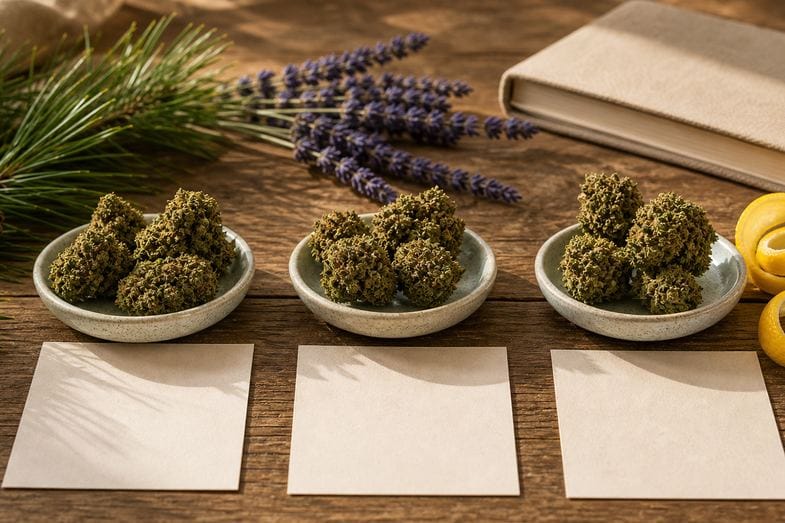
Next, compare the scent language with the image. If the flower is described as compact, resinous, and fresh, the photo should help that sentence make sense. If the description says floral and light, the rest of the page should not suddenly switch to heavy, exaggerated wording. Consistency is a subtle sign of care.
Then look at the product documentation. Aroma is sensory, but Justbob’s analysis documents keep the technical side close to the product. If you are comparing similar CBD flowers, read the aroma profile, look at the product photo, and check the lot analysis. The three pieces answer different questions.
When comparing CBD flowers, do not chase terpene names as trophies. Terpenes are helpful only when they make the aroma easier to read. If the page names terpenes, the description should still come back to plain scent language: citrus, pine, floral, herbal, woody, earthy, resinous, or fruity. This is true for CBD flowers with a bright profile and for hemp flowers with a softer aromatic line. Terpenes add context, but the finished description should still sound like something a person can recognise.
That is also why hemp flowers with similar photos can deserve different aroma notes. The visible flower gives one clue, terpenes give another clue, and the product page should bring those clues together without making the reader work too hard.
Finally, keep your own notes simple. “Fresh citrus and pine” is more useful than a paragraph that tries to sound expensive. “Earthy, woody, resinous” is enough if that is what the flower description actually supports. Good aroma language is often plain. That is part of its charm.
Read also: CBD Hash Vs CBD Extracts: Format Differences – Justbob
Final notes on CBD flower aroma profile
A well-written CBD flower aroma profile should make a product easier to understand, not more complicated. Its purpose is to describe the main scent families, explain why hemp flowers can have different aromatic identities, and help readers compare CBD flowers using clear, reliable language rather than exaggerated claims.
The most effective aroma descriptions are simple and precise. Terms such as citrus, pine, floral, woody, earthy, herbal, fruity, and resinous are familiar to most readers and make it easier to recognise the character of a flower. Combined with product images, detailed descriptions, and Justbob’s lot-by-lot laboratory analyses, they provide a complete picture of each product.
Ultimately, a good product page balances sensory information with technical transparency. Aroma profiles help describe the experience, while laboratory analyses provide objective data about every commercialised batch. Together, they allow customers to compare CBD flowers with greater confidence and choose the product that best matches their preferences.
🌿 Explore the Justbob online store to discover our selection of premium CBD flowers and other high-quality CBD products.
Frequently asked questions about CBD flower aroma profile
What is a CBD flower aroma profile?
A CBD flower aroma profile is a structured description of the flower scent, including notes such as citrus, pine, floral, woody, earthy, herbal, fruity or resinous.
Are aroma notes the same as product results?
No. Aroma notes describe scent families and sensory character. They should not be treated as a personal promise or a product instruction.
Why do CBD flowers smell different?
CBD flowers can smell different because variety, terpenes, drying, curing, storage, trichomes and natural plant variation can all influence the final aroma.