
Modified on: 17/09/2026
Reading the Hemp Flower Enrichment Process on a Product Page
A hemp flower enrichment process is the production path that turns a standard CBD flower into an enriched product, with a higher overall cannabinoid concentration than the base flower. The result is what the catalog calls Boost Weed: a registered hemp variety that has gone through a coating step and therefore reads differently on the page, on the label, and in the analytical document. This Justbob guide explains what the enrichment process is, what changes on the flower, and how to read the result responsibly.
-
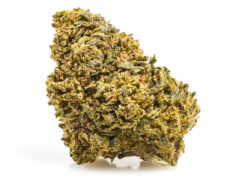
 Max CBDAMNESIA CBD BOOSTStarting from: 0,85€/g
Glasshouse | CBD<40%
Grams5 10 20 50 100 200 400 -
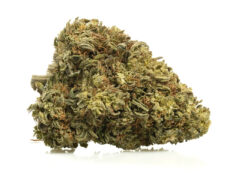
Max CBDAK47 CBD BOOSTStarting from: 1,45€/g
Indoor | CBD<47%
Grams5 10 20 50 100 200 -
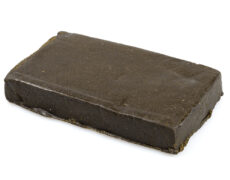
Max CBDCHARAS
CBD HASH | CBD<45%
Starting from:FLASH SALE -10%
0,90€0,80€/gGrams5 10 20 50 100 200 -
JB OIL 25%Starting from: 14,90€
CBD Oil 25%
The aim is to demystify the production language. After reading a few pages, the difference between a standard CBD flower and an enriched flower becomes legible at a glance.
What “hemp flower enrichment process” describes
The hemp flower enrichment process is a production sequence that combines a registered hemp variety with a separately produced CBD extract. The flower keeps its botanical shape; the extract is applied as a coating layer on the surface of the bud, increasing the overall cannabinoid concentration of the final product.
The four-step framework helps with reading. The base flower is a registered hemp variety from the EU industrial hemp catalogue; the extract layer is a CBD-rich coating produced through a controlled extraction process; the assembly step joins the two; the final product carries both layers, with a documented cannabinoid breakdown for each.
In our view, the most useful enriched hemp pages keep this four-step language explicit. A page that simply names the format without explaining the layers leaves the reader without the basic framework needed to understand the product.
The starting point: a registered hemp variety from the EU catalogue
Every enriched flower starts with a registered hemp variety. The variety has to be listed in the EU industrial hemp catalogue (the Common Catalogue of Varieties of Agricultural Plant Species) and respect the harmonised THC threshold under Regulation (EU) 2021/2115. The most common bases are recognisable names such as Finola, Carmagnola, Fedora, and Felina.
The variety contributes the visual structure of the bud, the baseline cannabinoid expression, and the terpene profile that carries into the final product. A more compact base reads denser after coating; a fluffier base reads lighter; the colour of the underlying flower influences the final amber-to-green balance.
For a CBD flower reader, the variety listed on the enriched label is the same anchor that appears on a non-enriched product. The catalogue provides the institutional baseline; the analytical document provides the lot-specific confirmation.
The enrichment layer: an extract coating on the flower
The extract layer is what turns the flower into an enriched product. The coating can take different forms: a fine layer of CBD resin distributed across the bud surface, a denser glaze of concentrated extract, or a crystalline outer layer made of CBD crystals applied to the flower. Each variant produces a different visible signature.
The cannabinoid profile of the coating depends on the source extract. A resin coating brings a broader cannabinoid spectrum from the same hemp variety; a crystal coating focuses the increase on a single cannabinoid, usually CBD, with most of the terpene fraction removed during isolation. The page should name the coating type when the catalog discloses the production setup.
For the reader, the coating is the visual cue that distinguishes an enriched flower from a standard CBD flower. Shiny resin patches, layered colour, and a denser feel of the bud can all come from this added layer.

Boost Weed: the Justbob commercial naming
Within the Justbob catalog, the enriched hemp flower line is called Boost Weed. The name was introduced in 2017 to identify a controlled production line dedicated to enriched products, distinct from the standard CBD flower category. The choice was editorial: a single recognisable label for the enriched line, with the same compliance framework as the rest of the catalog.
Boost Weed products retain the same regulatory cues as standard CBD flowers. The variety on the label is registered in the EU industrial hemp catalogue; the cultivation threshold follows the harmonised EU rule; the analytical document confirms the cannabinoid breakdown for the specific lot. The enrichment is the production step, not a regulatory shortcut.
For the reader, the Boost Weed label is a signal: the product on the page has gone through an enrichment step, and the visible structure of the flower should correspond to the description. A Boost Weed page that does not mention the coating explicitly is missing one of the basic elements needed to understand the product.
How the coated flower reads visually
An enriched flower has a different visual signature from a standard CBD flower. The bud structure is preserved, but the surface carries more visible resin or, in the case of crystal coatings, a sandy outer layer that catches light differently. Under suitable lighting, the enriched flower can appear denser, glossier, and more uniform in colour.
The colour profile can shift toward warm amber tones when the coating is a CBD resin extract, and toward pale, frost-like white when the coating is made of CBD crystals. The base flower may still show through, especially on the sides of the bud that received less coating, giving the enriched product a layered appearance.
For the reader, the photo on the catalog page is the first visual reading layer. A Boost Weed page should show the layered appearance clearly: visible coating, layered colour, and the underlying bud structure together, rather than a uniform glossy mass that hides the base flower.
Resin coverage and surface signature
Resin coverage is one of the most useful surface cues on an enriched flower. The coating sits on the surface of the bud and surrounding bracts, creating glints under light that the reader can usually see in the product photo. A well-coated enriched flower shows relatively even coverage across the bud surface; a less even coating shows patches of coated and uncoated areas.
The surface signature varies according to the coating type. A resin coating produces a glossy, textured surface, generally with amber-to-golden tones. A crystal coating produces a matte, sandy surface, generally with off-white to pale yellow tones. Both surface types are characteristic visual signatures of the enrichment process.
For the reader, the surface signature can help identify the coating type before opening the label. A glossy amber surface points toward a resin coating, while a matte, sandy surface points toward a crystal coating. The label and analytical document then provide confirmation of the breakdown for the specific lot.

How the analytical document confirms the enrichment
The analytical document is where the enrichment process becomes verifiable. A Boost Weed lab report should list the cannabinoid breakdown of the final enriched product, with CBD usually present at a higher percentage than the base flower variety would reach on its own. The terpene profile, when reported, provides an additional indication of the remaining aromatic fraction.
The cross-check is straightforward. A Boost Weed page that lists a base variety with a typical CBD range of 8 to 12 percent and an enriched product with a CBD content of 18 to 22 percent documents the enrichment step explicitly. The difference between the two figures can be referred to as the enrichment delta; the analytical document confirms that this difference is reflected in the final product.
For the reader, this is the most reliable way to assess an enriched product. The base variety establishes the starting point, while the final laboratory analysis confirms the cannabinoid concentration after the enrichment process.
A short history: from extract production to assembled CBD products
The enrichment process builds on a longer scientific tradition. Supercritical CO₂ extraction, one of the controlled methods used to produce CBD extracts at industrial scale, was systematised by Egon Stahl and colleagues at the end of the 1970s and applied to hemp through the 1980s. The technology used to produce clean CBD extracts therefore predates the assembled-product format by several decades.
Composite hemp products, in which an extract is applied to a flower base, are a more recent commercial format. The category took shape in European catalogs during the 2010s, alongside the broader expansion of CBD product lines under the EU industrial hemp framework established by Regulation (EU) 2021/2115. Boost Weed sits within this newer commercial layer, with a documented production setup behind each lot.
For the reader, this background gives the enrichment process a longer history than the page itself might suggest. A Boost Weed lot in 2026 reflects decades of extraction research, applied to the same hemp varieties that the EU catalogue lists within its standard cultivation framework. For wider regulatory context, the European Commission page on hemp is a useful entry point. It links to the EU industrial hemp catalogue and the Regulation (EU) 2021/2115 framework, which sit behind every registered variety that enters the enrichment process.
How Justbob documents the enrichment process
Justbob carries out regular analyses on all commercialised products and on every batch. The relevant documents are available directly on each commercialised product page, so readers who want to confirm the cannabinoid breakdown of a Boost Weed lot can access the certificate of analysis directly from the catalog.
The reading routine is straightforward and repeatable. Once a reader has cross-checked one Boost Weed lot against its analytical document, the same approach can be applied to the next lot and the next variety. The variety name on the label is the bridge to the EU catalogue; the analytical document provides the lot-specific confirmation; the coating description provides the visible reading layer.
In our view, the consistency of these three layers is what makes a Boost Weed page easier to understand. The coating you can see, the certificate you can access, and the registered variety on the label should all point to the same lot.
Read also: Hemp Flower Aroma Notes: A Clear Scent Vocabulary
Compliance-safe wording on enriched hemp pages
Compliance-safe wording for an enriched hemp page should remain purely descriptive. For example, “Enriched hemp flower based on Carmagnola, with a CBD resin coating and a documented 20 percent CBD content per lab report” describes the product. “Premium-grade flagship enriched flower” is primarily marketing language.
Boost Weed products are sold for technical, scientific, and ornamental purposes only, in line with the applicable EU industrial hemp framework. The coating description, the base variety, and the cannabinoid percentages are part of how the product is presented in the catalog. They are not directives, claims of benefits, or alternatives to anything else.
For the reader, the test is simple. If the description helps you understand the visible structure of the enriched flower, the words are being used as descriptive vocabulary. If the description invites you to do something with the product, the page has stepped outside the compliance-safe lane.
Discover enriched hemp flowers with Justbob
Understanding the hemp flower enrichment process makes it easier to read product descriptions, compare cannabinoid profiles, and identify the characteristics of an enriched flower. At Justbob, each Boost Weed product combines a registered hemp variety with a documented enrichment process, supported by batch-specific analysis and product information.
If you want to explore the world of enriched hemp flowers, discover the Justbob Boost Weed range and compare different varieties, coating types, cannabinoid profiles, and available product formats. Browse the catalog, check the available laboratory documentation, and find the CBD flower that best matches your preferences.
🌿 Explore Justbob and discover our range of enriched hemp flowers and Boost Weed products.
Frequently asked questions about hemp flower enrichment process
What is the hemp flower enrichment process?
The hemp flower enrichment process is a production sequence that combines a registered hemp variety with a separately produced CBD extract. The extract is applied as a coating layer on the bud surface, increasing the overall cannabinoid concentration of the final product. Inside the Justbob catalog, the enriched line is called Boost Weed.
How can a reader recognise an enriched flower on the page?
The visible signature is the coating layer. A resin coating produces a glossy, amber surface; a crystals coating produces a matte, sandy surface. The catalog photo, the variety on the label and the analytical document together confirm the enrichment.
Does the enrichment process change the regulatory framework?
No. Enriched hemp products keep the same regulatory cues as standard CBD flower. The base variety is registered in the EU industrial hemp catalogue, the cultivation threshold is the harmonised EU rule under Regulation (EU) 2021/2115, and the analytical document confirms the cannabinoid breakdown for each lot.