Modified on: 17/09/2026
Is CBD Legal in Europe? A Clear Guide to EU Hemp Rules
The question “Is CBD legal in Europe?” is one of the most common entry points for readers browsing a hemp catalog. The accurate answer is layered: the EU sets a harmonised framework for the cultivation of industrial hemp, while each member state regulates the commercial side through its own national provisions. The variety listed on the label and the analytical document help anchor the product within these two layers. This Justbob guide explains how to read CBD legality in Europe as a source-based reading habit, page by page.
-
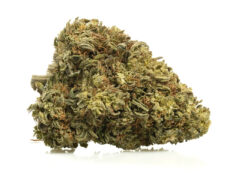
 Max CBDAMNESIA CBD BOOSTStarting from: 0,85€/g
Glasshouse | CBD<40%
Grams5 10 20 50 100 200 400 -
Max CBDAK47 CBD BOOSTStarting from: 1,45€/g
Indoor | CBD<47%
Grams5 10 20 50 100 200 -
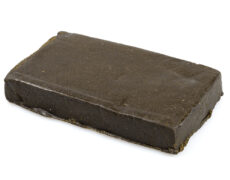
Max CBDCHARAS
CBD HASH | CBD<45%
Starting from:FLASH SALE -10%
0,90€0,80€/gGrams5 10 20 50 100 200 -
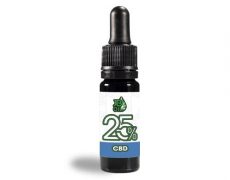
JB OIL 25%Starting from: 14,90€
CBD Oil 25%
The aim is to keep the regulatory map clear and easy to follow. After reading a few product pages, the EU framework, national provisions, and the documents that connect the two become familiar reference points.
What “CBD legal in Europe” actually describes
The phrase covers two distinct regulatory layers. The first is the EU industrial hemp framework, which establishes harmonised rules for the cultivation of industrial hemp across member states. The second is the commercial layer, which each member state regulates through its own provisions concerning sale, labelling, and retail conditions. The two layers work alongside each other, with the EU rules providing the cultivation framework and national rules governing the commercial side.
For a CBD flower reader, both layers matter for different parts of the same product page. The variety name, THC threshold information, and analytical document relate primarily to the cultivation framework, while retail conditions, buyer-side requirements, and local labelling provisions belong to the national layer.
In our view, the most useful pages discussing CBD legality in Europe keep these two layers clearly separated. A page that talks about Europe without distinguishing between cultivation and commerce makes the regulatory framework more difficult to understand.
Read also: CBD Flower Legal Framework: The Rules Behind The Label
The EU industrial hemp framework as the cultivation backbone
The EU industrial hemp framework is the set of agricultural rules governing the cultivation of hemp across member states. The framework defines which hemp varieties qualify, the applicable THC threshold, and the conditions under which cultivation may qualify for agricultural support. The structure is harmonised: a registered hemp variety cultivated in one EU country falls within the same overarching agricultural framework as the same variety cultivated in another EU country.
The framework treats hemp as an agricultural crop, rather than as a special agricultural category. The Common Agricultural Policy allows hemp cultivation alongside cereals, oilseeds, forage crops, and other registered species, subject to the agronomic rules applicable to the crop.
For the reader, this means that the cultivation layer of a CBD product page draws on a common EU framework. The variety, the applicable THC threshold, and the cultivation references all relate to the same harmonised agricultural framework.
Regulation (EU) 2021/2115: the legal anchor for harmonised cultivation
Regulation (EU) 2021/2115 is the Common Agricultural Policy regulation that replaced the previous CAP framework from 2023 onward. It sets out the rules under which hemp cultivation can qualify for CAP support, references the Common Catalogue of Varieties, and establishes the applicable THC threshold for the crop. The regulation provides an important legal reference for the cultivation of industrial hemp within the EU.
The regulation does not, by itself, establish the commercial rules governing CBD products. Its focus is on cultivation, including eligible varieties, applicable THC thresholds, and agricultural support. The commercial layer, including how a CBD flower or CBD extract may be marketed and sold, depends on the national provisions applicable in each member state.
For the reader, citing Regulation (EU) 2021/2115 on a CBD product page helps identify the legal framework behind the cultivation of the hemp used as a raw material. It should not be read as a blanket statement that a finished CBD product is automatically legal for sale throughout the EU. The cultivation framework and the commercial rules are separate layers, and both need to be considered when assessing CBD legality in Europe.

The Common Catalogue of Varieties: 1972 origins, modern role
The Common Catalogue of Varieties of Agricultural Plant Species is the official EU list of plant varieties approved for cultivation within the applicable agricultural framework. The origins of the system date back to 1972, when the European Economic Community established the directive that harmonised the registration of plant varieties across member states. Hemp was included in this framework alongside other agricultural crops.
The modern Common Catalogue is a continuous evolution of that original framework. New hemp varieties can be added when they meet the applicable registration requirements, while existing varieties can be removed when they no longer meet the relevant criteria. Names such as Finola, Fedora, Felina, Futura, Carmagnola, and Tiborszallasi appear in the consolidated lists, together with information such as the country of origin and the maintainer.
For the reader, the catalogue provides the reference point for determining whether a hemp variety is registered within the EU agricultural framework. The variety listed on a CBD product label can therefore be cross-referenced with this official list.
The 0.3 percent THC threshold at cultivation
Under the current EU agricultural framework, the THC threshold for eligible industrial hemp cultivation under CAP support is 0.3 percent. The threshold applies to the plant material at the cultivation stage and is the EU-harmonised reference behind references to “EU industrial hemp” on CBD-related product pages.
The THC level is determined through analytical methods established under the applicable EU framework. The analytical document for a specific lot provides the lot-specific THC value, allowing the result to be checked against the applicable threshold. This harmonised threshold provides a common agricultural reference across EU member states.
For the reader, references such as “below 0.3 percent THC” or “complies with the EU industrial hemp framework” on a label point back to this cultivation threshold. The analytical document provides the lot-specific confirmation of the reported cannabinoid levels.
Where national rules take over: the commercial side of CBD
The cultivation framework is harmonised at EU level, while the commercial framework is largely determined at national level. Each EU member state may have different provisions concerning how CBD products can be sold to customers, including requirements relating to labelling, retail conditions, age limits, and intended-use positioning. The underlying EU cultivation framework remains common, while the rules applicable to the finished product can vary between markets.
This distinction is what makes the question “Is CBD legal in Europe?” a layered one. A CBD flower lot cultivated in France or Italy within the applicable EU agricultural framework may be subject to different commercial requirements when the finished product is marketed in another country. The cultivation framework may be the same, while the retail and commercial context changes according to the destination market.
For the reader, this means that the national layer is the one most likely to vary from country to country. The EU cultivation framework provides the common agricultural reference point; the national commercial framework is the layer that needs to be checked separately for each market.

The Kanavape CJUE ruling: a turning point for European CBD
A short historical note helps put the European CBD framework into context. On 19 November 2020, the Court of Justice of the European Union (CJEU) ruled on Case C-663/18, commonly known as the Kanavape ruling. The Court held that a member state cannot generally prohibit the marketing of CBD lawfully produced in another member state when the CBD is extracted from the whole hemp plant, including its flowers and leaves, unless such a restriction can be justified under the conditions recognised by EU law.
The ruling had an important impact on the European CBD market. Following Kanavape, national measures restricting the cross-border marketing of lawfully produced CBD had to be assessed in light of the EU principle of free movement of goods and the conditions under which national restrictions may be justified. The commercial side of CBD therefore became more clearly connected to the wider framework of the European single market.
For the reader, citing the Kanavape ruling on a CBD product page identifies the case-law layer of the regulatory framework. It provides important context for understanding how national restrictions on CBD interact with the free movement of goods within the EU. It does not, by itself, establish that every CBD product can be sold in every member state without further national requirements.
How to read a CBD product page through the EU framework
A CBD product page is most useful when its EU framework references and national context are clearly aligned. The variety should be traceable to the relevant Common Catalogue; the THC information should correspond to the applicable cultivation framework; the analytical document should provide the lot-specific cannabinoid data; and the commercial presentation should take into account the provisions applicable in the destination market.
When these layers are consistent, the page provides a much clearer regulatory picture. When one layer is missing, the information becomes incomplete. A page that lists a variety that cannot be verified in the relevant catalogue, provides unclear THC information, or lacks an analytical document reference has omitted one of the basic elements needed to assess the product.
For the reader, this is the source-based reading habit. Regulatory references are not simply decorative elements on a product page; they provide the framework needed to understand where the product comes from, how its characteristics can be verified, and which rules may apply to its commercialisation in a particular market.
National variations to watch for as a reader
National provisions on CBD products can vary across the EU. Some countries have specific commercial rules concerning the form of the product, marketing language, retail age requirements, labelling, and conditions for cross-border sales. These variations belong to the commercial layer described above and can change independently of the EU cultivation framework.
A careful CBD product page can therefore reference the national context of the destination market, with a short note on the relevant provisions where they differ from the broader EU framework. This is particularly important for products shipped to multiple EU countries, where the same lot may be marketed under different national commercial requirements.
For the reader, the national layer is the one to check for the destination market. The EU cultivation framework provides the common agricultural reference; the commercial conditions applicable to the finished product may differ from one country to another.
How Justbob documents EU compliance
Justbob carries out regular analyses on all commercialised products and on every batch. The relevant documents are available directly on each commercialised product page, so readers who want to check the cannabinoid breakdown or other available information for a specific lot can access the certificate of analysis directly from the catalog.
The reading routine is straightforward and repeatable. Once a reader has cross-checked one lot against its analytical document and the relevant EU framework references, the same approach can be applied to the next lot and the next variety. The catalog structure is consistent, the documentation follows the same approach, and the relevant framework references provide the regulatory context.
In our view, this consistency helps turn a CBD product page from a simple marketing surface into a more transparent source of product information. The page provides the product details; the analytical document supports the relevant data; and the variety listed on the label can be cross-referenced with the applicable EU industrial hemp framework.
Compliance-safe wording on European CBD pages
Compliance-safe wording for a European CBD page should remain within the framework of factual and verifiable information. For example, “Industrial hemp variety registered in the EU Common Catalogue, with cultivation within the applicable THC threshold and a lot-specific analytical document available” describes the product and its documentation. “Premium-grade European CBD for unbeatable evenings” is marketing language.
CBD products are presented by Justbob for technical, scientific, and ornamental purposes only, in line with the applicable framework. The framework references, variety name, and cannabinoid percentages are part of how the product is presented in the catalog. They are descriptive information, not directives, health claims, or instructions for use.
For the reader, the test is simple. If the wording helps map the product to its relevant regulatory and analytical references, the page is using those references as documentation. If the wording makes claims about effects or invites the reader to use the product in a particular way, the page moves beyond a purely compliance-focused description.
Understanding CBD in Europe: from EU rules to the product page
Understanding CBD legality in Europe means looking at more than a single rule or threshold. The EU industrial hemp framework provides the common agricultural reference, while national provisions determine many of the commercial conditions that may apply to finished CBD products in each market. By checking the hemp variety, applicable THC information, analytical documentation, and destination-country requirements, readers can build a clearer picture of the regulatory context behind a CBD product page.
At Justbob, we believe that transparency starts with accessible product information and clear documentation. Our catalog brings together a wide selection of CBD products, with different varieties and formats to explore, including CBD flowers, hash, oils, and other hemp-derived products, with product information and available analytical documentation provided directly on the relevant pages.
🌿Explore the Justbob catalog and discover the variety of CBD flowers, CBD hash, CBD oils, and other CBD products available online.
Frequently asked questions about CBD legal in Europe
Is CBD legal in Europe under one single rule?
No. The cultivation framework is harmonised at the EU level through Regulation (EU) 2021/2115 and the Common Catalogue of Varieties, with a total THC threshold below 0.3 percent at harvest. The commercial side, including how CBD is sold to customers, is regulated by national provisions in each member state, with variations between countries.
Which EU regulation anchors the industrial hemp framework?
Regulation (EU) 2021/2115 is the Common Agricultural Policy regulation that sets the wider rules for hemp cultivation under CAP support, references the Common Catalogue of Varieties and defines the THC threshold at cultivation. It is the main legal anchor for the EU industrial hemp framework.
What did the Kanavape ruling change in 2020?
In case C-663/18 of 19 November 2020, the Court of Justice of the European Union held that a member state cannot prohibit the marketing of CBD legally produced in another member state, on the basis of the EU principle of free movement of goods. The ruling reshaped the European CBD market by aligning national restrictions with the wider single-market framework.