
Modified on: 17/09/2026
Why European CBD Regulations Require Careful Reading
Article updated on 30/07/2026
CBD rules in Europe are not always easy to summerise in a single sentence. The rules can depend on several factors, including the country, the type of CBD product, its intended use and the date of reference.
When people search for CBD retail rules Europe, they often look for a simple answer about whether CBD products are allowed. However, the more accurate question is: which CBD product, in which country, and under which regulatory framework?
That is the spirit of this guide. It is not legal advice and it is not a travel guide. It provides a clear overview of European CBD regulations to help readers better understand product pages, labels and official information sources. It explains why CBD rules may differ across European countries and why understanding product categories is essential.
-
 Max CBDAMNESIA CBD BOOSTStarting from: 0,85 €/g
Glasshouse | CBD<40%
Grams5 10 20 50 100 200 400 -
Max CBDAK47 CBD BOOST
Indoor | CBD<47%
Starting from:HALLOWEEN SALE -10%
1,45 €1,30 €/gGrams5 10 20 50 100 200 -
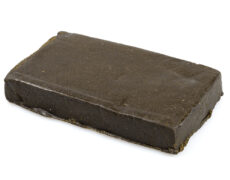
Max CBDCHARAS
CBD HASH | CBD<45%
Starting from:HALLOWEEN SALE -10%
0,90 €0,80 €/gGrams5 10 20 50 100 200 -
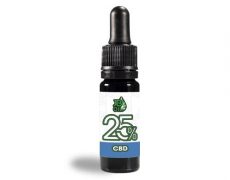
JB OIL 25%Starting from: 14,90 €
CBD Oil 25%
The idea that there is one single CBD law covering the entire European market can be misleading. Regulations continue to evolve, national authorities may apply different approaches and product categories are treated differently. A CBD flower, a CBD oil, a CBD extract and products falling under Novel Food regulations do not sit in the same drawer, even if search engines sometimes throw them together. They do not necessarily follow the same rules. The same term, CBD, can refer to very different products with very different requirements.
Why one-line answers fail in CBD retail in Europe
CBD retail in Europe is not a single shelf with one label. Which means that it is not governed by one single rule or one universal product category. It is shaped by several overlapping factors: the EU hemp framework, national regulations, product category, THC limits, labelling requirements, documentation and local enforcement practices. This is why a sentence such as CBD is legal in Europe is often too broad to provide a useful answer. The same acronym — CBD — can appear in very different contexts. CBD products may be discussed as hemp-derived products, oils, cosmetics, Novel Food applications, flowers, extracts or other hemp material. Each category can involve different regulatory conversations.
The first practical lesson is simple: a local example should not automatically become a European rule. It is important to avoid turning a city story into a rule. A Barcelona coffee-shop article, for example, does not represent the entire CBD retail market in Europe. Local venues, tourism rules and cannabis-club discussions can distract from the key question: what product is being sold, under which category and with what supporting documentation?
For regulatory content, shortcuts can quickly become outdated. Reliable information requires checking current official sources and clearly indicating when regulatory information has been reviewed.
Read also: CBD Flower Legal Framework: The Rules Behind The Label
The EU hemp framework and the 0.3% THC threshold
At European Union level, hemp is considered within the framework of agricultural rules concerning industrial hemp varieties. The European Commission explains describe hemp (Cannabis sativa L.) as a plant with very low THC content and refers to the 0.3% THC threshold in the context of the Common Agricultural Policy.
This threshold is an important reference point, but it does not answer every question related to CBD retail regulations in Europe. A THC limit alone does not automatically define how every CBD product category is treated. The Commission also notes that EU countries may apply more restrictive rules in line with EU treaties and international obligations. This is the important part many quick summaries miss. Different aspects (including flowers, oils, extracts, labelling requirements and retail conditions) may depend on additional rules and national approaches.
The European framework provides a common reference for hemp cultivation, while individual countries may introduce specific requirements within the limits of EU law and international obligations. This is why retailers, publishers and consumers should avoid assuming that one threshold determines the complete legal status of every CBD product.
This is why CBD retail rules Europe is a better keyword than a vague “is CBD legal” question. It reminds us to read the layers in order: EU hemp context first, product category second, country rules third, product documents always.

National rules matter more than slogans
European countries do not always approach CBD products in the same way. Some focus strongly on THC levels. Others place greater attention on the product format, Novel Food authorisation, cosmetics regulations or specific local retail channels. In some cases, national approaches may also change following court decisions, agency updates or new market reviews.
The EUDA FAQ on commercial cannabis-derived products is a useful official reference point because it presents low-THC products as an area where legal and regulatory approaches differ across Europe. You can consult this context in the EUDA cannabis laws in Europe FAQ.
For blog content, the editorial rule should be strict, clear, and consistent: never transfer a regulation from one country to another country page without checking a current and reliable source. Even small wording differences matter. Term such as permitted, tolerated, authorised, not prohibited, and commercially available do not have the same legal meaning and should not be used interchangeably.
That may sound like hair-splitting, but it protects the reader. If a rule depends on the country, the product category or the date of reference, the content should clearly state this. A cautious and precise explanation is always better than a confident statement that may become incorrect after the next regulatory update.
Novel Food, oils and product categories
Novel Food is one of the main reasons CBD rules in Europe can sometimes appear complex. Within the EU regulatory framework, Novel Food authorisation is a specific pathway related to the food market. It is relevant when CBD is framed as a food ingredient or food product, but that does not make every CBD product a food product.
The European Commission provides the general authorisation framework on its Novel Food authorisations page. For editorial content, the key point is simple: food authorisation is a specific regulatory pathway, not a universal label that can be applied to every CBD format.
CBD oil pages require extra care because the term oil can refer to different commercial contexts. A technical CBD oil page should focus on elements such as ingredients, carrier oil, label language, batch information and certificate availability. It should not be written as a food-related page unless the specific product and legal framework genuinely support that approach. For this product category, keep the CBD oil page separate from broad legal statements.
CBD flowers require a different regulatory and editorial approach. The relevant terms include hemp, flower, cannabinoid profile, aroma, appearance, THC threshold and batch documentation. Combining CBD flower information with Novel Food explanations can be misleading and make the contest less precise rather than more complete. Clear separation between product categories helps readers better understand the differences between CBD oils, CBD flowers, and other CBD products, while avoiding misleading legal assumptions.
Labels, THC values and analysis documentation
Retail rules become easier to understand when a page clearly separates public-facing information from measured data. A product label can describe the product category and main characteristics. A batch document can provide verified cannabinoid values. A category page can explain the general information and product ranges. Each element has a specific role.
For CBD flowers, THC values should always be linked to reliable certificates and batch reports, rather than presented through generic statements. For CBD oils, information about the carrier oil, ingredients, and product composition should be transparent and easy to find. For CBD hash and CBD extracts, details about texture, format and cannabinoid documentation should stay close to the product description.
Justbob carries out constant analyses on all commercialised products and on every individual lot. The relevant analysis documents are available directly on each commercialised product page, allowing readers to check the documentation associated with the specific product they are interested in.
This is the less visible part of quality control, but it is also one of the most important. A page can have polished wording and attractive descriptions, but the document trail is what makes product information verifiable. In a regulated CBD market, a clear lot number and accessible analysis documents are more meaningful than any promotional adjective.
How Justbob frames CBD products
Justbob frames CBD products with a compliance-first approach based on clear principles: EU producers, industrial hemp, product documentation, technical and ornamental positioning, age-gated access, and careful category-specific language. This approach may sound less exciting than a tourist guide, but it creates content that is more accurate, reliable, ans suitable for a professional shop.
For CBD flowers, the most effective editorial approach is to describe the flower format, aroma notes, appearance, cannabinoid information and certificate availability. For CBD hash, the focus naturally shifts toward resin characteristics, density, texture and batch documents. Each product category should maintain its own terminology and avoid mixing different regulatory or technical concepts.
The same principle applies throughout the website: do not claim more than what the product page and available documentation can demonstrate. If contexts refers to THC values, it should be supported by appropriate documentation. If it discusses about country-specific rules, it should include reference date and reliable source. If it describes a product category, it should remain consistent with that category’s characteristics and regulatory contexts.
There is also an important human element to this approach: good compliance content does not have to be complicated or boring. It can be reassuring, clear, and easy to understand. Think of it as a well-organised passport folder before a long journey: it may not be the most exciting part of the trip, but having the right documents ready makes everything smoother.
Read also: Where is marijuana legal in Europe? | Justbob – CBD Weed

Why dates and sources matter
CBD retail rules Europe content should always include a date of review when it discusses current regulations. This article was updated on 30 May 2026. That does not freeze the law, which is not permanently fixed; it simply informs readers when the regulatory information was last checked against official sources.
Dates matter because CBD regulations and related guidance can change over time. A national authority may issue new guidance. A court decision may influence legal interpretation. A Novel Food authorisation process may progress, or a specific product category may be evaluated differently from another.
Sources matter because third-party summaries can often simplify or remove important details. Official regulatory pages may not always be the easiest material to read, but they remain the most reliable starting point for CBD legal content. A blog article can translate the logic into plain English, but it should complement, not replace, the source.
The safest editorial habit is simple: explain the general principle, provide a link to the relevant official source, and avoid universal statements when national CBD rules may vary between countries. This approach keeps content accurate, useful, and transparent, while avoiding the impression of providing legal advice across every European jurisdiction.
Final notes on CBD retail rules in Europe
CBD retail rules in Europe are best understood as a layered framework rather than a single rule. The EU hemp framework provides a common reference point, while Novel Food rules become relevant for products placed on the food market. At the same time, national regulations define many practical aspects of retail, and each product category determines which regulatory questions need to be considered. Batch documents and product analyses then provide the evidence needed to make product information verifiable.
For Justbob, the key editorial principle is to present CBD products within their correct context: hemp-derived, EU-produced, properly documented, technically described, and positioned according to the applicable product category. Clear information about labels, THC values, and analysis documents is more valuable than broad legal claims that may not apply equally across all European markets.
A precise and transparent approach helps readers better understand the differences between products, regulations, and national frameworks, while keeping content accurate and easy to verify.
🌿 Want to know more about the CBD cannabis products available in our catalog? Visit the Justbob online store.
Frequently asked questions about CBD retail rules Europe
Are CBD retail rules the same across Europe?
No. EU hemp rules provide an important reference point, but national rules and product categories can change the retail picture from country to country.
Why do CBD rules change by country?
CBD rules change by country because each market can apply national restrictions, authority guidance and product-category rules. That is why current official sources matter.
Is this article legal advice?
No. This article is an editorial overview of CBD retail rules in Europe, updated on 12 May 2026, and it should not replace professional advice or current official checks.