Modified on: 28/08/2026
Reading Hemp Plant Fibre And Seeds Through Industrial Uses
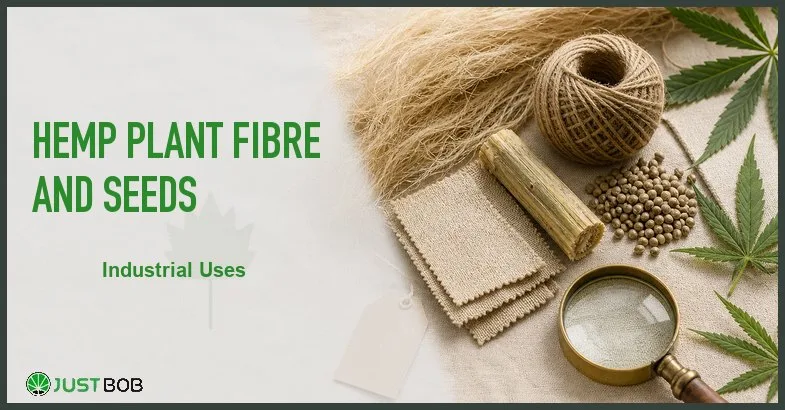
Hemp is a multi-use agricultural plant. Beyond the cannabinoid catalog, the fibre and the seeds of Cannabis sativa L. have a long industrial track record, with documented applications in textile, paper, biocomposite and seed-fraction categories across European agriculture. This Justbob guide explores hemp plant fibre and seeds as the industrial side of the same plant, together with the framework references associated with each application.
-
 Max CBDAMNESIA CBD BOOST
Glasshouse | CBD<40%
Starting from:FLASH SALE -10%
0,85€0,75€/gGrams5 10 20 50 100 200 400 -
Max CBDAK47 CBD BOOSTStarting from: 1,45€/g
Indoor | CBD<47%
Grams5 10 20 50 100 200 -
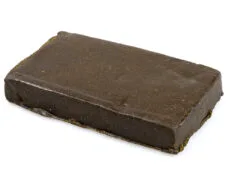
Max CBDCHARASStarting from: 0,90€/g
CBD HASH | CBD<45%
Grams5 10 20 50 100 200 -
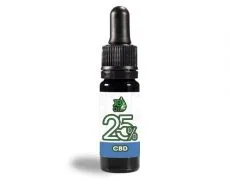
JB OIL 25%Starting from: 14,90€
CBD Oil 25%
The aim is to map the wider plant economy. Through a few examples, the distinction between the cannabinoid side and the industrial side of hemp becomes clear across different product pages.
What “hemp plant fibre and seeds” means
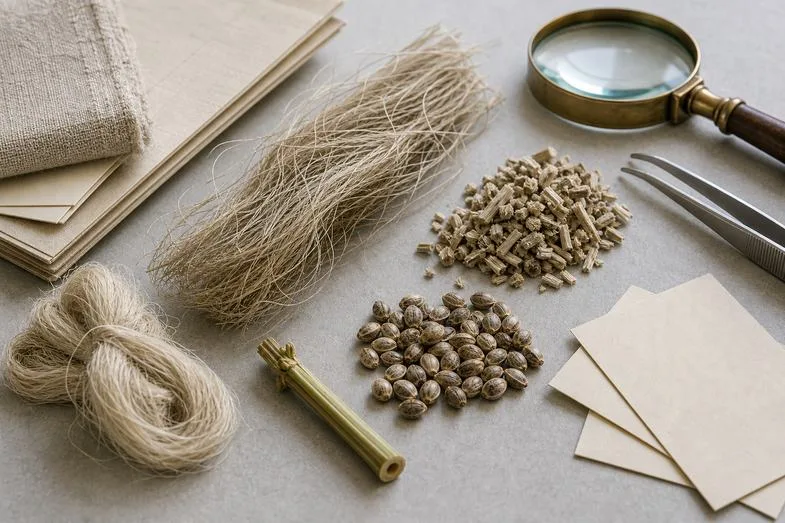
Hemp plant fibre and seeds are two distinct industrial fractions of Cannabis sativa L. Fibre comes from the stem and consists of two distinct layers: bast fibres, found in the outer layer and the hurd, or woody core, found inside. The seeds come from the inflorescence after fertilisation, with oil and protein fractions tracked in agricultural and material documentation.
For readers interested in CBD flowers, fibre and seeds represent the older and broader side of the hemp economy. While cannabinoids are primarily associated with the flower, many traditional and industrial applications are based on the stem and seeds. In other words, the same plant supports different uses and industries, depending on which part of the plant is being considered.
For this reason, we believe the most useful hemp-related resources should clearly distinguish between these different plant fractions. The term hemp products can refer to fibre and seed products, cannabinoid-based products, or both. The clearest and most informative pages make this distinction explicit, helping readers understand which part of the plant each product comes from.
Read also: Legal male hemp plant: what are the uses?
Bast fibres: the structural outer layer
Bast fibres are the long, strong fibres found in the outer layer of the hemp stem. Running lengthwise along the stem, they provide the structural support that allows the plant to grow upright, reaching three to four metres in height in industrial fibre varieties. The fibres are extracted through a process known as retting, in which the stems are exposed to controlled moisture and humidity, allowing microbial activity to break down the tissues that bind the bast fibres to the inner core.
The mechanical properties of hemp bast fibres are well documented. Their tensile strength is comparable to that of flax, while fibre length can reach one to two metres in well-retted stems. These properties make hemp bast fibres suitable for a wide range of applications, including textiles such as canvas, rope, twine and fabrics, as well as specialty papers and biocomposite materials, including insulation panels and automotive components.
Several European countries, including France, Italy, Spain, Portugal and Germany, have centuries-old traditions of hemp fibre cultivation, closely linked to maritime, textile and paper industries.
Hurd: the woody core
The hurd is the woody core of the hemp stem, the inner fraction that remains after the bast fibres are separated. It consists of short, lignified fibres with a porous structure, giving it a low density and a strong insulating properties. The same fraction is sometimes referred to ad shiv or shives in industrial documentation.
The hurd has found a significant modern application in hempcrete, a biocomposite construction material that combines hemp hurd with a lime binder. Hempcrete walls have been used in European construction since the late 1980s, with the French Isochanvre product introduced around 1986 as one of the first commercial formulations. The material offers natural insulation, hygroscopic regulation and a low embodied-carbon profile.
The hurd is also widely used as animal bedding, thanks to its strong absorbency in veterinary and equestrian applications. In addition, it serves as a horticultural substrate and as a feedstock for biorefinery applications across the wider hemp economy.
Hemp seeds: composition and oil fraction
Hemp seeds are the reproductive fraction of the plant, produced by female plants after fertilisation. The seeds are small, typically three to five millimetres in size, with a hard outer shell, or pericarp, and a soft inner kernel containing the oil, protein and carbohydrate fractions.
The composition of hemp seeds is well documented. They contain approximately 30 to 35% oil by weight, with a notable proportion of polyunsaturated fatty acids, including linoleic acid, alpha-linolenic acid, and gamma-linolenic acid).The protein fraction accounts for around 25%, while the carbohydrate fraction consists mainly of fibre, with a smaller starch component.
Hemp seeds can be seen in several forms, including whole seeds, hulled seeds (with the outer shell removed), pressed seed oil and seed cake obtained through mechanical processing.
Each of these forms belongs to the seed-fraction framework and remains distinct from the cannabinoid framework that covers CBD products.
Hemp seeds are available in several forms, including whole seeds, hulled seeds (with the outer shell removed), pressed seed oil and seed cake obtained through mechanical processing.
Each of these forms belongs to the seed-fraction framework and remains distinct from the cannabinoid framework that covers CBD products.
This distinction is also important when comparing hemp seeds with hemp flowers, which are separate parts of the plant with different structures and roles. For a closer look at the differences between these two parts of the plant, take a look at our article Hemp Seeds vs Hemp Flowers: What’s the Difference?
Hemp seed oil vs CBD oil: two different products
Hemp seed oil and CBD oil are two distinct products derived from the same plant, with very different regulatory and compositional profiles. Hemp seed oil is obtained from the seeds through cold pressing or expeller pressing. It contains no measurable CBD or THC because cannabinoids are concentrated in the trichomes of the inflorescence rather than in the seeds. The label usually identifies it as “Cannabis sativa L. seed oil” or “hemp seed oil”.
CBD oil, on the other hand, is obtained from the inflorescence or the whole aerial parts of the plant through controlled extraction methods, such as CO2 supercritical extraction, ethanol extraction or other methods. It contains CBD as its main cannabinoid, with a complete cannabinoid profile typically reported in the Certificate of Analysis. The product is generally labelled as “CBD oil” or “full-spectrum hemp extract.”
This distinction is important because the two products fall under different regulatory frameworks. Hemp seed oil is regulated within the broader seed-oil framework, while CBD oil falls under the EU industrial hemp framework on the cultivation side and under national commercial provisions at the retail level.
Industrial applications of hemp fibre
The industrial applications of hemp fibre span a wide range of sectors, including textiles, paper, biocomposites and specialty materials. In the textile industry, hemp fibre is used for canvas, rope, twine, sailcloth and modern fabrics. In papermaking, it is used for specialty papers, including banknotes, archival papers and technical papers, where its long fibres provide specific tensile and durability properties.
Biocomposite applications have expanded significantly over the past two decades. Hemp bast fibres can be combined with thermoplastic matrices to produce automotive components, with lime binders for hempcrete walls, and with other natural fibres to manufacture insulation panels. The renewable nature of the fibre, together with its low embodied-carbon profile, makes hemp an increasingly attractive material for sustainable construction.
European fibre and biocomposite production has grown alongside the broader bio-based economy framework. Several EU Member States, including France, Italy, the Netherlands and Germany, host industrial hemp fibre processors that supply the textile and construction sectors with cultivated raw material.
Industrial applications of hemp seed
The industrial applications of hemp seed span several areas, including seed oil, seed cake, agricultural input and technical formulation categories. Whole or hulled seed fractions are used across agricultural supply chains; while pressed seed oil represents a distinct seed-oil fraction. The remaining seed cake is produced as a by-product of mechanical pressing and can be further used in different industrial applications.
The agricultural input side of the seed economy includes whole or partially processed hemp seeds supplied for livestock and other agricultural uses. In this context, factors such as the oil profile, seed-cake fraction and traceability documentation are more relevant than consumer-facing descriptions of the product.
European production has grown steadily over the past twenty years, with hemp seed cultivation hubs in France, Italy, Hungary and Romania supplying seed oil and agricultural seed fractions to the wider European market.
The EU industrial hemp framework for fibre and seed
The cultivation of hemp fibre and seed falls within the EU industrial hemp framework established by Regulation (EU) 2021/2115 and related agricultural provisions. Under this framework, the cultivated variety must be registered in the Common Catalogue of Varieties of Agricultural Plant Species and must comply with the applicable total THC threshold of less than 0.3 percent at harvest.
Industrial hemp varieties grown for fibre and seed are generally distinct from those cultivated for cannabinoid extraction, as they have different agronomic profiles. Fibre varieties tend to be tall and unbranched, with a focus on stem biomass, while seed varieties are generally shorter and more branched, with a greater focus on seed yield.
These differences are also reflected in the plant’s overall structure, as explained in the article about hemp plant anatomy.
Some varieties are dual-purpose, producing both fibre and seed in commercially relevant quantities.
Within the agricultural framework, hemp is treated as a crop alongside cereals, oilseeds and forage crops, with agronomic rules adapted to the specific characteristics of the species.
The Common Agricultural Policy (CAP) also supports hemp cultivation under the same broader scheme that applies to other registered crops.
A short history of hemp fibre and seed processing
The fibre and seed side of hemp has a long history of processing within European agriculture. For centuries, bast fibre was retted, broken and spun into rope and cloth, while the hurd left over from the process was treated as a low-value by-product, long before hempcrete gave it a more significant role in construction. The seed followed a parallel path, being pressed for oil or retained for sowing as part of traditional agricultural and food-supply systems.
From a documentation perspective, the USDA bulletin Hemp Hurds as Paper-Making Material” (1916) provides an interesting historical reference. It examined the hurd, the discarded inner core of the stem, and demonstrated its technical potential as a paper-making feedstock on an industrial scale. It was among the early studies to consider the two stem fractions as separate resources rather than treating hemp as a single material.
This distinction between bast, hurd and seed remains central to how hemp is understood today. The current EU framework, established under Regulation (EU) 2021/2115, brings this long agricultural tradition into a structured system of registered varieties and documented cultivation, with agronomic rules adapted to fibre-oriented, seed-oriented and dual-purpose crops.
How Justbob references hemp fibre and seed framework
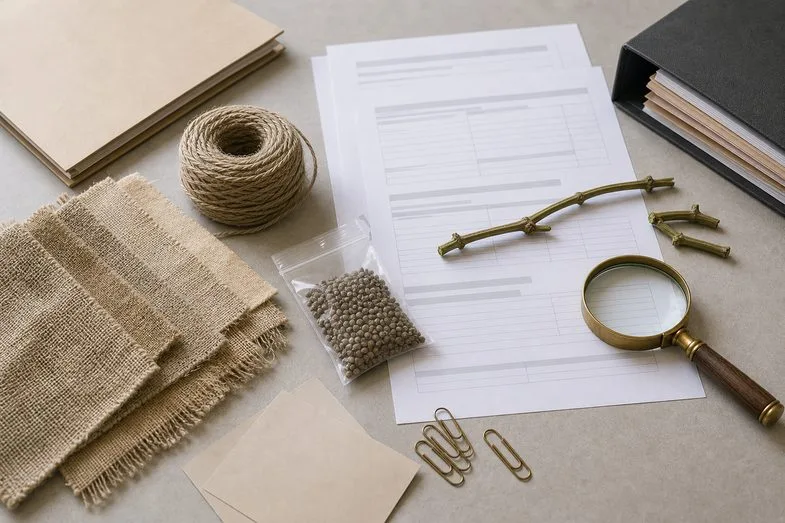
Justbob carries out constant analyses on all commercialised products and on every batch. The relevant documentation is available on each product page, allowing readers who want to check the analytical information behind a specific lot to access the Certificate of Analysis directly from the catalogue.
The Justbob catalogue focuses primarily on the cannabinoid side of the hemp economy, including CBD flower, CBD hash, CBD extracts and CBD oil. However, the agricultural foundation behind these products is connected to the same broader hemp framework that also covers fibre and seed cultivation. The variety indicated on the label, the cultivation framework described on the product page and the analytical documentation for each lot all form part of this wider regulatory and agricultural context.
Understanding this shared foundation provides a useful way to read the different areas of the hemp industry. The Common Catalogue, the THC threshold and the Common Agricultural Policy (CAP) framework are also relevant to fibre and seed cultivation, with agronomic requirements adapted to the specific purpose of each crop.
Compliance-safe wording on hemp uses
Compliance-safe wording around hemp plant fibre and seeds should remain within agricultural and material context. A description such as “Industrial hemp variety registered in the EU Common Catalogue, cultivated for fibre and seed applications under the Common Agricultural Policy framework, with documented bast fibre yield and seed oil content” provides factual information about the product and its intended application. By contrast, wording such as “Premium-grade hemp with everything you can imagine” is primarily promotional rather than descriptive.
CBD products are sold for technical, scientific and ornamental purposes only, in line with the EU industrial hemp framework. References to fibre and seed applications, variety names and different product categories help place individual products within the broader hemp economy. They are descriptive references rather than instructions, health claims or recommendations for use.
For readers exploring the wider hemp landscape, a simple distinction can be useful: when wording connects the plant to its documented agricultural or industrial framework, it is providing context and classification. When it instead encourages a particular action or makes claims about what a product can do, it moves beyond that compliance-safe approach.
A closing reading habit for hemp plant fibre and seeds
Understanding hemp plant fibre and seeds starts with a few basic distinctions. Bast fibres and hurd are separate parts of the stem, while the seed fraction represents a distinct product category. It is also important to distinguish hemp seed oil from CBD oil and to identify the cultivated variety through the Common Catalogue.
For a broader regulatory perspective, the European Commission’s information on hemp provides a useful starting point, with references to the Common Catalogue of Varieties, Regulation (EU) 2021/2115 and related agricultural documentation covering fibre, seed and cannabinoid cultivation.
🌿And if you would like to explore the cannabinoid side of the hemp plant in more detail, you can also take a look at Justbob CBD flower selection, where you can find further information on the varieties and products available.
Frequently asked questions about hemp plant fibre and seeds
What are the two main fibre fractions in a hemp stem?
The two main fibre fractions in a hemp stem are the bast fibres (the long, strong fibres of the outer layer used for textile, rope, canvas and biocomposite applications) and the hurd (the woody core used for hempcrete construction, animal bedding and paper production).
Is hemp seed oil the same as CBD oil?
No. Hemp seed oil comes from the seeds through cold pressing and contains no measurable CBD or THC. CBD oil comes from the inflorescence or aerial parts through controlled extraction and contains CBD as the main cannabinoid. The two products sit under different regulatory frameworks and have very different compositional profiles.
How does the EU industrial hemp framework apply to fibre and seed cultivation?
The EU industrial hemp framework set by Regulation (EU) 2021/2115 requires the cultivated variety to be registered in the Common Catalogue of Varieties of Agricultural Plant Species and to respect the total THC threshold of less than 0.3 percent at harvest. The framework applies to fibre, seed and cannabinoid cultivation, with adjusted agronomic rules for each application.