
Modified on: 17/09/2026
Hemp plant anatomy: a simple botanical map for reading product pages
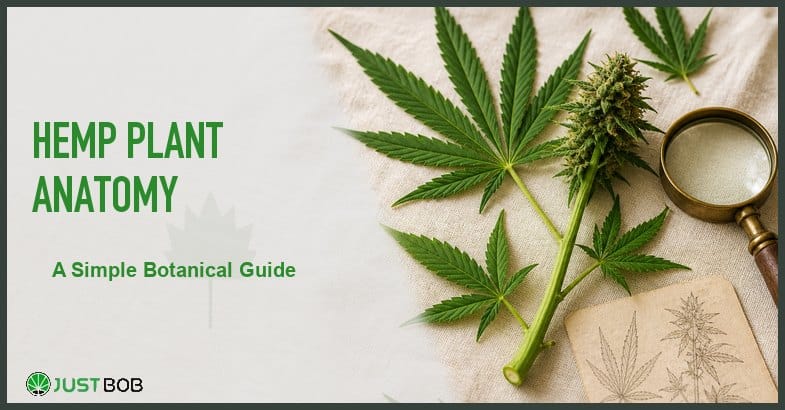
Hemp is a familiar word but a fuzzy mental picture. Most readers know it as a plant; fewer would draw a quick sketch of where the flowers grow, how the leaves are organised or what the trichomes do.
This guide walks through hemp plant anatomy with the product page in mind. The aim is to give a botanical vocabulary that makes a CBD flower description easier to read, from the bud in the photo to the resin in the close-up.
-
 Max CBDAMNESIA CBD BOOSTStarting from: 0,85€/g
Glasshouse | CBD<40%
Grams5 10 20 50 100 200 400 -
Max CBDAK47 CBD BOOSTStarting from: 1,45€/g
Indoor | CBD<47%
Grams5 10 20 50 100 200 -
Max CBDCHARAS
CBD HASH | CBD<45%
Starting from:FLASH SALE -10%
0,90€0,80€/gGrams5 10 20 50 100 200 -
JB OIL 25%Starting from: 14,90€
CBD Oil 25%
The plant is Cannabis Sativa L., the species used for industrial hemp in the EU framework. Its structure is broadly the same whether the variety is grown for fibre, for seeds or for cannabinoid-rich flowers.
Read also: Hemp Flower Aroma And Texture: What To Notice – Justbob
The overall structure of a hemp plant
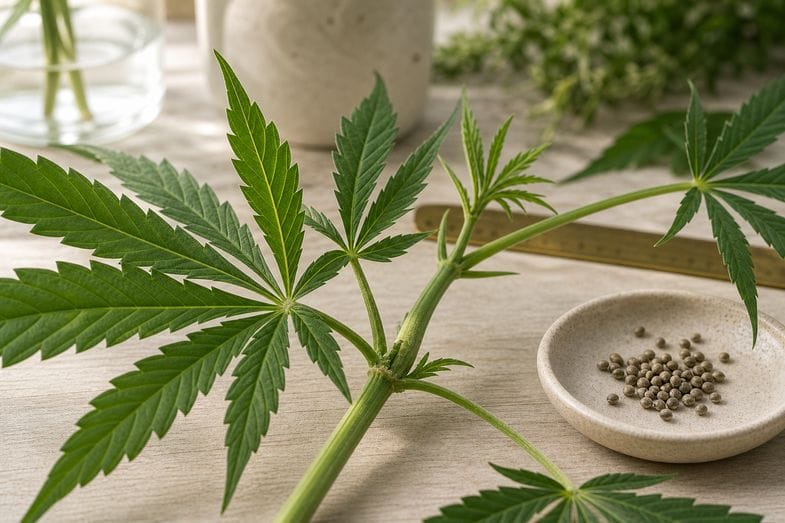
A hemp plant is built like a tall, branching herb. From a central taproot, the stem rises upward, sometimes reaching two or three metres in field-grown industrial hemp, with paired branches departing from successive nodes along the way. Each node carries a pair of opposite leaves at the lower portion of the plant; higher up, the leaves can become alternate, with one leaf per node.
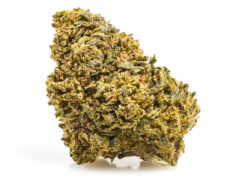
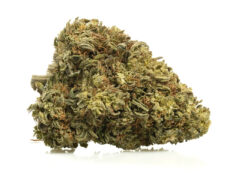
The flowers grow at the tops of the main stem and at the ends of the branches, in dense clusters called inflorescences. The visible bud on a CBD flower product page is one of these inflorescences, dried and prepared for the catalog.
For the reader, this overall plan matters because the product is a specific part of a much larger plant. The bud in the photo is a small section taken from the upper inflorescence; the rest of the plant (roots, stem, fan leaves) does not enter the catalog in flower form.
The stem and the structural side of the plant
The hemp stem is hollow and fibrous, and it carries one of the oldest commercial uses of the species: textile fibre. Industrial hemp fibre has been spun and woven for thousands of years; archaeological references include hemp cordage in the Yangshao culture of the Henan province in China, dated to between 5000 and 3000 BCE, which gives the species one of the longest documented textile histories of any plant.
For CBD flower products, the stem is not the part of interest. The catalog focuses on the inflorescence and its resin glands. But knowing that the stem has its own commercial history helps the reader understand why hemp varieties differ: fibre-focused varieties are bred for tall, straight stems with limited branching, while flower-focused varieties are bred for dense, resinous inflorescences with shorter, bushier growth.
The European Catalogue of varieties of agricultural plant species includes hemp varieties for both fibre and flower production, and the registered variety on a CBD flower label tells the reader which lineage the bud belongs to.
The leaves: fan leaves and sugar leaves
Hemp has two main leaf types in the context of the inflorescence.
The fan leaves are the large, palmate leaves with five to nine slender leaflets, organised in a flat, hand-like silhouette. They photosynthesise for the plant and stay green-to-yellow through most of the growth cycle, but they carry comparatively little resin.
The sugar leaves are the smaller leaves that grow inside the flower cluster, immediately surrounding the bracts. They are often glistening with trichomes (hence the nickname “sugar“), and they are partially removed during the trimming process. A well-trimmed CBD flower has the fan leaves removed and most of the sugar leaves trimmed away, leaving the dense bud visible.
For the reader, the distinction between fan leaves and sugar leaves explains the “trim quality” vocabulary on CBD flower product pages. A close-trimmed bud shows mostly the inflorescence; a less-trimmed bud may still carry visible sugar leaves around the bracts.
The flower (inflorescence): the part on the product page
The hemp flower as it appears on a product page is technically the female inflorescence of the plant. Hemp is naturally dioecious, as to say male and female flowers on separate plants, with female plants producing the resin-rich clusters used for CBD products. Modern cultivation often selects feminised seed lines, so that fields contain only female plants and the resulting inflorescences develop with consistent characteristics.
The flower is made of small floral units called calyxes, which carry the trichomes and the seeds (when pollination occurs). On a CBD flower product page, the visible bud is a cluster of calyxes packed densely together, with the bracts and pistils contributing to the visual texture.
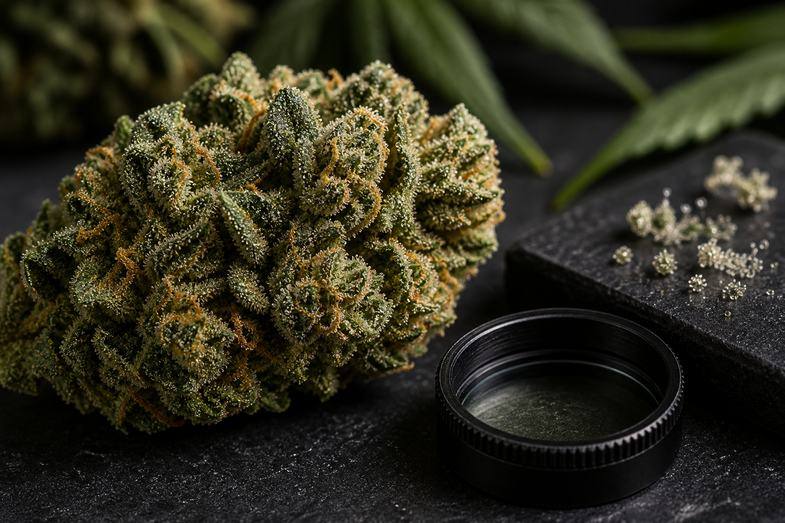
The pistils, the small hair-like structures that often appear in orange or amber tones on a mature flower, are part of the reproductive anatomy of the calyx. They are visible on close-up product photos and contribute to the colour balance described on the page.
The trichomes and where the resin sits
The trichomes are the small resin glands that grow on the surface of the flower, on the sugar leaves and on parts of the bracts. They are visible under a magnifier as tiny mushroom-shaped structures with a stalk and a bulbous head; without magnification, they read as a frosted layer that catches the light.
Most of the cannabinoids (CBD, CBG, CBN, CBC, THC) and most of the terpenes are stored in the trichomes. When a CBD flower page describes a resin-rich bud, it is describing a dense layer of trichomes on the surface. When the page mentions an aroma profile, the molecules behind that aroma live in the trichomes.
A short historical note frames the trichomes nicely. The first detailed botanical descriptions of cannabis trichomes date back to the nineteenth century, when optical microscopy reached enough resolution to distinguish the different glandular shapes (capitate-stalked, capitate-sessile, bulbous) on the leaf and flower surface. When a CBD flower page mentions a frosted layer or a snowy texture on the bud, that wording is shorthand for “the trichome density is visible at the photo’s resolution“.
For the reader, this also explains why two flowers of the same registered hemp variety can look slightly different: the trichome density depends on harvest moment, sunlight exposure during flowering and post-harvest handling.
The roots: out of frame but worth mentioning
Hemp roots form a deep taproot in field-grown plants, with a network of lateral roots branching from it. The root system is rarely shown on product pages, but it is part of why hemp is also studied as a phytoremediation crop: it can absorb soil contaminants during cultivation.
For CBD flower production, the root system matters because it shapes how the plant takes up nutrients and water during growth. Variation in soil and irrigation produces variation in the cannabinoid profile of the final flower.
For the reader, the root is the part of the plant that is implicit on a CBD flower page. The product description does not show it, but it influences the agricultural story that ends up in the bud.
Sativa, indica and the species behind the names
Botanically, all the hemp varieties registered in the EU Catalogue are classified as Cannabis Sativa L. The “sativa” and “indica” labels that appear in some product copy refer to phenotypic groupings (taller, narrow-leaf vs shorter, broad-leaf) rather than to two distinct biological species. Modern botany increasingly groups them as varieties or chemotypes within one species.
For a CBD flower product page, this means the species line is consistent across the EU industrial hemp framework: Cannabis Sativa L., registered variety, less than 0.3 percent THC at harvest. The visible differences between varieties come from selective breeding within that single species.
For the reader, this simplifies the botanical map. One species, many varieties, one consistent regulatory backbone. For the wider regulatory framework that anchors hemp anatomy to EU agriculture, the European Commission hemp page is a useful background reading.
How Justbob keeps the botanical data visible
Justbob carries out constant analyses on all commercialised products and on every batch. The relevant documents are available inside each commercialised product page, so a reader who wants to confirm the registered hemp variety, the cannabinoid profile or the terpene composition for a specific lot can open the certificate of analysis directly from the page.
The botanical vocabulary, in other words, is anchored to verifiable documents. A CBD flower page does not just describe the plant in general terms; it points to the analytical document that maps the chemistry of the specific bud in the photo.
Reading a CBD flower page through the anatomy lens
Knowing hemp plant anatomy changes how a CBD flower page reads. The bud in the photo is an inflorescence, not a generic plant part. The trim notes describe the removal of fan leaves and most sugar leaves. The aroma description points to the molecules stored in the trichomes. The resin layer mentioned in the texture is the same trichome layer in close-up.
When a page describes “dense buds with visible trichome coverage and pistil tones in the orange range”, it is using exactly the botanical vocabulary covered in this guide. The reader who has the anatomy map in mind can interpret that sentence in seconds.
A closing reading habit for hemp plant anatomy
The five anatomical parts to keep in mind are stem, fan leaves, sugar leaves, inflorescence and trichomes. The product page focuses above all on the inflorescence and the trichomes: the bud shown in the photograph is the flower cluster, while the frosted appearance comes from the resin-rich trichomes that cover its surface. The trim quality, meanwhile, tells you how much of the surrounding sugar leaves remains visible, while the registered variety and cultivation information place that particular flower within its broader botanical and agricultural context.
With this simple map in mind, reading a CBD flower product page becomes much easier. Instead of treating terms such as dense buds, resinous surface, visible pistils, sugar leaves or trichome coverage as marketing language alone, you can connect each description to a specific part of the plant. The same applies to laboratory information: the botanical identity tells you what plant and variety you are looking at, while the certificate of analysis provides the analytical data for the specific batch.
If you want to put this vocabulary into practice, explore the CBD flower selection on Justbob and use the product pages to compare varieties, appearance, cannabinoid profiles and available batch documentation. Take a closer look at the flower photographs, read the botanical descriptions and check the accompanying analyses to build a clearer picture of what you are actually looking at.
🌿 Discover the Justbob range and start reading CBD flower product pages with a more informed botanical eye.
Frequently asked questions about hemp plant anatomy
What part of the hemp plant ends up on a CBD flower page?
The CBD flower visible on a product page is the dried female inflorescence of the plant, made of densely packed calyxes covered in trichomes. The fan leaves and most sugar leaves are removed during trimming.
Where do the cannabinoids and the terpenes live in the plant?
Most of the cannabinoids and terpenes are stored in the trichomes, the small resin glands on the surface of the flower and the surrounding bracts. The rest of the plant carries comparatively little.
Is the registered hemp variety visible from the plant anatomy?
Some characteristics are visible: leaf shape, branching habit, inflorescence density. The registered variety on the product page provides the full classification, with the analytical document confirming the cannabinoid and terpene profile.