Modified on: 17/09/2026
How To Read CBD Hash By Shape: A Simple Guide to What You Are Seeing
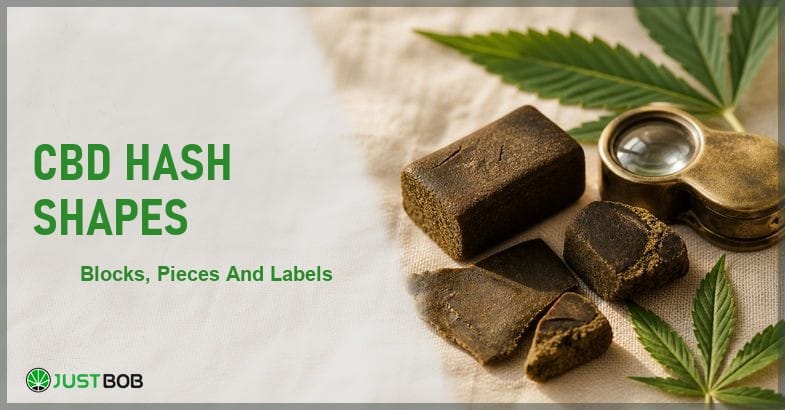
A piece of CBD hash can come in more than one form: a neat pressed block, a rounded nugget, a thin slab, or a handful of loose crumbs in the corner of a jar. The shape isn’t just about appearance . It can offer useful clues about how the resin was gathered, pressed and handled before it made its way into the product photo. In this Justbob guide we will look at the most common CBD hash shapes, what the surface and edges can tell you and how to compare what you see with the product label and batch documents. No mystery, no guesswork, just a clearer way to understand what you are looking at when you browse a hash listing.
-
 Max CBDAMNESIA CBD BOOSTStarting from: 0,85€/g
Glasshouse | CBD<40%
Grams5 10 20 50 100 200 400 -
Max CBDAK47 CBD BOOSTStarting from: 1,45€/g
Indoor | CBD<47%
Grams5 10 20 50 100 200 -
Max CBDCHARAS
CBD HASH | CBD<45%
Starting from:FLASH SALE -10%
0,90€0,80€/gGrams5 10 20 50 100 200 -
JB OIL 25%Starting from: 14,90€
CBD Oil 25%
This is about product literacy, not a buyer’s verdict. Read on, and you will be able to look at a hash photo, identify the format in front of you, and know which detail on the page actually confirms it.
What we mean by CBD hash shapes
CBD hash shapes are simply the physical forms that pressed hemp resin takes after it has been collected and worked. Shape is descriptive vocabulary, much like distinguishing between a baguette and a tin loaf.
It tells you about format and how the product has been handled, not about its quality or rank.
This is the most useful way to look at it: shape describes, it does not make promise. A block and a slab can come from the same registered variety and the same batch. The difference may simply be in how they have been pressed and cut. Keeping that distinction in mind helps avoid unnecessary guesswork later, especially when a product listing makes one shape sound more impressive than another.
Blocks, pieces and pressed forms
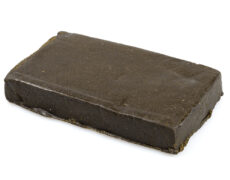
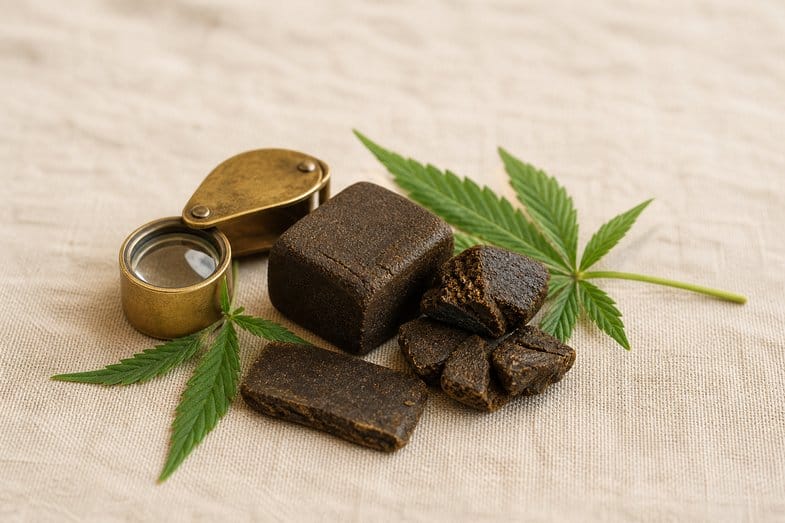
Most of what you will see in 2026 catalogue falls into a handful of common formats. A pressed block is the classic shape: compact and rectangular, with flat faces and relatively sharp edges.
A slab is thinner and wider, more like a tile than a brick. Broken pieces are fragments snapped from a larger block, so their edges are irregular and their surfaces uneven. A nugget or ball is rounded rather than cut, shaped by hand or through tumbling rather than by a press. Loose or crumbled hash sits at the soft end, where the resin holds together only lightly.
Surface and color cues
Once you have identified the format, the surface fills in the rest of the picture. A freshly pressed face often has a faint sheen, a soft pressed gloss that catches the light. A drier surface looks more matte and granular. Edges can be clean and defined on a machine-pressed block, or rounded and worn on a hand-shaped piece.
Color can range across a wide band, from pale blond through amber to deep brown, depending on the variety and how the resin was separated.
What characterises CBD hash can also be understood by looking at its shape, surface, colour and the way the resin has been pressed and handled.
The range of CBD hash colours can provide useful visual clues, while the laboratory documentation remains the appropriate reference for verifying the product’s composition.
Color alone does not tell you much, and it certainly does not rank one piece above another. Shape is only one cue among several, and aroma is another useful detail to consider alongside it, as our guide on CBD Hash Aroma: How To Read Resin Notes sets out in more detail.
Photos, labels and batch documents
The product photo shows the shape, while the label and batch documents provide the confirmation. When you look at a hash listing, the photo tells you what the piece looks like, while the written information fills in the details. The label gives you the CBD percentage, the registered variety and the lot number. The certificate of analysis behind the listing provides the cannabinoid panel and the THC reading against the 0.3% threshold harmonised at European level.
The key habit is simple: match the shape you see in the photo to what is written on the page. If the listing shows a clean pressed block and the label, variety and lot all match the certificate, the information is consistent. The form you see and the figures you read should always belong to the same lot.
What shape should not promise
This is the part where a careful reading matters most. Shape is not a quality certificate. A glossy pressed face is not a guarantee, a sharp edge is not a grade, and a rounded nugget is not a sign of anything beyond how it was formed. Shape says nothing about effects, and it should not be treated as a substitute for the lab report.
If a page leans on a particular shape to suggest strength or some special status, that is marketing language doing the talking, not the resin itself. The honest version is much simpler: this is the format, here is the variety and here is the lab result. Everything a shape can responsibly tell you stops at description.
For official background on how CBD products are presented to the public, the Food Standards Agency CBD guidance is a useful neutral starting point. It also keeps the regulatory picture separate from the claims made by any individual product listing.
Where pressed shapes came from
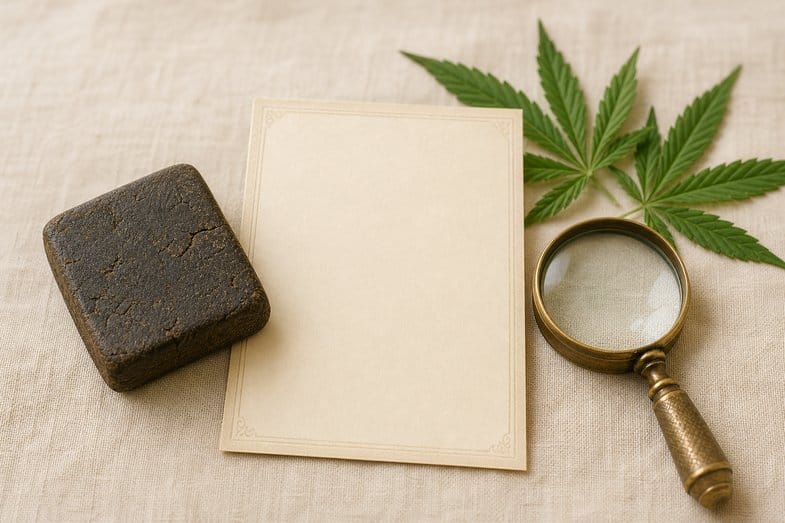
Pressing resin into a defined shape is an old practical tradition. For centuries, loose resin was worked into slabs, balls and blocks because a solid form is simply easier to weigh, store and transport than a heap of powder. The shape was originally about practicality and handling, long before it became a matter of style.
The modern chapter has a verifiable European footnote. In Amsterdam in the 1990s, Mila Jansen, often known as the “Hash Queen”, developed the Ice-O-Lator, a cold-water sieving method that separates resin gently using ice and agitation. The loose resin produced by a process like this can then be pressed into the blocks and slabs that are familiar today.
It is a useful reminder that modern resin shapes are rooted in a much longer history of processing and handling methods.
Read also: CBD Hash Texture: What Soft, Firm and Crumbly Can Mean
Shapes in the Justbob catalog
Justbob runs constant analyses across every commercialised product, batch by batch. Each product page holds the documents that go with it. A reader who wants to confirm the cannabinoid breakdown, the THC threshold compliance or the registered variety for a specific lot can open the certificate of analysis straight from the product page.
Every hash listing on the catalog sits inside the EU industrial hemp framework, produced by EU producers from registered hemp varieties, with THC kept at or below the 0.3% threshold harmonised at European level. Hemp resin is offered for technical, scientific and ornamental purposes only. Within that frame, the shape is read as what it is: a description of the format, placed next to the label and the document that carry the real detail.
Reading a shape in five quick checks
Putting it all together takes just a few simple checks. When looking at a CBD hash listing, a reader can follow the same five steps in roughly the same order each time. Start by identify the shape in the photo, then take a closer look at the surface and edges. Check the CBD percentage on the label and make sure it matches the registered variety. Finally, compare the lot number on the jar with the one listed on the certificate.
If everything lines up, the check is complete.
🌿Ready to take a closer look? Explore Justbob and discover our CBD selection and find your next favourite.
Frequently asked questions about CBD hash shapes
What are common CBD hash shapes?
The most common CBD hash shapes are the pressed block (compact and rectangular with flat faces), the slab (thinner and wider, closer to a tile) and broken pieces (irregular fragments snapped from a larger block). Two more round out the set: the nugget or ball (rounded rather than cut) and loose or crumbled resin that holds together only lightly. Each is a format description, telling you how the resin was pressed and handled rather than ranking one above another.
Can shape prove product quality?
No. A shape describes the physical form of the pressed resin and nothing more. A glossy pressed face, a sharp edge or a rounded nugget tells you about handling, not about quality, strength or any effect. The details that actually confirm a lot are the CBD percentage on the label, the registered variety and the THC reading on the certificate of analysis, not the form the piece happens to take.
Why check batch documents?
Batch documents tie the shape you see to the figures that matter. The certificate of analysis carries the cannabinoid panel, the THC value against the 0.3 percent threshold harmonised at European level, the registered variety and the lot number. Matching the lot number on the jar to the lot number on the certificate confirms that the piece in the photo and the figures on the page belong to the same batch.