Modified on: 03/09/2026
<
Colour tells you something, the document tells you more
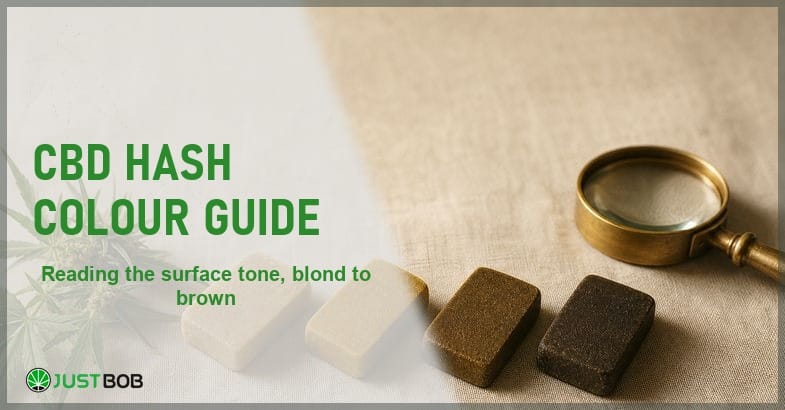
A piece of CBD hash can be pale blond, warm amber or deep brown, and that colour is the first thing a photo shows. It is a genuine clue, worth reading, but it is also the cue most likely to be misread. On a Justbob hash listing, colour is one signal among several, and the document carries the part colour cannot. This guide stays on colour alone, what the shade can suggest and where it stops, kept apart from texture and from any sense of grade.
-
 Max CBDAMNESIA CBD BOOSTStarting from: 0,85€/g
Glasshouse | CBD<40%
Grams5 10 20 50 100 200 400 -
Max CBDAK47 CBD BOOSTStarting from: 1,45€/g
Indoor | CBD<47%
Grams5 10 20 50 100 200 -
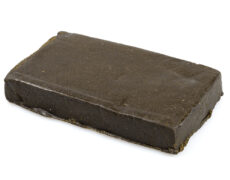
Max CBDCHARAS
CBD HASH | CBD<45%
Starting from:FLASH SALE -10%
0,90€0,80€/gGrams5 10 20 50 100 200 -
JB OIL 25%Starting from: 14,90€
CBD Oil 25%
This guide keeps to colour, and nothing else. Read the shade as a description of a surface rather than a verdict on a piece, and a hash photo becomes easier to take at face value.
What a hash colour guide covers
A colour guide does one job: it helps you read the surface shade of a piece of hash and understand what that shade can and cannot tell you. Colour here means the visible tone, from pale to dark, nothing more. It is kept separate from texture, which is a different cue with its own guide.
The honest starting point is that colour is descriptive. It records how a piece looks, shaped by the plant material and by how the resin was separated and pressed. It is information about appearance, not a score.
The colour range, from blond to dark brown
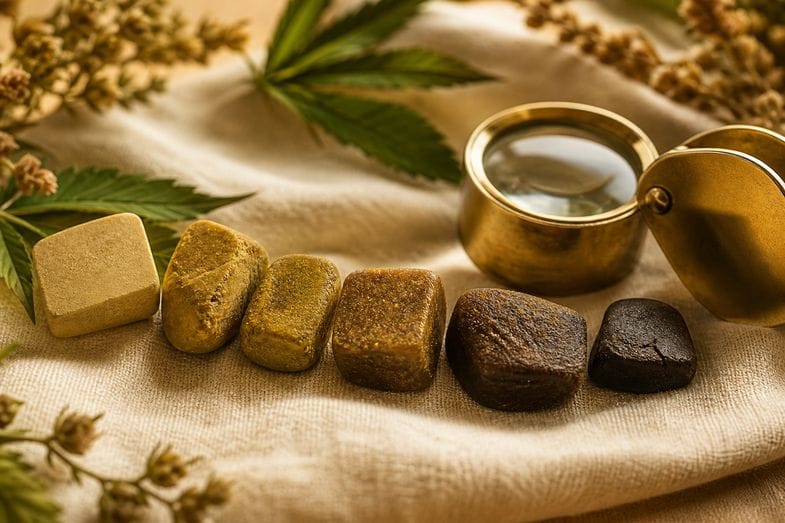
Most CBD hash sits somewhere on a simple band of colour:
- Blond or pale gold: a light, sandy tone, often from resin separated with little plant material.
- Golden amber: a warmer mid-tone, common across many pressed pieces.
- Light brown: a deeper tone, where more plant matter or pressing has darkened the surface.
- Dark brown: the darkest end, often from heavier pressing or longer age.
These are points on a spectrum, not a ranking. A blond piece and a dark brown one differ in tone, and the difference describes handling, not worth.
Why lighting changes what you see
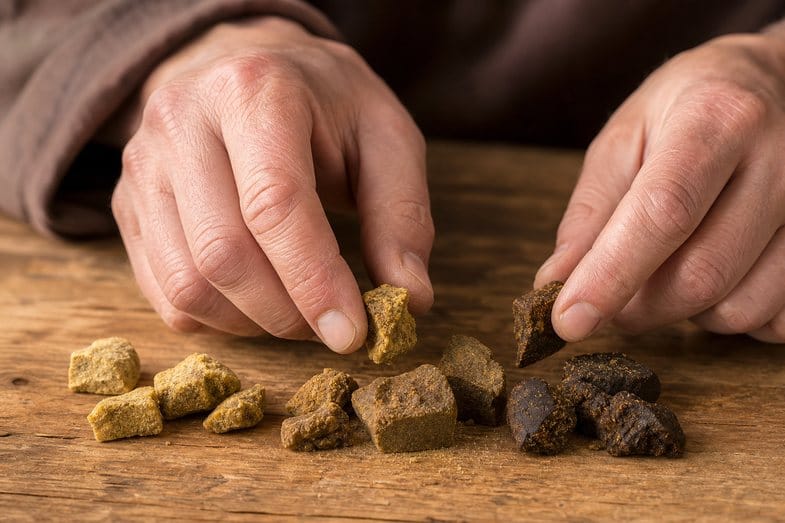
Colour is also the cue a photo distorts most easily. The same piece looks lighter under bright daylight and warmer under a yellow lamp, and a screen shifts it again. Two honest photos of one piece can show two different shades, simply because the light was different.
So a single photo’s colour is best held loosely. It tells you roughly where a piece sits on the band, pale or dark, but not an exact tone, and an exact tone would not settle anything on its own.
Read also: How CBD hash is made and what differences with regular hashish
Colour, age and the amber comparison
Resin has always changed colour with time and air, long before anyone pressed hemp. Amber, the fossilised tree resin prized for thousands of years, runs from pale gold to deep cherry brown depending on its age and what it met along the way. The colour records a history, not a value.
Cannabis resin is far younger, but it follows the same rule. A piece can darken as it meets air and light, so colour tracks handling and time as much as anything about the plant. That is one more reason to read tone as a description rather than a grade.
Reading colour next to the document
Colour earns its place once it sits beside the rest of a listing. The CBD hash pages put the photo next to the label figures and the linked certificate, so the shade you see can be checked against the variety and the batch on record.
Colour is only one cue, and texture is another worth reading alongside it. Our guide on CBD Hash Texture: What Soft, Firm and Crumbly Can Mean covers that side, so the two cues stay separate and clear.
Read also: CBD Hash Aroma: How To Read Resin Notes
Hash colour on a Justbob page
Every hash that Justbob commercialises is analysed, lot by lot, and its certificate of analysis lives inside the product page. A reader can line up the colour in the photo with the registered variety, the CBD figure and the THC reading for that exact batch, from the same listing.
Every hash sits inside the EU industrial hemp framework, produced by EU producers from registered hemp varieties, with THC kept at or below the 0.3 percent threshold harmonised at European level. CBD hash is offered for technical, scientific and ornamental purposes only. Colour is read here as appearance, with the document doing the confirming.
What colour cannot promise
Colour has a firm boundary. A pale piece is not automatically better than a dark one, and a dark piece is not stronger; tone is not a measure of strength or grade at all. Colour also says nothing about the cannabinoid figures, which live only in the certificate of analysis.
So the shade opens the reading and the document finishes it. Colour is worth a glance because it is quick and real, as long as it is read for what it is: a description of a surface, checked against the paperwork that carries the detail. For the regulatory view from outside the trade, the Food Standards Agency CBD guidance covers the public, regulatory side.
Frequently asked questions about cbd hash colour guide
What does CBD hash colour show?
CBD hash colour shows the surface tone of a piece, anywhere from pale blond through golden amber to dark brown. It is a description of appearance, shaped by the plant material and by how the resin was separated, pressed and aged. Colour can place a piece roughly on a light-to-dark band, but it works as a visual note rather than a measurement, and it is read separately from texture.
Can colour prove product quality?
No. Colour describes how a piece looks, not how good or strong it is. A pale piece is not automatically better than a dark one, and tone is not a measure of grade or strength. The figures that actually describe a lot, the cannabinoids and the THC reading, live on the label and in the certificate of analysis, not in the colour.
Why check documents too?
Because colour is only the surface, and the document carries the substance. The certificate of analysis holds the cannabinoid panel, the THC reading against the 0.3 percent threshold harmonised at European level and the batch identity. Matching the variety and batch code on the label to the certificate confirms that the piece in the photo and the figures on the page describe the same lot.