

Modified on: 28/08/2026
Reading hemp buds, stems and leaves as plant parts
A hemp plant may look simple at first glance, but contains a rich botanical vocabulary. The visible parts of the plant, the buds at the top, the stems along the structure and the leaves on the sides, all have specific names and specific roles inside the catalog of European industrial hemp. This Justbob guide walks through hemp buds, stems and leaves as plant parts, with the precise vocabulary that travels onto a CBD product page.
-
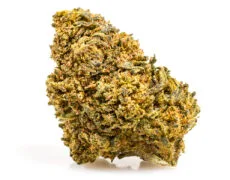
 Max CBDAMNESIA CBD BOOST
Glasshouse | CBD<40%
Starting from:FLASH SALE -10%
0,85€0,75€/gGrams5 10 20 50 100 200 400 -
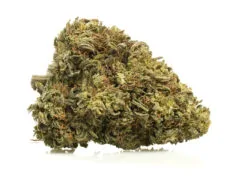
Max CBDAK47 CBD BOOSTStarting from: 1,45€/g
Indoor | CBD<47%
Grams5 10 20 50 100 200 -
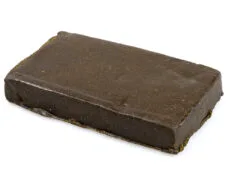
Max CBDCHARASStarting from: 0,90€/g
CBD HASH | CBD<45%
Grams5 10 20 50 100 200 -
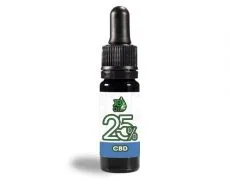
JB OIL 25%Starting from: 14,90€
CBD Oil 25%
The aim is to give the reader a portable botanical map that makes the plant easier to understand and recognise. After exploring the different parts and their relationships, the terminology becomes familiar enough to identify the main features of a hemp plant at a glance.
What “hemp buds, stems and leaves” describes on a product page
Hemp buds, stems, and leaves are three of the main visible parts of the Cannabis sativa L. plant, and these terms regularly appear on CBD product pages, catalogue descriptions, and analytical documents. The bud is the flowering structure at the top of the plant, the stem provides its main structural support, and the leaves are the broad, palmate structures that grow along the stem.
For readers exploring CBD flowers, these terms provide a basic botanical vocabulary for understanding what they see. Each part has its own structure, biological function, and relevance to how the plant is described on a product page.
From this perspective, the most useful CBD product pages keep plant-part terminology clear and explicit. Naming the individual parts gives the reader a more precise and verifiable way to understand the plant, while generic descriptions can make the botanical context harder to identify.
Read also: CBD Flower Appearance: Visual Checks
The bud: the flowering part of the female plant
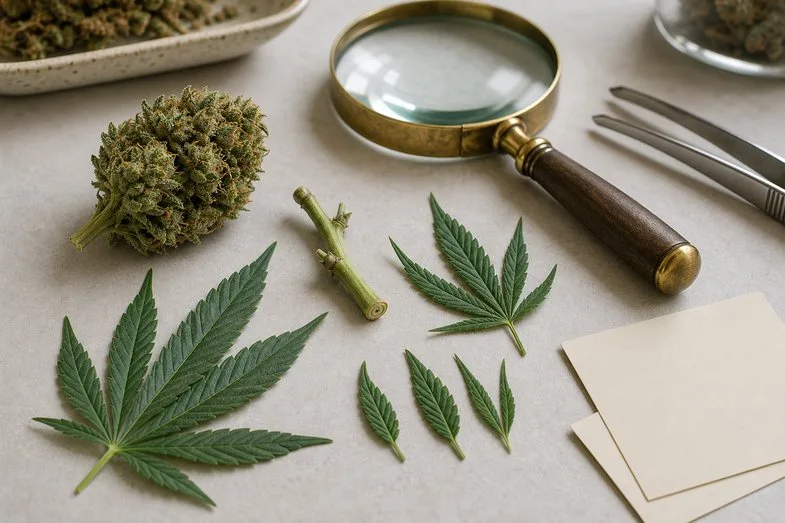
The bud is the flowering structure of the female hemp plant. It develops at the top of the main stem and at the tips of the lateral branches, forming a compact structure made of small overlapping bracts.
These bracts surround the developing reproductive structures and are covered with resin glands, or trichomes, which are particularly abundant in the flowering parts of the plant. that protect the developing seed and host the highest density of resin glands on the plant.
The bud is also the part of the hemp plant most closely associated with its cannabinoid and terpene content. Its compact structure, visible resin coverage, and range of colours and textures are among the characteristics that define the appearance of a CBD flower. These are the features typically highlighted in catalogue photographs and described in product listings.
For the reader, the bud provides the most recognisable visual signature of the product. Its structure, trim quality, colour, and visible trichome coverage can be assessed from the photograph, while the analytical document provides the corresponding information on the cannabinoid profile.
The stem: the structural backbone
The stem forms the woody central axis of the hemp plant. Depending on the variety, it can range from just a few centimetres in compact plants to several metres in taller industrial fibre varieties. Its internal structure is partly hollow, while the outer layers contain the fibres that have been used for textile and other material applications for centuries.
The stem keeps the plant upright and provides the vascular pathways that connect the roots with the leaves and flowering structures. It also contains two important material fractions: the bast fibres, made up of long fibres found in the outer layers, and the hurd, the woody inner core. Both have played an important role in the traditional and modern processing of industrial hemp.
For the reader, the stem is particularly relevant to the agricultural and material side of hemp cultivation, especially when the plant is grown for fibre or for dual-purpose production. On a CBD flower product page, by contrast, the stem mainly provides the structural context for the flower rather than being the main focus of the product.
The leaves: fan leaves vs sugar leaves
Hemp plants have two recognisable types of leaves: fan leaves and sugar leaves. Fan leaves are the large, palmate leaves with the characteristic five to nine pointed lobes. They grow along the main stem and branches and are usually the most recognisable feature of the hemp plant for non specialist observers. Sugar leaves are smaller and grow within and around the flower, often covered with visible trichomes that give them a distinctive frosted appearance.
Fan leaves play a central role in photosynthesis. Their broad surface allows the plant to capture light efficiently, while their characteristic palmate shape has become one of the defining visual features associated with Cannabis sativa L. This distinctive morphology also contributed to the way the species was described and illustrated in botanical traditions following the Linnaean classification of 1753
Sugar leaves grow closer to the flower and can carry a visible layer of trichomes and resin. They generally contain fewer cannabinoids and terpenes than the flower itself, but more than the larger fan leaves. On a CBD flower, some sugar leaves may remain attached to the trimmed bud, contributing to its final appearance and texture.
For readers interested in exploring this distinction further, our article Cannabis Leaves vs. CBD Flowers offers a useful comparison between these two parts of the plant and explains why they are often confused.
Trichomes: the resin glands across all parts
The trichomes are the small resin glands that produce the cannabinoids and the terpenes of the hemp plant. They appear as tiny stalked structures, mostly on the bud and the surrounding sugar leaves, with smaller numbers on the fan leaves and almost none on the stems.
In a close up photograph of a hemp flower, trichomes can appear as fine, sparkling or frosted details across the surface of the bud. Their presence and density are among the visible characteristics used to describe the appearance and development of a flower. At the microscopic level, these small glands are also where much of the plant’s resin is produced and stored.
For the reader, trichomes provide a useful link between the botanical and analytical sides of the plant. The visible resin coverage can be observed in a detailed photograph, while the cannabinoid profile is established through laboratory analysis. Together, these two perspectives connect what can be seen on the plant with what can be measured in the analytical record.
What stays in CBD flower products vs what gets trimmed
A CBD flower product is rarely presented as the whole plant. The catalogue typically shows the trimmed flower, with the larger fan leaves removed and the sugar leaves either retained or partially trimmed, depending on the producer’s preparation standards. Small sections of the stem may remain beneath the flower, while most of the stem material is removed during processing.
Trimming is a standard part of CBD flower preparation. A more closely trimmed flower has a compact appearance, with most of the surrounding leaf material removed. A lighter trim leaves more sugar leaf around the flower, creating a different visual shape and surface coverage. The amount of plant material removed can also affect the overall composition of the finished product by weight.
For the reader, the trim is one of the visible characteristics to consider when looking at a CBD flower page. The catalogue photograph should correspond to the product description. A well trimmed flower will generally show cleaner edges, while a lightly trimmed flower will retain more leaf material around the bud. Machine trimming can also produce a more uniform appearance, whereas hand trimming may result in small natural variations between individual flowers.
The role of bracts and pistils on the bud surface
The surface of a hemp flower is not a uniform mass. It is made up of small modified leaves called bracts and the pistils that emerge from them. The bracts form a protective structure around the developing reproductive parts of the plant, while the pistils are the fine, thread like structures that often appear in shades of orange, red, or brown during flowering.
The combination of bracts and pistils gives the bud its layered visual texture. Under a reasonable light, the bracts read as small, overlapping scales coated with trichomes; the pistils stand out as fine threads of contrasting colour. The proportion of bracts to pistils varies with the variety and the maturity at harvest.
For the reader, bracts, pistils, and trichomes are therefore all part of the visual language used to describe a CBD flower. A detailed catalogue photograph allows these botanical features to be observed directly, while the appearance of the trichomes can provide additional information when considering the stage of flower development. For a closer look at how changes in trichome appearance can be used to recognise different stages of maturity, see our guide on how to recognise mature trichomes.
How plant parts shape the visual signature of CBD flower
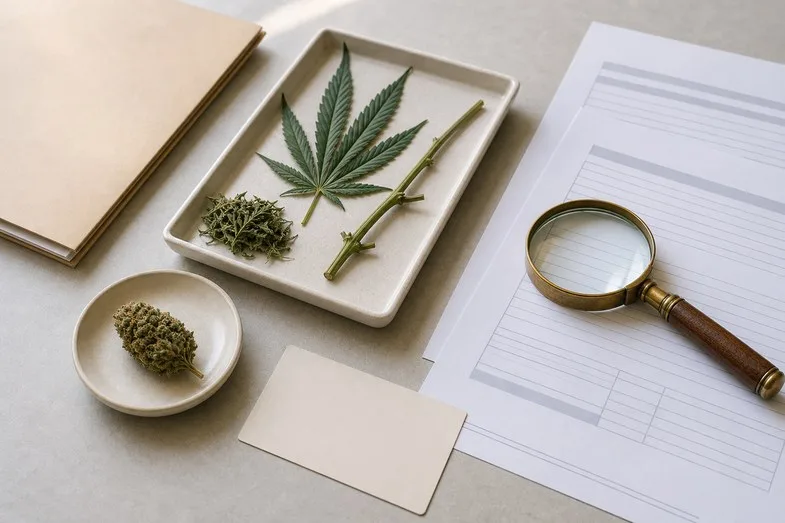
The visual signature of a CBD flower comes from the combination of the plant parts that remain in the trimmed product. The compact bud holds the most resin; the sugar leaves contribute a frosted edge; the small stem fragments give the structural connection between the parts; the trichomes catch the light across the whole surface.
A CBD flower page that names these parts in the product description is doing the botanical homework. A page that uses generic words like “premium nug” or “flashy flower” skips the botanical vocabulary and depends on marketing rather than on observable plant parts.
For the reader, the plant-part vocabulary is a verification tool. The names of the parts can be checked against the catalog photo and against the analytical document, where the cannabinoid breakdown reflects the part composition of the lot.
The agricultural framework behind hemp plant parts
Hemp plant parts are part of a broader European agricultural and regulatory framework that governs the cultivation of industrial hemp as a whole. Regulation (EU) 2021/2115 refers to the Common Catalogue of Varieties and establishes conditions related to THC levels within the framework of the Common Agricultural Policy. These rules apply to the cultivation of eligible hemp plants, regardless of how individual parts of the plant may later be used.
The European fibre tradition predates the modern CBD catalogue by several centuries. A good example is the Cordoaria Nacional in Lisbon, founded in the eighteenth century, which produced large quantities of hemp rope and cordage for the Portuguese naval fleet. This production relied on the bast fibres found in the stem and reflects the longstanding industrial importance of hemp across Europe. Long before CBD products appeared in modern catalogues, hemp was already an established agricultural crop and an important source of raw materials.
For the reader, this historical and agricultural background gives the vocabulary of buds, stems, and leaves a much longer history than the modern product page alone might suggest. The plant parts described on a CBD flower page today belong to a botanical and agricultural tradition that has been documented and used across Europe for centuries.
How Justbob documents plant-part vocabulary
Justbob carries out constant analyses on all commercialised products and on every batch. The relevant documents are available directly on each product page, so readers who want to confirm the cannabinoid profile of a specific trimmed lot can consult the certificate of analysis without leaving the catalogue.
The same reading approach can then be applied from one lot to the next. Once a reader has cross checked a lot against its analytical document and the plant part vocabulary used on the page, the process can be repeated for other lots. The catalogue structure, documentation standards, and botanical vocabulary remain consistent across the CBD flower range.
In our view, this consistency is what turns plant part terminology into a practical reading tool. The page provides the botanical context, the analytical document confirms the cannabinoid profile, and the variety shown on the label connects the product to the EU industrial hemp framework.
Read also: Cannabis Yellow Leaves? Let’s clarify
Compliance-safe wording on hemp plant parts
Compliance safe wording for hemp plant parts should remain purely botanical and descriptive. A phrase such as “trimmed Carmagnola bud with visible trichome coverage and small sugar leaves around the surface” describes the product and its physical characteristics. By contrast, “premium grade nug for an unbeatable evening” shifts from botanical description into marketing language.
CBD products are sold for technical, scientific and ornamental purposes only, in line with the EU industrial hemp framework. The plant part names, trim description, and cannabinoid percentages are part of how the product is described in the catalogue. They are not directives, benefits, or alternatives to anything else.
For the reader, the test is simple. If the wording helps map and identify the plant parts of the product, the page is using botanical vocabulary as documentation. If the wording invites you to do something with the product, the page has stepped outside the compliance safe context.
A closing reading habit for hemp plant parts
Reading hemp buds, stems, and leaves as distinct plant parts can become a simple botanical habit. Identify the bud as the flowering structure, recognise the stem as the plant’s structural backbone, distinguish fan leaves from sugar leaves, observe the visible trichome coverage in the catalogue photograph, and confirm the variety shown on the label against the EU Common Catalogue.
Once these features become familiar, the same approach can be applied across different products and varieties.
🌿Ready to put your botanical eye to the test? Explore Justbob trim CBD collection and take a closer look at the plant parts that make up each product.
Frequently asked questions about hemp buds, stems and leaves
What are the three main parts of the hemp plant?
The three main visible parts of the hemp plant are the bud, the stem and the leaves. The bud is the flowering structure of the female plant, the stem is the woody central axis that holds the structure upright, and the leaves come in two varieties (fan leaves on the stem and sugar leaves around the bud).
Where are the cannabinoids concentrated on the plant?
The cannabinoids are concentrated in the trichomes, the small resin glands that grow mostly on the bud and the sugar leaves. The fan leaves carry a smaller fraction; the stem carries almost none. The lab report for a lot reflects the part composition of the trimmed product.
Why do CBD flower products mostly carry the bud?
A CBD flower product usually carries the trimmed bud because the bud holds the highest density of trichomes and therefore the highest cannabinoid concentration per gram. The fan leaves are removed, the sugar leaves are often kept or partially trimmed and the stem fragments are usually discarded or kept short.