Modified on: 31/08/2026
Reading CBD laws in Europe as a careful checklist
CBD laws in Europe cannot be reduced to a single rule. They are shaped by several layers of regulation: the EU framework governing industrial hemp cultivation, national rules affecting the commercial side, analytical documentation relating to individual lots, and variety registration at plant level. Looking at these elements together is the most reliable way to understand what applies to a CBD product and to assess the information presented on a product page. This Justbob guide walks through the relevant checks step by step.
-
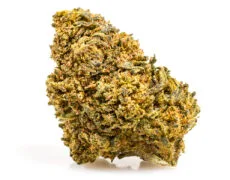
 Max CBDAMNESIA CBD BOOSTStarting from: 0,85€/g
Glasshouse | CBD<40%
Grams5 10 20 50 100 200 400 -
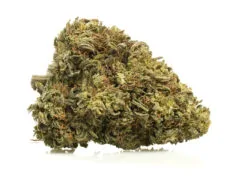
Max CBDAK47 CBD BOOSTStarting from: 1,45€/g
Indoor | CBD<47%
Grams5 10 20 50 100 200 -
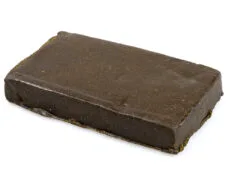
Max CBDCHARAS
CBD HASH | CBD<45%
Starting from:FLASH SALE -10%
0,90€0,80€/gGrams5 10 20 50 100 200 -
JB OIL 25%Starting from: 14,90€
CBD Oil 25%
The aim is practical. Once a reader has applied the checklist to one CBD product page, the same approach can be used for others, following the same source checks and looking for the same types of supporting information.
What “CBD laws in Europe” reads like on a product page
CBD laws in Europe are reflected on a product page through a combination of references: the registered hemp variety, the THC threshold, relevant EU regulations, national provisions, and the analytical documentation linked to the product. None of these elements replaces the others; together, they provide a practical framework for understanding and checking the information presented on the page.
For a CBD buyer, this legal and regulatory layer provides an important baseline for assessing the information behind a product. A page that identifies the variety, states the relevant THC level and provides access to supporting documentation gives the reader clear points to verify. By contrast, a page focused solely on the product itself, without any reference to the applicable framework, offers fewer ways to assess the information provided.
In our view, the most useful CBD product pages make regulatory information part of the content, rather than hiding it in footnotes. The relevant framework should be visible and accessible, giving readers the opportunity to understand the product and check the information for themselves.
Read also: CBD Flower Legal Framework: The Rules Behind The Label
The checklist mindset: source-by-source verification
The checklist mindset is the most efficient way to read CBD laws in Europe on a single product page. Rather than trying to summarise the entire regulatory landscape, the reader checks one source at a time: variety, threshold, document, commercial framing. Each source has a specific reference, and each reference has a defined location on the page.
The checklist is deliberately short. Five or six items, checked in order, give the reader a complete picture of the law layer applicable to the lot in front of them. The same checklist works across CBD flower, CBD hash, CBD oil, and CBD extract pages, with only minor adjustments to the form-specific references.
For the reader, this routine turns a CBD product page from a marketing surface into a verifiable document. The references are not decorative; they are checkable items.
Step 1: confirm the registered hemp variety
The first checklist item is the variety stated on the label. A registered hemp variety appears in the EU Common Catalogue of Varieties of Agricultural Plant Species, together with the country of origin and the maintaining entity. Common European variety names include Finola, Fedora, Felina, Futura, Carmagnola, and Tiborszallasi.
The cross-check is straightforward. The variety name on the product label should match a name listed in the consolidated EU catalogue or in the corresponding national variety list. If the variety shown on the page does not appear in the catalogue, the first checklist item is incomplete, making the rest of the law layer harder to verify.
For the reader, this step is quick in practice. The variety name is usually visible on the product page, while the catalogue is publicly accessible online. A simple check takes less than a minute and helps clarify the cultivation framework behind the product.
Step 2: confirm the THC threshold language on the label
The second checklist item is the THC threshold language. EU industrial hemp cultivation under CAP support is set at less than 0.3% total THC at harvest. The product label should carry some version of this number, usually phrased as “THC below 0.3 percent,” “complies with the EU industrial hemp framework,” or “Cannabis Sativa L. registered in the European Catalogue.”
If the label does not mention the THC threshold at all, the law layer is incomplete on the page. A CBD product page that skips the THC reference asks the reader to take the framework on trust, rather than providing a point that can be independently verified.
For the reader, this step is also fast. The threshold language is one of the most relevant lines to check on an EU CBD label, and a careful product page makes it visible. Spotting its absence can be just as informative as spotting its presence.
For a broader explanation of where THC is found in cannabis and how it differs from CBD, see the the article “Where Is THC Found in Cannabis?”
Step 3: read the analytical document for the lot
The third checklist item is the analytical document for the lot. A CBD product page should link to a certificate of analysis confirming the cannabinoid breakdown, THC compliance, and, when reported, the terpene profile. This document provides the lot-specific layer of the law check.
The cross-check involves matching the lot reference on the label with the lot reference on the document. The CBD percentage on the label should fall within the range confirmed by the document. The THC value reported in the document should respect the 0.3 percent threshold. The variety name on the document should also match the variety stated on the label.
For the reader, this is the most data-dense step. A lab report can take two or three minutes to review carefully, but it is the document that turns the law references into a verifiable record for a specific batch.
Step 4: check the commercial provisions of the destination market
The fourth checklist item is the commercial framing on the page. Each EU member state regulates the commercial side of CBD, with national provisions covering retail conditions, age limits, marketing language, and labelling. The page should align its commercial framing with the destination market.
The commercial layer is the part most likely to vary across countries. A page that ships to multiple EU markets will often reference the relevant national context briefly, with a note where the provisions differ from the EU cultivation baseline.
For the reader, this is the checklist item that depends on the destination market. A buyer in France checks the French context; a buyer in Italy checks the Italian context; the cultivation references remain the same regardless of the destination.
For a broader overview of how CBD laws vary across Europe, see the Justbob article CBD Laws in Europe.

Step 5: verify cross-border conditions when relevant
The fifth checklist item is the cross-border layer, which becomes relevant when the product crosses EU borders between cultivation and sale. The EU single market principle allows industrial hemp products to circulate across member states under the harmonised cultivation framework, while national commercial provisions apply at the destination.
In practice, this means that a CBD product cultivated in one EU country and sold in another should reference both the cultivation framework at EU level and the commercial conditions at the destination national level. The cross-border layer is what makes the European single market visible on the product page.
For the reader, this step matters most when dealing with cross-border purchases. The same lot can move across different markets, and the references on the page should reflect that movement.
How EU sources differ from national legislation
EU sources and national legislation operate at different levels of the checklist. EU sources, including Regulation (EU) 2021/2115 and the Common Catalogue, set the harmonised cultivation framework. National legislation regulates the commercial layer, with provisions that differ from country to country.
A short reference point helps. In 2019, the European Food Safety Authority (EFSA) clarified that CBD extracts intended for use in food products fall under the EU novel food framework, separate from the industrial hemp cultivation rules. The distinction is regulatory: CBD as an extract intended for food is one framework; industrial hemp cultivation under CAP support is another. CBD product pages that position themselves outside the food category sit on the industrial hemp side of the line.
For the reader, this layered reading is part of why the checklist matters. A CBD product page that references the cultivation framework is documenting the agricultural side of the law; a page that ventures into food framings has to reckon with a different regulatory layer.
When the checklist flags a gap on the page
A checklist gap is a missing reference on a CBD product page. A page can be incomplete in several ways: a variety not listed in the catalogue, missing THC threshold language, an absent analytical document, unclear commercial framing, or a confusing mix of cultivation and food references.
When the checklist flags a gap, the reading does not stop; it simply becomes more cautious. A page with a clear cultivation framework but no analytical document, for example, can still be useful for verifying the variety, but the lot itself cannot be fully verified. The reader can adjust the level of confidence accordingly.
For the reader, the checklist is a calibration tool. Each item covered by the page increases the verification level; each missing item lowers it. The framework references and the documents do most of the work.
How Justbob documents the checklist layers
Every Justbob lot is analysed before it reaches the catalogue, and each commercialised product page carries its own certificate of analysis. This keeps the checklist items concrete: variety, threshold, document, and commercial framing can all be checked against a real lot, directly on the page, without leaving the catalogue.
The strength of a checklist is that it travels. Run it once on a Justbob lot, and the same five steps can be applied to the next variety and the next product form, because the references remain in the same places each time.
The checklist is therefore less a test that the page must pass and more a habit the reader develops. The page supplies the references; the certificate confirms the lot; the registered variety connects the product back to the EU industrial hemp framework.
Compliance-safe wording for European CBD law references
On a compliance checklist, the wording itself is part of what needs to be reviewed. A compliant line should remain factual and reference-based: “industrial hemp variety registered in the EU Common Catalogue, below 0.3 percent total THC at cultivation, lot-specific analytical document available, commercial framing aligned with the destination market.” Each element points to a verifiable reference. By contrast, wording such as “top-grade CBD with the best European laws behind it” moves away from reference and into promotional language.
These products are sold for technical, scientific and ornamental purposes only, within the applicable EU industrial hemp framework. The variety name, regulatory references and cannabinoid percentages help identify and position the product in the catalogue; they are not directives, claims about benefits, or substitutes for other products or uses.
The wording check therefore follows the same logic as the document check: if a phrase can be traced back to a verifiable reference, it can have a place on the page. If it encourages the reader to expect a particular outcome from the product, it has moved outside the compliance-safe lane.
A closing reading habit for the CBD laws checklist
Running the five-step CBD laws checklist on a single product page takes less than five minutes once the process becomes familiar. Variety, THC threshold, analytical documentation, commercial framing and the cross-border layer: each point has a specific reference and a clear place to be checked on the page.
Once these elements become part of your routine, reviewing a product page becomes much more straightforward.
🌿 And if you want to put the same reference-based approach into practice, you can explore the available products on the Justbob CBD flower page.
Frequently asked questions about cbd laws in europe
How many steps does a CBD laws checklist usually have?
A practical CBD laws checklist for Europe usually covers five steps: confirming the registered hemp variety, checking the THC threshold language on the label, reading the analytical document for the lot, verifying the commercial provisions of the destination market and reviewing cross-border conditions when relevant.
Does EFSA regulate CBD products in Europe?
EFSA, the European Food Safety Authority, has clarified that CBD extracts intended for use in food products fall under the EU novel food framework. This sits separately from the industrial hemp cultivation framework that covers the agricultural side of the same plant. CBD product pages positioned outside the food category sit on the industrial hemp side of the line.
Where do EU and national CBD laws differ?
EU sources, including Regulation (EU) 2021/2115 and the Common Catalogue of Varieties, set the harmonised cultivation framework. National legislation regulates the commercial side, with provisions on retail, labelling, age limits and marketing language that differ from country to country.