Modified on: 27/08/2026
CBD legal status France: source-based notes for careful readers
The CBD legal status in France is shaped by several layers of legislation and legal interpretation. European Union rules provide the broader framework, while French legislation, court decisions and administrative measures determine how these principles apply at national level. Product-specific requirements then add another layer that consumers and businesses should consider.
-
 Max CBDAMNESIA CBD BOOST
Glasshouse | CBD<40%
Starting from:FLASH SALE -10%
0,85€0,75€/gGrams5 10 20 50 100 200 400 -
Max CBDAK47 CBD BOOSTStarting from: 1,45€/g
Indoor | CBD<47%
Grams5 10 20 50 100 200 -
Max CBDCHARASStarting from: 0,90€/g
CBD HASH | CBD<45%
Grams5 10 20 50 100 200 -
JB OIL 25%Starting from: 14,90€
CBD Oil 25%
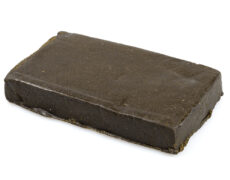
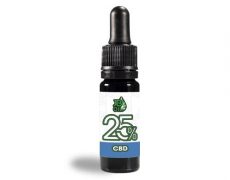
This guide from Justbob explores the CBD legal status in France, with a particular focus on CBD flower and the regulatory framework surrounding its cultivation, marketing and sale. Because legislation can be complex and evolve over time, understanding the relevant sources and their context is essential.
CBD legal status in France: what does it cover?
The term CBD legal status in France refers to the combination of European rules, French legislation, judicial decisions and regulatory requirements that influence how CBD products can be marketed and sold in France. It is therefore more accurate to view the subject as a framework of interconnected rules rather than as a single law governing all CBD products.
This distinction is particularly important for CBD flower and other hemp-derived products. The applicable framework has evolved over time, meaning that information published in 2021 may no longer provide a complete picture of the situation today. Court decisions, regulatory developments and subsequent legislative measures can all affect how the rules are interpreted.
For this reason, reliable information about CBD in France should always take the date and origin of each source into account. Official legislation, court decisions and current regulatory guidance provide a stronger basis for understanding the subject than outdated summaries or isolated claims.
The objective of this guide is therefore not to provide a one-line definition of CBD legality, but to help readers understand the different legal sources that should be considered when researching the CBD legal status in France.
Read also: CBD Flower Legal Framework: The Rules Behind The Label
CBD legal status in France: what it actually covers
CBD legal status in France refers to the combination of EU rules, French national legislation, court decisions and product-specific requirements that shape how CBD products are regulated, marketed and sold in the French market. It is not governed by a single statute that can be cited on its own; instead, the applicable framework consists of several sources that need to be read together.
For CBD flower pages aimed at French readers, this distinction is particularly important because the legal framework has evolved over time. Guidance published in 2021, for example, may need to be considered alongside a 2022 court decision or a 2023 regulatory measure. When researching CBD legality, the date and authority of a source are just as important as the information it contains.
The most useful CBD France content should therefore explain how these different layers interact rather than attempt to provide a definitive answer in a single paragraph. Understanding the structure of the legal framework is essential when assessing the status of a specific CBD product.
The EU layer: industrial hemp and harmonised cultivation
At European Union level, Regulation (EU) 2021/2115, within the framework of the Common Agricultural Policy (CAP), establishes rules relevant to the cultivation of industrial hemp. Eligible hemp varieties are included in the Common Catalogue of Varieties of Agricultural Plant Species, while the CAP framework applies a THC threshold of less than 0.3% for eligible hemp cultivation.
This EU framework provides an important agricultural baseline for industrial hemp cultivation in France and other EU Member States. It determines which hemp varieties can qualify under the relevant CAP rules and establishes the applicable THC threshold for cultivation covered by that framework.
However, the EU agricultural framework should not be confused with a complete set of rules governing the commercial sale of CBD products. The cultivation rules provide one part of the legal framework, while French national legislation and other applicable rules determine additional requirements for CBD products placed on the French market.
In other words, the EU layer establishes the agricultural foundation, while the French national layer adds further rules governing the products themselves.
The CJEU Kanavape ruling: a key EU-level reference
The Kanavape ruling of the Court of Justice of the European Union (CJEU), delivered on 19 November 2020 in Case C-663/18, is one of the most frequently cited EU-level references when discussing CBD legal status in France. The case concerned the free movement of CBD products lawfully produced in one EU Member State and marketed in another, with France at the centre of the original dispute.
The CJEU examined the interaction between EU free movement of goods principles and national measures restricting the marketing of CBD products that had been lawfully produced in another Member State. Importantly, the ruling did not establish that all CBD products are automatically legal across the EU, nor did it eliminate national regulatory requirements. Instead, it provided an important EU-level legal reference for assessing national restrictions, and its reasoning has subsequently been considered in the French legal context.
For a CBD France guide, the Kanavape judgment should therefore be presented as an EU-level reference rather than a French national source. This distinction is important: EU case law provides the broader legal context, while French legislation, administrative measures and national court decisions determine how that framework is applied within France.
French national acts and decisions: a chronological framework
The French CBD legal framework has developed through a combination of national legislation, ministerial measures, administrative decisions and court rulings. Over recent years, various decrees, arrêtés and decisions of the Conseil d’État have contributed to defining the conditions under which CBD flowers and other hemp-derived products may be marketed in France.
The Conseil d’État has played an important role in reviewing the legality and scope of certain administrative measures. Some decisions have suspended or limited the application of specific measures, while subsequent developments have further shaped the regulatory landscape. Looking at these decisions chronologically helps demonstrate that CBD regulation in France is an evolving framework rather than a fixed set of rules.
For a reliable CBD France resource, it is therefore preferable to distinguish clearly between the different types of legal sources. The Journal officiel de la République française is the appropriate reference for legislation, decrees and arrêtés, while the Conseil d’État provides access to relevant administrative decisions. Whenever possible, readers should be directed to these official sources, rather than relying solely on simplified summaries.
This source-based approach makes it easier to understand what the law actually says, when a particular rule was adopted, and whether subsequent decisions have affected its interpretation or application.
The French national lens on CBD flower commerce
The French national framework should be distinguished from the EU agricultural framework. While EU rules establish the framework for industrial hemp cultivation and eligible hemp varieties, French national rules and regulatory measures have addressed additional questions concerning the marketing, presentation and commercial positioning of CBD products, including CBD flowers.
The relationship between EU cultivation rules and French commercial requirements has been the subject of legal discussion, including in the context of the Kanavape case. For readers looking to understand the current situation, the most reliable approach is to consult the latest official French sources dealing with the commercial aspects of CBD and read them alongside the relevant EU framework governing hemp cultivation.
For a CBD product page aimed at French consumers, the safest approach is to use accurate, carefully qualified wording that reflects the regulatory position at the time of publication. Articles should also include a clear publication or update date and, where appropriate, direct readers towards official sources so they can verify the latest information.
Three layers, three habits: how French CBD readers can check sources
Understanding CBD legal status in France is easier when the available information is examined through three distinct layers: the EU framework, the French national framework and the individual product.
- The first step is to consult the EU layer. This includes Regulation (EU) 2021/2115, the European Catalogue of Varieties of Agricultural Plant Species, and relevant CJEU case law, with the Kanavape judgment providing an important reference point. These sources provide the broader legal and agricultural context and tend to be more stable than product-specific or national administrative measures.
- The second step is to examine the French national layer. Readers should consult the Journal officiel de la République française for legislation, decrees and arrêtés, as well as the Conseil d’État for relevant administrative decisions. Because this area of regulation can evolve, the publication date of each source matters. A French administrative measure from 2021, for example, should not automatically be treated as reflecting the current position if subsequent judicial or regulatory developments have modified its scope or interpretation. Reading the sources chronologically provides a clearer picture of how the framework has developed.
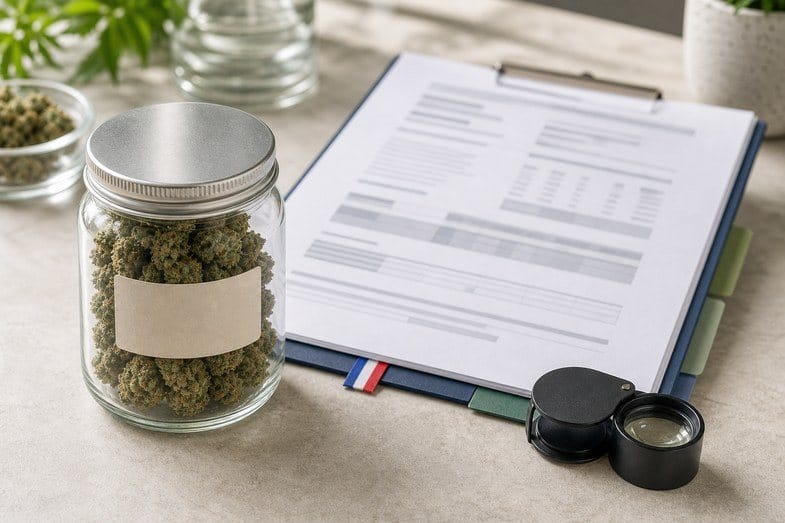
- The third step is to examine the product itself. This means checking the product label, batch or lot reference, available certificate of analysis and declared cannabinoid profile. The question of CBD legality becomes much more practical when it is connected to a specific product and its documentation rather than to a general statement about CBD.
By combining these three layers — EU rules, French national sources and product-specific information — readers can build a more accurate and up-to-date understanding of the CBD legal framework in France.

Why HHC is a different conversation from CBD
HHC (hexahydrocannabinol) is a different cannabinoid from CBD and should not be treated as part of the same legal framework. Its chemical characteristics and regulatory treatment differ from those applicable to CBD, and France has adopted specific measures concerning HHC and other cannabinoids, including certain synthetic and semi-synthetic compounds.
For readers researching CBD legal status in France, this distinction is particularly important. CBD and HHC are separate substances, with different regulatory histories and potentially different legal requirements. Combining the two subjects can therefore create confusion, especially when discussing whether a particular cannabinoid product may be marketed or possessed in France.
The practical approach is simple: CBD should be assessed under the legal framework applicable to CBD and hemp-derived products, while HHC should be assessed separately under the rules specifically applicable to HHC.
This article focuses exclusively on the CBD legal status in France. Questions concerning HHC, its regulation or its legal status should be addressed through dedicated, up-to-date sources dealing specifically with HHC, preferably official French or European sources.
Labels, batch documents and adult positioning
A responsible CBD product page aimed at French readers should make the intended product positioning clear and avoid claims that could be misleading. Where appropriate, the page should use clear, factual and source-aware language, without making personal outcome claims or providing instructions for consumption.
Product documentation should support this approach by providing essential information such as product identity, batch or lot reference and relevant analytical data. Clear labelling helps readers understand exactly which product and batch the available information relates to.
At Justbob, products are subject to ongoing analysis, including batch-specific testing, and the relevant analytical documentation is made available on the corresponding product pages. This allows readers to consult information relating to the specific product they are viewing.
However, product labels and laboratory documents do not replace the applicable legal framework. Their purpose is to make information about a specific product and batch clearer and more verifiable, while the relevant legislation and official guidance remain the primary reference for determining legal requirements.
How to read CBD France content responsibly
Three small habits help. First, check the date of the article: legal pages without dates age quickly. Second, check whether the page distinguishes EU rules from French national acts; the two layers should not be collapsed. Third, check whether the page cites official sources by name (Journal Officiel, Conseil d’Etat, European Commission, CJEU rulings); if it does, the article is more verifiable.
A page that mixes the EU and the French layers in one breath is harder to read than a page that keeps them clearly separated. Restraint, in this topic, reads as competence.
Read also: THC CBD Label Terms: Safe Reading Guide
A closing reading habit for CBD legal status France
The CBD legal status in France is not defined by a single rule. It is the result of several interconnected layers, including European Union legislation, French national rules, administrative decisions and relevant court judgments. Understanding how these sources interact is essential for anyone researching CBD products in the French market.
The EU framework provides the broader agricultural context, while French legislation and administrative decisions add national requirements. At product level, clear labelling, batch information and accessible analytical documentation can help consumers better understand the product they are looking at.
Because the regulatory environment can evolve, current and reliable information matters. Readers should always check the date of legal content and consult official sources when they need to verify the rules applicable to a specific situation.
If you are looking for CBD products with clear product information and batch-specific documentation, explore the range available from Justbob. Explore the products, check the available documentation and make an informed choice. Each product page provides detailed information designed to help you understand the product before making a purchase, including product characteristics and available analytical documentation.
🌿 Explore the best CBD products on Justbob, check the available documentation and make an informed choice.
This article provides general information and does not constitute legal advice. Regulations may change, so always consult current official sources for the latest requirements applicable to your situation.
Frequently asked questions about CBD legal status France
What is the CBD legal status in France?
CBD legal status France is the layered set of EU rules, French national acts, court decisions and product positioning practices that shape how CBD products are discussed and sold in France. It evolves through both administrative acts and court rulings.
Is CBD subject to the same rules across all EU countries?
The EU framework provides a shared cultivation baseline through Regulation (EU) 2021/2115, but national rules on the commercial side differ between member states. France has its own national framework on top of the EU layer.
Why are dates important on CBD France content?
The French national framework around CBD has been updated through a series of administrative acts and court decisions over recent years. A CBD France article without a date can be out of step with the current state of play; dated content is much easier to verify against current sources.