Modified on: 03/08/2026
Reading THC and CBD as label terms
THC and CBD label terms are easier to handle when you read them like fields, not like a debate. On a hemp product, the two names appear as figures on a label and as rows on a certificate, each tied to a number. This guide stays on that reading. It explains what the THC and CBD terms mean where you actually meet them, on the label and in the document, and it leaves the wider arguments to one side.
-
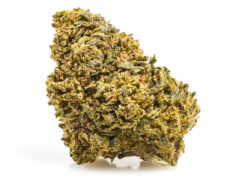
 Max CBDAMNESIA CBD BOOSTStarting from: 0,85€/g
Glasshouse | CBD<40%
Grams5 10 20 50 100 200 400 -
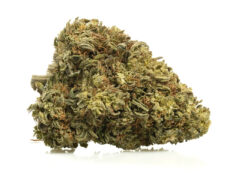
Max CBDAK47 CBD BOOSTStarting from: 1,45€/g
Indoor | CBD<47%
Grams5 10 20 50 100 200 -
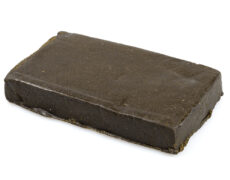
Max CBDCHARAS
CBD HASH | CBD<45%
Starting from:FLASH SALE -10%
0,90€0,80€/gGrams5 10 20 50 100 200 -
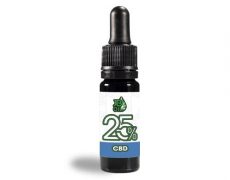
JB OIL 25%Starting from: 14,90€
CBD Oil 25%
Picture a label and a certificate side by side, each with a short list of figures. The terms only get confusing when they are turned into a contest. Read as rows, they are plain: a name, a number, a threshold, each doing one defined job.
What THC and CBD label terms mean
THC and CBD label terms are simply the words and figures used to record those two compounds on a product’s label and documents. CBD usually appears as a percentage; THC appears as a reading checked against a legal threshold. Both are entries, not opinions, and reading them means reading numbers in context rather than weighing one against the other.
Kept at that level, the terms stay manageable. This page reads them as fields, and it does not turn them into a comparison or anything beyond what the label and the certificate record. Read this way, the pair stops being a topic to argue about and becomes a short list to check, which is far more useful on a product page.
CBD on the label
On a label, CBD is normally given as a percentage, marked as indicative because a plant product naturally varies. The figure tells you the stated amount for that genetic profile, the maximum reached in the laboratory, and it sits beside the product name as one of the headline entries. It is a quantity, written down.
Read that way, the CBD figure is straightforward. It records how much of the named compound the label states, nothing more, and it is confirmed against the certificate for the specific batch in hand. There is nothing to interpret beyond that: it is a number with an indicative note, and that note is the important part for a plant product.
Read also: CBD Flower Lab Testing: What the Checks Show
THC and the threshold
THC is read differently, because its term is tied to a line. On a hemp product, the THC figure is the reading checked against the 0.3 percent threshold harmonised at European level, the limit that defines the legal category. So the THC term is less about a quantity for its own sake and more about a figure sitting at or below a fixed point. For the rules that sit behind that line, our guide to the CBD flower legal framework sets them out.
Read this way, the THC term is a checkpoint, not a feature. It records that a batch sits within the threshold, and that is the whole of what the figure is there to say. It is read as a position against a line, not as a measure of anything else.
A line that means a limit
A small line that defines a limit is an old and useful idea. In 1876, after a long campaign by Samuel Plimsoll, British law required ships to carry a load line on the hull, a painted mark showing how deep a vessel could safely sit in the water. Cross it, and the ship was overloaded; stay below, and it was within the rule.
The 0.3 percent threshold works in the same plain way. It is a fixed line, and the THC figure is simply read against it: at or below means within the category, in exactly the manner a load line was read on a hull.
Read also: CBD Flower Certificates: What To Read First
The COA rows
Where the label gives the headline figures, the certificate of analysis gives the rows. There, CBD and THC each get a line, with the measured figure beside the name, alongside any other compounds tested for the batch. The label states; the certificate records, row by row.
This is why the two read together so well. The label term points to a figure, and the matching row on the certificate confirms it, so a reader can follow each name from the printed label to the measured document. A label term is only as reliable as the row that backs it, and on a complete page that row is always there to be opened.
What not to infer from the terms
It is worth being plain about the limits. A THC or CBD term on a label records a figure and, for THC, a position against a threshold. It does not describe what a compound does, it makes no comparison between the two, and it carries no message beyond the measurement itself. Those questions sit well outside a label field, where only the figures and the threshold live.
So the terms are read for exactly what they are: figures, in context, confirmed by a document. For an official overview of hemp as an agricultural crop, the European Commission page on hemp sets out the wider framework the terms sit within.
THC and CBD terms on a Justbob page
On a CBD flower page, the two terms do a narrow job: a CBD figure, a THC reading against the threshold, and the certificate that confirms both. Every commercialised product is analysed and each batch is checked, with the document kept inside the product page, so each figure can be traced from the label to the row that records it.
Every product sits inside the EU industrial hemp framework, with THC kept at or below the 0.3 percent threshold harmonised at European level. The products are offered for technical, scientific and ornamental purposes only, and on a Justbob page the THC and CBD terms are read as exactly that: figures with a document behind them, and nothing more is asked of them.
Frequently asked questions about thc cbd label terms
What are THC and CBD label terms?
They are the words and figures used to record those two compounds on a product’s label and documents. CBD is usually given as an indicative percentage, the stated amount tied to the genetic profile; THC is given as a reading checked against the 0.3 percent threshold harmonised at European level. Both are entries to be read in context, not opinions, and each is confirmed by the certificate of analysis for the specific batch rather than taken on the label alone.
Is this a CBD versus THC article?
No. This is about how the two appear as terms on a label and a certificate, not a comparison of the compounds. It reads each as a field: CBD as a stated figure, THC as a reading against a threshold. It deliberately leaves any weighing of one against the other to one side, because that is a different subject from reading the labels.
Why do COA rows matter?
Because the row is where a label term is confirmed. On the certificate of analysis, CBD and THC each appear as a measured row, with the THC reading checked against the 0.3 percent threshold harmonised at European level for the batch. Following a term from the printed label to its row on the document is how a reader confirms the figure rather than trusting the label by itself.