Published on: 11/08/2026
A greenhouse word that ended up on shopping forums
Ask what PGR weed means and you will get three answers before anyone agrees on the question. The phrase mixes horticulture, market folklore and a good deal of guesswork, and it usually arrives attached to a photograph of a very dense bud. We get the question often enough at Justbob that it deserves a proper answer rather than a shrug.
-
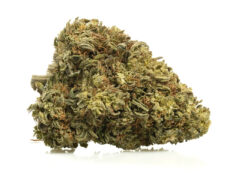
 Max CBDAMNESIA CBD BOOSTStarting from: 0,85€/g
Glasshouse | CBD<40%
Grams5 10 20 50 100 200 400 -
Max CBDAK47 CBD BOOSTStarting from: 1,45€/g
Indoor | CBD<47%
Grams5 10 20 50 100 200 -
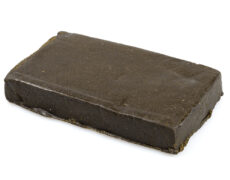
Max CBDCHARAS
CBD HASH | CBD<45%
Starting from:FLASH SALE -10%
0,90€0,80€/gGrams5 10 20 50 100 200 -
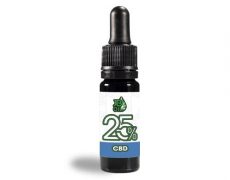
JB OIL 25%Starting from: 14,90€
CBD Oil 25%
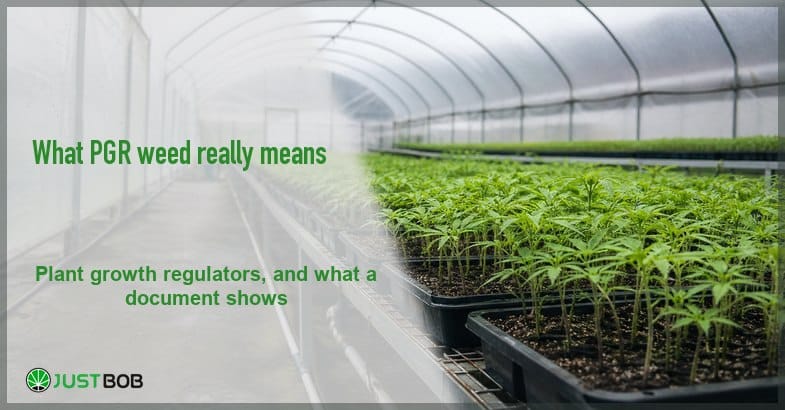
So this guide takes the phrase apart in three pieces. What plant growth regulators actually are, why growers borrowed the term from ornamental nurseries, and what a buyer can genuinely check rather than guess from a picture. The short version, if you are in a hurry: PGR is a farming word, and the honest answer to the question lives in a document.
What PGR weed means
PGR stands for plant growth regulator. Plants have always made their own: auxins, gibberellins and cytokinins are the familiar families. Between them they decide how tall a stem grows, how much a plant branches and when it flowers. Growers have spent a century learning to nudge those signals on purpose, first with extracts and later with synthetic compounds designed to do one job each.
The phrase PGR weed, then, is not a botanical category. It is a market term for cannabis that somebody believes was grown with synthetic regulators. That belief is usually based on how the flower looks, which is where the trouble starts.
Read also: CBD Flower Lab Report: What It Shows and Why It Matters
The three names that keep coming up
Three compounds do most of the talking in these conversations, and all three come from ordinary agriculture rather than from anything exotic.
- Daminozide, long used on ornamental plants to shorten stems and keep potted flowers compact.
- Paclobutrazol, a triazole compound that slows stem elongation, familiar in nursery and orchard work.
- Chlormequat chloride, used on cereals to shorten straw so that a crop is less likely to flatten in wind and rain.
None of these was invented for cannabis. They belong to a toolbox built for wheat fields and flower nurseries, which is exactly why the argument about them is so muddled. The names travelled into a conversation about buds, but the science behind them was written about barley and poinsettias.
From a 1926 experiment to a supermarket shelf
The whole field starts with a very small piece of jelly. In 1926, working in Utrecht, the Dutch botanist Frits Went cut the tips from the coleoptiles of oat seedlings, the pale sheaths that push up before the first leaf. He stood them on blocks of agar so that whatever they released would soak in, then placed those blocks back on the cut shoots, set deliberately to one side rather than square on top. The shoots bent away from the side carrying the block. Something chemical, not something mechanical, was telling the plant which way to grow, and that something was later named auxin.
A century on, you can see the commercial descendant of that experiment in any garden centre in December. The reason a shop-bought poinsettia sits low and bushy in its pot, instead of stretching into the leggy shrub it would become outdoors, is that growers manage its height deliberately. In our view that is the useful thing to hold on to: regulating plant growth is routine horticulture, applied to millions of pots a year, and not a secret practice invented to fool anybody.
A photograph is a weak test
Online, the test offered for PGR weed is almost always visual. Rock-hard flowers, unusually round shapes, very few visible pistils, less surface frost. It sounds convincing, and it is the reason the phrase spreads with photographs rather than with paperwork.
The problem is that every one of those features has innocent explanations. Genetics produce dense flowers on their own; some varieties are simply compact. Drying and pressing change how firm a flower feels. A close-up taken under a hard phone flash will flatten the look of resin on any bud you point it at. Reading a CBD flower listing, you are looking at one photograph, taken once, under lighting nobody described to you.
A picture can raise a question. It cannot answer one.
Read also: CBD Product Quality Standards: Batch Checks
Where European rules put these substances
In the European Union, compounds of this kind are handled as plant protection products. That means each active substance goes through an approval process at EU level before any member state can authorise a product containing it, and that maximum residue levels are set for agricultural produce. Approvals also expire, get reviewed and are sometimes not renewed, so the list is not a fixed thing. The European Commission overview of the pesticides framework sets out how that system is organised.
Hemp grown in the EU sits inside that same framework, alongside the rules that keep registered varieties at or below the 0.3 percent THC limit set at European level. It is an agricultural crop, with the paperwork of an agricultural crop.
Which document actually answers the question
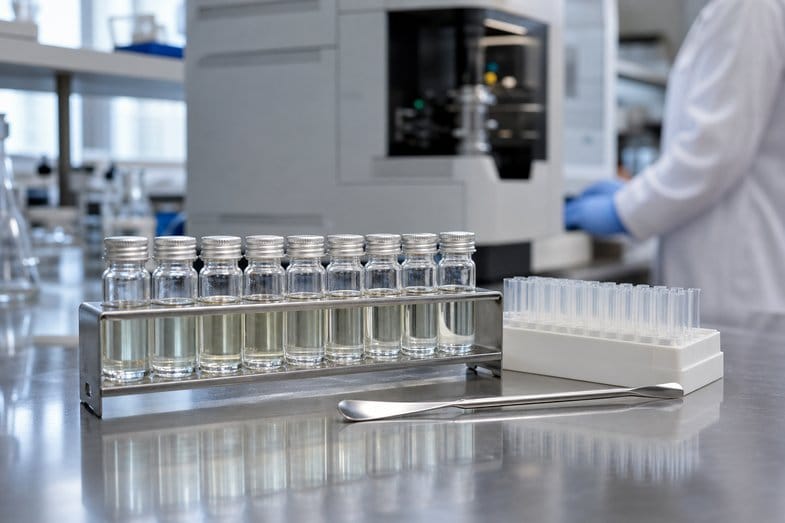
This is the part worth knowing, and it is where most articles on the subject stop short. A certificate of analysis is not one single test. The cannabinoid panel that appears on most product pages measures CBD and THC content, and it tells you nothing at all about residues, because it was never asked to. Residue screening is a separate analysis, run against a different list of substances.
So if the question in your head is about growing practice, the cannabinoid figures will not settle it. What settles it is a batch that can be traced: a lot number on the packaging that matches a document you can actually open, and a producer who can say where the crop was grown and under which rules. Our guide to CBD flower certificates walks through how those documents are laid out field by field.
PGR weed, read from the buyer’s side
Put together, the picture is less dramatic than the forums suggest. Plant growth regulators are a real and regulated part of agriculture. The phrase PGR weed is a suspicion about how a plant was grown, and a suspicion is not settled by a photograph, a texture or a confident comment under a post.
Which is why we would rather point you at paperwork than at adjectives. Our hemp is grown by EU partners, each batch is analysed, and the lot reference sits on the page so it can be matched to its record. Everything is offered for technical, scientific and ornamental purposes.
Want to see what that looks like in practice? Open any listing in the Justbob catalogue and pull up its lot document while you are there.
Frequently asked questions about PGR weed
What is PGR weed?
It is a market phrase rather than a plant type. PGR stands for plant growth regulator, a family of natural and synthetic compounds that influence how a plant grows, branches and flowers. When people say PGR weed they mean cannabis they believe was grown using synthetic regulators, usually judging from the appearance of the flower rather than from any analysis.
Which substances are people talking about?
Most often daminozide, paclobutrazol and chlormequat chloride. All three come from mainstream horticulture and agriculture, where they are used to control the height of ornamental plants or to shorten cereal straw. In the European Union substances of this kind are regulated as plant protection products, with approval handled at EU level and maximum residue levels set for agricultural produce.
Can you tell from a photograph?
Not reliably. Dense flowers, rounded shapes and few visible pistils are often cited as signs, but genetics, drying, pressing and the lighting used for the photograph all change those same features. A picture is a reasonable prompt for a question and a poor substitute for a document.
What should I check instead?
Check that the batch is traceable. Look for a lot number on the packaging that matches a certificate you can open, and for a clear statement of where the hemp was grown and under which framework. Bear in mind that a standard cannabinoid analysis reports CBD and THC figures only: residue screening is a separate test against a separate list of substances.