
Published on: 11/08/2026
No water, no ice, no solvent: just a screen
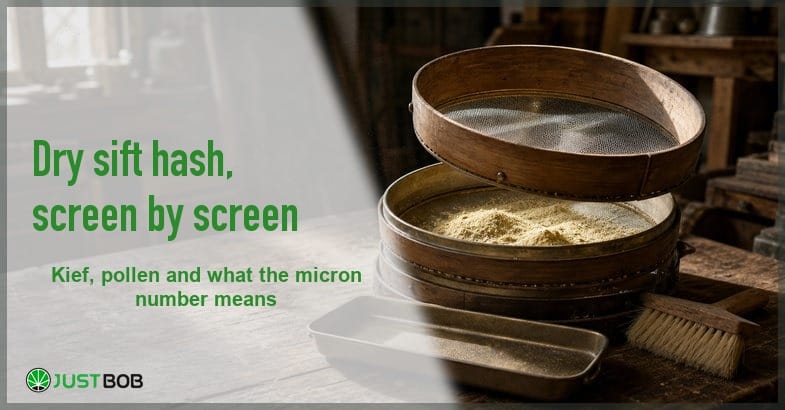
Dry sift hash is the plainest idea in the whole hash family. No water, no ice, no solvent: just dried plant material, a screen and movement. What falls through is resin. What stays behind is leaf. Everything else in this article is detail about how fine that screen is and what the resulting powder looks like once it reaches a jar.
-
 Max CBDAMNESIA CBD BOOSTStarting from: 0,85€/g
Glasshouse | CBD<40%
Grams5 10 20 50 100 200 400 -
Max CBDAK47 CBD BOOSTStarting from: 1,45€/g
Indoor | CBD<47%
Grams5 10 20 50 100 200 -
Max CBDCHARAS
CBD HASH | CBD<45%
Starting from:FLASH SALE -10%
0,90€0,80€/gGrams5 10 20 50 100 200 -
JB OIL 25%Starting from: 14,90€
CBD Oil 25%
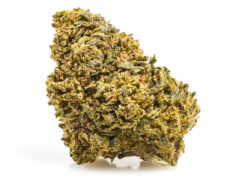
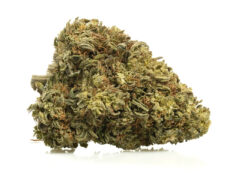

The reason the topic gets confusing is vocabulary. Kief, sift, pollen, sieved hash and screened resin all circle the same object, and a product page may use any of them. So this guide looks at dry sift hash from the buyer’s side of the counter: what the words mean, what the micron number is actually telling you, and how a sifted product differs from one made with water.
The principle, in one sentence
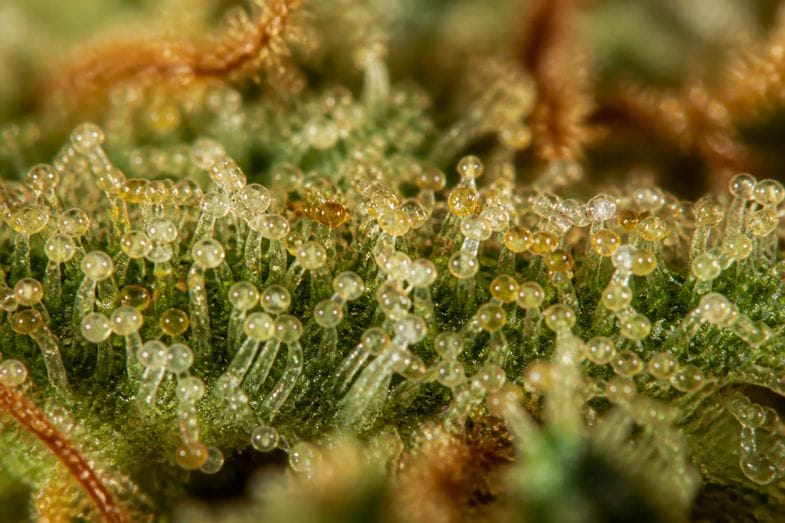
Dry sift hash is resin separated from dried hemp material by mechanical screening alone. The resin lives in the trichomes, the tiny stalked glands that stand on the surface of the flower and hold most of its aromatic compounds. Trichome heads are brittle when dry, so gentle agitation over a mesh breaks them free and lets them drop through, while the bulkier leaf fragments stay on top.
That is the entire principle: the resin heads are smaller than the plant matter around them, and a screen sorts by size.
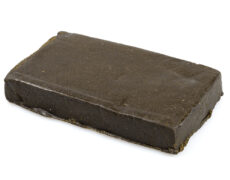
The powder that collects underneath can then be left loose or pressed into a block, which is why the same starting material can appear on a shelf either as a sandy powder or as a firm slab.
Read also: CBD Hash Texture: What Soft, Firm and Crumbly Can Mean
Kief, sift and pollen: three words, one family
These three turn up constantly and they are not quite synonyms.
- Kief is the loose resin powder itself, collected from the screen. The word comes from the Arabic kayf, and it travelled into European trade vocabulary along with the material.
- Sift, or dry sift, names the method and by extension the product of that method.
- Pollen is a commercial name used across European catalogues for sifted resin, sold either loose or pressed. Botanically it is a misnomer, since none of this is pollen, but it has been on labels long enough to be a category of its own.
The honest thing to say, and it rarely gets said, is that these words describe presentation rather than a strict hierarchy of quality. A jar labelled kief and a slab labelled pollen may come from exactly the same screening run.
What the micron number means
The number you see beside a sifted product, usually somewhere between 45 and 160 micron, is the opening size of the mesh used. A micron is a thousandth of a millimetre, so a 90 micron screen has holes ninety thousandths of a millimetre across.
Mature trichome heads on hemp mostly fall in a band between roughly 50 and 120 micron, which is why that range dominates the labels. Head size is not fixed, either. Research published in Plant Cell Physiology in 2025 found that modern cannabis trichomes are larger than those of landrace ancestors. Screening ranges follow botany, not tradition.
A coarser screen lets more material through, including more leaf, and gives a greener, more powdery result. A finer screen holds back the bulk and passes a paler, more uniform powder, but less of it.
Where the numbers on a sieve came from
There is a small piece of industrial history behind that figure. Sieving as a trade is ancient, but for most of its life a sieve was described by eye: fine, medium, coarse, or by whatever the local miller called it. Numbers arrived with industry. In the early twentieth century the W. S. Tyler company published a standard screen scale that fixed mesh counts to defined aperture sizes, giving engineers a shared language for sorting powders in mining, milling and chemistry.
That habit of pinning a name to a measured aperture spread across every industry that sorts powders, hemp resin included. The lineage is not direct, but the idea is the same: a figure you can check beats an adjective you cannot.
Dry sift and water-processed hash, side by side
The other well-known separation route uses ice water instead of a dry screen. Both aim at the same thing, and they arrive by different roads.
- Dry sift: dried material, mesh screens, no liquid. Fast, uses no water, and tends to carry a little more plant matter unless the screening is repeated.
- Water-processed, often called bubble hash: material agitated in ice water so that the brittle resin heads break off and sink, then collected through a series of bags of decreasing micron size.
Neither is inherently superior. They produce different textures and slightly different appearances, and the micron grade tells you more about a given batch than the method name alone does.
Read also: CBD Hash Shapes: Blocks, Pieces And Labels
How sifted resin looks on a shelf
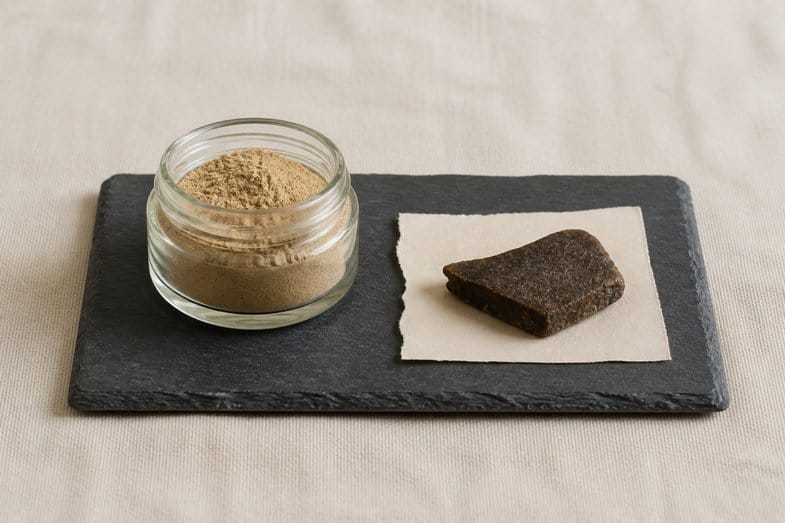
Loose sift is a powder, and its colour runs from pale sand to a deeper gold or light brown depending on the screen and the material. Under a loupe it looks granular rather than glassy. Pressed sift darkens as the resin compacts, so the same batch can be blond as a powder and noticeably browner as a block.
Storage follows ordinary rules for aromatic plant products: a closed container, away from light and heat, at a stable temperature. Our guide to what hash is sets the wider family in order if you want the full map before going further.
Reading a dry sift hash listing
A sifted product is easy to read once you know which fields carry information. The micron grade describes the screen. The colour and texture describe the pressing. The lot number ties the jar in front of you to a record.
On our side of the counter that means every item in the CBD hash range carries a lot number and is backed by an analysis. The grade on the label is not the only thing you have to go on. It is sold for technical and ornamental use.
Curious how a sifted product is actually described? The listings on Justbob are the shortest route.
Frequently asked questions about dry sift hash
What is dry sift hash?
It is resin separated from dried hemp material using mesh screens and movement, with no water, ice or solvent involved. The trichome heads that hold the aromatic compounds are brittle once dry, so they break free and fall through the mesh while larger leaf fragments stay above it. The powder collected below can be left loose or pressed into a block.
Is kief the same as dry sift?
Close, but the words do different jobs. Kief names the loose resin powder itself, dry sift names the screening method and its product, and pollen is a commercial label used for sifted resin, loose or pressed, in many European catalogues. A single screening run can end up described by any of the three, depending on how the result is presented.
What does the micron number tell me?
It gives the opening size of the mesh used, in thousandths of a millimetre. Most hemp trichome heads sit roughly between 50 and 120 micron, so screens in that band are the common ones. A finer screen passes a paler and more uniform powder in smaller amounts, while a coarser one passes more material along with more plant matter.
How does it differ from bubble hash?
Only in how the resin is separated. Dry sift uses screens and dry agitation, while bubble hash uses agitation in ice water followed by collection bags of decreasing micron size. The two routes give different textures and appearances, and neither is automatically better than the other.