
Published on: 14/11/2026
Mac and Cheese strain: the savoury MAC-family cultivar and what the listings say
Mac and Cheese is one of those names that tells you almost nothing until you read the cross underneath it. It has nothing to do with the dish, and the cheese half turns out to be a real parent rather than just a smell: strain databases record the plant as a cross inside the wider MAC family.
-
 Max CBDAMNESIA CBD BOOST
Glasshouse | CBD<40%
Starting from:BLACK MONTH -15%
0,85 €0,70 €/gGrams5 10 20 50 100 200 400 -
Max CBDAK47 CBD BOOSTStarting from: 1,45 €/g
Indoor | CBD<47%
Grams5 10 20 50 100 200 -
Max CBDCHARASStarting from: 0,90 €/g
CBD HASH | CBD<45%
Grams5 10 20 50 100 200 -
JB OIL 25%Starting from: 14,90 €
CBD Oil 25%

Where the Mac and Cheese strain comes from
Strain databases credit Mac and Cheese to the breeder Capulator, and the cross they list is The Mac paired with Alien Cheese. The Mac, usually written MAC for Miracle Alien Cookies, is the side that carries the family name: databases trace it to an Alien Cookies selection crossed with a Miracle line, itself a Starfighter and Colombian pairing. That is the half responsible for the frost and the MAC group’s trademark gassy sweetness.
Alien Cheese is the other half, and it gives the name its second word. The databases describe it as a balanced variety with a funky, blue-cheese and skunk aroma. Where the accounts still drift is over how strongly any given pack leans cheese-forward, so two packs carrying the same name can still smell some way apart.
Read also: Cannabis strains and effects: Dr Ethan Russo’s research.
The MAC family and why these plants share a name
The naming works the way most modern cannabis families do. MAC grew into a family label once the original drew attention, and the cultivars grouped under it either descend from that Alien Cookies cross or were selected inside the same breeding project. When a listing says a variety belongs to the MAC line, it usually means the plant carries that heritage and the frosted, resin-heavy look the family is known for.
Mac and Cheese sits inside that group as a flavour-driven branch. Across the strain sheets the whole MAC family gets a gassy, sweet-and-sour backbone, and here the Alien Cheese parent pushes the savoury side forward. Among its relatives it is the one growers reach for when they want that funky note over the sweeter cookies profile.

Mac and Cheese strain flavour profile and the terpenes behind it
The aroma is the whole reason the name stuck. Breeder catalogues and grower reviews describe a savoury, tangy note they write down as cheese, inherited from the Alien Cheese side, with a bright sour-citrus lift over the top and a diesel-like, gassy base from the MAC parent. It is that savoury edge, more than any sweetness, that sets it apart on the nose from the plainer cookies plants further up the family tree.
Reviews commonly reach for caryophyllene to explain the peppery, savoury part of that smell, with limonene behind it for the citrus. Those aromas come from terpenes the plant builds in its resin glands as it grows. An analysis of terpenes and terpenoids in cannabis sets out how dozens of these compounds, in shifting ratios, account for the very wide spread of smells found across varieties. If the citrus side is what draws you in, our limonene aroma guide covers that single note in more depth.
What the buds look like
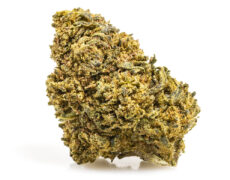
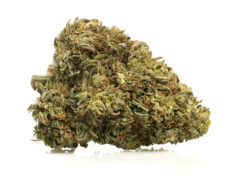
The flowers give a lot away before you read a single label. Photographs published under the name show a dense, chunky structure with the compact build typical of the MAC line, and the first thing most reviewers mention is the resin. The buds read as heavily frosted, coated thickly enough that the surface looks sugared, with bright orange pistils threading through a pale green base.
Colour is the quieter signature. Listings note that many MAC-family phenotypes stay creamy and light rather than dark, though some throw soft purple or lavender tones across the leaves when nights turn cold late in flower. Either way the resin coat is the headline, and it is more than a surface detail: that frost marks out where the aromatic glands sit, since that is where the terpenes are concentrated.

Read also: What Are Trichomes? A Botanical Guide
What grower reviews report about the effects
This section reports the recreational cannabis variety exactly as strain databases, breeder catalogues and grower reviews present it. It is not a description of anything sold on this site, and it is not health information of any kind.
The write-ups tend to start with the potency figures. Databases place Mac and Cheese at around 20 to 25 per cent THC depending on the batch. Reviewers writing about the recreational plant reach for words like uplifting, energetic and euphoric, describing a mood lift and a talkative, creative turn more than a heavy sedative weight. The accounts do not all line up.
Those same figures are where the boundary sits. They come from recreational plants listed in databases and breeder catalogues, grown outside the limits a European crop respects. European hemp is a different product. It is raised from EU Common Catalogue seed, held under the legal THC threshold, and described by a batch analysis rather than a strain sheet. None of the experience reported above applies to it.
Flowering time and how the plant behaves
On the growing notes, databases describe Mac and Cheese as a well-balanced hybrid with a flowering window of about nine weeks, roughly sixty days, indoors. Unlike some of its taller MAC relatives, it is reported to show minimal stretch once it flips into bloom and to stay compact, so plant height stays fairly contained.
Databases rarely give consistent yield figures for the variety, and the write-ups tend to agree that growers keep it for the resin coat far more than for the volume. Canopy management is still described as worth the effort, since the dense flower structure can leave the lower branches short of light. As with every figure on this page, these are the numbers recreational growers report for the variety, not specifications for anything on sale here.
Mac and Cheese against MAC, Alien Cookies and the cheese names
Databases treat MAC itself as the parent standard, gassy and sweet with the trademark frost. MAC 1 is described as a selected cut of that original, while some nurseries present MAC V2 as a later, separate breeding project, so the two are not interchangeable. Further back, Alien Cookies and Starfighter appear as ancestors that lent the group its structure.
The cheese itself comes straight from the Alien Cheese parent, and databases in turn list Alien Cheese as a cross of UK Cheese and Alien Technology. So the cheese does trace back to the well-known UK Cheese line, a couple of steps up the tree, even though Mac and Cheese stands as its own cultivar two generations on from it. The wider point holds across the group: the recorded lineage places a plant within the family, whatever the marketing name on the front.
What a MAC or cheese name means on a European hemp label
Everything above refers to recreational genetics documented in overseas databases. A European hemp label reads the same words in another key. Here a variety name simply flags an aroma family and a look: the flower comes from certified EU Common Catalogue seed, and its lab analysis defines it in place of a strain sheet.
That is the frame to keep in mind when a MAC or a cheese name appears next to a European product. Our CBD flower listings, for instance, describe hemp by its aroma and its lab results rather than by the reported effects of a recreational plant.
That applies to the smaller formats too. The small buds grade is the identical flower in a more compact size, sold and described on the same terms.
Mac and Cheese in brief
Mac and Cheese is a cross of The Mac and Alien Cheese, a savoury branch of the wider MAC (Miracle Alien Cookies) family, with the cheese tracing back through Alien Cheese to the UK Cheese line. Databases agree on a tangy, blue-cheese and sour-citrus aroma over a gassy base, on dense and heavily frosted buds, and on a compact, well-balanced plant with a flowering window of about nine weeks. Because the family is large and the names travel loosely, it is worth reading the parents printed under any listing before you trust the name alone.
Frequently asked questions about the Mac and Cheese strain
What is the Mac and Cheese strain?
Mac and Cheese is a cannabis variety credited to the breeder Capulator, recorded by strain databases as a cross of The Mac and Alien Cheese. The Mac, short for Miracle Alien Cookies, brings the frosty, gassy MAC-family character, while Alien Cheese contributes the funky, blue-cheese note the second word points to. It is a variety recorded in recreational databases abroad, not a product sold on this site, and it is not health information of any kind.
Is Mac and Cheese indica or sativa?
Breeder listings generally describe Mac and Cheese as a well-balanced hybrid, with the reported effects leaning a little to the energetic, sativa side rather than the sedative one. It is a note about character rather than a precise measured split, and the reviews are not unanimous. All of this concerns the recreational variety as catalogued in overseas strain databases. It describes nothing sold on this site, and it is not health information of any kind.
What does the Mac and Cheese strain smell and taste like?
Reviews and breeder catalogues describe a savoury, tangy note written down as cheese, inherited from the Alien Cheese parent, with a bright sour-citrus lift and a diesel-like, gassy base from the MAC side. Reviewers commonly point to caryophyllene for the peppery, savoury part and limonene for the citrus. These observations are logged for the recreational variety. A European hemp product, by contrast, is defined by its own aroma and by its batch analysis.
How much THC does the Mac and Cheese strain have?
Strain databases record recreational Mac and Cheese at around 20 to 25 per cent THC, depending on the batch, and most do not report a meaningful CBD figure. Those figures come from databases covering recreational plants grown overseas. They say nothing about European hemp, a crop kept under the legal THC threshold, grown from EU Common Catalogue varieties and sold on its batch analysis rather than a recreational strain sheet.
Is Mac and Cheese related to the Cheese strains?
The cheese is not just a flavour word: it comes from the Alien Cheese parent, and databases list Alien Cheese in turn as a cross of UK Cheese and Alien Technology. So Mac and Cheese does trace back to the well-known UK Cheese line, a couple of steps up its family tree, while still standing as its own distinct cultivar a couple of generations on from that Cheese line. The parents recorded under a listing, more than the flavour word in the name, tell you where a plant sits in the family.