Modified on: 17/09/2026
How to Read a CBD Flower Lab Report
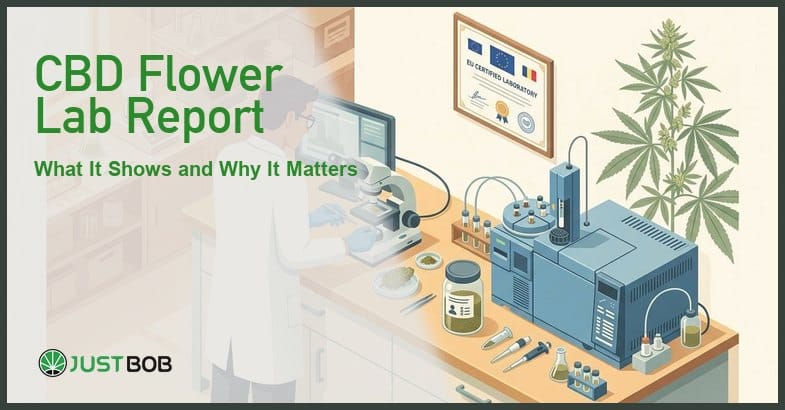
A lab report for CBD flower is not the flashiest part of the product page. It is usually a table, a date, a batch number and a few lines of lab language. Still, for a careful reader, it is the paper trail behind the flower. In the world of Justbob, that small document can say more than a long list of adjectives.
Think of it as an identity card. The flower may have a name, aroma notes and product photos, but the report tells you which batch was tested, which cannabinoids were measured and whether the document is fresh enough to be useful. No confetti, no drum-roll, just numbers doing their quiet job.
That is why a CBD flower lab report should be viewed as a practical reference rather than a decorative feature. A useful CBD flower lab report is not a simple badge: it is the document that lets the reader connect a product page with a batch, a date and measured values.
-
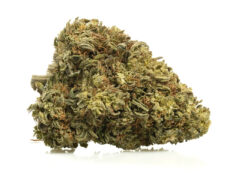
 Max CBDAMNESIA CBD BOOST
Glasshouse | CBD<40%
Starting from:FLASH SALE -10%
0,85 €0,75 €/gGrams5 10 20 50 100 200 400 -
Max CBDAK47 CBD BOOSTStarting from: 1,45 €/g
Indoor | CBD<47%
Grams5 10 20 50 100 200 -
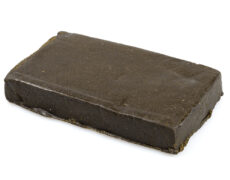
Max CBDCHARASStarting from: 0,90 €/g
CBD HASH | CBD<45%
Grams5 10 20 50 100 200 -
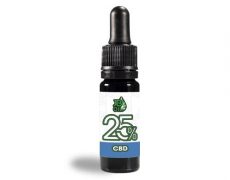
JB OIL 25%Starting from: 14,90 €
CBD Oil 25%
In our view, this is where CBD e-commerce has become more grown-up. A few years ago, many product pages leaned heavily on mood and vocabulary. Today, the better habit is simpler: read the certificate of analysis before you fall in love with the label.
Justbob applies this habit across its catalog. Every batch offered for sale undergoes laboratory analysis on an ongoing basis, and the corresponding laboratory documentation is available on each product page. The goal is practical: keep quality control visible, make product checks easier to read and give customers a clearer way to compare CBD products before choosing.
What a CBD flower lab report is
A lab report for CBD flower is a document issued following laboratory testing of a specific sample of hemp flower. It may also be called a certificate of analysis, or COA. In plain English, it is the document that connects a product, a batch and a set of measured results. The key point is “specific sample”. Lab reports are not meant to describe every CBD product in a catalog forever. A report is linked to a specific batch, and the batch is the bridge between the flower in the jar and the numbers on the page.
A solid certificate of analysis usually shows the testing laboratory, sample date, batch or lot reference, testing method and results. The details matter because a COA without identity is like a passport without a photo. It may look official at first glance, but you still need to know who or what it belongs to. For CBD products, the report is also a way to keep the product page grounded. It provides measured information about CBD content, cannabinoid profile and other analytical parameters. It cannot turn a product into something it is not, and it should never be used as a shortcut for personal advice or legal interpretation.
This is why batch-level analysis matters in a real shop environment. When each product page includes its corresponding documentation, the customer does not need to rely only on words such as selected or premium. The page can show the report, the report can show the batch, and the batch can show the checks behind that specific item.
Read also: CBD Oil Certificate Checklist: What To Read – Justbob
Batch numbers, dates and sample identity
The first part of a certificate of analysis is often the least exciting and the most useful. Look for the batch number, sample name, collection date, analysis date and laboratory reference. This is where a lab report stops being a generic document and starts becoming traceable. If the product page mentions one batch and the COA shows another, that mismatch deserves attention. It does not automatically mean something dramatic, but it does mean the document is not doing its job clearly. Good CBD certificates should reduce confusion, not invite a detective novel.
Dates also matter. Hemp flower is a plant material, and product documentation should be recent enough to reflect the batch being offered for sale. A certificate of analysis from a third-party laboratory is strongest when it clearly corresponds to the batch currently available, not to a distant batch from another season.
The manufacturer or supplier name can appear in different ways depending on the laboratory and the reporting format. The key point is consistency. The product name, batch ID and certificate of analysis should point in the same direction, like three signs on the same road rather than three people giving directions at once.
Cannabinoid profile, CBD content and THC threshold
The cannabinoid profile is the part most readers open first. It lists the cannabinoids detected during testing and their measured concentrations. In this section, the table commonly includes CBD, THC and other cannabinoids, depending on the method used by the laboratory.
The CBD content may be shown as a percentage, as milligrams per gram, or both. Percentages are easy to compare, but the report should also make clear whether the result refers to the raw flower sample and how the analysis was performed. A clean table is helpful, but the tiny notes below the table sometimes carry the most important context.
THC is another line people notice quickly. According to the European Commission guidance on industrial hemp, EU agricultural provisions use a 0.3% THC limit for certain hemp material and certified seed contexts. A lab report can help document measured levels, while the product page still needs to comply with the applicable regulations in the market where the product is sold.
Do not read that profile as a promise about personal experience.
It is a chemical snapshot of the sample, not a guarantee about its characteristics beyond the measured analytical results. This distinction keeps the article honest and keeps the COA in its proper place: useful documentation, not a crystal ball.
Terpenes, aroma notes and the limits of a COA
Some lab reports include a terpene profile. Terpenes are aromatic compounds found in many plants, including hemp, citrus peel, herbs and pine needles. In CBD flowers, terpenes can help explain why one strain smells greener, fruitier, sharper or more resinous than another.
This is where the document becomes slightly more human. A terpene profile can make a dry table feel like a map of the flower’s aromatic profile. Limonene, myrcene, pinene and caryophyllene are not poetry, admittedly, but they can help explain why two flowers with similar CBD percentages may have noticeably different aromas. For CBD products, this additional information can make the documentation easier to connect with the product page.
Still, aroma is not the same as a promise. A certificate of analysis can show measured terpenes and cannabinoid content, but it cannot replace the information provided on the product page or careful reading of the product description. The COA records the analytical results, while the product page provides the broader context for the product.
Heavy metals, mold and other screening lines
Beyond cannabinoids and terpenes, many CBD lab reports include screening for contaminants. Depending on the laboratory and the product category, the document may mention heavy metals, residual solvents, pesticides, microbial limits, yeast, mold or other unwanted compounds. The important word is screening. A line about heavy metals is not there to decorate the page. It tells the reader whether that parameter was tested and what the result was. Some documents use simple terms such as “Pass” or “Fail”; others list measured levels and reference limits.
Heavy metals can appear in laboratory reports because hemp is a plant, and plants interact with soil. That does not make every flower suspicious. It simply explains why testing exists. Just as food labels identify allergens to improve transparency, a good COA lists screening categories to document the checks that have been performed. Mold and microbial screening results should also be read carefully. A “Pass” result is helpful, but the COA should make clear which test was performed and when. If the section is missing entirely, the reader should not assume the outcome. Missing information is not the same as a clean result.
For CBD products, quality control is often the result of many routine checks rather than a single certificate or claim. The best lab reports make those checks visible. By contrast, weaker documentation often relies on vague marketing terms such as “premium”, “pure” or “certified” without providing the underlying analytical data.
Third party lab testing and CBD certificates
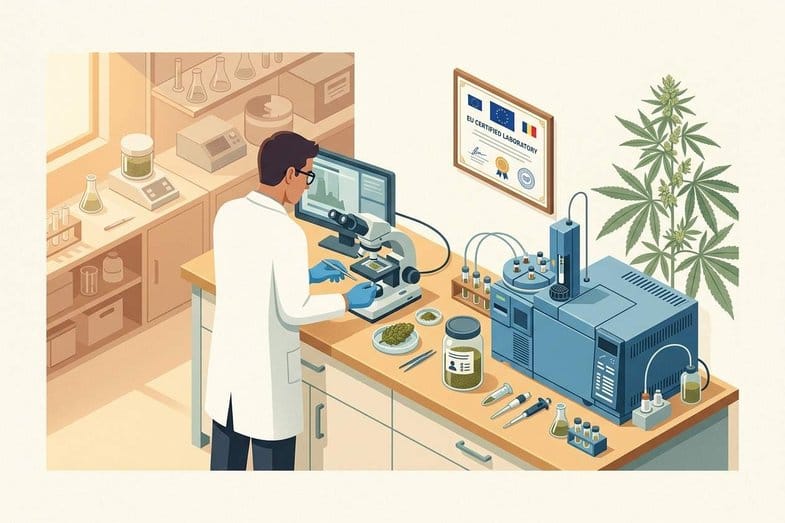
Third party testing matters because independence matters. A third party lab is separate from the seller or manufacturer, which makes the results more useful than an internal statement with no outside verification. It is not magic, but it is a better starting point. When a page mentions a certificate of analysis (COA), look for the laboratory name. A real third party report usually names the lab, includes a report number, and shows contact or accreditation details. The more traceable the document is, the easier it is to trust the information it contains.
CBD certificates are not all formatted the same way. Some are clean, one-page summaries. Others are longer documents with several pages of analysis, method notes, and appendices. Understanding the fields of a CBD flower COA makes it easier to locate the batch information, cannabinoid results and other key details, even when the document uses a more technical format. Do not panic if the layout looks technical. Start with the simple questions: what was tested, when, by whom, and for which batch?
The phrase “certificate of analysis (COA)” can sound like lab paperwork with a tie on, but the idea is straightforward. It is a readable summary of testing results. Once you know where to look, the document becomes less intimidating and more like a checklist.
One small editorial rule helps: trust documents before adjectives. A product page may say “carefully selected” or “well documented.” A COA shows whether the basic checks are visible. Good CBD certificates and lab reports should make the conversation calmer, not louder.
Read also: CBD Extract Texture: How To Read The Format
How to compare a lab report and a product page
The best way to use the report is to compare it with the page it supports. Start with the product name and batch. Then compare the cannabinoid profile, CBD content, THC content, and any terpene profile. If the numbers are easy to connect, the page feels more transparent.
Next, check whether the report supports the type of product being described. A CBD flower page should not rely on a generic extract report. A flower COA should refer to the flower itself, with sample weight, plant material, or similar details that make sense for the category. If you are browsing CBD flower, this habit helps you separate product storytelling from product documentation. Both can be useful, but they serve different purposes. Storytelling helps you understand the item; testing helps you verify the underlying details.
Also check whether the file is readable. Blurry scans, cropped pages, and tiny screenshots create friction. A certificate of analysis should not require a magnifying glass and a heroic attitude. Clear documents are part of a professional customer experience.
Final checklist before trusting the document
Before treating a COA as useful, run through a short checklist. Does it name the laboratory? Does it show a batch number? Does it include a date? Does the cannabinoid table match the product page? Does it mention THC levels clearly? Are heavy metals or other screening lines present when they should be?
Then ask the small question: what is missing? Sometimes the missing section tells you as much as the section that is present. A clean certificate of analysis gives you enough details to understand the report without guessing.
The right attitude is neither suspicious nor naive. It is simply attentive. Lab reports, CBD certificates and product pages work best when they speak to each other. When CBD products are documented this way, the reader gets a clearer view without needing to become a laboratory technician for the afternoon.If you want to keep this checklist in mind while browsing, take the document habit with you. It is a small extra step, but it makes every product page easier to read.
🌿At Justbob, we believe that clear information helps customers make more informed choices. Explore our CBD products and discover a selection supported by transparent product documentation.
Frequently asked questions about CBD flower lab reports
What is a CBD flower lab report?
This lab report is a testing document for a specific hemp flower sample or batch. It usually shows cannabinoid levels, sample identity, laboratory details and the date of analysis.
What should a CBD flower certificate of analysis show?
A CBD flower certificate of analysis should show the batch number, lab name, testing date, cannabinoid table, THC line and any relevant screening categories. Clear CBD lab reports make the product page easier to verify.
Is a COA enough to compare CBD products?
A COA is useful, but it is only one part of the comparison. It should be read together with the product page, label details, batch identity and the overall clarity of the seller’s documentation.