Modified on: 17/09/2026
What CBD Oil Lab Testing Adds to a Label
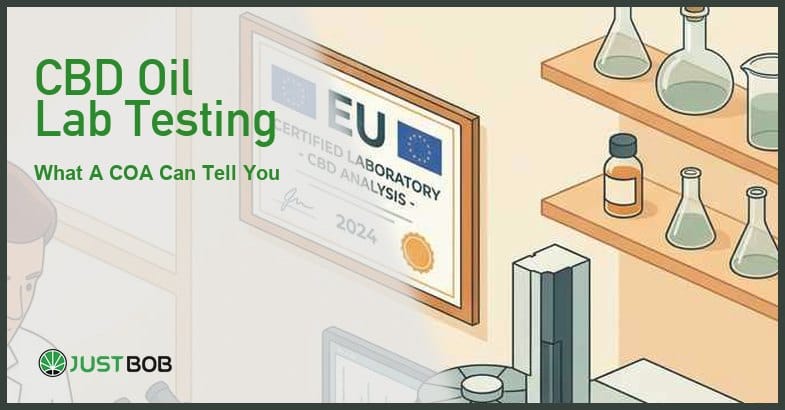
Lab testing can sound dramatic, but the useful part is usually quiet: sample name, batch number, date, cannabinoids, THC information and a few rows that ask to be read slowly. It is not a spy film. It is more like checking a receipt before leaving the shop, only the receipt happens to include chemistry. In the Justbob catalogue, that kind of document helps the label, product page and batch information speak the same language.
This article explains how a certificate of analysis works for CBD oil, what lab documents can show and what they should not be asked to prove. The aim is product transparency: clear documents, clear batch identity and quality checks that customers can actually find.
-
 Max CBDAMNESIA CBD BOOSTStarting from: 0,85 €/g
Glasshouse | CBD<40%
Grams5 10 20 50 100 200 400 -
Max CBDAK47 CBD BOOST
Indoor | CBD<47%
Starting from:HALLOWEEN SALE -10%
1,45 €1,30 €/gGrams5 10 20 50 100 200 -
Max CBDCHARAS
CBD HASH | CBD<45%
Starting from:HALLOWEEN SALE -10%
0,90 €0,80 €/gGrams5 10 20 50 100 200 -
JB OIL 25%Starting from: 14,90 €
CBD Oil 25%
JustBob analyses all available CBD products and their batches on an ongoing basis. The relevant certificate of analysis is available inside each product page, so the CBD content, label details, COA and quality documentation can be compared without hunting through the site like a person looking for a charger in a suitcase. When we say CBD oil lab testing, this is the practical meaning: a document connected to the product, not a loose promise. Good CBD oil lab testing information should help the reader find the batch, compare the label and understand what the certificate can actually show.
What lab testing means for CBD oil
Lab testing for CBD oil means sending a sample to an independent laboratory where specific product characteristics can be measured and documented. The report may include a cannabinoid profile, THC testing, heavy metal screening, pesticide analysis, residual solvent testing, batch references, and other quality checks.
The key word is “specific.” A certificate of analysis (COA) should not be a generic promise about every product forever. It should be linked to a sample, a batch, a date, and a product page. Without that connection, the document becomes little more than decorative paperwork. A COA is useful because it turns abstract claims into verifiable data that can be checked. CBD certificates are not glamorous, but they provide the transparency that matters on a technical product page. In our view, boring documents are often the most helpful ones.
For CBD products, this is also a way to keep labels honest. If the label says one thing and the COA shows another, the reader has a reason to slow down. If the label and the reported values agree, the page feels more trustworthy and easier to compare.
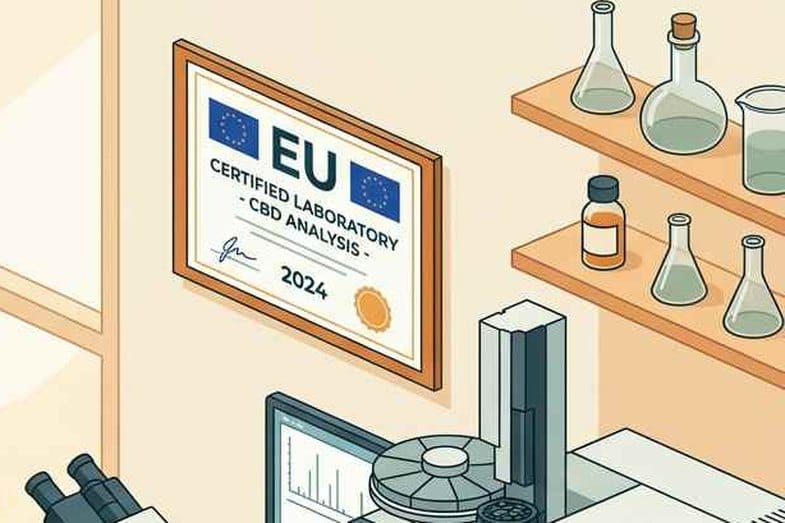
Read also: CBD Flower Lab Report: How to Read a COA – Justbob
COA, batch and sample identity
The first lines of a certificate of analysis (COA) are often the most important: the laboratory name, sample description, batch number, report date, and sometimes the testing services requested. These details tell the reader what was tested and when.
Batch identity matters because CBD products are made in batches. A CBD oil label can show a batch code, while the product page can display the corresponding certificate of analysis (COA). When those pieces line up, the document becomes traceable. Third-party testing adds another layer. A third-party laboratory is separate from the seller or manufacturer, which makes the report more useful than an internal record. Third-party testing services are not a magic wand, but they provide a stronger foundation for CBD certificates and quality documentation for CBD products. The sample description should also make sense. If a page is about CBD oils, the certificate should not look like it belongs to flowers, hash, or another product category. Clear lab reports help avoid that confusion.
Accredited laboratories usually work with defined methods, measurement ranges, and industry standards. That matters because purity screening, cannabinoid analysis, and contaminant checks need a consistent framework. A third-party report is easier to read when the laboratory explains what was tested, how the sample was identified, and which standards were used to produce the result. It also keeps quality control for CBD linked to documentation instead of adjectives. A clean report can still be short, but it should never feel anonymous.
Cannabinoid analysis and THC threshold
Cannabinoid analysis is the section most readers open first. It typically shows CBD content, THC levels, other cannabinoids, and their concentrations. Some reports list results as percentages, others by weight or concentration. The format may change, but the purpose is the same: to show measured values for the tested sample.
THC testing is especially important because the THC result connects the product page with regulatory thresholds and brand controls. According to the European Commission hemp page, EU agricultural provisions use a 0.3% THC limit for certain industrial hemp contexts. A CBD oil certificate of analysis (COA) can document the measured THC level for a specific batch. The report can also show whether the product is full-spectrum or whether the cannabinoid profile is more limited. Claims of a full-spectrum product should still be checked against the reported values. Full-spectrum on the label, full-spectrum in the product description, and full-spectrum details in the COA should not be three separate stories.
A certificate of analysis (COA) can make this comparison easier. It does not replace the label, but it gives its claims a measured backbone.
Heavy metals, pesticides and residual solvents
Good CBD testing often includes more than just cannabinoids. Depending on the product and the scope of the laboratory’s analysis, a report may screen for heavy metals, pesticides, residual solvents, microbial indicators, and other contaminants.
Heavy metals appear in reports because hemp is a plant, and plants interact with soil. Seeing a heavy metals section is not a reason to panic. It is a sign that the laboratory has assessed a category that can matter for product quality and quality assurance. Pesticides and residual solvents are similar. The reader should look for what was tested, which method was used, and whether the results are presented clearly. A pass/fail summary can be helpful, but measured results and reference standards usually provide more context.
Heavy metals, pesticides, and solvents also show why a certificate of analysis is more useful than a slogan. The phrase “highest quality” can sound appealing; a report that lists heavy metals and contaminants provides something more concrete. Looking at CBD oil ingredients alongside laboratory results can help consumers better understand what is inside the bottle and how quality checks support product transparency.
Lab report vs label
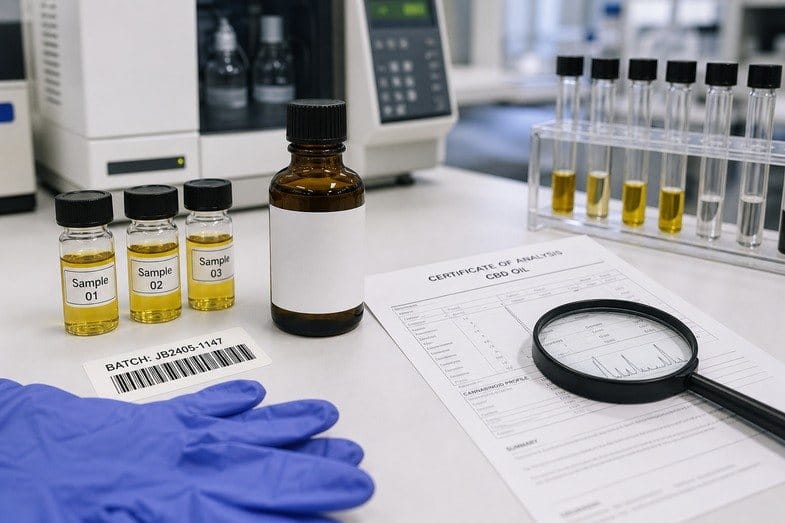
The label and the lab report should agree. That sounds obvious, but it is one of the best checks a reader can make. The label may show CBD content, the batch number, product type, and its intended purpose statement. The lab report should support those details.
Understanding what a CBD oil product label reports makes it easier to compare its key details with the corresponding laboratory results and identify any discrepancies.
A useful CBD oil page lets customers move from the label to the certificate of analysis (COA) without guessing. The report should show the product name or sample description, the batch or lot number, the analysis date, and the reported results. If the page makes that path easy, the testing information feels practical rather than ornamental. CBD certificates also help separate product composition from marketing language. A manufacturer may describe a product as “carefully produced,” “selected,” or “premium.” The COA should show what was actually analysed and measured.
This is where Justbob’s batch-level approach matters. All commercialised products and their batches are analysed, and the related COA is made available on the product page. The customer sees the label, then the certificate, then the reported results.
The factors behind CBD oil prices can also be considered when comparing products, alongside their composition, batch documentation and laboratory results.
What lab testing does not say
Lab testing has limits. A certificate of analysis (COA) can show cannabinoid levels, THC testing, heavy metal screening, purity checks, pesticide screening, and other test results. It cannot say whether a product is suitable for an individual’s specific circumstances.
It also should not be used as a shortcut for personal advice. A lab report is a product document, not a guide to routines, outcomes, or individual physiological responses.
Whether you can take too much CBD is a separate question that cannot be answered by laboratory testing alone, as a COA describes the product rather than an individual’s circumstances.
CBD oil for pets should also be considered separately, since product documentation does not determine whether a CBD product is appropriate for a specific animal.
Keeping that boundary clear protects the quality of the information.
Some market language around CBD testing uses broad reassuring terms. More reliable wording is simply more precise: lab testing supports visible quality checks and product safety controls for a specific batch. It does not create an absolute guarantee about every possible situation. That distinction may sound careful, and it should. Good CBD certificates are strongest when they stay focused on their purpose.
How to read CBD certificates without getting lost
Start with the header. Does the certificate of analysis (COA) name the laboratory? Does it include the sample, batch, and date? Then move to cannabinoid analysis. Are CBD content, THC levels, and other cannabinoids listed clearly?
Knowing the layout of a CBD oil certificate makes it easier to find the laboratory details, batch information, cannabinoid results and contaminant checks without overlooking important details.
Next, check the contaminant sections. Heavy metals, pesticides, residual solvents, and other contaminants should be easy to find if they were part of the testing services. If a section is absent, do not assume the result. Missing information is not the same as a clean result.
Then compare the COA with the label. Does the batch match? Does the CBD content fall within the same range? Do the reported results support the product page? This is simple work, but it is valuable work.
Across CBD products, that habit keeps the comparison grounded. CBD products can have different formats, CBD certificates, and full-spectrum descriptions, but the reader is still asking the same sensible questions: What was tested? Which batch? Which lab? Which purity or contaminant sections are included? Do the CBD product page and the certificate agree?
Read also: CBD Flower Terminology: A Clear Hemp Glossary – Justbob
Final reading checklist
Before trusting a certificate of analysis (COA), run a short checklist: laboratory name, sample identity, batch number, date, cannabinoid analysis, THC line, heavy metals section, pesticides section, residual solvents, contaminants, and label consistency. Then ask the quiet question: does the document make comparison easier? A good COA should not feel like a locked cabinet. It should help customers read CBD products with more clarity. CBD testing is not about drama. It is about clear documents, measured contents, traceable batches, and quality checks that can be verified twice. When the label and certificate of analysis agree, the product page earns a little more trust the old-fashioned way: by showing its work.
For customers looking for CBD products backed by transparent information, Justbob applies a batch-level testing approach, making laboratory documentation available alongside its products. From CBD oils to other CBD formats, each product is supported by quality checks designed to help customers understand what they are choosing.
🌿Discover Justbob’s CBD products, including its CBD oil, and explore products with clear composition details and dedicated testing documentation.
Frequently asked questions about CBD oil certificates
What is lab testing for CBD oil?
It is laboratory analysis of a specific CBD oil sample or batch. The report can show cannabinoid levels, THC testing, batch identity and selected quality checks such as heavy metals or contaminants.
What is a COA for CBD oil?
A COA is a certificate of analysis. For CBD oil, it should connect the product and batch to lab results, including cannabinoid analysis, THC line, date and laboratory details.
Should the lab report match the CBD oil label?
Yes. The lab report should match the product name, batch reference and key label details. If the label and COA do not align, the document should be reviewed carefully before comparison.