Modified on: 24/07/2026
Plant compound words in a clean glossary
A hemp plant compounds glossary should feel like a clean index box, not a chemistry cliff. It gathers the everyday words for the things a hemp plant naturally makes, gives each a plain definition, and stops there. This page keeps to that idea. It explains the compound vocabulary you meet on product pages and labels, stays with the plant’s own naturally occurring compounds, and keeps the focus on neutral plant vocabulary.
-
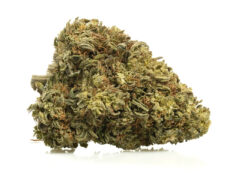
 Max CBDAMNESIA CBD BOOSTStarting from: 0,85€/g
Glasshouse | CBD<40%
Grams5 10 20 50 100 200 400 -
Max CBDAK47 CBD BOOSTStarting from: 1,45€/g
Indoor | CBD<47%
Grams5 10 20 50 100 200 -
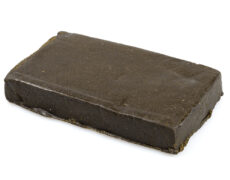
Max CBDCHARAS
CBD HASH | CBD<45%
Starting from:SUMMER SALE -10%
0,90€0,80€/gGrams5 10 20 50 100 200 -
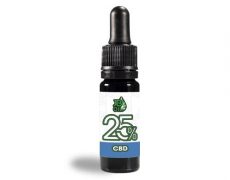
JB OIL 25%Starting from: 14,90€
CBD Oil 25%
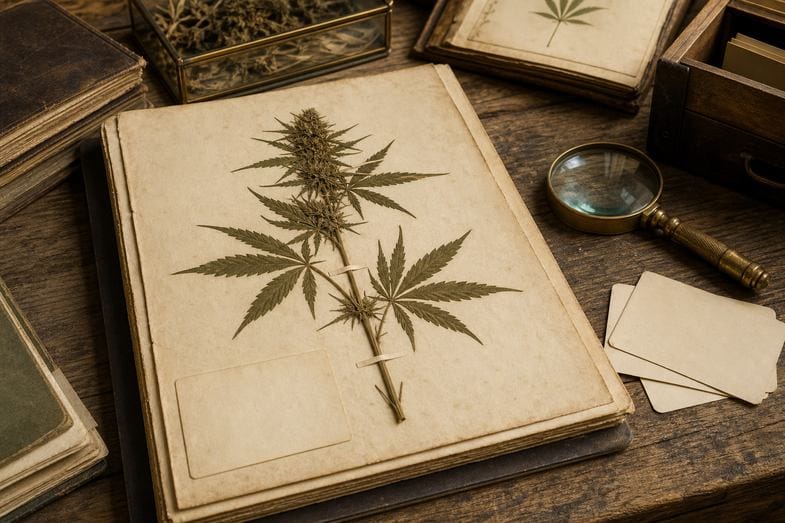
Think of a drawer of index cards, one term to a card. Acronyms behave much better once each gets its own plain label, and that is really all a glossary is: a row of cards, in order, written in words anyone can read.
What a hemp plant compounds glossary is, and is not
A hemp plant compounds glossary is a list of the naturally occurring compounds linked to the hemp plant, each paired with a clear, non-technical definition. It is a reading aid for product pages, not a science syllabus. The aim is to recognise a word when it appears on a label, not to study how anything is made.
Just as importantly, this glossary is about the plant’s own compounds only. It does not cover manufactured or synthetic substances, which belong to a different and unrelated subject. Everything below names something the hemp plant produces by itself.
Cannabinoids: the headline compound family
Cannabinoid is the umbrella word for a family of compounds the hemp plant forms in its resin. CBD is the one most product pages name first; others, written as short codes such as CBG and CBN, appear as further compounds the plant produces on its own. On a label a cannabinoid usually shows up as a name beside a figure, and nothing more is implied by the entry itself.
One more cannabinoid word is worth knowing as a measurement term: THC is the compound checked against the 0.3 percent threshold harmonised at European level. On a hemp page it functions as a number to be verified, a line on the certificate rather than a feature of the product.
Terpenes and flavonoids: the aroma and pigment words
Terpenes are the aroma compounds of the plant, the part of the vocabulary that explains why one variety smells of pine and another of citrus. They are described by scent words on a product page, and our guide to the CBD flower terpene profile walks through how those aroma notes are read.
Flavonoids are the companion word: a group of plant compounds found across the botanical world, associated with the colour and tone of plant material rather than its smell. Together, cannabinoids, terpenes and flavonoids make up the three compound families a hemp glossary most often has to define.
Where the three families sit on the plant
These three families do not appear in the same way on a page. Cannabinoids are usually listed as names and figures, terpenes as aroma vocabulary, and flavonoids as colour-and-plant-tone vocabulary. The point is not to add more label categories; it is to keep the three family names separate and easy to tell apart when they share a line.
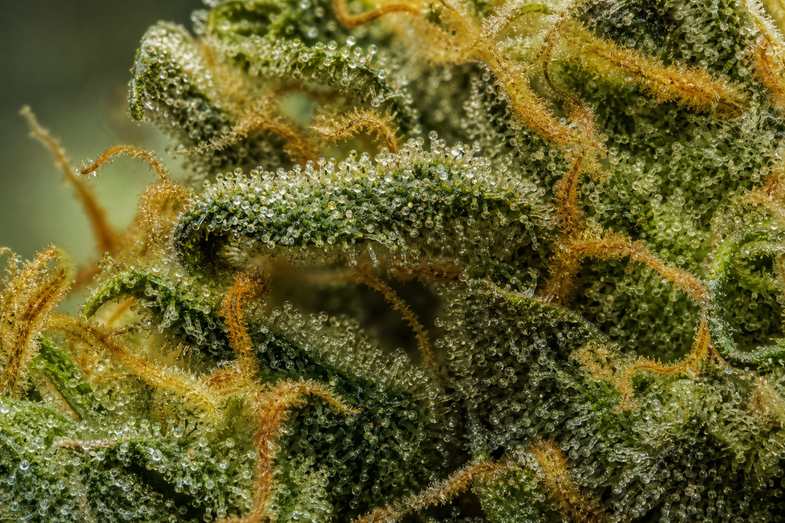
Trichome is a useful supporting word. It names the tiny resin glands on the flower surface, where cannabinoids and terpenes are formed. It is not a fourth compound family, but it helps connect the vocabulary back to a visible plant structure, and that link is exactly the kind of thing an index card is good at holding.
The botanical name behind the label
The oldest term in the box is the plant’s own name. Hemp is written on labels as Cannabis sativa L., and the lone capital L is a tribute hiding in plain sight. It marks Carl Linnaeus, the Swedish naturalist who fixed the two-part naming system and described the species in his Species Plantarum of 1753.
So every time a label reads Cannabis sativa L., it is quietly citing a glossary entry more than two and a half centuries old. The naming habit that lets a plant carry one agreed term across borders began with that single initial.
How the words map to labels and documents
A glossary earns its keep at the point where a word meets a document. A cannabinoid name on a label should line up with the same name on the certificate of analysis; a terpene word should match the aroma description; the botanical name should be consistent from page to page. The vocabulary, in other words, is there to be checked.
This is why the definitions stay plain. A reader does not need the chemistry to use the page; they need to recognise the term, find it on the label, and confirm it against the paperwork for that batch.
What this glossary leaves out
A glossary is defined as much by what it excludes. This one leaves out terms from any non-plant-made category, because they are not part of the hemp plant and have no place in a plant-compound vocabulary. The boundary is simple: the list stays with plant compounds and document words only.
So the box stays clean: plant compounds, plant names, label and document words, and nothing borrowed from another subject. For an official overview of hemp as an agricultural crop, the European Commission page on hemp sets out the wider framework.
A plant-compound vocabulary on a Justbob page
On a CBD flower page, this vocabulary is already at work: a cannabinoid name and figure, a terpene description, the botanical name, and the certificate that confirms them. A glossary simply makes those words easier to follow.
Every product on a Justbob page sits inside the EU industrial hemp framework, with THC kept at or below the 0.3 percent threshold harmonised at European level. The products are offered for technical, scientific and ornamental purposes only, and the compound vocabulary is part of how each page is kept readable.
Frequently asked questions about hemp plant compounds glossary
What is a hemp plant compounds glossary?
It is a plain-language list of the naturally occurring compounds linked to the hemp plant, with a clear definition for each term. It usually covers the three main families, cannabinoids, terpenes and flavonoids, along with the botanical name and the label words that go with them. Its job is to help a reader recognise a term on a product page and check it against the documents, not to teach the underlying chemistry.
What does this glossary leave out?
It leaves out anything that is not a naturally occurring hemp plant compound. The list stays with cannabinoids, terpenes, flavonoids, the botanical name and the document words needed to read a product page. That keeps the vocabulary tied to the plant and to verifiable label information.
Why check product documents?
Because the glossary word and the document are meant to agree. A cannabinoid name on the label should match the certificate of analysis, which records the cannabinoid figures and the THC reading against the 0.3 percent threshold harmonised at European level for that batch. Reading the term and confirming it against the paperwork is how the vocabulary stays useful.