Modified on: 16/06/2026
A dramatic name with a practical product route
CBD moonrock is a visual format first: a little geology nickname, a lot of product-page checking. The name borrows from lunar rock, but the useful part is plainer than the word suggests: a coated, dusted piece of hemp extract, described by how it looks and confirmed on paper. This guide reads it as an extract format, on appearance, label and document, and it leaves the dramatic name to do nothing more than catch the eye.
-
 Max CBDAMNESIA CBD BOOST
Glasshouse | CBD<40%
Starting from:SUMMER SALE -10%
0,85€0,75€/gGrams5 10 20 50 100 200 400 -
Max CBDAK47 CBD BOOSTStarting from: 1,45€/g
Indoor | CBD<47%
Grams5 10 20 50 100 200 -
Max CBDCHARASStarting from: 0,90€/g
CBD HASH | CBD<45%
Grams5 10 20 50 100 200 -
JB OIL 25%Starting from: 14,90€
CBD Oil 25%
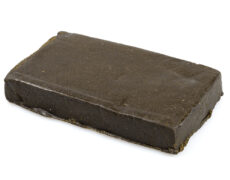
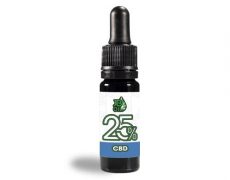
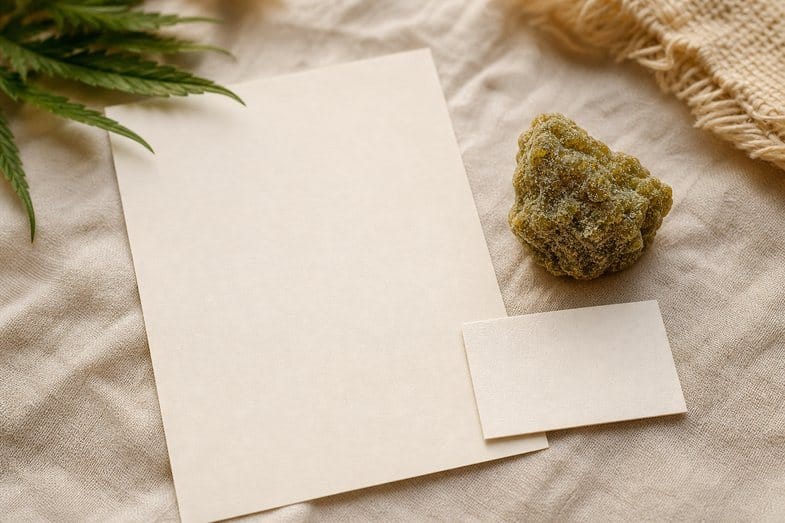
Picture a small pebble-like piece on a display dish, its product card and certificate beside it. That is the honest setting for the word. CBD moonrock is best understood as an object with a recognisable look and a document, and the striking name is far less useful than the calm description that sits beside it on the card.
What cbd moonrock means
CBD moonrock is a hemp extract format in which a piece is coated and dusted so it reads as a small, craggy nugget, drawn from Cannabis sativa L. grown as an agricultural crop. The name describes an appearance, not a promise: a textured, pebble-like format that sits in the extracts family. Read plainly, CBD moonrock names a look and a place on a page, offered for technical, scientific and ornamental purposes.
Kept at that level, the term stays steady. CBD moonrock is the craggy, coated entry among the extract formats, distinct from a glassy sheet or a loose crumble by the way it looks. The job of this page is to describe that appearance clearly and to point a reader toward the CBD extracts category, where the actual products are listed and compared.
Texture and appearance
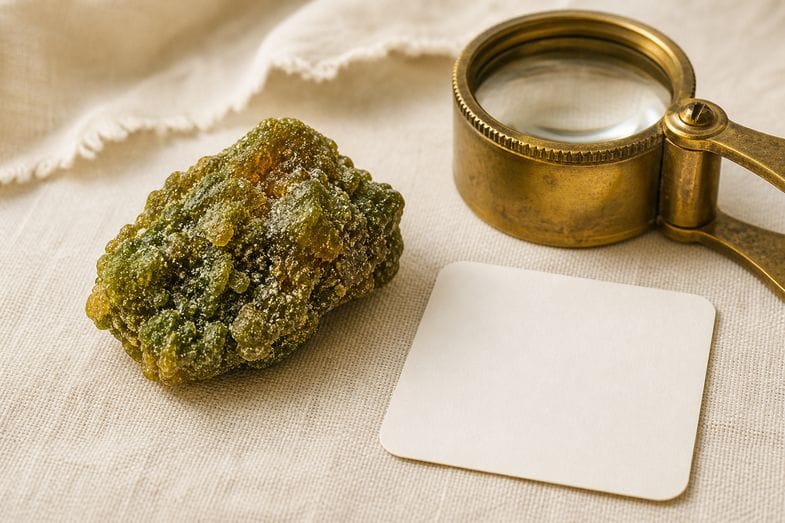
Appearance is where the description becomes concrete. CBD moonrock typically reads as a rounded, craggy piece with a dusted surface, in tones from green to pale gold, looking denser and more textured than a plain bud. These are descriptive notes about how the format looks, the kind of detail a reader can confirm on a product card.
Read this way, the appearance is simply a characteristic. A craggy, dusted surface is a visible fact about the format, not a claim of any kind, and it sits beside the colour and the named figures as part of the description. The dramatic name is just shorthand for that look, and the calm description is what a reader actually reads.
Read also: What Is CBD Isolate? A Simple Guide To This Extract Format
Product card
On a product card, the appearance word sits beside the other entries: the format name, the named components, the indicative figure for the extract. It is read as one description among several, not as a headline. The point is that the word moonrock should match the craggy, dusted look a reader can see in the photograph.
That is where the description earns its place. An appearance term on a card is a small, checkable note, set next to figures that can be confirmed. The format is most useful when the moonrock word lines up with the listing and the certificate, rather than leaning on the drama of the name to do the work the document should do.
Even moon rocks get a catalogue number
The habit of pairing a spectacular object with a plain record is true even of the real thing. The lunar samples returned by the Apollo missions are among the most dramatic objects ever collected, yet each one is held under a sober catalogue number at a curation laboratory, described in careful, ordinary detail. The romance is in the name; the record is a number and a description.
A product page works on the same principle. CBD moonrock may sound striking, but the useful information is on the certificate, where the figures are measured and recorded. The space programme described literal moon rocks with catalogue numbers rather than adjectives. A product page describes this format with a calm note and a document, and in both cases the record, not the name, is what a reader should read.
Read also: What Are Trichomes? A Botanical Guide
Labels and documents
An appearance word only holds if the record backs it. On a product page, the format name sits beside the figures and the batch number, and the certificate of analysis confirms them for the lot. The label describes; the document measures; the batch number ties the two together, so the craggy piece a reader sees matches the rows on the paper.
This is why a format guide ends at the document. A CBD moonrock label is read against the certificate, where the THC figure is checked against the 0.3 percent threshold harmonised at European level, and the CBD figure is stated as indicative. For the regulation behind that line, the EU rules on the common agricultural policy set out the framework, and our legal hemp note covers it in plainer terms.
CBD moonrock on a Justbob page
On a Justbob extract page, the format guide does a narrow job: an appearance word, the named components, an indicative figure and the certificate that confirms them. Every commercialised product is analysed and each batch is checked, with the document available on the product page, so the moonrock a reader sees can be traced to the row that records it.
Every product is produced by selected EU hemp partners and sits inside the EU industrial hemp framework, with THC kept at or below the 0.3 percent threshold harmonised at European level. Each one is offered for technical, scientific and ornamental purposes only. Read this way, on a Justbob page CBD moonrock is simply an appearance word, backed by a document.
Frequently asked questions about cbd moonrock
What is CBD moonrock?
CBD moonrock is a hemp extract format in which a piece is coated and dusted so it reads as a small, craggy nugget, drawn from Cannabis sativa L. grown as an agricultural crop. The name describes an appearance that sits in the extracts family, offered for technical, scientific and ornamental purposes. It is read against the product card and the certificate of analysis for the batch, where the THC figure is checked against the 0.3 percent threshold. The craggy look can then be confirmed beside the measured figures rather than taken on the label alone.
Is this an extract-format guide?
Yes. This is an extract-format guide that describes appearance and points to the document. It stays on the look of the format, the product-card wording and the certificate, and it leaves anything beyond the format to one side, so the striking name does no more than catch the eye.
Where do extract documents fit?
The certificate of analysis is where an appearance word is anchored. The product card names the format and records the indicative CBD figure; the certificate measures the contents, including the THC reading checked against the 0.3 percent threshold for the lot. Following the format name from the card to the document is how a reader keeps the description tied to something measured rather than to a striking name.