

Modified on: 04/08/2026
What Hemp Bud Appearance Covers On A Product Page
Hemp bud appearance refers to the combination of visible signals a reader notices when viewing a catalog photo of a CBD flower. A bud has its own structure, colour range, pistil pattern, trichome coating, and trim level, and each of these characteristics contributes to the visual vocabulary that a product page can either explain clearly or leave open to interpretation. This Justbob guide walks through the appearance checks that a reader can run on a hemp bud listing before opening the lab document.
-
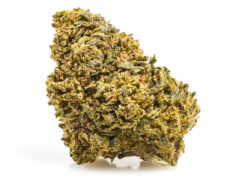
 Max CBDAMNESIA CBD BOOSTStarting from: 0,85€/g
Glasshouse | CBD<40%
Grams5 10 20 50 100 200 400 -
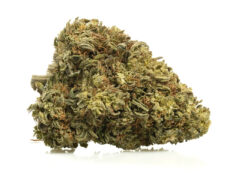
Max CBDAK47 CBD BOOSTStarting from: 1,45€/g
Indoor | CBD<47%
Grams5 10 20 50 100 200 -
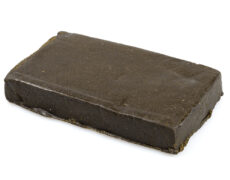
Max CBDCHARAS
CBD HASH | CBD<45%
Starting from:FLASH SALE -10%
0,90€0,80€/gGrams5 10 20 50 100 200 -
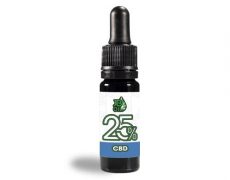
JB OIL 25%Starting from: 14,90€
CBD Oil 25%
The goal is photo literacy. After a quick read of the page, the trim, colour and resin coating on the bud should correspond with the product description, and any any visible inconsistency should be easy to identify at a glance.
Visual cues to read first on a hemp bud listing
A hemp bud listing presents five main visual cues: the overall structure of the bud (compact or airy), the colour profile (olive, sage, amber, with optional purple), the pistil pattern (orange or coral filaments running across the surface), the trichome layer (the resin frost covering the bracts) and the trim level (how cleanly the sugar leaves have been removed). A CBD flower reader can review these five elements on a product page in less than thirty seconds.
These five cues work together to create a complete visual impression. A bud that looks compact and resin-coated has a different visual profile from a one that looks airy, pale and lightly trimmed. Individual visual signals are not definitive on their own, but together they create a consistent way of reading the appearance of a hemp bud.
Bud structure: density, calyx shape and overall form
The bud structure shown in a catalog photo can vary from compact and tight to airy and feathery. A compact bud usually displays tightly packed calyces with minimal air space between the bracts; an airy bud shows looser calyces with visible air gaps. Some hemp varieties tend toward compact structure as a default; others are looser by genetic baseline.
The calyx shape can be round (sativa-leaning varieties often show longer, finger-shaped calyces) or short (indica-leaning varieties often show stout, round calyces). Many EU registered varieties carry hybrid traits, and the catalog photo usually shows a mid-range structure that mixes both.
Reading the structure is partly a question of preference and partly a question of consistency. A page that promises “dense, compact CBD flower” and shows a clearly airy bud is mismatched; a page that says “soft, airy structure” and shows a brick-like compressed bud is mismatched the other way.
Colour ranges: from olive green to amber and beyond
Hemp buds usually fall within a colour spectrum that ranges from olive green to sage green, often developing amber tones during the post-harvest process. In some cases, they may also display purple highlights, a natural characteristic associated with cold-climate growing conditions.
A bud that appears bright lime green often indicates a younger lot or a less mature finishing phase. By contrast, a bud with a deep amber or brown appearance may reflect a longer post-harvest process or simply an older lot.
Colour is not always uniform across the bud surface. Some buds feature a green base with an amber pistil overlay, while others combine a green base with a silvery trichome veil that gives the overall appearance a lighter, more luminous tone. A good catalogue photo should clearly reveal these different colour layers, using natural, balanced lighting and avoiding heavy filters that flatten the bud’s colour profile.
The purple register found on some hemp buds is caused by anthocyanin pigments that accumulate at lower temperatures. It is a genuine trait of certain registered varieties, and when a product page shows clean, well-defined purple tones, it can reasonably be expected to come from a lot grown under cool finishing condition
Understanding colour is just one part of evaluating hemp flowers. If you’d like to learn more about resin-derived hemp concentrates, our article on CBD crumble explains how this extract is produced and what makes it different from flower.
Pistils: orange filaments and what they tell
Pistils are the fine orange or coral filaments that weave across the surface of a hemp bud. They begin as white reproductive hairs and gradually change to orange or red-brown as the lot matures. A bud with mostly white pistils often indicates an early harvest, while one with predominantly amber, curled pistils usually reflects a more complete ripening cycle.
The density of the pistils can also vary considerably. Some buds are heavily covered, creating a dense orange layer over the calyces, while others have fewer filaments, allowing more of the bud’s natural green base to remain visible. Neither appearance is inherently better than the other. The final look depends on several factors, including the registered variety, the harvest timing, and the post-harvest finishing protocol.

For anyone assessing a hemp bud, pistils are primarily a visual indicator of maturity. When most of the bud is covered with amber pistils, it generally points to a mature lot. Conversely, a prominent presence of white pistils on a bud presented as fully finished may suggest an earlier-harvest variant.
Trichome layer: the resin frost on the surface
Trichomes are the tiny glandular hairs that coat the calyces and produce most of the cannabinoid and terpene fraction of a hemp variety. On a catalog photo, they read as a thin silvery or amber frost that catches the light along the bud surface. The denser the trichome layer, the heavier the visible frost.
Trichomes appear in three main forms on a hemp bud: bulbous (the smallest), capitate-sessile (mid-size) and capitate-stalked (the largest and most photogenic, with a clear stalk and a translucent head).
A close-up photo on a product page often picks up the capitate-stalked trichomes most easily, because their geometry is the most distinctive.
A loupe-friendly catalog photo can show the trichome heads as small translucent spheres on stalks, with a clear visible head that can range from glass-clear to milky to amber depending on the ripening stage. Reading these heads is one of the oldest visual quality checks in hemp work, and it stays relevant on a 2026 product page.
If you’d like to explore this topic in greater depth, our article What Are Trichomes? A Botanical Guide explains how trichomes develop, why they matter, and what they reveal about hemp quality.
Sugar leaves and trim level: what the cut reveals
Sugar leaves are the small leaves that grow close to the calyces and carry a partial trichome layer of their own. The trim level of a hemp bud refers to how thoroughly these leaves have been removed during processing. A close trim leaves the bud with very little visible leaf material, while a loose trim retains more sugar leaves, making them clearly visible across the bud’s surface.
A close-trimmed bud typically has a tighter, more sculpted appearance in catalogue photos. By contrast, a loose-trimmed bud looks fuller and less uniform, with the tips of the sugar leaves extending beyond the calyces. Neither style is inherently better than the other, as each reflects different processing choices. However, if a product is described as hand-trimmed, the images should show a clean, carefully shaped bud rather than one that appears heavily machine-cut or excessively leafy.
The trim level also influences how the trichome layer appears in product photos. On a close-trimmed bud, the resin coating is concentrated mainly on the calyces, making the frosted surface easier to appreciate. On a loose-trimmed bud, the remaining sugar leaves contribute additional visible trichome coverage, creating a slightly different overall appearance.
Reading a hemp bud at the microscopic scale
Looking closely at a hemp bud is part of a long tradition of scientific observation. In 1665 Robert Hooke published Micrographia, the first major work to describe biological surfaces under the microscope.
While examining thin slices of cork, he coined the term “cell”, laying the foundations for centuries of microscopic plant study, from early botanical research to the analysis of trichomes in modern hemp.

Anyone who picks up a 10× loupe to examine a hemp bud today is, in many ways, repeating the same basic practice that began in Hooke’s time: using a simple lens, a steady hand, and careful observation to understand what the surface reveals. The terminology has evolved, and calyces, pistils, and trichome heads are now part of the vocabulary, but the underlying approach remains remarkably unchanged.
How appearance maps onto the lab document on the page
The visual appearance of a hemp bud should always be considered alongside the lab report that accompanies the lot. A bud with a dense, well-developed trichome layer will often correspond to a lot with higher cannabinoid levels, while one with a lighter resin coating may indicate lower concentrations.
This relationship is not absolute, but when both the product images and the analytical results are accurate, they generally tell a consistent story.
When the lab report also includes a terpene profile, the bud’s appearance may offer additional clues about its aromatic character. For example, buds with more pronounced amber tones are often associated with myrcene-dominant profiles, whereas those with brighter green hues and a silvery trichome coating may more often be linked to pinene-forward varieties.
Visual appearance alone cannot confirm the terpene composition, but it can provide useful context when interpreted together with the laboratory data.
Ultimately, the catalogue photo and the lab report complement one another. The image documents the bud’s visible characteristics, while the laboratory analysis provides its chemical profile. Together, they offer a more complete picture of the lot than either could on its own.
Where Justbob keeps the visual reading transparent
Justbob carries out constant analyses on all commercialised products and on every batch. The relevant documentation is available directly on each product page, allowing readers to verify the cannabinoid profile, THC threshold compliance, and, where detailed product images are provided, compare the documented characteristics with the visible appearance of a specific lot without leaving the catalogue.
The catalogue photo is designed to be read together with the lab document, not as a standalone element. The visible features of the bud, such as its structure, colour, and trichome density, should correspond with the information reported in the certificate of analysis. Readers can therefore cross-check both sides and evaluate the product with a clearer understanding of what the lot represents.
This two-sided approach is what helps maintain transparency throughout the catalogue. The photo, label, registered variety, and certificate are all part of the same record, allowing the visual description of a hemp bud to be verified against the analytical documentation available on the page.
Compliance-safe wording on hemp bud appearance pages
A compliance-safe description of hemp bud appearance should remain strictly descriptive. A phrase such as “compact CBD flower with amber pistils, a silvery trichome layer and a close hand-trim, paired with a 14% CBD reading per lab document” simply describes the product’s visible characteristics and documented data. By contrast, expressions such as “premium hand-selected flower with an unbeatable look” move into marketing language rather than objective description. The first helps the reader understand what they are seeing; the second introduces subjective claims that may create unnecessary compliance concerns.
Hemp flowers are sold for technical, scientific and ornamental purposes only, in accordance with the EU industrial hemp framework.
The bud’s structure, colour, pistil pattern, trichome coating and trim level are elements used to describe and position the product within the catalogue. They are not instructions, claimed benefits, or substitutes for other regulated product categories.
The distinction is straightforward: if the appearance description helps the reader interpret the image, the page is using the right vocabulary as a visual reference. If the wording encourages a specific use or suggests effects beyond the documented characteristics, it moves beyond a purely descriptive approach.
A short photo-reading routine for hemp bud listings
Reading a hemp bud listing visually is a simple skill that becomes faster with practice. Start by identifying the bud structure, whether it appears compact or airy, then assess the colour profile (olive, sage, amber, with possible purple tones). Next, look at the pistil density and maturity stage, from white to orange and amber, before examining the trichome frost across the calyces. Finally, consider the trim level (close or loose) and check that the catalogue description matches what is visible in the image.
Once the visual vocabulary is familiar, this entire process can be completed in about a minute. For a complete evaluation, the final step is always to consult the lab document and verify the reported cannabinoid profile and THC compliance for the specific lot.
🌿If you are ready to apply this approach and explore a carefully described hemp flower selection, you can discover the available options in our Boost Weed collection.
Frequently asked questions about hemp bud appearance
What should I look at first on a hemp bud photo?
Start with the overall structure (compact or airy), then the colour profile (olive, sage, amber, with possible purple highlights), then the pistil pattern (orange or coral filaments), the trichome frost density on the calyces, and the trim level (how cleanly the sugar leaves have been removed). Those five cues form the visual reading.
What do orange pistils mean on a hemp bud?
Pistils start out white and shift toward orange or red-brown as the lot matures. A bud that shows mostly amber pistils usually reads as a fully ripened lot. A bud presented as fully finished but with a strong white pistil presence usually signals an early-harvest variant.
Why does a hemp bud sometimes look frosty?
The frosty look comes from the trichome layer on the calyces. Trichomes are small glandular hairs that produce most of the cannabinoid and terpene fraction of the variety. On a catalog photo they read as a thin silvery or amber frost that catches the light along the surface of the bud.