
Modified on: 28/08/2026
Reading industrial hemp uses across fibre, paper and materials
Industrial hemp is one of the oldest agricultural crops on the European continent. Beyond the modern cannabinoid catalog, the plant supplies fibre for textiles and ropes, hurd for construction biocomposites, paper for specialty applications and seed fractions for the wider agricultural framework. This Justbob guide walks through industrial hemp uses sector by sector, with the regulatory framework that connects the cultivation side to each application.
-
 Max CBDAMNESIA CBD BOOSTStarting from: 0,85€/g
Glasshouse | CBD<40%
Grams5 10 20 50 100 200 400 -
Max CBDAK47 CBD BOOSTStarting from: 1,45€/g
Indoor | CBD<47%
Grams5 10 20 50 100 200 -
Max CBDCHARAS
CBD HASH | CBD<45%
Starting from:FLASH SALE -10%
0,90€0,80€/gGrams5 10 20 50 100 200 -
JB OIL 25%Starting from: 14,90€
CBD Oil 25%
The aim is to map the wider economy of the plant. After a few examples, the difference between industrial hemp applications and the cannabinoid catalog becomes legible on any agricultural reference page.
What “industrial hemp uses” actually covers
Industrial hemp uses cover the non-cannabinoid applications of Cannabis sativa L. cultivated under the EU industrial hemp framework. The main categories include textiles (canvas, rope, twine and modern fabrics), paper (specialty applications), construction biocomposites (hempcrete walls, insulation panels), automotive components (door panels and trim parts), agricultural substrates (animal bedding and horticulture) and biorefinery feedstock.
For readers interested in CBD flowers, the industrial side of hemp represents the older economic layer behind today’s modern market. While the cannabinoid framework primarily focuses on the inflorescence, the industrial hemp sector makes use of the plant’s stems, seeds, and broader biomass. The same registered variety can therefore serve different purposes depending on how it is cultivated, processed, and directed into specific production chains.
In our view, the most useful hemp culture pages keep the industrial vocabulary explicit. A reference to “hemp products” without a specific application is harder to read than a reference that names the sector and the framework behind it.
Read also: Hemp biomass: meaning of the term and uses
Textile applications: from canvas to modern fabrics
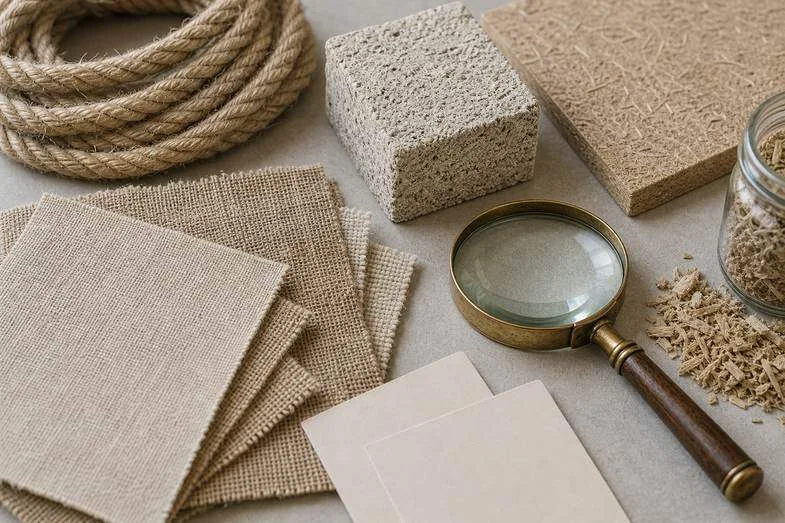
Textile production is one of the oldest documented uses of hemp fibre in European industry. Canvas, the heavy fabric traditionally used for sails, tents, and painting supports; rope, widely used in maritime, agricultural, and construction settings; twine, commonly found in packaging, gardening, and crafts; and modern technical fabrics all rely on the bast fibre extracted from the hemp stem.
The mechanical properties of hemp textile fibre are well documented. The tensile strength supports applications where durability matters more than a fine weave, while its natural resistance to mildew and pests adds value in maritime and outdoor settings. Its breathability and moisture handling propriety make hemp textile interesting for modern clothing and home textiles.
Contemporary hemp textile production combines traditional retting and processing with modern spinning and weaving techniques. Several European producers in France, Italy, Spain and Romania supply hemp yarn and woven hemp fabric for fashion, home textile and technical markets.
Paper applications: specialty papers and durability
Paper applications represent another long-standing industrial use of hemp. The long bast fibres give hemp paper a stronger tensile profile and a longer fibre length than typical wood-pulp paper, making it suitable for specialty applications where these properties are particularly valuable.
Documented use cases include banknotes, where the strong tensile profile and the resistance to repeated handling are well suited to the application; archival papers (the low lignin content supports long-term stability; and technical papers, including filter papers, art papers, and thin technical papers. Hemp paper is also a feedstock for some specialty paper producers in France and Italy that supply niche markets.
The USDA published the foundational bulletin Hemp Hurds as Paper-Making Material in 1916, documenting the technical feasibility of hemp paper at industrial scale. The bulletin is still referenced in contemporary hemp economy literature as one of the early modern studies on this application.
Hempcrete and construction biocomposites
Hempcrete is the most visible modern application of hemp hurd in construction. This biocomposite combines hemp hurd with a lime binder to produce wall infill, insulation and structural-light applications. The French Isochanvre product was introduced around 1986 as one of the first commercial hempcrete formulations.
Hempcrete walls offer natural insulation, with thermal conductivity typically ranging from around 0.06 to 0.10 W per metre kelvin, depending on the formulation; hygroscopic regulation as the material absorbs and releases ambient moisture, helping stabilise the wall assembly; and a low embodied-carbon profile, as the cultivation phase sequesters atmospheric carbon that the lime binder partially retains in the wall).
Beyond hempcrete, hemp fibre is used in insulation panels, often combined with other natural fibres, as well as in fibreboards and in bio-based plasters. Several European certifications now recognise hemp-based building materials as part of the sustainable construction framework.
These applications are part of a broader industrial ecosystem in which different fractions of the hemp plant are used for different purposes. For a closer look at hemp fibre, hurd and seed applications, see also our guide to hemp plant fibre and seeds.
Automotive biocomposites: door panels and trim parts
Automotive biocomposites are one of the fastest-growing industrial hemp applications across the European market. Hemp bast fibres are combined with thermoplastic or thermoset matrices to produce moulded panels, including door inner panels, parcel shelves, boot liners, and headliners) which can replace traditional glass-fibre or all-plastic components.
The motivation is twofold. Hemp fibre reduces the weight of the finished part, which can contribute to improved vehicle efficiency. At the same time, the renewable nature of the fibre also reduces the embodied carbon of the part, which supports automotive sustainability targets. Several European car manufacturers have adopted hemp-based biocomposites for selected components since the 2000s.
The supply chain typically involves industrial hemp farms in France, Germany, Italy or the Netherlands, fibre processors that extract and clean the bast fibre, compounders that produce the fibre-matrix pellet and component manufacturers that mould the final part for the automotive industry.

Animal bedding and horticultural substrates
Hemp hurd as animal bedding is a mature application across European veterinary and equestrian markets. Its strong absorbency, with the hurd capable of absorbing up to four times its weight in liquid, combined with its dust-free profile and natural composting properties after the bedding cycle, makes it an attractive material for stables, kennels, and small-animal cages.
In horticulture, hemp hurd is used as a growing substrate, often in combination with other organic materials. Its porous structure retains both moisture and air, creating favourable conditions for root development in container-grown plants. Some commercial hydroponic systems use hemp-based substrate blocks as an alternative to mineral wool.
Both applications recover by-products of the bast fibre extraction (the hurd is the inner core that separates from the fibre during retting), turning what would otherwise be a low-value fraction into a marketable agricultural input.
Biorefinery and circular economy applications
Biorefinery applications are an emerging area for industrial hemp. The plant provides multiple fractions, including bast fibre, hurd, seed, leaf, inflorescence, that can be processed through integrated facilities to extract value from each component. The cannabinoid fraction represents one of these streams, while the others can support applications in fibre, paper, seed products, and bio-based chemistry.
Circular economy applications further extend the potential of industrial hemp. These include hemp-based packaging, such as paper-based and biocomposite packaging that can replace petroleum-based plastics; hemp-based bioplastics for short-life goods; and hemp-based insulation, which can potentially be recovered and incorporated into new construction materials at the end of its service life.
Several EU research and industry programmes have funded hemp biorefinery projects over the past decade, with pilot plants in France, Germany, the Netherlands, and Italy demonstrating the technical viability of integrated hemp processing.
This broader approach to the plant as a source of multiple valuable fractions is also closely connected to the development of hemp-based fuels and energy applications, an area explored in greater detail in Hemp as Fuel: Is It Possible or Is It a Utopia?.
The EU industrial hemp framework as the cultivation anchor
All these industrial applications draw from hemp cultivated under the EU industrial hemp framework set by Regulation (EU) 2021/2115. Under this framework, the cultivated variety must be registered in the Common Catalogue of Varieties of Agricultural Plant Species and to respect the total THC threshold of less than 0.3% at harvest.
The same regulatory framework also provides the foundation for the cannabinoid catalog side of the hemp sector. The requirements concerning the variety, THC threshold, and CAP support scheme apply to industrial hemp regardless of its final use, while specific agronomic practices may be adapted to fibre-oriented, seed-oriented, or dual-purpose cultivation.
For readers interested in industrial hemp, this regulatory framework provides the essential legal and agricultural foundation for understanding its different applications. Cultivation under the EU framework establishes hemp as a legitimate agricultural crop across the Member States, building on a cultivation tradition that predates the modern bio-based economy by several centuries.
A short history: from Cordoaria Nacional to the modern bio-based economy
The industrial hemp tradition has well-documented roots throughout European agricultural history. The Cordoaria Nacional in Lisbon, founded in the eighteenth century, was one of the largest European producers of hemp rope and cordage for the Portuguese naval fleet. In Italy, the Piedmontese tradition around the town of Carmagnola gave its name to one of the registered hemp varieties that is still cultivated today.
The modern industrial hemp economy was reshaped by the cultivation cycles of the twentieth century, with a significant contraction in the post-war decades followed by a renewed expansion from the 1990s onwards. The current EU framework, established under Regulation (EU) 2021/2115, represents the latest stage of this multi-century trajectory, with provisions adapted the needs of the modern bio-based economy supplied by hemp.
Understanding this longer historical trajectory provides greater context for today’s industrial applications. A hempcrete wall built in 2026, for example, can be viewed as part of a fibre tradition documented as far back as the eighteenth century, while a hemp-based automotive panel draws on the same agricultural heritage and cultivation framework that has supported European hemp production for generations.
How Justbob connects the industrial framework to the CBD catalog
Justbob carries out constant analyses on all commercialised products and on every batch. The relevant documents are available on each commercialised product page, allowing readers interested in the regulatory and quality references behind a specific lot to access the certificate of analysis directly from the catalog.
The Justbob catalog focuses on the cannabinoid side of the hemp economy, including CBD flower, CBD hash, CBD extracts, and CBD oil. However, the regulatory framework supporting these products is connected to the same broader framework that underpins the industrial applications described above. The registered variety, cultivation THC threshold, and agricultural framework form part of the wider regulatory context governing the hemp economy.
For readers, this shared framework provides the link between the CBD catalog and the wider hemp economy. Each product in the catalog ultimately comes from a plant with a multi-century agricultural history, cultivated today within an EU framework that encompasses both cannabinoid and industrial applications.
Read also: Legal male hemp plant: what are the uses?
Compliance-safe wording on industrial hemp references
Compliance-safe wording for industrial hemp uses should remain within the agricultural and material framing. For example “Industrial hemp variety registered in the EU Common Catalogue, cultivated for fibre and seed applications under the Common Agricultural Policy framework, with documented industrial supply chain” describes the product and its regulatory context.
“Premium-grade hemp for unbeatable industrial value” is promotional language rather than a factual description.
CBD products are sold for technical, scientific and ornamental purposes only, in line with the EU industrial hemp framework. References to industrial application, variety names and supply chain categories help document the broader hemp economy. They should be understood as descriptive references rather than directives, benefits, or alternatives to other products or applications.
The basic distinction is straightforward: if the wording connects the plant to its documented industrial and agricultural framework, the page is using those references as documentation. If the wording encourages the reader to take a specific action with the product, it moves beyond that compliance-safe context.
A closing reading habit for industrial hemp uses
Reading about industrial hemp uses can be approached as a straightforward exercise in agricultural and material analysis. Start by identifying the application category—textile, paper, construction, automotive, agricultural substrate, or biorefinery—then consider the cultivation framework behind the supply chain and verify the variety against the EU Common Catalogue. Finally, place the specific application within the broader bio-based economy to understand how the different parts of the hemp plant contribute to the overall value chain.
🌿Ready to explore hemp products for yourself? Discover the Justbob Kits, a selection of curated hemp products designed to bring different formats and experiences together in one convenient option. Explore the available kits and choose the one that best matches your interests.
Frequently asked questions about industrial hemp uses
What are the main industrial applications of hemp?
The main industrial applications of hemp include textile (canvas, rope, twine, modern fabrics), paper (banknotes, archival papers, specialty papers), construction biocomposites (hempcrete walls, insulation panels), automotive components (door panels, trim parts), agricultural substrates (animal bedding, horticulture) and biorefinery feedstock for the wider bio-based economy.
How does the EU industrial hemp framework support these applications?
Regulation (EU) 2021/2115 sets the cultivation rules for industrial hemp under the Common Agricultural Policy, with the requirement that the variety be registered in the Common Catalogue and respect the total THC threshold below 0.3 percent at harvest. The framework applies to fibre-leaning, seed-leaning and dual-purpose cultivation, with adjusted agronomic provisions for each application.
What is hempcrete and where did it start?
Hempcrete is a biocomposite construction material that combines hemp hurd with a lime binder. The French isochanvre product was introduced around 1986 as one of the first commercial hempcrete formulations. The material offers natural insulation, hygroscopic regulation and a low embodied-carbon profile.