Modified on: 29/07/2026
Two product families, one careful reading method
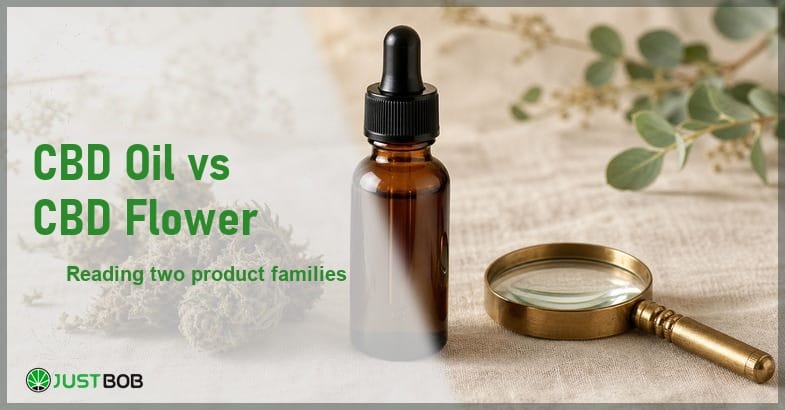
CBD oil and CBD flower are the two big product families in the hemp catalogue, and they invite endless comparison. The most useful comparison, though, is not a verdict; it is a reading exercise. Both come down to a label and a document, presented in different forms. This guide sets the two side by side as products: their formats, their label fields and the paperwork they share, so the comparison stays practical and document-led.
-
 Max CBDAMNESIA CBD BOOST
Glasshouse | CBD<40%
Starting from:FLASH SALE -10%
0,85 €0,75 €/gGrams5 10 20 50 100 200 400 -
Max CBDAK47 CBD BOOSTStarting from: 1,45 €/g
Indoor | CBD<47%
Grams5 10 20 50 100 200 -
Max CBDCHARASStarting from: 0,90 €/g
CBD HASH | CBD<45%
Grams5 10 20 50 100 200 -
JB OIL 25%Starting from: 14,90 €
CBD Oil 25%
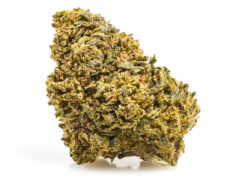
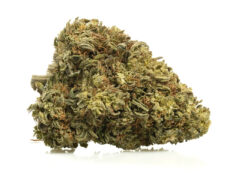
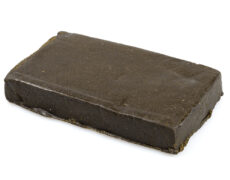
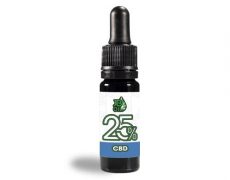
The picture to hold is two shelves, not two habits. One holds bottles, the other holds jars, but both carry the same kind of record underneath, and reading that record is the method that works for either.
What the comparison is really about
Comparing CBD oil and CBD flower means comparing two product forms of the same plant, not two ways of doing anything. Oil is a liquid: a hemp extract blended into a carrier and bottled. Flower is the dried inflorescence of the hemp plant, sold much as it grows. The difference is one of format and presentation, which is exactly where a careful reading starts.
The frame that works is product-first. Read each as an item on a page, with a label and a document, and the comparison becomes a matter of format rather than preference.
The oil side: a liquid with an ingredient line
On the oil side, the format is a small bottle and an ingredient-style label. The label names the carrier oil, a concentration figure for the CBD, a spectrum word and a batch code. For a fuller introduction to that family, our guide on What is CBD Oil? walks through the basics of the format.
Everything on an oil label points at one thing: what is in the bottle and in what amount. It is a liquid product described by its contents, read field by field.
The flower side: a dried botanical with a variety
On the flower side, the format is the dried hemp inflorescence itself, described by appearance and variety. The label names the registered variety, a CBD figure and a batch code, while the photo carries the look. The CBD flower listings group these by registered name, variety by variety.
Where an oil is read as contents, a flower is read partly by sight: the bud, its structure, its colour. Two different formats, two slightly different reading habits, but the same underlying record.
Read also: Legal hemp production and history in Ireland
The document both families share
Underneath the two formats sits the same kind of paperwork. Both an oil and a flower carry a certificate of analysis recording the cannabinoid figures, the THC reading against the 0.3 percent threshold harmonised at European level, and the batch identity. The document is the common language the two families speak.
This is why the comparison is simpler than it looks. However different a bottle and a bud appear, the question you ask of each is identical: does the label match the certificate for this batch?
Two forms of one plant
Keeping a plant in more than one form is an old habit. In the 1540s, the Italian botanist Luca Ghini invented the herbarium, pressing and drying plants so they could be kept and studied as specimens. The dried flower is heir to that tradition, the plant preserved much as it grew, while an oil is the same plant captured as an extract instead.
Five centuries on, the two forms still sit side by side. One keeps the botanical whole, the other concentrates it into a liquid, and a product page simply records which form you are looking at.
A bottle also changes the order in which information appears. The reader meets the carrier first, then the concentration figure, then the spectrum term and the batch code. A flower reverses the emphasis. The plant name, visible structure, colour and lot reference arrive before the analytical document confirms the cannabinoid profile. Neither format gives a shortcut. Each simply asks for a slightly different first glance before the same certificate check.
Reading either one on the catalog
On a product page, the method is the same whichever family you are in. The CBD oil listings and the flower listings both put the label beside the document, so a reader can run the same check on either: read the label, open the certificate, confirm the batch.
Choosing between the two is a personal matter, and not one a comparison article should settle. What this page offers is the reading method that makes either family clear.
That is why the comparison should stay slow and literal. The oil page begins with a formulated liquid and a small set of label fields. The flower page begins with a botanical specimen and a product photograph. In both cases the reader is not solving a mystery; they are joining a label, a batch code and a certificate into one record.
Read also: Hemp Flower Glossary: Clear Product Terms
What this comparison does not do
This comparison stays on products and documents, and it stops there. It does not turn the two formats into a ranking, because that question sits outside a product-reading page. The useful output is a method, not a verdict.
So oil and flower are left as what they are: two formats of one plant, each read through its label and its certificate. For an independent overview of how CBD products are framed, the Food Standards Agency CBD guidance offers a regulator’s view, separate from any catalogue.
Oil and flower on a Justbob page
Justbob carries both families, and handles them the same way: every commercialised product is analysed and each batch is checked, with the certificate of analysis kept inside the relevant product page. Whether the page shows a bottle or a bud, the document is one click away.
Every oil and every flower sits inside the EU industrial hemp framework, with THC kept at or below the 0.3 percent threshold harmonised at European level. The products are offered for technical, scientific and ornamental purposes only. Oil and flower differ in form; they are read the same way.
Frequently asked questions about cbd oil vs cbd flower
What is the difference between CBD oil and CBD flower?
CBD oil and CBD flower are two product forms of the same hemp plant. CBD oil is a liquid, a hemp extract blended into a carrier and bottled, described by a carrier, a concentration figure and a spectrum word. CBD flower is the dried inflorescence, described by its registered variety and appearance. The difference is one of format and presentation, and both are confirmed by a certificate of analysis.
Is this a ranking of the two?
No. This is a product-reading comparison, not a ranking. The article stays on formats, labels and documents: how each family is presented and how to read it. Anything beyond those records sits outside the page.
Why check documents?
Because the document is the common record behind both formats. Whether you are reading an oil or a flower, the certificate of analysis carries the cannabinoid figures, the THC reading against the 0.3 percent threshold harmonised at European level and the batch identity. Matching the label to the certificate is the one check that works for either family.