

Modified on: 17/09/2026
Understanding the CBD legal framework in Italy: a practical guide to rules, documents and updates
06/08/2026
Italian CBD regulations are not something that can be summed up in a single sentence. They are the result of different layers of information: the European framework for hemp, national legislation, regulatory updates, product categories, labelling requirements and official documentation.
This Justbob article aims to organise these elements clearly and provide a practical overview of the Italian CBD legal framework, without replacing official sources or legal advice.
-
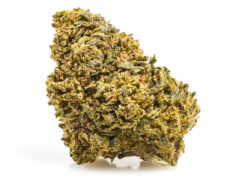
 Max CBDAMNESIA CBD BOOSTStarting from: 0,85€/g
Glasshouse | CBD<40%
Grams5 10 20 50 100 200 400 -
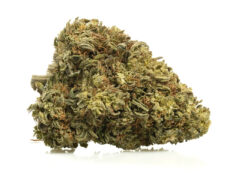
Max CBDAK47 CBD BOOSTStarting from: 1,45€/g
Indoor | CBD<47%
Grams5 10 20 50 100 200 -
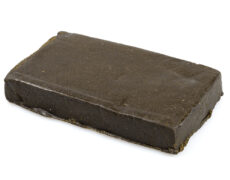
Max CBDCHARAS
CBD HASH | CBD<45%
Starting from:FLASH SALE -10%
0,90€0,80€/gGrams5 10 20 50 100 200 -
JB OIL 25%Starting from: 14,90€
CBD Oil 25%

The goal is simple: to help readers understand why terminology, product documentation and regulatory updates matter when discussing CBD in Italy. In a constantly evolving regulatory environment, accuracy and attention to detail are not optional — they are essential tools for reading information correctly and making informed choices.
What does CBD legal framework Italy means?
The term CBD legal framework in Italy refers to the set of rules, interpretations and requirements that influence how CBD and hemp-derived products are classified, presented and monitored within the Italian market.
Rather than being a single regulation, this framework is built from several elements: the European legal context surrounding hemp, Italian national provisions, product categories, labelling requirements and the documentation used to verify product compliance.
Because this area continues to evolve, every discussion of CBD regulations should always be considered together with its publication date and the latest available updates. A reliable overview does not ignore regulatory changes — it acknowledges them and places information in the correct timeline.
This approach helps readers distinguish between general assumptions and product-specific information supported by documentation and current regulatory references.

Read also: CBD Flower Legal Framework: The Rules Behind The Label
EU hemp context and THC threshold
Understanding the EU hemp context is an essential starting point when discussing CBD regulation in Italy. The European Commission hemp page provides the agricultural background for hemp cultivation across Europe, including the THC limits relevant to approved hemp varieties and agricultural support schemes.
For CBD-related content, the practical takeaway is straightforward: references to THC thresholds must be accurate and placed in the right context. Product descriptions should avoid broad statements about legality and instead focus on clear information, reliable labelling and product-specific documentation.
Italian regulations and the importance of precise wording
Italian CBD rules should always be considered alongside official sources, including publications from institutions such as the Gazzetta Ufficiale when national measures or regulatory updates are involved. This article aims to help readers understand the structure of the regulatory framework, not to replace official guidance or legal advice.
A careful CBD article should avoid absolute claims and recognise that the regulatory landscape can evolve. In Italy, as in other European markets, hemp-derived products have been subject to ongoing discussions and interpretations.
For this reason, labels, batch documentation and publication dates are not secondary details. They are essential tools for understanding what a product is, how it is positioned and which information applies at a given moment.
Italian rules in context: Legge 242/2016, decrees and case law
The Italian background for industrial hemp begins with Legge 242/2016 (the Italian Industrial Hemp Law of 2 December 2016), which set the framework for the cultivation of Cannabis Sativa L. for industrial purposes in Italy. The law referenced the European catalogue of registered hemp varieties and the cultivation conditions linked to the EU agricultural framework. Around the same period, Italy developed a body of national rules and interpretations that addressed how hemp-derived products could be discussed, including the so-called cannabis light or light cannabis terminology, and how a low-THC cannabis flower category should be read on labels and on product pages.
Subsequent acts and rulings added detail at the national level. Italian ministerial acts and court decisions have addressed THC limits, sale conditions and product positioning over the years, with sometimes diverging interpretations. The Italian Supreme Court (Corte di Cassazione, Sezioni Unite, sentenza 30475/2019) is one of the better-known references in this debate, because it addressed how to read Italian national rules when applied to so-called cannabis light commercial sales. Each step is documented in the Gazzetta Ufficiale or in the corresponding court decision, which are the sources a careful page should cite rather than paraphrase loudly.
For a reader on a CBD page, the practical takeaway from this Italian context is the same as for any EU country: the national framework is layered, the acts and rulings are dated, and the national interpretation may be updated by new acts or new court decisions. Reading Italian CBD content responsibly means treating each act and each court ruling as a piece of context, not as a final answer, and checking the latest official sources for the current state.
The current CBD landscape in Italy: a regulatory framework still under discussion
As of August 2026, the CBD landscape in Italy remains a complex and evolving regulatory topic. Recent national measures have introduced restrictions concerning hemp inflorescences and products derived from them, including certain forms of processing, trade and distribution. These measures have significantly changed the way hemp-derived products must be analysed within the Italian market.
At the same time, the application and interpretation of these provisions have been subject to legal debate. Questions regarding the compatibility of some restrictions with constitutional principles have been raised before the Italian Constitutional Court, meaning that the regulatory framework is still being examined and may continue to evolve.
For consumers and businesses, this makes one aspect particularly important: information must be read in context. Product category, intended use, documentation, labelling and the date of publication are essential elements for understanding how a CBD-related product is positioned at a specific moment.
Rather than relying on simplified statements about CBD being simply “legal” or “illegal” in Italy, a careful analysis should consider the exact type of product, the applicable rules and the latest official developments.
Shipping CBD products to Italy: understanding the current framework
Justbob ships to Italy because the current regulatory framework allows the sale and delivery of CBD flowers and CBD products (except for CBD oils, which are not legal in Italy) available on the platform according to their specific classification and applicable requirements.
The Italian CBD landscape is not based on a single rule applying to every product category. Regulations distinguish between different types of hemp-derived products, and this is why product classification, documentation, labelling and compliance checks remain essential elements of the market.
For this reason, a careful approach is always recommended: rather than referring to CBD as a single category, it is important to consider the exact nature of the product, its documentation and the regulatory framework applicable at the time of purchase.
Justbob continues to monitor regulatory developments to ensure that the products offered and the information provided to customers remain aligned with the applicable requirements.
How EU rules and Italian rules sit beside each other for CBD products
The EU layer and the Italian layer are two distinct things, and they should not be collapsed into one sentence. At EU level, Regulation (EU) 2021/2115 within the Common Agricultural Policy sets a harmonised framework for industrial hemp cultivation under the Common Agricultural Policy, with a THC threshold of less than 0.3 percent that applies to the registered hemp seed varieties in the European Catalogue grown for CAP support. This 0.3 percent EU-level threshold is an agricultural reference for cultivation under that policy; it is not, by itself, an Italian national rule on the commercial side, and Italian acts may set their own conditions for cultivation, sale and product positioning.
Italian rules then add the national lens: how Italian law has framed hemp under Legge 242/2016 and subsequent ministerial acts, how Italian case law has read the sale of CBD products in Italy and how Italian labels should be phrased. The CJEU Kanavape ruling of November 2020 is another important EU-level reference that touched on the free movement of CBD products between EU member states, even though the case did not originate in Italy.
For a CBD product page aimed at the EU consumer, this two-layer reading is what keeps the content honest. The EU layer gives an agricultural and cross-border baseline. The Italian layer gives the national wording, the dated acts and the court precedents. Together they form the folder a careful page should keep open, without collapsing one layer into the other or forcing a verdict into a single sentence.

Why labels, documents and regulatory updates matter when reading CBD rules in Italy
A responsible product page should make the product positioning clear. Justbob products are intended for technical, scientific or ornamental purposes, and they are reserved for adults.
The label and document area should support that positioning with clear product identity, batch references and source-aware wording. Legal context becomes easier to understand when product pages rely on precise information rather than broad claims. CBD rules can only be discussed with caution. Readers comparing CBD-related pages should consider product documentation, official updates and the publication date of available information. This approach may seem less immediate, but it provides a more reliable way to understand a changing regulatory environment.
Our editorial view is simple: legal content should be measured, dated and based on reliable sources. Overly confident statements can quickly become outdated, while vague explanations do not provide real guidance. The most useful approach is the balanced one: clear wording, updated references, product labels and supporting documents. Search terms such as CBD Italy framework, CBD rules Italy or CBD flower Italy may lead readers to this topic, but the analysis should always return to the same key elements: official context, product classification, documentation and dates.
In legal and regulatory discussions, precision is not just a style choice: it helps readers avoid unnecessary confusion and understand the information available at the time of reading.
Official sources, product pages and the right way to read CBD regulations in Italy
Understanding CBD rules in Italy requires reading two different types of information: official regulatory sources and product-specific documentation.
- Sources such as the European Commission hemp framework and the Gazzetta Ufficiale provide the wider legal and regulatory context, including updates and national measures.
- Product pages, on the other hand, describe the specific item, its classification, positioning and available documentation.
These two levels of information should not be confused. Official sources explain the framework; product pages explain the individual product. A careful reader considers both elements together to build a more complete understanding. For this reason, content about the CBD legal framework in Italy should not only refer to general regulations but should also encourage readers to check product-level information, labels and supporting documents.
A responsible product page can explain relevant elements such as hemp context, THC-related terminology, age restrictions and the intended technical, scientific, ornamental or collector positioning where applicable. However, it should avoid presenting regulatory topics with excessive certainty, especially in areas where interpretations and requirements may evolve over time.
Careful wording is therefore not a limitation. In regulatory discussions, precision and transparency are part of providing useful information to readers.
What a product page can responsibly clarify
A responsible product page should provide clear, practical information about the product itself: its category, intended technical, scientific or ornamental positioning, adult-only context, label details, batch identification and available documentation. Its purpose is not to resolve every legal discussion in a single paragraph. Instead, a well-structured product page helps readers understand the specific item, while official sources remain the reference point for the broader regulatory framework.
This distinction gives legal content a practical role: official sources explain the rules and context, while product documentation explains the characteristics and information connected to the individual product.
Dates are also essential in regulatory content. Because rules, interpretations and official guidance may evolve, a publication date shows when information was reviewed and helps readers understand the timeline behind a statement. The most reliable editorial approach is therefore simple: avoid universal claims, provide source context and use precise language. In regulatory topics, accuracy builds trust far more effectively than confident but unsupported statements.
For Justbob, the right approach is consistent: explain clearly, reference reliable sources, support information with documentation and keep content updated. This allows the CBD legal framework Italy topic to remain useful without making promises that belong to official authorities rather than editorial pages.
Read also: Is CBD Legal in Italy? What To Know Before Reading Old Guides
A practical final check: how to read CBD regulations with awareness
Before relying on any article about the CBD legal framework in Italy, it is useful to check a few essential elements: does it consider the European context, does it use precise and cautious language, does it avoid unsupported claims and does it refer to reliable sources? Good regulatory content should not create unnecessary certainty. Its purpose is to help readers become more informed, careful and aware of the different layers involved.
A responsible reading approach follows the same order: consult the relevant EU context, review official Italian updates, check the product page and consider the available documentation. No article can replace official guidance or legal advice, but combining these sources helps create a more accurate and balanced understanding.
The most reliable habit is simple: check the source, check the date and check the exact wording. In a changing regulatory environment, precision is what keeps information useful.
🌿 Want to explore CBD products? Visit the Justbob catalogue: if you are interested in exploring different formats, you can also discover our selection of CBD hash products and compare the available characteristics before making your choice.
Frequently asked questions about CBD legal framework Italy
What is the CBD legal framework in Italy?
It is the set of EU context, Italian national rules, product-positioning requirements and source updates that shape how CBD products are discussed and checked in Italy.
Is CBD flower handled the same in every EU country?
No. EU hemp context matters, but national rules and interpretations can differ. Readers should check official sources and product documents.
Why should CBD legal information be checked regularly?
CBD rules and national measures can change. Checking official sources, dates, labels and batch documents helps keep the reading current.