
Modified on: 16/06/2026
Composition words should point back to the label
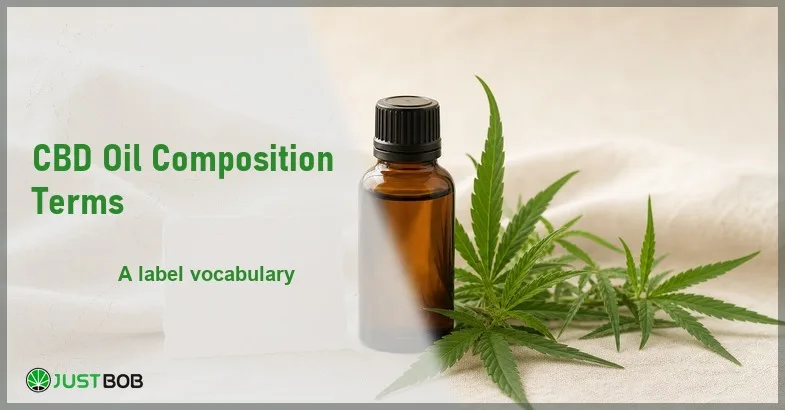
CBD oil composition terms are the words a label uses to say what is in the bottle. They name an extract, a carrier, a figure and a batch, and each one should send a reader straight back to the label rather than off into a sales pitch. This guide handles them that way, as a short vocabulary tied to the document in front of you, because composition is most useful when every word can be checked against the bottle it describes.
-
 Max CBDAMNESIA CBD BOOSTStarting from: 0,85€/g
Glasshouse | CBD<40%
Grams5 10 20 50 100 200 400 -
Max CBDAK47 CBD BOOSTStarting from: 1,45€/g
Indoor | CBD<47%
Grams5 10 20 50 100 200 -
Max CBDCHARAS
CBD HASH | CBD<45%
Starting from:SUPER SALE -20%
0,90€0,70€/gGrams5 10 20 50 100 200 -
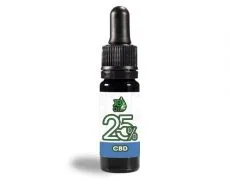
JB OIL 25%Starting from: 14,90€
CBD Oil 25%

Picture a bottle with its label turned to face you. The composition terms are the handful of words that tell you what the contents are made of and where the proof sits. Read like signposts, they are plain and steady. Seen as fireworks, they stop meaning much at all, which is why this page keeps them firmly attached to the label.
What CBD oil composition terms mean
CBD oil composition terms are the label words that describe what an oil is composed of: the hemp extract, the carrier it sits in, the stated figure, and the batch that ties the bottle to a document. None of them describe what the oil does. Each one names a component or a reference, so the vocabulary stays on the make-up of the product rather than anything beyond it.
This is deliberately not an ingredients deep dive, a carrier guide or a concentration manual. It is a vocabulary page: a way to recognise the composition words when you meet them and to know which document confirms each one. Kept at that level, the terms become a short list to read, not a topic to oversell.
Hemp extract wording
The extract is the heart of the composition, and its wording matters. A label may describe the hemp extract as full spectrum, broad spectrum or isolate, and those are composition terms, not promises. Full spectrum names an extract that keeps the wider range of hemp compounds; broad spectrum names one with the THC fraction reduced; isolate names a single isolated compound. Each word describes what the extract contains, nothing more.
Read that way, the spectrum word is a fact about make-up. It tells you which compounds the extract is said to hold, and the certificate for the batch is where that description is confirmed. The label names the extract; the document measures it, so the word and the row can be read together.
Read also: CBD Oil Lab Testing: What a Certificate Can Tell You
Carrier and concentration context
Two composition words sit close to the extract: the carrier and the concentration. The carrier is the oil the extract is held in, often described as an MCT carrier oil or a hemp seed oil, and the term simply names that base. The concentration is the figure given for the extract, marked as indicative because a plant product naturally varies.
Both are context terms here rather than the subject of the page. They tell a reader what the extract is suspended in and what figure the label states, and each points to its own fuller note elsewhere. Within CBD oil composition terms they appear as two short labels: a named base and an indicative figure, each confirmed against the batch document rather than taken on the label alone.
Batch and document identity
The last composition term is the one that holds the rest together: the batch identity. A batch number ties the bottle to a specific lot and to the certificate that measures it. Without it, the other words float free. With it, the extract wording, the carrier and the concentration all point to one document for that lot.
This is why composition reads best as a set of labels with a shared reference. The terms name the make-up, and the batch number names the proof, so a reader can follow each word from the printed label to the row that records it. A composition term is only as solid as the batch document standing behind it.
A note that named the object
The idea of a short line that identifies an object is old. In 1457, the Mainz Psalter became the first printed book to carry a colophon, a closing note that named the printers, the place and the date of printing. It did not describe what the book was about. It identified the object: who made it, where and when.
A batch reference does the same plain job for an oil. It does not describe what the contents do; it identifies the lot, so the bottle can be matched to its document. The colophon named the book at the press; the batch number names the oil at the laboratory, and in both cases the line is about identity, not about what the contents do.
What not to infer from the terms
It helps to be plain about the limits. A composition term names a component or a figure. It does not say what the oil will do, it makes no comparison and it carries no message beyond the make-up itself. The words describe the contents and point to a document, and that is the whole of their job on a label.
So the terms are read for what they are: names for an extract, a carrier, a figure and a batch, each confirmed on paper. For an official overview of how CBD products are handled, the Food Standards Agency CBD guidance sets out the wider context the labels sit within.
Composition terms on a Justbob page
On a CBD oil page, the composition terms do a narrow job: an extract word, a named carrier, an indicative figure and a batch number, each tied to the certificate kept inside the product page. Every commercialised product is analysed and each batch is checked, so each composition word can be traced from the label to the document that records it.
Every product sits inside the EU industrial hemp framework, with THC kept at or below the 0.3 percent threshold harmonised at European level, and is offered for technical, scientific and ornamental purposes only. Read this way, on a Justbob page the CBD oil composition terms are simply the make-up of the bottle, written down and backed by a document.
Frequently asked questions about cbd oil composition terms
What are CBD oil composition terms?
They are the label words that describe what a CBD oil is composed of. They name the hemp extract and its spectrum word, the carrier it sits in, the indicative figure, and the batch number that ties the bottle to a document. Each one names a component or a reference rather than describing an outcome, so the vocabulary stays on the make-up of the product and each word can be confirmed against the certificate for the specific batch in hand.
Is this an ingredients article?
No. An ingredients note lists what goes into a product, while this page reads composition as a label vocabulary: how the make-up is named and which document confirms each term. It deliberately leaves the deeper carrier and concentration detail to their own notes, and stays on recognising the composition words and following them back to the batch document.
Why compare the terms with documents?
Because a composition word is only as solid as the record behind it. The label names an extract, a carrier, a figure and a batch; the certificate of analysis measures them for the lot. Following each term from the printed label to its row on the document is how a reader confirms the make-up rather than trusting the label on its own.