Modified on: 17/09/2026
CBD Hash vs CBD Extracts: What Really Sets Them Apart?
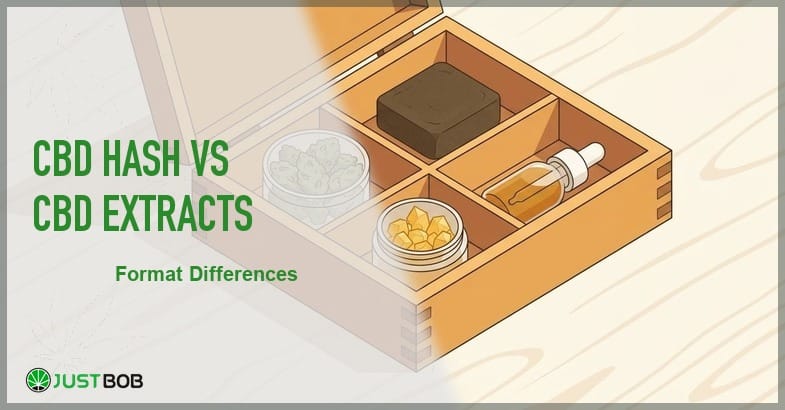
CBD hash and CBD extracts may appear side by side in CBD catalogues, but they are far from being the same type of product. Their format, texture, appearance and production characteristics can differ considerably, and these differences are often reflected in the way each product is labelled and documented.
In this guide, we take a closer look at the details that help distinguish CBD hash from CBD extracts, from the way they look and are described to the information found on their labels and analytical documents. Understanding these differences makes it easier to read product information with a more critical eye and identify what the available documentation actually tells you.
-
 Max CBDAMNESIA CBD BOOSTStarting from: 0,85€/g
Glasshouse | CBD<40%
Grams5 10 20 50 100 200 400 -
Max CBDAK47 CBD BOOSTStarting from: 1,45€/g
Indoor | CBD<47%
Grams5 10 20 50 100 200 -
Max CBDCHARAS
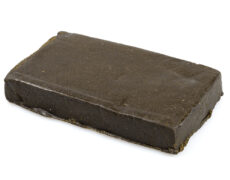
CBD HASH | CBD<45%
Starting from:FLASH SALE -10%
0,90€0,80€/gGrams5 10 20 50 100 200 -
JB OIL 25%Starting from: 14,90€
CBD Oil 25%
A useful comparison does not declare a winner. It explains how the formats describe themselves so that a reader can choose what to read first on each product page.
What is CBD hash? Understanding format, texture and composition
CBD hash is a hemp-derived product made from the resinous material of the hemp plant. In general terms, hemp flowers are harvested and dried before the resin is separated from the plant material through mechanical processes such as sieving. The resulting material is then collected and may be pressed into a compact form, creating the dense, resin-like appearance commonly associated with CBD hash.
The characteristics of CBD hash can vary according to the hemp variety, processing method and degree of pressing, affecting its texture, colour and overall appearance.
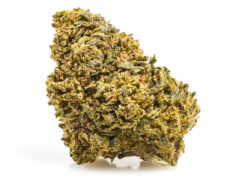
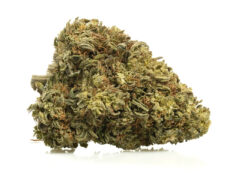
So, what does CBD hash look like? Its appearance can vary considerably depending on the hemp variety, processing method and degree of pressing. Some products may have a soft and slightly pliable texture, while others can be firmer, drier or more crumbly. Colour can also range from light green and golden or amber tones to darker shades.
These differences are not necessarily an indication of quality on their own. When comparing CBD hash products, it is useful to consider several pieces of information together: the hemp variety, the product description, the cannabinoid profile and, where available, the relevant laboratory analysis.
CBD Hash Texture and Appearance
Texture is one of the most noticeable characteristics of CBD hash. Terms such as pressed, dense, soft, crumbly, resinous, dry, sticky or compact are commonly used to describe how a particular product looks and feels. These descriptions help distinguish different formats and batches, but they should be understood as descriptive information rather than a substitute for laboratory data.
The same applies to colour and aroma. Natural hemp products can show variations between varieties, harvests and batches, so a difference in appearance does not automatically indicate a difference in composition.
For a more complete picture of a CBD hash product, visual and descriptive information should therefore be read alongside its label and available analytical documentation. The label can provide information such as the product name, hemp variety and declared cannabinoid content, while a laboratory report can provide more specific information about the cannabinoids detected and their measured concentrations.
Understanding these details makes it easier to answer the basic question “What is CBD hash?” without relying on appearance alone, and gives readers a clearer way to compare different hemp-derived products.
What are CBD extracts? Types, formats, and labelling explained
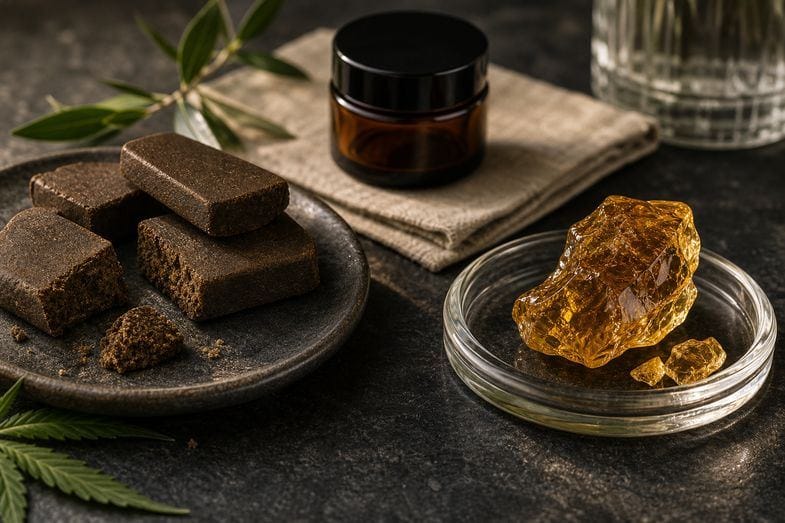
CBD extracts cover a much broader category than CBD hash. The term can refer to a range of more refined hemp-derived formats, including CBD crystals, CBD shatter, CBD oil and other concentrated preparations. Depending on the producer and product range, the category may also include layered products such as CBD moonrock or icerock, which combine hemp flower with other CBD-rich materials.
One of the main differences between CBD hash and CBD extracts is the way the product is presented and described. CBD hash generally retains a visible connection to the original plant material, with descriptions focusing on characteristics such as texture, colour, aroma and density. CBD extracts, by contrast, often place greater emphasis on CBD concentration, cannabinoid profile, extraction method and analytical results.
For example, CBD crystals are commonly presented according to their high level of CBD purity, with some products reaching concentrations around 98–99%. Their appearance and texture can be very different from those of CBD hash, and the percentage of CBD becomes one of the most important pieces of information on the product page. Similarly, CBD shatter is recognised by its brittle, glass-like appearance, while products such as CBD moonrock are visually distinctive because they combine different CBD-rich layers or materials.
How CBD extraction works
The term “CBD extract” can also refer to the production method used to separate and concentrate cannabinoids from hemp. Supercritical CO₂ extraction is one of the technologies used in the production of many modern hemp extracts. When carbon dioxide is brought above its critical temperature and pressure, it develops properties that allow it to act as an efficient extraction medium. The process can be carefully controlled to target specific compounds and produce different types of hemp extracts.
The extraction method alone, however, does not tell you everything about the final product. The resulting cannabinoid profile, concentration and composition depend on the starting material, processing conditions and subsequent purification or formulation steps. This is why the analytical documentation remains an important source of information when comparing different CBD extracts.
Why the CBD lab report matters
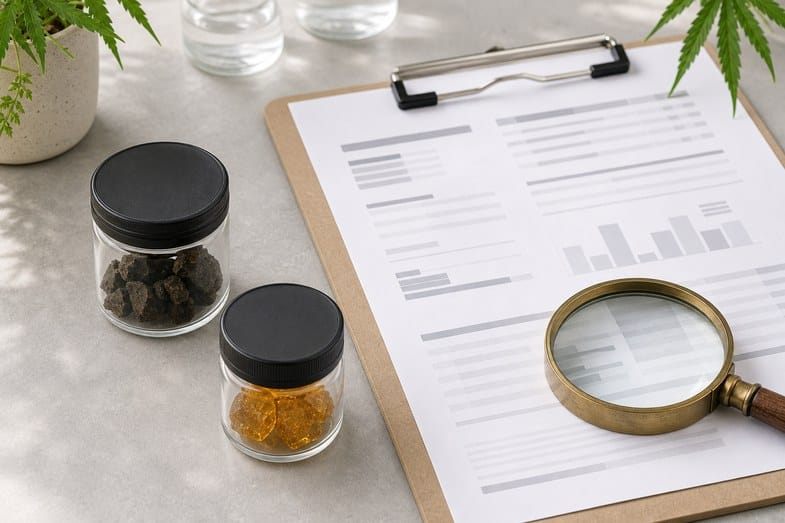
When reading a CBD extract product page, it is useful to look beyond the headline CBD percentage. The corresponding CBD lab report or certificate of analysis (COA) can provide a more precise picture of the cannabinoid profile and the parameters actually tested.
This is particularly relevant for highly concentrated formats such as CBD crystals and shatter, where numerical values often play a larger role in the product description than they do for CBD hash. If the extract is formulated with a carrier oil, such as MCT oil, hemp seed oil or olive oil, the composition of that carrier should also be considered separately from the cannabinoid content.
In short, CBD extracts represent a wide family of formats rather than a single type of product. Understanding the difference between CBD crystals, shatter, oils, moonrock and other extracts, and comparing the product description with its available analytical documentation, provides a clearer and more reliable way to understand what a particular CBD extract actually contains.
CBD Hash vs CBD Extracts: Texture, Appearance and Format
CBD hash texture and appearance: CBD hash generally retains a more recognisable connection to the original hemp resin, so product descriptions often focus on characteristics such as density, softness, firmness and colour. Depending on the variety and processing, CBD hash can range from light blonde or golden tones to darker amber and brown shades, with a texture that may be soft and pliable, compact and pressed, or dry and crumbly. Product photographs typically highlight the surface, structure and density of the material, helping readers understand its physical format.
CBD extracts texture and appearance: CBD extracts cover a wider range of refined formats, so their appearance can vary considerably. Understanding how CBD extract textures differ can help readers distinguish between formats such as crystals, shatter and other refined CBD products based on their physical characteristics. CBD crystals are typically presented as fine, white or translucent crystalline material, while CBD shatter is known for its thin, brittle and glass-like appearance. Other formats, such as CBD moonrock, have a more layered and irregular visual structure. As a result, extract product descriptions tend to place greater emphasis on concentration, purity, cannabinoid content and processing, alongside the physical appearance of the specific format.
CBD hash vs CBD extracts: The clearest difference is therefore visible in both the physical format and the way each product is described. CBD hash is generally characterised through its resin-like appearance, texture, density and colour, whereas CBD extracts are more often distinguished by their specific format, CBD concentration and cannabinoid profile. Comparing photographs, product descriptions and available analytical documentation side by side provides a more complete way to understand the differences between CBD hash and CBD extracts without relying on appearance alone.
CBD concentration and cannabinoid profile
CBD concentration in CBD hash can vary significantly depending on the hemp variety, plant material and production process. Product labels may indicate a CBD percentage or concentration range, but the most accurate figure is the one reported in the laboratory analysis for the specific lot. This distinction is important when comparing different CBD hash products, as the advertised percentage should not automatically be treated as the exact cannabinoid content of every batch.
CBD extracts generally cover products with a broader range of cannabinoid concentrations, including highly refined formats such as CBD crystals, which can contain very high levels of cannabidiol. Other formats, such as CBD shatter or moonrock, can show different CBD percentages depending on their composition and how the final product is produced. In composite products such as moonrock, for example, the overall cannabinoid profile depends on the combination of the underlying hemp flower and the additional CBD-rich components.
The cannabinoid profile is therefore one of the most useful elements to compare when looking at CBD hash vs CBD extracts. CBD percentage provides information about the amount of cannabidiol, while the complete laboratory report can show the presence and relative levels of other cannabinoids, including THC. Rather than relying exclusively on a headline percentage, comparing the product label with the lot-specific certificate of analysis (COA) provides a more precise picture of the actual composition of each product. A useful companion article on the THC side of hemp products is Trace THC In Hemp Flowers: Why Batch Reports Matter, which explains how trace THC is read in the lab report.
Terpene, aroma, and resin profile
Terpenes in CBD hash: The aromatic profile of CBD hash is often closely connected to the characteristics of the hemp flower from which it originates. Depending on the variety and processing, the product may present earthy, herbal, woody, citrus or floral notes. Because CBD hash retains a significant part of the plant’s resin profile, descriptions often use terpene and aroma vocabulary to explain its sensory characteristics, alongside information about texture, colour and appearance.
Terpenes in CBD extracts: The terpene profile of CBD extracts can vary considerably depending on the type of extract and the processing methods used. Less refined extracts may retain a broader range of naturally occurring aromatic compounds, while highly purified formats such as CBD crystals have a very different composition and generally contain far fewer of the compounds naturally associated with hemp aroma. Other extracts may have terpenes naturally retained during processing or may contain terpenes that have been incorporated into the final formulation, depending on the specific product.
How to read terpene and aroma descriptions: When comparing CBD hash vs CBD extracts, an aroma description should always be considered alongside the product’s composition and available analytical documentation. A product page can describe its expected aromatic characteristics, but the laboratory report and technical documentation provide more useful information about what has actually been analysed or identified. Looking at the terpene profile, cannabinoid composition and product format together gives a clearer picture of how the aroma and resin characteristics differ between CBD hash and different types of CBD extracts.
CBD Hash vs CBD Extracts: how product labels differ
CBD hash labels generally focus on the plant-based characteristics of the product. Depending on the market and applicable regulations, the label may include information such as the hemp variety, product format, CBD concentration, THC content, batch or lot identification and the applicable intended-use wording. Additional information can describe characteristics such as appearance, texture or aroma, helping consumers distinguish one CBD hash product from another. The overall language remains closely connected to the original hemp plant and its resin.
CBD extracts labels tend to place greater emphasis on the specific extract format and its composition. The product name may identify formats such as CBD crystals, CBD shatter or CBD oil, while the label can provide information about CBD concentration, cannabinoid content, batch identification and other relevant product details. Where applicable, technical documentation may also provide information about the extraction or purification process. Highly refined formats are therefore often described using more numerical and analytical information than traditional CBD hash.
What CBD hash and CBD extracts labels have in common: Although the descriptive information can differ, both categories rely on the same basic product-identification principles: the product name and format, cannabinoid information, batch or lot details, applicable THC information, manufacturer or seller information and any legally required warnings or intended-use statements. The main difference is therefore not the regulatory information itself, but the product-specific details used to describe CBD hash compared with CBD extracts. Checking the label together with the corresponding certificate of analysis can provide a more complete understanding of either format.
Read also: CBD Hash Texture: What Soft, Firm and Crumbly Can Mean
Batch Analysis and How to Read the Product Page
Reading the batch analysis: The basic routine for checking a CBD product is similar across both categories. Start with the laboratory report or certificate of analysis associated with the relevant batch or lot, then review the cannabinoid profile, CBD concentration and THC content, followed by any additional parameters included in the document. When comparing CBD hash vs CBD extracts, the focus can change depending on the product format: a CBD hash analysis may be useful for understanding the broader cannabinoid profile, while an extract analysis may place greater emphasis on CBD concentration or purity and, where relevant to the production process, parameters such as residual solvents. JustBob regularly analyses its commercialised products and makes the relevant analytical documentation available directly from the corresponding product pages, allowing the product description and laboratory information to be consulted together.
Reading a CBD hash page: When looking at a CBD hash product page, the product description and visual information generally play an important role alongside the laboratory document. The reader can look at the product format, hemp variety, colour, texture and aroma description before checking the corresponding batch information and certificate of analysis. Terms describing density, softness, resinous texture or aromatic characteristics help explain the physical identity of the product, while the analytical document provides the measurable cannabinoid information for the relevant lot.
Reading a CBD extracts page: On a CBD extracts product page, the analytical information can become more central because extracts cover a wider range of formats and concentrations. Product descriptions may focus on the specific format, CBD concentration, cannabinoid profile and other technical characteristics, while the certificate of analysis provides the data needed to verify the information available for the relevant batch. Whether reading CBD hash or CBD extracts, the most reliable approach is therefore to combine the product description, label, batch number and laboratory analysis, rather than relying on any single piece of information in isolation.
For the regulatory background that sits behind both formats, the European Commission page on hemp is a useful reference. It anchors the EU industrial hemp framework that the labels reference for the THC threshold and the registered varieties.
A closing reading habit: what to check before choosing
The easiest way to understand the difference between CBD hash and CBD extracts is to look at the two formats side by side. Start with the product page, then compare the format, appearance, texture, CBD concentration and cannabinoid profile before checking the corresponding batch analysis or certificate of analysis. CBD hash tends to be described through its resinous texture, colour and aromatic profile, while CBD extracts are often distinguished by their specific format, concentration and analytical characteristics. Reading these elements together gives a much clearer picture than relying on a single product description or headline CBD percentage.
For the regulatory and technical background behind hemp-derived products, it is also useful to consult reliable sources and the applicable documentation for each product. The laboratory report remains particularly important when you want to move from general product information to the specific characteristics of an individual batch.
🌿 Ready to compare formats? Explore the CBD hash and CBD extracts range at JustBob and discover the differences for yourself.
Frequently asked questions about CBD hash vs CBD extracts
What is the main difference between CBD hash and CBD extracts?
CBD hash is pressed hemp resin obtained mainly through mechanical methods, while CBD extracts is a broader family of more refined formats including crystals, shatter and moonrock. The texture, the typical CBD concentration and the way the label is written all change between the two.
Do CBD hash and CBD extracts share the same regulatory framework?
Both families sit inside the EU industrial hemp framework, with the same THC threshold of less than 0.3 percent at harvest and the same registered hemp varieties as raw material. National rules on the commercial side may add further provisions.
Which format has a higher CBD concentration?
CBD extracts can reach significantly higher CBD concentrations than CBD hash, with crystals at 98 to 99 percent purity and shatter usually above 60 percent. CBD hash typically reports CBD in the 20 to 50 percent range. The lot-specific value should always be checked on the lab report.