Modified on: 06/08/2026
A simple way to read the bottle before the copy
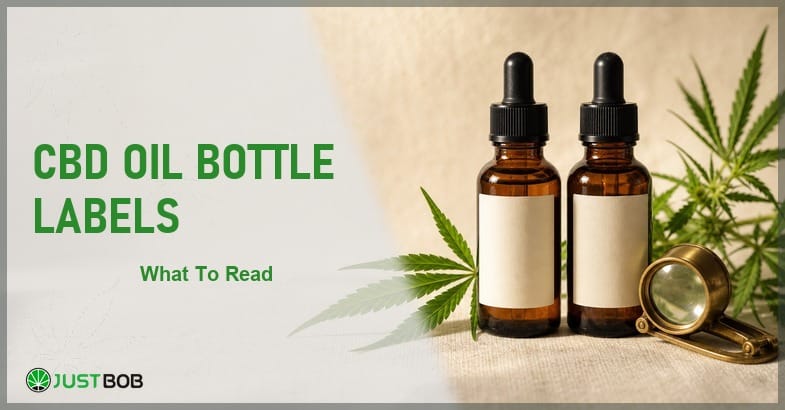
CBD oil bottle labels can feel crowded, but most of the useful clues sit exactly where you expect them. A small bottle has a front panel and a back panel, and each one tends to carry a predictable set of details. Once you know the layout, the label stops being a wall of small print and starts being a short map. This Justbob guide explains what a bottle label shows, how the panels are laid out, and how the batch details lead to the document behind the bottle. It stays on layout and navigation, with no instructions of any kind.
-
 Max CBDAMNESIA CBD BOOSTStarting from: 0,85 €/g
Glasshouse | CBD<40%
Grams5 10 20 50 100 200 400 -
Max CBDAK47 CBD BOOST
Indoor | CBD<47%
Starting from:HALLOWEEN SALE -10%
1,45 €1,30 €/gGrams5 10 20 50 100 200 -
Max CBDCHARAS
CBD HASH | CBD<45%
Starting from:HALLOWEEN SALE -10%
0,90 €0,80 €/gGrams5 10 20 50 100 200 -
JB OIL 25%Starting from: 14,90 €
CBD Oil 25%
Orientation is the whole point here. With a little practice, you can pick up a bottle, know which panel holds what, and follow the batch code to its document.
What CBD oil bottle labels show
A bottle label is the packaging layer of information, distinct from the longer product page online. It carries the product identity, the cannabinoid figures, the carrier oil, a batch code, a short warning and a pointer to the document. The same facts can appear in more detail on the web listing, but the bottle has to hold the essentials in a small space.
From the shelf, the helpful frame is to read the bottle as the summary and the product page as the full version. The label tells you what the bottle is; the page and the document expand on it. Neither replaces the other.
Layout and identity fields
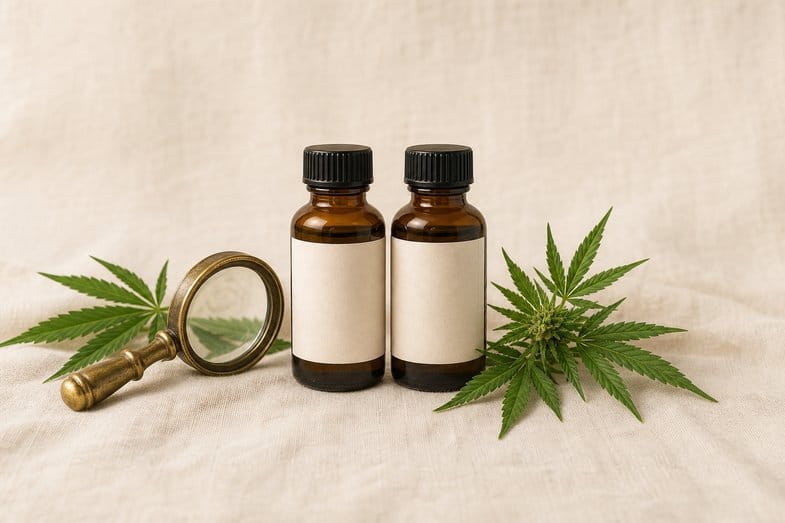
Most bottles split their information across two panels. The front panel usually carries the product identity: the name, the format, the headline CBD figure and the volume. The back panel tends to carry the supporting detail: the carrier oil, the batch code, the warning line, the age note and the pointer to the document.
That split is the layout logic worth remembering. Identity and headline figure at the front, supporting detail and traceability at the back. For the wider catalog context, the CBD oil listings mirror this order, with the page expanding on what the bottle introduces.
Batch details and document routes
The traceability cluster is the part that points outward. A batch code, and sometimes a QR code, gives a route from the bottle to the certificate of analysis. The batch code lets you find the document manually; a QR code, where present, links to it directly. Either way, the bottle is designed to lead you to the paperwork.
That route is the practical heart of the label. For the document at the other end of it, our guide on CBD Oil Certificate Checklist: What To Read covers what the certificate carries once the batch code has taken you there.
Read also: CBD Oil Bottle Sizes: How To Read Labels
How a code learned to point at a document
The idea of scanning a small mark to reach a longer record is more recent than the bottle itself. In 1994, the engineer Masahiro Hara and his team at Denso Wave in Japan developed the QR code, designed to hold far more information than a standard barcode and to be read quickly from many angles. It is the technology that now lets a label point straight at a document.
That background explains why a modern bottle can stay uncluttered. The label does not need to print everything, because a code can carry the reader to the full record. The panel is small by design; the document route does the rest.
Bottle label vs product page
It helps to keep the two layers separate. The bottle label is the physical summary, limited by space and printed once per run. The product page is the online version, with room for the full description, the variety detail and the document link. They should agree with each other, but they are not the same surface.
When the two line up, the bottle and the page describe the same lot. The batch code is the hinge between them: it appears on the bottle, on the page and on the certificate, and it is what keeps all three pointing at the same run.
Read also: MCT Carrier Oil In CBD: Label Reading Guide
What not to infer from a bottle label
A bottle label has firm limits. It identifies the product, lists the figures and points to the document. It does not describe an outcome, and it carries no instructions, which is not its job.
So the careful reading keeps to what the panel prints. The label tells you what the bottle is and how to reach its paperwork. Anything beyond that, any hint of a result or a method, is wording to read with care rather than a fact the label can hold.
The bottle, the page and the document
All of Justbob’s commercialised products are analysed lot by lot. Every product page keeps its documents on hand. A reader who wants to confirm the cannabinoid breakdown or the batch identity for a specific bottle can open the certificate of analysis without leaving the product page.
Every CBD oil listing sits inside the EU industrial hemp framework, with THC kept at or below the 0.3 percent threshold harmonised at European level, and the products are offered for technical, scientific and ornamental purposes only. Within that frame, the bottle label is read as a packaging summary that points to the document, not as a place for any other kind of message.
Front, back, then the document
A bottle reads in a few moves. Read the front panel for the product identity and the headline CBD figure. Turn to the back panel for the carrier oil, the batch code and the warning line. Follow the batch code, or the QR code if there is one, to the certificate of analysis. Three moves, front to back to document, and the bottle is read at a glance.
For official background on how CBD products are framed for the public, the Food Standards Agency CBD guidance serves as a neutral reference living outside the catalog, keeping the rules apart from any single listing.
Frequently asked questions about cbd oil bottle labels
What do CBD oil bottle labels show?
A CBD oil bottle label usually shows the product identity (name, format and headline CBD figure) on the front panel. The back panel carries the supporting detail: the carrier oil, the THC reading against the 0.3 percent threshold harmonised at European level, and the batch code. It also holds a short warning line with an age note and a pointer to the certificate of analysis. The bottle holds the essentials; the product page and the document expand on them.
Are bottle labels the same as product pages?
No. The bottle label is the physical packaging summary, limited by space and printed once per production run. The product page is the online version, with room for the full description, the variety detail and a direct document link. They should agree with each other, and the batch code is the hinge that keeps the bottle, the page and the certificate pointing at the same lot.
Where are batch documents found?
At Justbob, each commercialised product page holds the certificate of analysis for that lot, so the document opens without leaving the listing. From the bottle, the batch code lets you find that document manually, and a QR code, where present, links to it directly.