
Modified on: 11/08/2026
One molecule, a rose, a beehive and a shampoo bottle
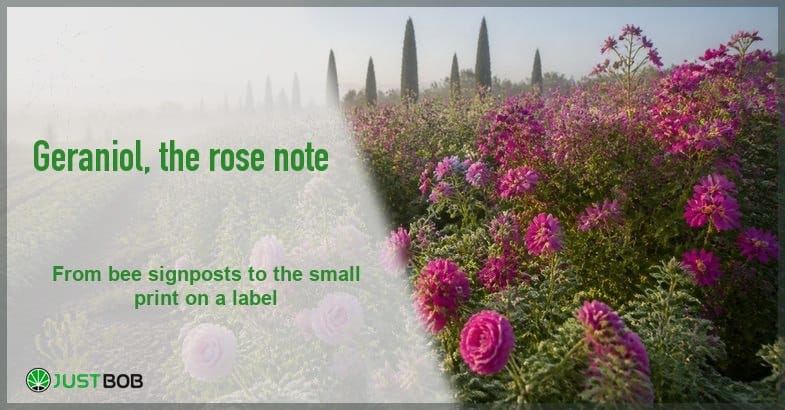
If you have ever put your nose into a rose and thought the smell was almost too perfect to be real, you have met geraniol. It is one of the compounds doing most of the work in rose oil, it carries the sweet edge of citronella and lemongrass, and it appears as a minor note in the aroma of some hemp varieties. What is geraniol, then, is really a question about one small molecule with a very wide address book.
-
 Max CBDAMNESIA CBD BOOST
Glasshouse | CBD<40%
Starting from:FLASH SALE -10%
0,85 €0,75 €/gGrams5 10 20 50 100 200 400 -
Max CBDAK47 CBD BOOSTStarting from: 1,45 €/g
Indoor | CBD<47%
Grams5 10 20 50 100 200 -
Max CBDCHARASStarting from: 0,90 €/g
CBD HASH | CBD<45%
Grams5 10 20 50 100 200 -
JB OIL 25%Starting from: 14,90 €
CBD Oil 25%
This guide keeps to what can be described and checked: the chemistry, the plants it comes from, why perfumers have leaned on it for over a century, and how a floral note is worded on a hemp product page.
A small molecule with a wide address book
Geraniol is a monoterpene alcohol. In plain terms that means a small molecule built from two isoprene units with an alcohol group at one end, which is what makes it an alcohol rather than a simple hydrocarbon like limonene.
It is a colourless to pale yellow liquid, oily rather than watery, poorly soluble in water and readily soluble in alcohol and oils. Chemists file it under CAS number 106-24-1, and the PubChem entry for geraniol lists its identifiers and physical constants in full.
Read also: Terpene Name Glossary: A Hemp Aroma Guide
Where the name came from
The name points at a plant, as terpene names usually do. Geraniol was named after geranium oil, distilled from scented Pelargonium species, where it occurs in quantity.
It is not confined there. Geraniol is a major component of rose oil and of palmarosa oil, and it is present in citronella, lemongrass and a long list of aromatic plants. The perfumery habit of naming a compound after the first plant it was pulled out of is why the aroma vocabulary reads like a botanical index.
The bee that uses it as a signpost
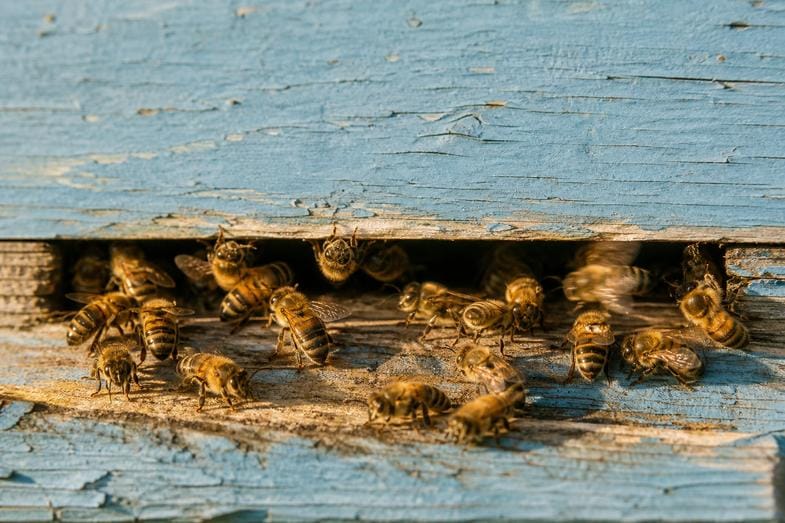
Here is the detail that makes geraniol more interesting than most entries in a terpene glossary. Honeybees produce it themselves, from the Nasonov gland at the tip of the abdomen, and release it by fanning their wings to spread the scent.
They use it as a marker. Foragers release it at forage sites worth returning to, and workers stand at the hive entrance releasing it to guide the rest of the colony home. A molecule we file under fragrance is, to a bee, a piece of infrastructure.
Geraniol in hemp aroma
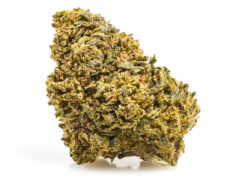
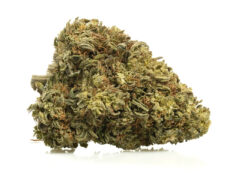
In hemp, geraniol is a minor player rather than a headline. Where it is present it contributes a floral, rose-leaning facet, often sitting under the more assertive notes that dominate a variety’s profile.
How much shows up depends on the variety and on what happened after harvest. Terpenes are volatile, and drying, handling and storage all shift the balance of a profile over time. A floral note described on a small buds listing is therefore a description of a particular batch at a particular moment, which is exactly how aroma wording should be read.
Read also: CBD Flower Aroma Families: A Clear Guide
Geraniol on a shampoo bottle
Turn over almost any scented cosmetic and you will find geraniol printed near the end of the ingredient list, after the recognisable names. There is a regulatory reason for that.
European cosmetics rules require a defined set of named fragrance substances to be declared individually on the label when they exceed set thresholds, rather than being folded into the generic word parfum. Geraniol is one of those named substances. So the same molecule that a perfumer reads as a rose note is, on a label, a line of small print with a legal obligation behind it.
Reading a floral note on a product page
Aroma wording on a listing does one job: it tells you what a batch smells like. Geraniol belongs to the floral end of that vocabulary, alongside notes described as rose, sweet or slightly waxy, and it sits beside the earthy, citrus and pine descriptors used elsewhere.
The most honest thing a floral note can do, we would argue, is stay a floral note. It describes a scent, it helps you picture a batch before it arrives, and it stops there. Our general guide to terpenes covers how the wider family is organised if you want the map rather than the single entry.
A word worth keeping small
Geraniol is a monoterpene alcohol named after geranium oil, abundant in roses and palmarosa. Bees use it as a signpost and perfumers as a rose note. In hemp it appears as a minor floral facet that varies from batch to batch.
On a Justbob page the aroma wording describes a batch and the certificate behind it records the figures, which is a division of labour worth keeping. The products themselves are sold as perfumers of environments and for technical and ornamental use.
Frequently asked questions about geraniol
What is geraniol?
Geraniol is a monoterpene alcohol, a small aromatic molecule found across the plant kingdom. It is a colourless to pale yellow liquid, poorly soluble in water and soluble in alcohol and oils, catalogued under CAS number 106-24-1. It is best known as one of the main components of rose oil and as the compound that gave geranium oil its name.
Is geraniol a cannabinoid?
No. Geraniol is a terpene, part of the aromatic fraction of a plant, while cannabinoids such as CBD and CBDA are a separate family of compounds recorded as figures on a certificate of analysis. Terpenes describe how a batch smells; cannabinoids are measured quantities. Keeping the two categories apart is what makes a product page readable.
Which plants contain geraniol?
Roses and palmarosa are among the richest sources, and it is also present in scented Pelargonium species, citronella and lemongrass, along with many other aromatic plants. In hemp it appears as a minor component in some varieties, contributing a floral facet rather than dominating the profile.
Why is geraniol listed on cosmetic labels?
Because European cosmetics rules require a defined set of named fragrance substances to be declared individually once they pass certain thresholds, instead of being covered by the generic term parfum. Geraniol is one of those named substances, which is why it shows up in the small print of scented products.