
Modified on: 17/09/2026
Reading hemp flower aroma and texture on a product page
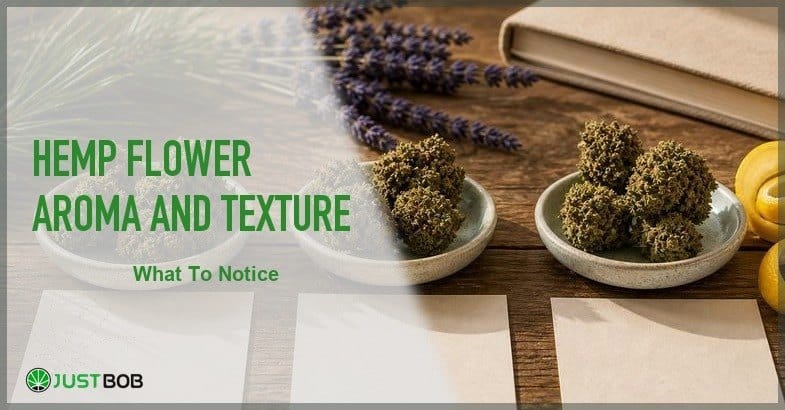
A hemp flower is easy to underestimate. It looks like a small dried bud, sometimes pale green, sometimes amber-tinged, sometimes shaped like a tiny pine-cone. The aroma and the texture are how that bud tells its story before you have even read the label.
This Justbob guide walks through the sensory layer of a hemp flower without sliding into use directives or personal-outcome claims. The companion category page for readers who want to browse products directly is CBD flower.
-
 Max CBDAMNESIA CBD BOOSTStarting from: 0,85€/g
Glasshouse | CBD<40%
Grams5 10 20 50 100 200 400 -
Max CBDAK47 CBD BOOSTStarting from: 1,45€/g
Indoor | CBD<47%
Grams5 10 20 50 100 200 -
Max CBDCHARAS
CBD HASH | CBD<45%
Starting from:FLASH SALE -10%
0,90€0,80€/gGrams5 10 20 50 100 200 -
JB OIL 25%Starting from: 14,90€
CBD Oil 25%
The sensory layer is descriptive, not prescriptive. It helps a reader compare two products on the page; it does not tell anyone what to do with them.
What hemp flower aroma and texture cover on a product page
Hemp flower aroma and texture are the two sensory signals a reader can pick up before opening the analytical document.
The aroma is the scent that travels with the flower: herbal, woody, citrus, fresh, slightly resinous.
The texture is the way the bud reads visually and on the package: trim quality, resin coverage, density, the green-to-amber colour balance.
Both layers describe the product. Neither replaces the batch document. On a careful page, the sensory description sits next to the photo and complements the percentages on the lab report, like a guided tour of the visible side of the flower. In our view, the most useful CBD flower pages give equal weight to aroma and texture. One layer covers the nose, one layer covers the eye, and the two together make a hemp flower legible in a way that words on a label cannot do alone.
Read also: Hemp Flower Aroma Notes: A Clear Scent Vocabulary
The visible texture: trim, resin and bud structure
Texture is the first sensory signal a reader meets on the page, because photos arrive before any description.
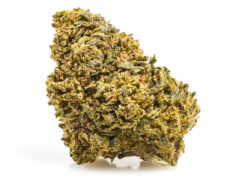
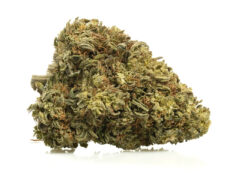
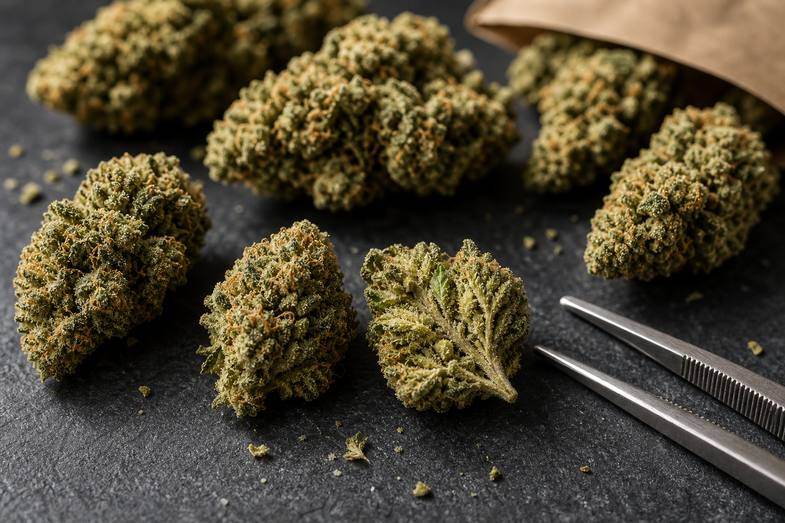
A trimmed bud shows a compact structure with the small fan leaves removed; an untrimmed bud keeps more leaf material around the flower, which changes the visual silhouette and sometimes the aroma intensity.
The visual checks you can make on hemp flower can help you assess details such as trim, resin coverage, colour balance and bud structure before comparing them with the product information.
Resin coverage is the next clue. The resin lives in the trichomes, the small sticky glands distributed on the surface of the flower and on the surrounding bracts. Under reasonable light, those trichomes catch as little glints on the bud, and the photo on a CBD flower page often shows that micro-pattern when the producer cares about the visual story.
Bud structure adds another reading angle. Dense, tightly packed buds tend to keep their aroma longer, because the inner surface is more protected from oxygen and light; looser, fluffier buds breathe more, which can soften the aroma intensity over time. None of this is a quality judgment, but it shapes how the texture description should be read on the page.
The aroma vocabulary: scent families and terpenes
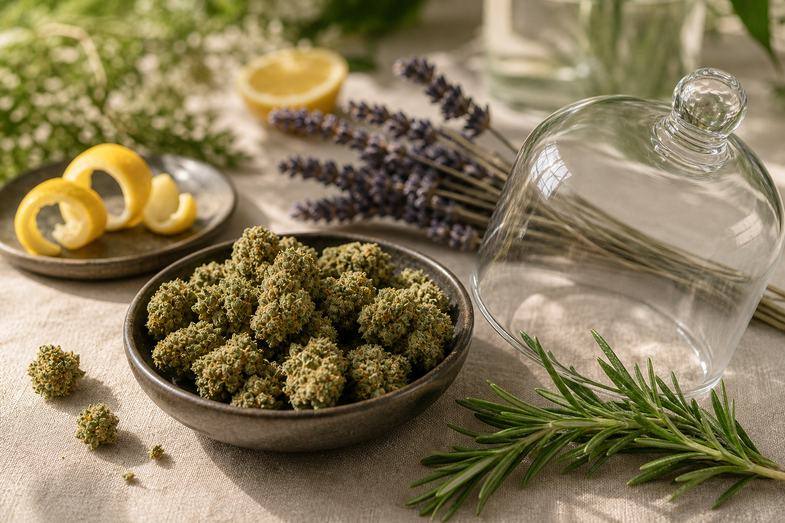
Aroma writing for hemp flower borrows directly from the wider botanical lexicon. The same scent families that describe perfumes, herbal teas and aromatic plants apply to the dried bud, because the molecules behind the aroma, also called terpenes, are largely the same.
Limonene gives a citrus impression, found in lemon peel and orange zest; pinene brings the pine-needle freshness familiar from a forest in early morning; myrcene leans toward earthy, slightly fruity notes, the same compound that gives ripe mangoes part of their scent. Linalool is the floral note in lavender and in some hemp varieties; caryophyllene adds a peppery, slightly spicy edge, found in black pepper and cloves; humulene leans toward woody and hoppy aromas, the terpene most familiar to anyone who knows how a fresh hop cone smells. None of these terpenes is unique to hemp. They are part of a wide botanical neighbourhood that the hemp flower simply shares.
For a product page, that means the aroma vocabulary is recognisable. A reader who has smelled rosemary, citrus peel and pine needles already has a small reference library for hemp flower aroma. The page is just borrowing the words.
How aroma and texture travel together
Aroma and texture are not independent layers. A dense, resin-rich bud usually carries a more concentrated aroma, because the trichomes hold most of the terpenes and the dense structure protects them from air exposure. A looser bud, with less visible resin, often reads as lighter and fresher in scent.
That correlation is not a strict rule. Two flowers with similar texture can still smell quite different, depending on the registered hemp variety and the curing process. Two flowers with similar aroma profiles can also feel slightly different in texture, depending on harvest moment and storage history. The pairing is a useful starting point, not a verdict.
For the reader, the takeaway is to use aroma and texture together as one sensory snapshot of the flower, and then move to the label and the batch document for the more specific layer. A useful regulatory companion is the PubMed Central review on cannabinoids and terpenes, which discusses how the same compounds behind a hemp flower’s scent appear across many plants in the literature.
Reading a CBD flower page through the sensory layer
A sensory reading routine fits neatly inside the broader CBD flower compliance habit.
- Start with the photo: notice the trim quality, the visible resin, the colour balance.
- Read the texture description on the page and check whether it matches what you see.
- Move next to the aroma description: which scent families does the page name, and which terpenes does it associate with them.
- After the sensory layer, the page should give space to the label and the batch document.
The CBD percentage, the THC threshold language and the cannabinoid profile in the lab report are what turn the sensory description into a complete picture. Aroma and texture invite the reader in; the analytical document keeps them grounded.
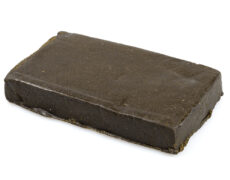
The same four-step reading order works across formats. CBD hash pages, CBD oil pages and CBD flower pages all benefit from the sensory layer being explicit but never inflated.
Hemp flower aroma notes from familiar botanical references
Many hemp flower aroma notes come straight from familiar aromatic plants. Rosemary, sage and thyme contribute the herbal, slightly resinous side; basil and mint lean toward fresh and bright; black pepper, clove and cardamom support the spicy and warm range. Citrus peel, in its lemon and orange varieties, anchors the citrus family. Pine needles and cedar sit in the woody column.
The vocabulary is borrowed because the terpene chemistry overlaps. Limonene appears in lemon peel and in some hemp varieties; pinene appears in pine resin and in others; linalool appears in lavender and in some floral-leaning hemp flowers. The flower is not pretending to be a herbal blend; it is simply sharing molecules with one.
For a reader, this recognisable neighborhood lowers the entry barrier. The aroma of a hemp flower can be described with words a non-specialist already knows.
Why CBD flower texture varies between lots
Two batches of the same registered hemp variety can read slightly differently in texture, and this is part of the agricultural nature of the product. Variation in harvest moment, in curing humidity, in trimming method and in storage conditions all change the visible side of the flower.
Curing, in particular, is a slow process. After harvest, the flower is dried and then stored at controlled humidity for a number of days; the standard reference range used by many producers is around 58 to 62 percent relative humidity, which keeps the bud stable without dehydrating the trichomes. The moisture content of hemp flower can therefore influence how the texture is described, particularly when comparing flowers from different lots or storage conditions. A flower cured too quickly tends to feel drier and more brittle; a flower cured too slowly may keep a higher water content and a softer texture.
For the reader, this means the texture description on the page is a snapshot of one lot. Comparing two lots of the same variety is more honest than expecting a single universal profile.
How batch documents support the sensory description
The analytical document gives the sensory layer something to lean on. The cannabinoid profile, with its percentages of CBD, CBG, CBN, CBC and THC, situates the flower in the broader chemistry. The terpene profile, when reported, names the dominant aroma-related compounds in the same way the page describes the scent.
When the page describes a citrus aroma and the terpene profile lists limonene as the leading terpene, the two readings agree. When the page describes a woody, piney aroma and the terpene profile lists pinene, again the two agree. That agreement is what turns sensory wording from a decorative layer into a verifiable one.
Justbob carries out constant analyses on all commercialised products and on every batch. The relevant documents are available inside each commercialised product page, so the sensory description on the page can always be checked against the batch numbers without leaving the catalog.
Read also: CBD Flower Aroma Profile: How to Read Scent Notes
A closing reading habit for hemp flower aroma and texture
Reading hemp flower aroma and texture is a quick discipline, but it can make product information much easier to understand. Start with the photograph and take a moment to observe the overall appearance, paying attention to details such as colour, structure and density. Then read the texture description and the aroma profile, checking whether the different elements form a coherent picture. Finally, compare the available information with the relevant analytical documentation, when provided, to distinguish descriptive characteristics from objectively verifiable information.
The whole routine takes less than a minute, yet it can give the reader a much firmer and more complete sense of the product before considering any other aspect. It also encourages a more careful approach to product descriptions: photographs and sensory notes can help explain what a product looks and smells like, while laboratory documentation provides a separate source of technical information. Keeping these two types of information distinct makes it easier to evaluate descriptions critically and understand exactly what is being communicated.
Over time, this simple habit can become a useful way of reading hemp-related product information more attentively, avoiding assumptions based on a single photograph, a single descriptive term or an isolated customer opinion.
🌿Ready to look closer? Explore the world of hemp flower with Justbob: discover the details, compare the profiles, and find your next favourite.
Frequently asked questions about hemp flower aroma and texture
What does hemp flower aroma and texture describe?
Hemp flower aroma and texture describe the scent and the visible build of the dried bud, including trim, resin coverage, density and the scent families recognised on the page. It is a sensory layer, not a personal-outcome claim.
Why do aroma and texture vary between lots?
Different harvests, curing conditions and storage histories shape both the aroma and the visible texture of the same registered hemp variety. Batch documents help anchor the description to a specific lot.
Are aroma and texture the same as quality?
No. They are useful sensory signals, but quality reading should also include the label, the cannabinoid profile in the lab report and the broader compliance information on the product page.