
Modified on: 10/07/2026
Texture words that stay on the product page
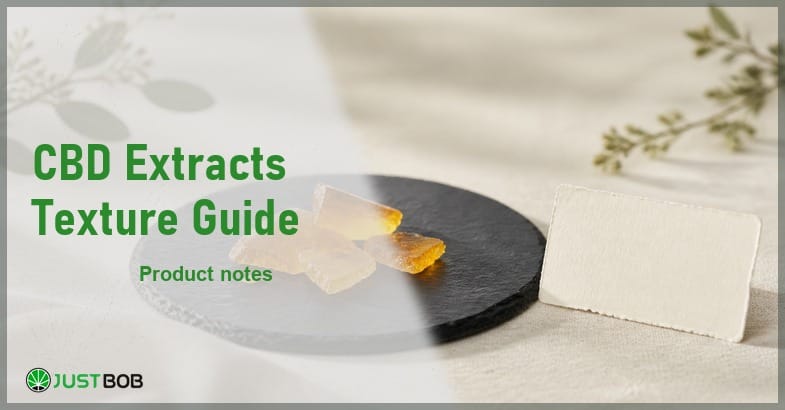
A CBD extracts texture guide is a short vocabulary for naming what an extract looks like on the page: its colour, its consistency and the words a label uses to describe both. It stays on the product card, naming the texture so a reader can recognise it, because a texture word is most useful when it is plain and specific and points back to the listing in front of them.
-
 Max CBDAMNESIA CBD BOOST
Glasshouse | CBD<40%
Starting from:FLASH SALE -10%
0,85 €0,75 €/gGrams5 10 20 50 100 200 400 -
Max CBDAK47 CBD BOOSTStarting from: 1,45 €/g
Indoor | CBD<47%
Grams5 10 20 50 100 200 -
Max CBDCHARASStarting from: 0,90 €/g
CBD HASH | CBD<45%
Grams5 10 20 50 100 200 -
JB OIL 25%Starting from: 14,90 €
CBD Oil 25%
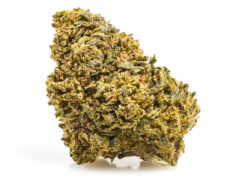
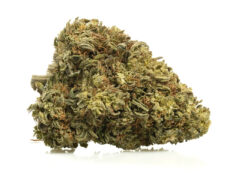
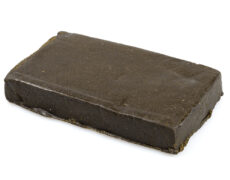
Picture a product card with a close photograph and a few lines of description. The texture words are the part that tells you whether an extract is solid or soft, pale or dark, glassy or matte. Read plainly, they describe an object. Stretched into anything else, they stop being useful, which is why this page keeps each word attached to the card it belongs to.
What a CBD extracts texture guide means
A CBD extracts texture guide is a set of description words for the physical form of an extract: its appearance, its consistency and the label terms that record them. None of those words describe what an extract does or anything beyond its look. Each one names a visible quality, so the vocabulary stays on the look of the product as a listing, nothing more.
Kept at that level, the texture words become a short naming exercise. A reader meets a photograph and a description, and the guide simply helps them match the right word to what they see. It is a vocabulary page for a product card, and that boundary is the whole point of it.
Appearance and consistency
Most texture words fall into two groups: how an extract looks and how solid it is. Appearance covers colour and surface, from pale gold to darker amber, from glassy and translucent to matte and opaque. Consistency covers the physical form, the words that say whether an extract reads as firm, brittle, soft or grainy on the page.
| Group | Texture words on the card |
|---|---|
| Appearance: colour | pale gold, amber, darker amber |
| Appearance: surface | glassy, translucent, matte, opaque |
| Consistency: firm forms | firm, brittle |
| Consistency: soft forms | soft, grainy |
Read together, those two groups describe an extract as an object. A label might pair a colour note with a consistency note, so a reader knows both the shade and the form before they ever see it in person. For how a sense of compactness is described in a related product, our note on CBD hash density covers the same kind of plain wording.
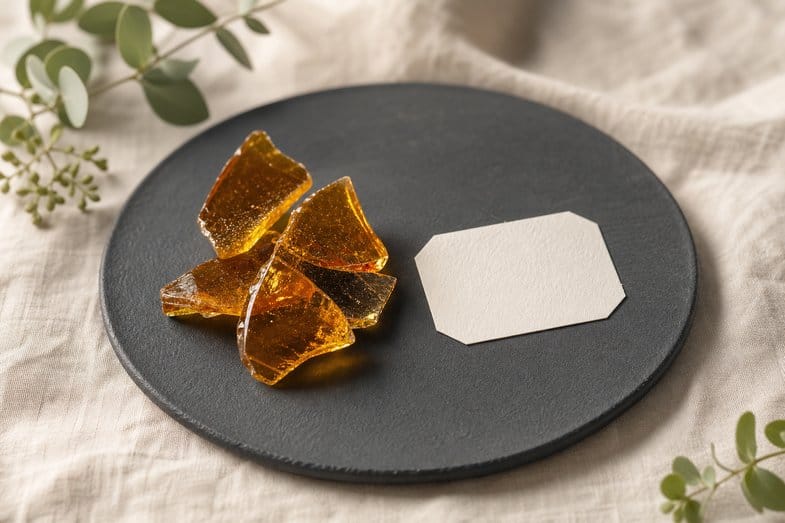
Read also: CBD Crumble: everything you need to know about this form of cannabis
Product-card wording
On a product card, the texture words do a plain job: they set expectations before a photograph is studied closely. A card might name a shade, a surface and a form, and those three notes together let a reader picture the extract accurately. The wording stays specific, because a vague texture word helps nobody.
This is where the vocabulary earns its keep. Words like glassy, brittle, soft or grainy are not dramatic, and they are not meant to be. They are plain labels for a physical object, chosen so the description on the card matches the extract a reader will receive, batch by batch.
A scale that named a quality
The idea of a fixed vocabulary for a physical quality is older than it looks. In 1812, the mineralogist Friedrich Mohs set out a scale that named the hardness of minerals from one to ten, judged by a simple scratch comparison. It did not say what a mineral was for. It gave people a shared, neutral way to name one physical property and compare it across samples.
Texture words for an extract work in the same plain spirit. They name appearance and consistency so two readers can mean the same thing by the same word. The Mohs scale named hardness for minerals; a texture note names form and colour for an extract, and in both cases the vocabulary is about describing an object, not about using it.
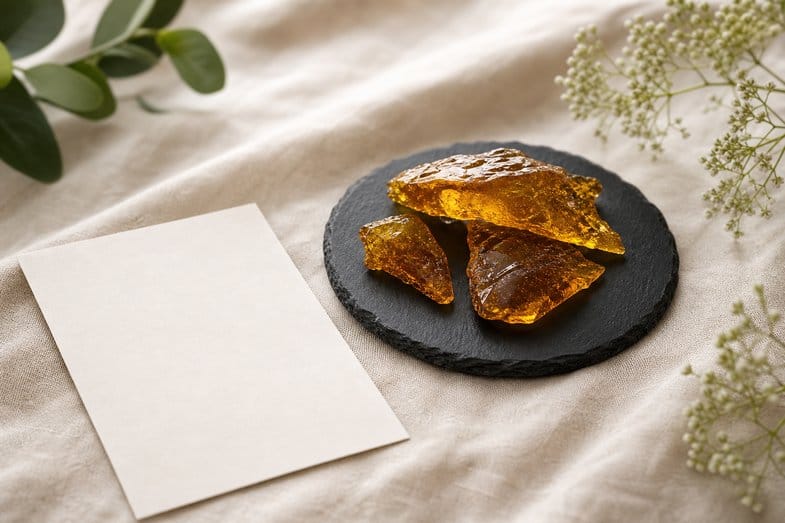
Read also: CBD Hash Texture: What Soft, Firm and Crumbly Can Mean
Labels and documents
A texture word on a card sits beside the same references as any other label entry. The product name, the indicative figures and the batch number are all there, and the texture note is read alongside them. The description says how the extract looks; the document confirms the figures for that lot.
This is why a texture guide ends at the document rather than at the description. A word like amber or brittle tells a reader what to expect on the surface, and the certificate of analysis for the batch records the measured figures behind it. The two are read together, so a description can always be checked against a document, never taken alone.
What this guide avoids
It is worth being plain about the limits. A CBD extracts texture guide names appearance and consistency and stops there. It makes no claim about results, it describes only the object on the page, and it stays well clear of the older topic this page used to cover. Those subjects sit outside a texture vocabulary entirely.
So the words are read for exactly what they are: plain names for colour and form, confirmed by a document. For an official overview of hemp as an agricultural crop, the European Commission page on hemp sets out the wider framework these products sit within.
Texture words on a Justbob page
On a CBD extracts page, the texture words do a narrow job: a colour note, a consistency note and the batch number that ties the listing to its document. Every commercialised product is analysed and each batch is checked, with the certificate kept inside the product page, so each description can be read next to the figures that confirm the lot.
Every product sits inside the EU industrial hemp framework, with THC kept at or below the 0.3 percent threshold harmonised at European level, and is offered for technical, scientific and ornamental purposes only. Read this way, on a Justbob page a CBD extracts texture guide is simply a set of sober description words, each backed by a document.
Frequently asked questions about cbd extracts texture guide
What is a CBD extracts texture guide?
It is a short vocabulary for naming the physical form of a CBD extract: its colour, its surface and its consistency, plus the label terms that record them. Each word describes a visible quality of the product as a listing, not anything a person might do with it. The guide helps a reader match the right description to a photograph and then check the figures against the certificate of analysis for the specific batch in hand.
Does this guide cover anything beyond description?
No. This page only names appearance and consistency on a product card. It stays on description and leaves anything beyond it to one side, including the older topic this page once covered. The aim is simply to recognise the texture words used on a listing and to read them next to the document that records the batch.
Why check labels and documents?
Because a texture word describes the surface, while the document records the measured figures. A description says an extract looks amber or reads as brittle; the certificate of analysis confirms the figures for the lot. Following a listing from its texture note to the batch document is how a reader checks the description and avoids trusting the card on its own.