Modified on: 03/09/2026
Small bottles, crowded labels and useful details
A CBD oil bottle is small, but it has a lot to say: size, percentage, batch code, ingredients and a label that has to do some very clear work. This Justbob guide is about reading the bottle, not about making product promises.
-
 Max CBDAMNESIA CBD BOOSTStarting from: 0,85€/g
Glasshouse | CBD<40%
Grams5 10 20 50 100 200 400 -
Max CBDAK47 CBD BOOSTStarting from: 1,45€/g
Indoor | CBD<47%
Grams5 10 20 50 100 200 -
Max CBDCHARAS
CBD HASH | CBD<45%
Starting from:FLASH SALE -10%
0,90€0,80€/gGrams5 10 20 50 100 200 -
JB OIL 25%Starting from: 14,90€
CBD Oil 25%
Bottle size is easy to over-interpret. A bigger bottle is not automatically a better product, and a smaller one is not automatically less serious. The useful reading starts with volume, label clarity and the documents connected to the batch.
What CBD oil bottle sizes mean
CBD oil bottle sizes usually refer to the container volume, often expressed in ml. On a CBD oil product page, bottle size should be read beside percentage, ingredients, batch reference and label information. CBD oil contains a defined volume of liquid, and that volume is the first concrete thing a label tells the reader.
The bottle is the container. The label is the map. The batch document is the more detailed folder. Reading all three together is much clearer than focusing on size alone.
Reading volume in ml and the bottles you usually see
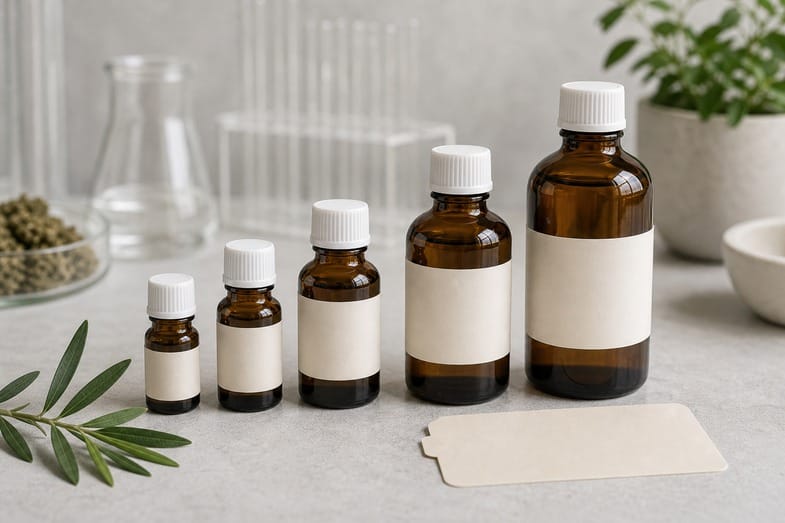
The most common CBD oil bottle sizes in the EU range from 10 ml at the smaller end, through 15 ml and 20 ml, up to 30 ml and the occasional 50 ml format. The ml number is essentially a volume range that describes how much liquid fits inside the bottle. It does not, by itself, describe quality, concentration or label completeness.
A label that says 10 ml or 30 ml is making a volume statement, nothing more. The percentage line beside it adds the concentration context, and the ingredient list adds what the oil contains. Reading these three together gives a fuller picture than focusing on the bottle size in isolation. CBD oil contains, in plain language, both the active hemp extract and the carrier oil that holds it, which is why volume is only one part of the description.
Bottle sizes also reflect format choices made by producers. Small bottles are common because the liquid is dense in CBD per ml and the label needs to stay readable on a small surface. Larger formats appear when a producer wants a longer-lasting bottle on the shelf. Neither is inherently better, but each shapes how the label is laid out and how much room the words have to breathe.
Carrier oils and the spectrum language on labels
A CBD oil label usually names the carrier oil, the neutral oil that holds the hemp extract in solution. Common options include organic hemp seed oil, MCT coconut oil and olive oil, each with its own visual and aroma profile on the page. The label uses these names to be transparent about what the bottle contains, not to push any particular feature. Many CBD products in this format also describe themselves as vegan friendly when the entire ingredient list, including any flavonoids or terpenes mentioned, is plant-based. Some pages, especially for tinctures, list “industrial hemp extracted from selected EU producers” or similar wording to clarify that the raw material is grown under the EU hemp framework.
The label also mentions spectrum language. Full spectrum CBD oil contains a wider mix of hemp-derived compounds, including other cannabinoids and small fractions of terpenes naturally found in the plant. Spectrum CBD oils on the broader spectrum side keep most of the natural mix while removing or reducing the THC fraction; spectrum CBD oils in the isolate category strip the profile down to a more concentrated cannabidiol line. These are all label descriptions, not promises.
In our view, the spectrum word is just a vocabulary shortcut. A reader who sees “full spectrum CBD oil” on a label is reading a description of how the extract was made, not a quality verdict. The same is true for broad spectrum. The label tells you what kind of CBD oil contains the bottle, and the documents tell you what specific batch ended up inside.
Read also: CBD Oil Lab Testing: What a Certificate Can Tell You
Volume, percentage and label space
A small bottle has limited space, so good label language matters. The reader should be able to find the product name, percentage context, ingredient list and batch code without solving a puzzle.
CBD oil labels and CBD oil packaging should make that information easier to read, not louder. The bottle is small, so the page has to do some of the organising work.
Percentage and volume describe different things. One tells you about the concentration language on the label. The other tells you about the bottle size. They should be read together, but not confused.
If you want to know more about the different kind of CBD oil, we suggest you read the specific article about the Isolate CBD oil.
Ingredients, batch codes and documents
Ingredient lists are part of label literacy. They help readers understand the carrier oil and hemp-derived extract context without turning the page into a claim.
Batch codes and documents add the product-specific layer. The bottle tells the reader the format, while the document area helps connect the label to a checked lot.
Justbob carries out constant analyses on all commercialised products and on every batch. Each commercialised product page includes those documents, so bottle-size details can be checked beside the information tied to the specific lot.
For regulatory background on CBD in food-related contexts, the Food Standards Agency CBD guidance is a useful official reference point.
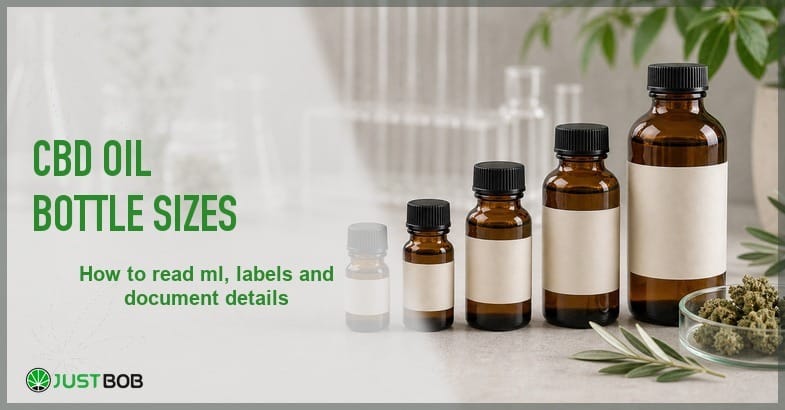
Amber glass, pipettes and label space on small bottles
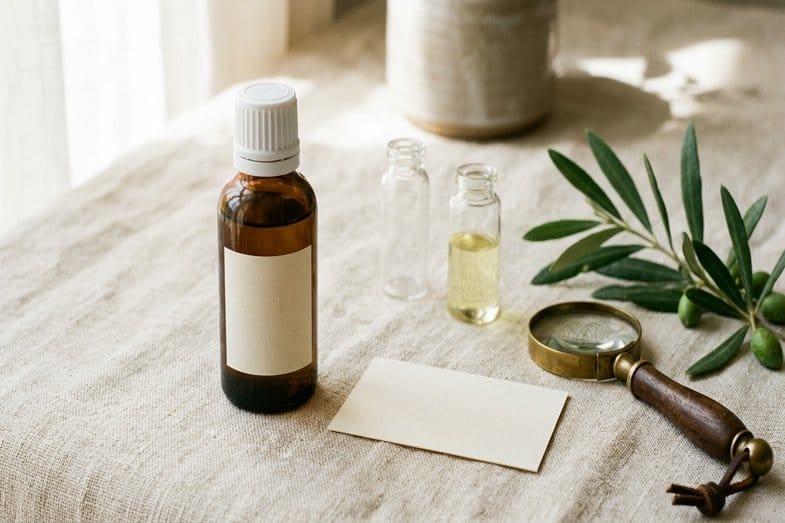
The CBD oil bottle itself is rarely a neutral object. Most CBD oil bottle sizes on the market use amber or dark green glass, a choice that has its origin in older pharmacy traditions: amber glass has been used since the nineteenth century to slow down the oxidation of light-sensitive compounds, by filtering part of the UV range that hits the bottle. Hemp-derived extracts share that sensitivity, which is why the colour is more than a stylistic choice.
The pipette, the small dropper built into the cap, is another label-relevant feature. It is part of the bottle format, not a use instruction. The pipette is usually a glass tube with a rubber bulb, calibrated visually in milliliters, and its presence on the page is essentially a description of how the format is built: a CBD oil bottle plus a pipette in the same screw cap, ready to read.
Imagine a row of amber bottles on a counter under warm light, pipettes lined up like tiny instruments in a botanical kit. The visual is concrete; the label is small; the words on it have to do a lot of work in very little space. That is exactly why a careful page reads label space and bottle materials as design details with their own implications, rather than as decoration. The reader who can identify the bottle, the pipette and the colour without effort spends less time guessing and more time reading the part that matters: the page and the documents.
Storage cues the label can give you
CBD oil bottle packaging often includes short storage cues printed alongside the ingredient list. Phrases like “store away from direct light“, “keep tightly closed” or “keep in a cool, dry place” are not marketing copy. They are a way of telling the reader that the contents of the bottle are sensitive to UV, oxygen and heat. The amber glass already handles part of the UV question, but light still reaches whatever sits behind a translucent bottle on a shelf.
These cues also fit the carrier oil. Organic hemp seed oil and MCT coconut oil are stable for a long time when kept away from light and heat, but they do age. A storage line on the label is a low-key way of saying that the bottle is at its best when it is handled like other plant-derived ingredients in the kitchen or the bathroom: out of the sun, tightly sealed and not parked next to a radiator.
The label is a small package of practical information, and reading it carefully is part of using the product page well.
Less is more: why size is not a quality promise
Bottle size is practical information. It should not be used as a shortcut for quality. A larger format does not automatically mean a better product, just as a smaller container does not necessarily indicate lower standards. The real value comes from the information behind the product: the format, label details, batch references, and supporting documentation that allow the reader to understand what they are choosing.
A clear product page explains these elements and gives customers the tools to compare options based on relevant details rather than simple visual impressions. Size can tell part of the story, but it is only one element within a wider picture that includes presentation, traceability, and transparency.
In our view, this is where many product pages become more useful: less noise, more label reading. Small bottles appreciate good manners, and so do the customers reading about them.
Why volume is only the first clue
CBD oil bottle sizes are easy to notice because volume is visible and simple. A label says ml, the bottle has a shape, and the reader immediately has something concrete to compare. That is useful, but it is only the first clue in understanding a product.
The better reading includes volume, percentage context, ingredient list, batch code and product documents. A bottle is small, so every label choice matters. Good wording and thoughtful layout can make limited space feel structured rather than crowded. The best labels do not try to say everything at once, they guide the reader through the essential details in a simple way.
There is something satisfying about a tiny label that behaves well. Small object, clear manners.
Read also: CBD Oil Ingredients: What Is Usually Inside the Bottle
Assumptions to leave on the shelf
The most common assumptions are the following:
- Bigger automatically means better. It does not. A larger bottle may offer more product, but size alone does not reveal the quality, clarity, or completeness of the information behind it.
- Bottle is less complete. It may simply be a different format with a tighter label and a more condensed way of presenting the same essential details.
- Percentage and volume mean the same thing. They do not. Percentage context and ml belong together, but they answer different questions on the label. One helps explain concentration, while the other describes the amount of product contained in the bottle.
A careful article should leave the reader more measured: check the size, read the label, compare the documents, then decide what the page is actually saying. The most useful information is not always the most visible element.
Reading the label before choosing the bottle
CBD oil bottle sizes are only one part of a wider information system. The real value comes from how volume, concentration, ingredients, batch references, and supporting documents work together to create a clearer picture of the product. A well-structured page does not ask the reader to rely on assumptions; it provides the details needed to understand the format and make a more informed comparison.
In the end, the best choice is not determined by the biggest bottle or the most visible feature. It comes from paying attention to the information behind the product and understanding how each detail contributes to the overall experience. A small label can still tell a complete story when every element has a clear purpose.
🌿Explore Justbob’s CBD oil range and discover products with detailed information designed to make comparison easier.
Frequently asked questions about CBD oil bottle sizes
What do CBD oil bottle sizes mean?
CBD oil bottle sizes usually describe container volume, often expressed in ml. They should be read beside percentage, ingredients, label details and batch documents.
Is a bigger CBD oil bottle always better?
No. Bottle size is practical information, not a quality promise. Product documents and label clarity matter more than size alone.
What should I check on a CBD oil label?
Check product identity, volume, percentage context, ingredient list, batch code and the documents available on the product page.