
Published on: 18/11/2026
Permanent Marker strain: what the databases actually record
The Permanent Marker strain is named after the way it smells. Strain databases and grower reviews keep coming back to the same picture: a sharp, chemical, almost solvent-like note that reviewers compare to an open marker pen, sitting over candy sweetness and a fuel-like base.
The variety in the title is a recreational cannabis plant bred in the United States, not a product on this site. We describe it the way the catalogues and review sites describe it, then draw a clear line between that plant and the European hemp flower Justbob actually sells.
-
 Max CBDAMNESIA CBD BOOSTStarting from: 0,85 €/g
Glasshouse | CBD<40%
Grams5 10 20 50 100 200 400 -
Max CBDAK47 CBD BOOSTStarting from: 1,45 €/g
Indoor | CBD<47%
Grams5 10 20 50 100 200 -
Max CBDCHARASStarting from: 0,90 €/g
CBD HASH | CBD<45%
Grams5 10 20 50 100 200 -
JB OIL 25%Starting from: 14,90 €
CBD Oil 25%

Where the Permanent Marker name comes from
Most strain names are marketing. This one is closer to a description. Reviewers reach for the same comparison again and again, the smell of a freshly uncapped permanent marker, and that comparison is what the name records. That aroma is the through-line of every write-up, and it got the variety noticed in a crowded field of dessert and candy crosses.
The name describes a scent, and it promises nothing about a result. Plenty of strain names imply a feeling; this one just flags a smell that people found unusual enough to remember. Everything else about the plant, the lineage and the look, sits underneath that first impression.
The genetics: Seed Junky Genetics and a three-way cross
Permanent Marker was bred by JBeezy of Seed Junky Genetics, one of the most influential breeders working with Gelato and Cookies genetics. The databases record it as a three-way cross: Biscotti, Jealousy and a Sherbet backcross usually written as Sherb Bx1.
Each of those three has its own recorded parentage:
| Contributor | What the databases list it as |
|---|---|
| Biscotti | Gelato 25 crossed with a South Florida OG line |
| Jealousy | Gelato 41 crossed with the same Sherbet backcross |
| Sherb Bx1 | A Sherbet backcross tracing to Sunset Sherbet |
So the family tree folds back on itself through Gelato and Sherbet more than once, which is part of why the plant reads as a concentrated version of that whole lineage, several dessert crosses stacked together in a single variety.
The databases do not all write the cross the same way. What they agree on is the breeder, the three named contributors and the Gelato-heavy backbone; the order and structure of the cross is where they drift apart.
The Cookies and Gelato heritage
This variety only makes sense alongside its family. Gelato and the wider Cookies group are among the dominant American breeding lines of the last decade, prized for dense structure, heavy resin and sweet, dessert-led aromas. Permanent Marker sits inside that group as one of its sharper, less obviously sweet branches.
These are dense, resin-coated flowers, closer in build to compact indica buds than to airy sativa colas. Density and size are different things, though: our guide to Small Buds explains how popcorn-sized flowers are graded against full-size tops on the European side of the market. The heritage explains the shape as much as the smell.
Read also: Legal marijuana Sativa: differences with cannabis indica and best strains of 2024
Aroma and flavour: the marker note over candy and gas
Its name comes straight from the aroma. Reviews describe a floral, soapy, chemical top note (the marker comparison) sitting over sweeter candy and cookie-dough tones, with a gassy, fuel-like base underneath. Some accounts add sour or ammonia edges. The overall impression is loud and a little industrial.
Flavour reports, as recorded by the same review sites, track the smell fairly closely. The sharp chemical note is said to carry through, softened by the sweeter candy layer. This is a variety that people remember by its nose, which is unusual, because most strains blur together into general sweetness once you have read enough write-ups.
Terpenes commonly listed for the variety
The compounds responsible for a smell like this are terpenes, the aromatic molecules behind much of a plant’s scent. If you want the background on how these work across cannabis, we cover the role of a terpene profile in a separate article. For Permanent Marker specifically, the databases converge on a short list.
Reviews commonly list caryophyllene, limonene and myrcene among its terpenes, and some add linalool. Caryophyllene is the peppery, spicy one; limonene brings a citrus edge; myrcene reads as earthy and herbal; linalool leans floral. This terpene mix lines up loosely with the reported aroma, though the loudest note, the solvent-like marker smell, is not cleanly explained by any single terpene on the list. The chemistry of that particular character is still described more by reviewers than by lab breakdowns.
What the bud looks like
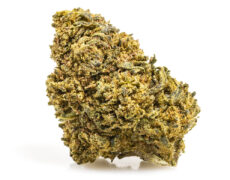
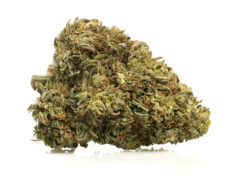
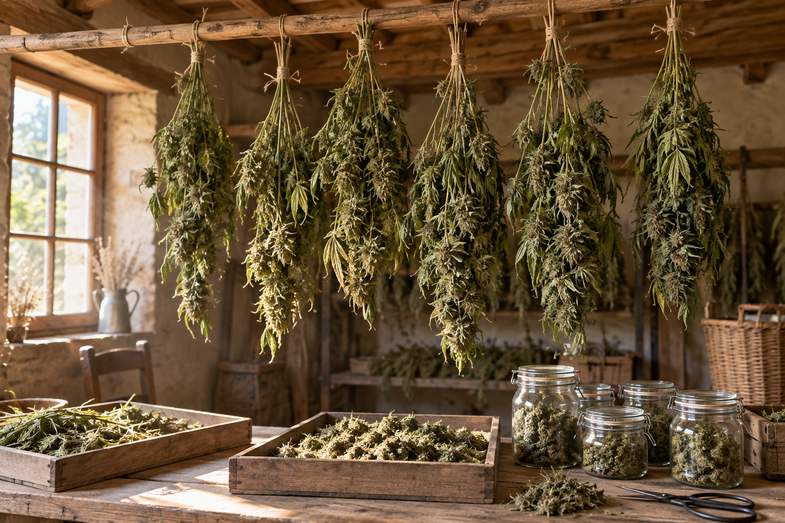
Photographs and grower notes describe dense, compact flowers with a deep green base, plenty of orange pistils and a thick, frosty coat of trichomes. The calyxes are swollen and packed tightly together, which is the classic look of these Gelato-adjacent genetics. Some phenotypes push towards purple in cooler conditions, though that colour depends on the growing environment and is not a fixed trait.
Buyers often associate that visual density with high-quality cannabis flower in general, whatever the variety. The compact, resin-heavy build of European CBD Flower follows a similar logic, even though the underlying chemistry is completely different. The look and the resin are about structure and growing care; they say nothing on their own about what is inside.
THC and the effects databases record
This is where the recreational variety and the European product part ways entirely. Strain databases report Permanent Marker as a high-THC plant, with figures that land roughly between 25 and 35 per cent depending on the grow and the testing. It is described as an indica-leaning hybrid, often put around 70 per cent on the indica side.
The effects that reviews and databases record, for that recreational plant and not for any European hemp, are described as relaxing and heavy, with reports of an early lift settling into calm. As with most strain listings, the accounts do not all line up, and they refer to a plant grown for high THC in places where that is legal.
European hemp is a different product. It is grown from certified seed of varieties listed in the EU Common Catalogue, held under the legal THC threshold, and described by a batch analysis rather than a strain sheet. The THC figures and the effects above belong to the recreational Permanent Marker plant, not to the hemp flower sold here.

Read also: Which Gorilla glue strain is the strongest?
How it differs from its neighbours
Permanent Marker overlaps with a lot of well-known modern varieties, so telling them apart comes down to detail. Its parents Biscotti and Jealousy are Gelato crosses in their own right, and the wider Runtz and Gelato family all trades in the same dessert-and-gas territory. What separates Permanent Marker in the write-ups is the aroma: that sharp, marker-like chemical note is more pronounced here than in its sweeter, fruitier relatives.
On structure and resin the differences are smaller. Most of this family produces dense, frosty, indica-leaning buds, so a photograph alone rarely settles which variety you are looking at. The reviews lean on one thing to tell it apart: the loud, solvent-like marker note.
Awards, and why the name travels further than the genetics
The name did not stay obscure. The variety was named Leafly Strain of the Year in 2023, and that kind of recognition is a large part of why the name now appears far beyond the plant that earned it. Once a strain name becomes a badge of quality, growers and sellers reach for it, and the label starts to drift away from the specific genetics that first carried it.
That kind of drift is well documented across cannabis generally. A 2015 genetic analysis of cannabis found that, in a number of cases, samples were more closely related to plants with different names than to plants sharing their own. The authors reported that a strain’s name is an unreliable guide to its genetics. On a variety this famous, that caveat matters: the name Permanent Marker tells you what a grower or catalogue is claiming, and the plant itself may or may not match.
European hemp sits inside a legal frame the recreational variety never had to meet. A strain sheet and a certificate of analysis do two completely different jobs, and only the second one describes the product on this site.
Frequently asked questions
What is the Permanent Marker strain?
Permanent Marker is a recreational cannabis variety bred in the United States by Seed Junky Genetics. Strain databases describe it as an indica-leaning hybrid known for a sharp, marker-like chemical aroma over candy and gas. It is not a European hemp product, and the figures reported for it do not describe the hemp flower sold here.
Who bred Permanent Marker and what are its parents?
It was bred by JBeezy of Seed Junky Genetics. The databases record it as a three-way cross of Biscotti, Jealousy and a Sherbet backcross known as Sherb Bx1, which places it firmly inside the Gelato and Cookies family. The way the cross is written differs slightly between sources.
Why is it called Permanent Marker?
The name comes from the aroma. Reviewers repeatedly compare its sharp, chemical, solvent-like smell to a freshly opened permanent marker pen. The label describes the scent, not any effect.
Is Permanent Marker indica or sativa?
Strain databases classify it as an indica-leaning hybrid, often placed around 70 per cent on the indica side. That classification applies to the recreational cultivar in the catalogues; the European hemp flower sold here is described by its batch analysis instead.
What does Permanent Marker smell like?
Reviews describe a floral, soapy, chemical top note (the marker comparison) sitting over sweeter candy and cookie-dough tones with a gassy base and occasional sour or ammonia edges. The terpenes most commonly listed for it are caryophyllene, limonene and myrcene, with some sources adding linalool.