
Modified on: 03/09/2026
A name can be playful, but the page must be clear
CBD hash product names can be fun, but the serious part is knowing what the page actually documents. A product name is a label, not a description, and it tells a reader very little on its own: the real information sits in the specs, the figures and the certificate beside it. This guide reads names as vocabulary, a way to recognise a product, and keeps the weight on the page details that a name can never replace.
-
 Max CBDAMNESIA CBD BOOSTStarting from: 0,85€/g
Glasshouse | CBD<40%
Grams5 10 20 50 100 200 400 -
Max CBDAK47 CBD BOOSTStarting from: 1,45€/g
Indoor | CBD<47%
Grams5 10 20 50 100 200 -
Max CBDCHARAS
CBD HASH | CBD<45%
Starting from:FLASH SALE -10%
0,90€0,80€/gGrams5 10 20 50 100 200 -
JB OIL 25%Starting from: 14,90€
CBD Oil 25%
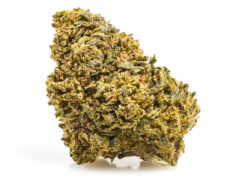
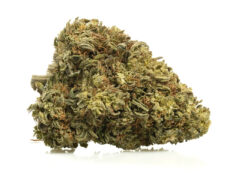
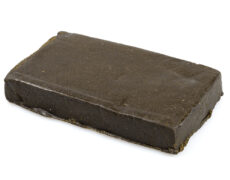
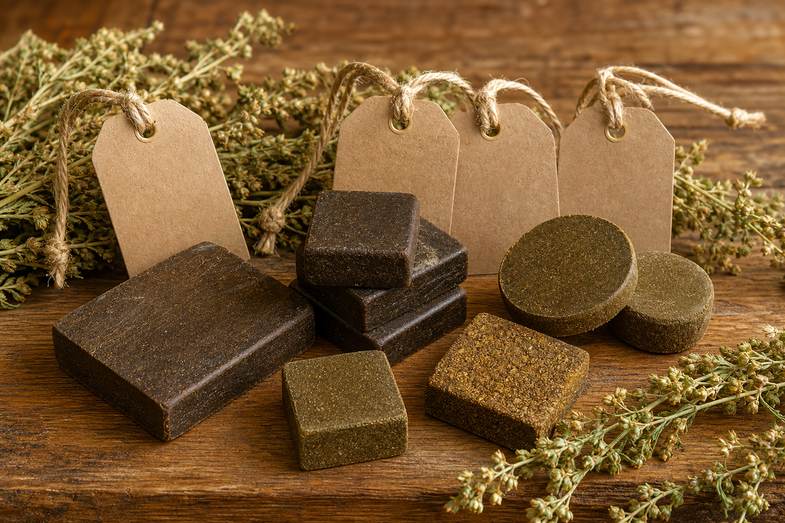
Picture a shop shelf where each block of hash carries a memorable name on its card. That is the honest setting for the topic. A name helps a reader find and remember a product, but the page underneath has to carry the plain specs, because a catchy word is a handle, not a description of what is in the block.
What CBD hash product names mean
CBD hash product names are the labels a shop gives to its pressed hemp resin items, drawn from Cannabis sativa L. grown as an agricultural crop. Taken honestly, a name is a way to tell one product from another and to remember it, nothing more: it is not a measure, a grade or a claim. Read plainly, a product name is a recognition tool, sitting above the specs that actually describe the item.
Kept at that level, names stay manageable. A name points to a product the way a title points to a book, useful for finding it but no substitute for reading the page. The job of this guide is to keep names in that role and to send a reader to the CBD hash page where the figures and documents do the describing.
Name versus product details
The split between a name and the details is the whole point. A name might be playful or plain, but the figures, the lot number and the certificate carry the description, not the word on the card. A reader who compares names alone is comparing handles; a reader who compares the details is comparing products.
Read this way, the name takes its proper place. It helps a reader find a product and return to it, while the specs and the certificate carry the information that matters. The vocabulary is most useful when a name is read as a label to recognise, not as evidence about what the product contains.

Read also: CBD Hash Aroma: How To Read Resin Notes
Texture cues
Beyond the name sit the descriptive cues a reader can actually see. The texture and appearance of a block, firm or soft, light or dark, matte or faintly sheened, are visible characteristics that a name does not capture. These are descriptive notes a reader can confirm on a product card, the kind of detail that sits closer to the product than any label word.
Read alongside the figures, the texture cues round out the picture. A name catches the eye, the texture is what the eye then checks, and the certificate is what confirms the figures. The product is described by what can be seen and measured, with the name simply marking which item is which.
When a name becomes a word
Names drift, which is exactly why they are weak evidence. The word escalator began as a trademark owned by the Otis company, but it slipped into everyday use as the plain word for a moving staircase, and by 1950 a United States ruling held it to be a generic term. The name had become a common word, detached from the specific maker it once marked.
A product page shows the same plain truth on a smaller scale. A hash name is a label that can be catchy, borrowed or generic, and none of that tells a reader what the block contains. The escalator story is the rule in miniature: a name can travel and change, so the page keeps the real description in the specs and the document, where a name cannot wander.
Read also: CBD Hash Hemp Traditions: Source-Aware Guide
Labels and documents
A name only holds if the record behind it does the work. On a product page, the name sits beside the figures and the lot number, and the certificate of analysis confirms them for the batch. Three parts share the job, so the block a reader sees matches the rows on the paper:
- The name marks the item: it points to which block is which, and nothing more.
- The document measures the contents: the certificate of analysis states the figures for the batch.
- The lot number ties the two together: it links the block in front of a reader to the matching row on the paper.
This is why reading a name leads to the document. A label is read against the certificate, where the THC figure is checked against the 0.3 percent threshold harmonised at European level, and the CBD figure is stated as indicative. For an official overview of hemp as an EU crop, the European Commission page on hemp is a useful public reference, and our legal hemp note covers the framework in plainer terms.
CBD hash product names on a Justbob page
On a Justbob CBD hash page, a name does a light job: it marks the product, while the figures, the lot number and the certificate carry the description. Every commercialised product is analysed and each batch is checked, with the document available on the product page, so whatever a product is called, the block a reader sees can be traced to the row that records it.
Every product is produced by selected EU hemp partners and sits inside the EU industrial hemp framework, with THC kept at or below the 0.3 percent threshold harmonised at European level. Each one is offered for technical, scientific and ornamental purposes only. Read this way, on a Justbob page CBD hash product names are simply labels, backed by a document.
Frequently asked questions about CBD hash product names
What do CBD hash product names mean?
CBD hash product names are the labels a shop gives to its pressed hemp resin items, drawn from Cannabis sativa L. grown as an agricultural crop. A name is a way to tell one product from another and to remember it, not a measure, a grade or a claim. It is read alongside the figures and the certificate of analysis for the lot, where the THC figure is checked against the 0.3 percent threshold. The product is described by the specs and the document, with the name carrying none of that weight on its own.
Are names enough to compare products?
No. A name helps a reader find and remember a product, but it does not describe what the block contains. Comparing names alone compares handles; comparing the figures, the lot number and the certificate compares products. The page keeps the real description in the specs and the document, so a reader should read those rather than rely on how catchy or familiar a name sounds.
Why check documents?
Because a name can be playful, borrowed or generic, and none of that records what is in the product. The certificate of analysis measures the contents for the lot, including the THC reading checked against the 0.3 percent threshold and the CBD stated as indicative. Following the lot number from the label to the document is how a reader keeps a product tied to a record, not to a word.