Modified on: 20/09/2026
The plain work done by labels, pouches and batch codes
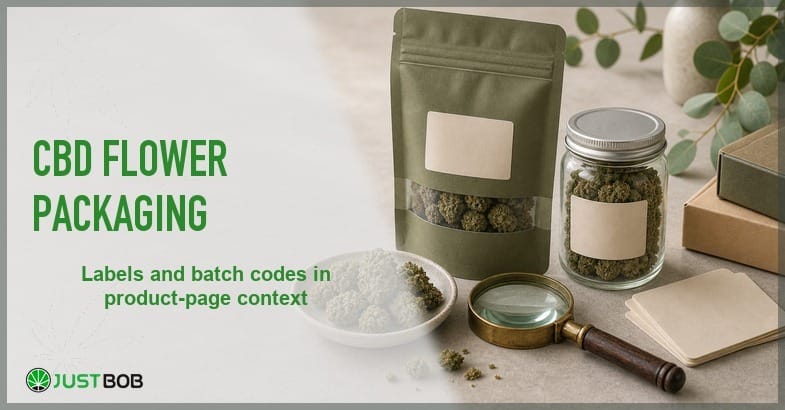
Packaging is easy to ignore until it does something useful: protects aroma, carries a batch code and keeps product details in one place. On Justbob, CBD flower packaging is part of the product-reading experience.
-
 Max CBDAMNESIA CBD BOOSTStarting from: 0,85€/g
Glasshouse | CBD<40%
Grams5 10 20 50 100 200 400 -
Max CBDAK47 CBD BOOSTStarting from: 1,45€/g
Indoor | CBD<47%
Grams5 10 20 50 100 200 -
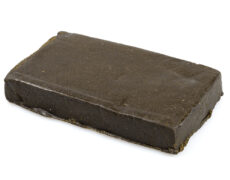
Max CBDCHARAS
CBD HASH | CBD<45%
Starting from:FLASH SALE -10%
0,90€0,80€/gGrams5 10 20 50 100 200 -
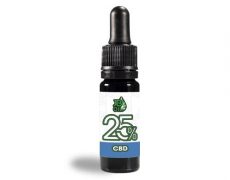
JB OIL 25%Starting from: 14,90€
CBD Oil 25%
It is not the flashy part of the page. That is precisely why we like it. Good packaging is boring in the best possible way: plain, practical and full of small details that help the reader compare products.
What CBD flower packaging is for?
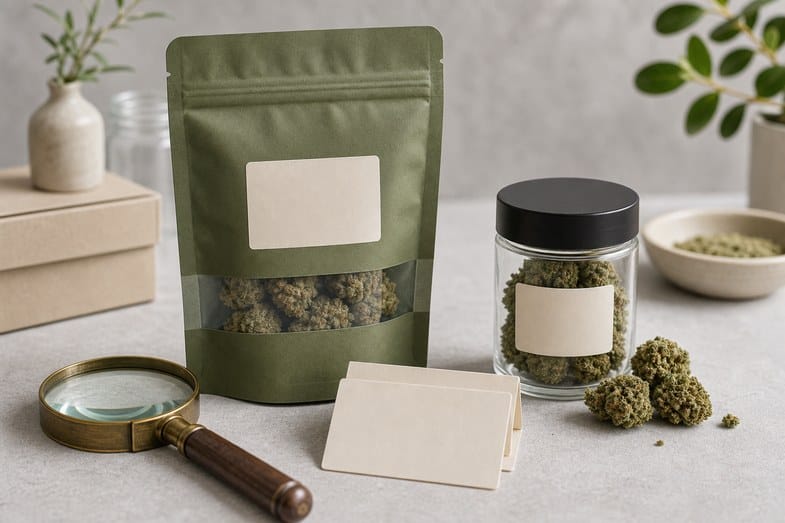
CBD flower packaging protects the product format, gives space for label information and connects the physical product to the product page. It supports the reading of CBD flower without trying to become the whole story.
A pouch, jar or box should make the basic information easier to find. If the packaging looks nice but tells the reader nothing, it has missed the useful half of its job.
Read also: CBD Flower Lab Testing: What the Checks Show
Label details and batch references
The most useful labels are clear and structured. They can include essential information such as product name, batch reference, CBD context, THC threshold terminology, adult-only positioning and the intended technical, scientific or ornamental framing.
Batch codes play an important role because they connect the physical product with the documentation and quality information associated with that specific lot. They may appear as small details, but they provide a practical link between the item, its traceability, and the available supporting documents.
Justbob carries out constant analyses on all commercialised products and on every batch. Those documents are available within each commercialised product page, helping customers connect label information, batch references and the specific lot details behind each product. This approach allows product information to be read in context: the label identifies the item, the batch code identifies the production lot, and the available documents provide additional product-specific information.
Aroma and visual presentation, and product protection
Packaging plays an important role in maintaining product presentation and protecting the characteristics of the item before it reaches the customer. Aroma notes, visible resin characteristics and flower structure can be better appreciated when the product has been handled, stored and presented with appropriate care.
Still, the packaging should not promise more than it can prove. Supporting product clarity, packaging should always be considered as one part of the information process: it can help preserve product identity and support clearer understanding of the item, but it cannot replace product photographs, label details, batch references or available documentation.
The most reliable evaluation comes from considering all these elements together, so that you can have a more complete and transparent way to understand the product beyond appearance alone.
Materials, pouches and boxes used for CBD flower packaging
CBD flower packaging comes in several recognisable formats. The most common are pouches, jars, stand up pouches and CBD boxes, each chosen for a different mix of practical reasons: aroma containment, light blocking, mechanical protection during transport and label space on the outer surface. CBD packaging that uses a jar usually focuses on visual presentation, while a pouch is built around lightness and a more compact label layout. Boxes, in turn, are a useful frame when the producer wants extra room for product information, batch reference and category context.
The materials used for these formats are part of the packaging vocabulary too.
- Stand up pouches commonly use multi-layer films with an aluminium or metallised barrier inside, which slows light and oxygen exchange and helps protect the aroma of CBD flowers.
- Jars are usually glass, sometimes amber, sometimes clear, with the design choice influenced by how the brand wants to show the flower;
- CBD boxes lean on rigid cardboard or laminated paperboard, materials that hold their shape and give a clean surface for the label.
For a reader comparing CBD flower packaging across different products, the format and the materials are two questions worth asking together. Stand up pouches feel lighter and have a quick zip closure. Boxes feel sturdier and may protect the bud structure better during shipping. Jars sit in the middle, with the advantage of being reusable for personal storage on a shelf. None of these options is automatically the best; each is a different balance of aroma protection, light exposure, design and shelf practicality.
What customers find useful on a packaging page
When a customer compares two CBD products in our catalog, the eye usually lands on a handful of practical things first. What format is this? Which materials? Where does the batch number live, and how do I reach the document linked to it? Those questions form the real reading routine, and a page that answers them quickly earns the customer’s attention without theatrics. We have seen packaging texts try to sell every printing finish on the market; it almost always works against the page, because the reader stops trusting the catalog.
The most helpful CBD packaging pages stay close to the product. They explain what the pack does, name the materials, point at the label structure and connect the page to its batch document area. Nothing more.
Two CBD products can be compared on that basis without anyone becoming a packaging specialist along the way.
Design choices: shapes, colours and how packaging information lands
There is a small story behind each CBD flower packaging unit. The shape of the container is one chapter, the colours on the label are another, and the way the material list is included on the outer surface decides how the chapter ends. Take amber jars: they exist on shelves today because 19th-century apothecaries discovered that dark glass slowed UV exposure on light-sensitive plant compounds. Two centuries later, that simple pharmacy habit is still doing real work for hemp resin and aroma stability.
BOXES and PACKAGES
Then there are the boxes. Square CBD boxes have a flat surface that handles labels well, while a glass jar forces colours and text to wrap around the curve. Stand up pouches sit on a flexible film that creases during shipping and stretches under the zip closure. Muted colours are used across many CBD flower packaging units because brand teams quickly learn that printed information needs to stand out instead of competing with the design. An individual unit ends up looking more orderly, and a row of them on a counter actually reads as a coherent range.
MATERIALS
The materials follow a similar logic. Durable cardboard, laminated paperboard, glass, and aluminium-lined film each feel different in the hand. Cardboard with a clean colour palette has a more editorial feel; transparent jars are more striking because they show the flowers directly. None of these decisions is automatically better than the other; each individual choice involves a trade-off between different qualities.
QUALITY
Quality, in any case, starts with the material and the construction but is confirmed through the label and documentation. Shape and colour decide the first impression; the printed CBD flower packaging labels are where the page anchors specific CBD products to batch references. Customers comparing options across the range can stay grounded as long as this sequence maintained.
A walk-through usually helps when someone is about to choose between CBD flower options on the page: which materials are used, which CBD boxes or pouches are included in the range, how labels are arranged, whether moisture, light and oxygen protection have been considered. The choice of packaging follows the type of CBD products on offer, and suitable CBD packaging makes these CBD options visible without unnecessary distractions. Cannabis Sativa L. is the species named on the label; suitable packaging solutions are those that put this detail in front of the customer without hiding it behind shapes, colours, or decorative touches.
Packaging as the product’s filing cabinet
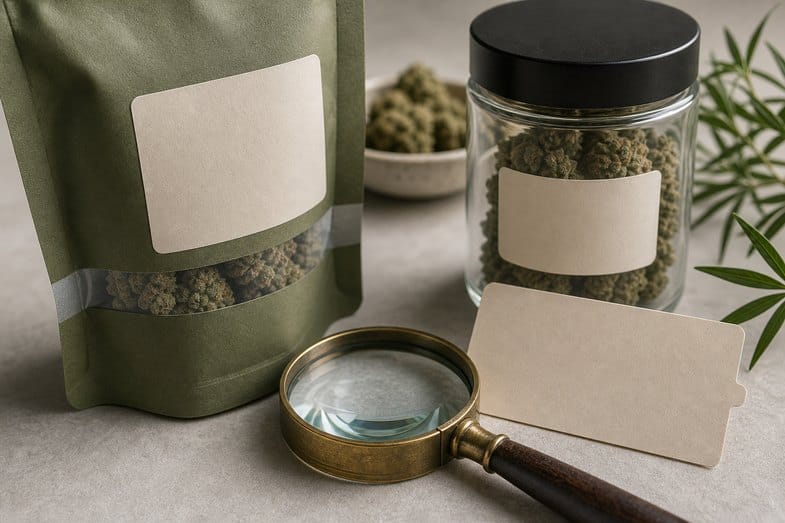
Think of the pack as a small filing cabinet rather than a stage. The pouch or jar holds the product, but it also keeps the label, category wording, and batch identity close together. That simple function matters more than it first appears. Hemp flower packaging and CBD flower storage packaging are useful search phrases only if the article keeps the angle practical: label space, batch codes, product presentation, and document access.
A good package helps a reader find the product name, label details, and batch reference without hunting through a crowded design. A clumsy package makes the reader work too hard, and nobody arrives at a product page hoping for a treasure hunt.
The nicest packaging copy is practical. It respects the small details. Imagine two product pages with similar flower photos: the one with clearer label cues, cleaner batch references, and easier document access will usually feel easier to read. Not louder. Easier.
What a careful reader can check on the label
On a CBD flower page, packaging and label language should line up with the product description. The reader can check whether the name, batch code, CBD context, and intended technical, scientific, or ornamental positioning are easy to understand.
The label should not be treated as an afterthought. It is the bridge between the product page and the physical product format. When that bridge is clear, the whole page feels more reliable.
A small label can carry a lot of meaning, but only if the wording is clear. Product name, batch code, category context, and document access should not feel scattered across the page. The reader should be able to follow the trail without stopping to decode the layout.
Batch codes and the document trail
Batch codes are easy to overlook because they are not flashy. Still, they are one of the most useful details on packaging. They connect a product with the documents that identify the lot.
The routine is simple: read the page, check the label, find the batch reference, and open the document. It is not dramatic, but it is exactly what careful product information should support. For packaging topics, the link between the code, label, and document area is the whole point. The reader should be able to move from one to the other without confusion.
Those documents give the packaging details a product-specific place to land, instead of leaving the label code as an isolated line of text. For regulatory background on CBD in food-related contexts, the Food Standards Agency CBD guidance is a useful official reference point.
When page copy and packaging disagree
If packaging and page copy feel disconnected, the reader notices. Maybe the page uses one phrase, the label suggests another, or the batch reference is hard to find. Even small mismatches can make a product feel less clear.
A better approach is consistency. The page explains, the packaging confirms, and the documents support. Each piece has a role.
CBD flower packaging therefore deserves its own article because it is not just a container topic. It is part of how a reader builds confidence in the product information, one small blank card at a time.
Read also: CBD Flower Legal Framework: The Rules Behind The Label
Choosing packaging that keeps information clear
CBD flower packaging is not only about appearance or protection. It is the point where design, product information, and traceability meet. A well-designed package helps readers understand what they are choosing, follow the details that matter, and connect the physical product with the information available online. From the material selection to the label layout and batch references, every element contributes to a clearer and more reliable experience.
When packaging is designed with purpose, it does not need to be loud to be effective. The best solutions create order, make information accessible, and allow customers to approach CBD products with greater awareness. In this sense, packaging becomes part of the overall product journey rather than just a container.
🌿 Want to compare CBD flower products? Discover the CBD flower range available at Justbob and explore products presented with attention to quality, information, and transparency.
Frequently asked questions about CBD flower packaging
Why does CBD flower packaging matter?
Packaging helps protect product presentation, provides label space and connects the physical product to batch documents and product-page details.
What should a CBD flower label show?
A useful label should make product identity, batch reference, CBD context, THC threshold language and intended positioning easy to check.
Is packaging enough to judge CBD flower quality?
No. Packaging is one clue. Readers should also check photos, product descriptions and batch analyses.