Modified on: 29/07/2026
The outside of the bottle has a job
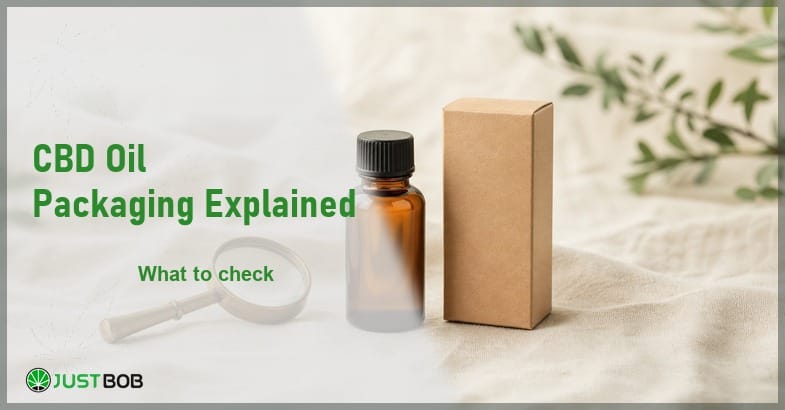
CBD oil packaging explained starts with the outside of the bottle, where the useful clues are politely waiting. The phrase covers everything around the product: the bottle, the box, the sealed pack, the label area and the way the page presents them. This guide stays on that outer layer. It explains what each part of the packaging is there to do, so a reader can tell, before anything else, that a product is what it says it is.
-
 Max CBDAMNESIA CBD BOOST
Glasshouse | CBD<40%
Starting from:FLASH SALE -10%
0,85 €0,75 €/gGrams5 10 20 50 100 200 400 -
Max CBDAK47 CBD BOOSTStarting from: 1,45 €/g
Indoor | CBD<47%
Grams5 10 20 50 100 200 -
Max CBDCHARASStarting from: 0,90 €/g
CBD HASH | CBD<45%
Grams5 10 20 50 100 200 -
JB OIL 25%Starting from: 14,90 €
CBD Oil 25%
Picture an unboxing desk, with a bottle, its box and a little stack of paper. Clear packaging should reduce guessing, not decorate confusion: every part of it is meant to tell you something plain, and the better it does that, the less you have to wonder.
What CBD oil packaging explained means
CBD oil packaging is the outer presentation of the product: the container, the box it arrives in, the seal, the area set aside for the label, and the way a product page shows all of it. It is about presentation and protection, the parts that surround the oil rather than the oil itself.
Kept at that level, the subject stays simple and safe. This page reads the packaging as a set of plain signals, limited to what can be seen around the bottle, box, seal and document route. Read that way, packaging is one of the simpler parts of a product page: it asks only to be looked at, not interpreted.
Bottle and box
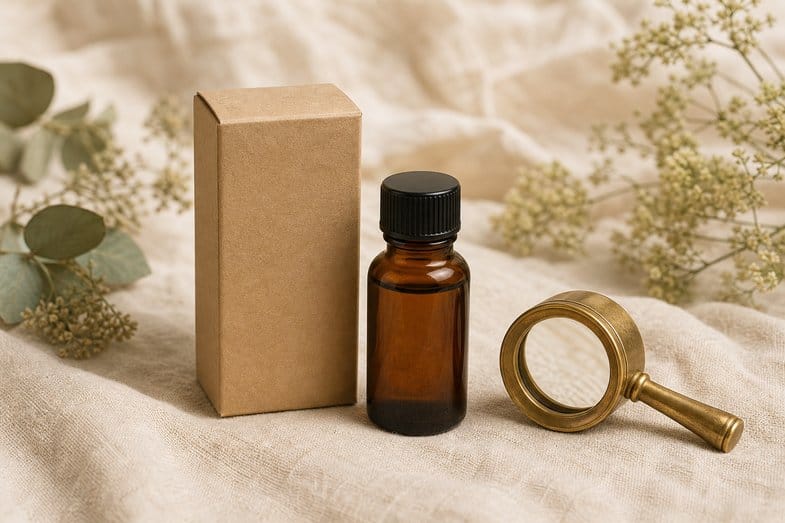
The container comes first. A CBD oil usually arrives in a small glass bottle, often amber, inside a printed box. The bottle holds and protects the liquid, while the box adds a surface for information and a layer of protection in transit. Between them, they keep the product intact and give it somewhere to carry its details.
Read as packaging, these are practical choices, not decoration. The bottle and box exist to protect the contents and to present them clearly, and a plain, well-made pack does both without fuss.
Read also: MCT Carrier Oil In CBD: Label Reading Guide
The label area
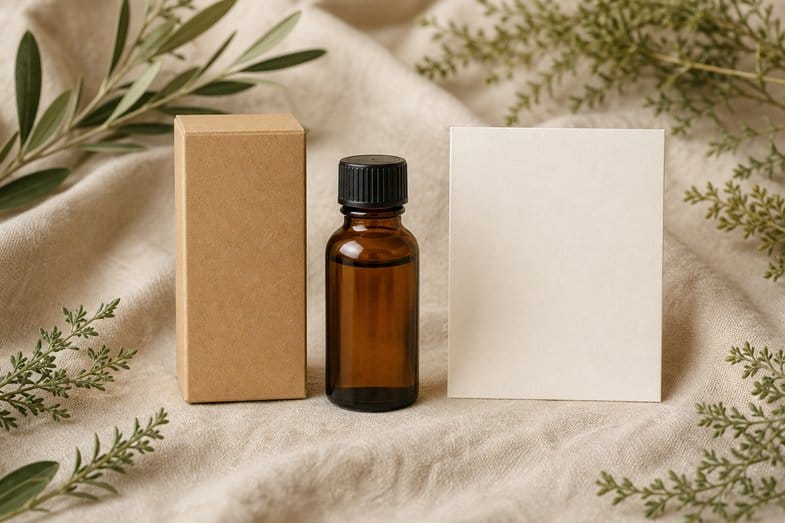
Packaging sets aside an area for the label, and the area itself is part of the story. A clear pack gives the label enough room to be read, with the key identifiers, the product name, the figures and the batch code, sitting where they can be found. For what goes inside the bottle that the label describes, our guide on CBD oil ingredients walks through the contents.
This is where packaging and label meet without overlapping. The packaging provides the surface and the space; the label fills it with the printed words, and a clear pack simply makes sure there is room to read them.
Seals and the sealed pack
A seal is a small but telling part of the pack. A sealed bottle or box is a sign that the product has not been opened since it left the producer, so the seal works as a plain check on the pack’s integrity. It says, in plain terms, this is intact, before a single word on the label is read.
So the seal earns its place. It is not decoration; it is a quiet piece of evidence that the pack in your hands is the pack as it was sent, which is exactly the kind of reassurance packaging is for.
A folding-box idea
The printed box is a younger invention than it looks. In 1879, the American printer Robert Gair worked out how to cut and crease cardboard in a single pass, turning out flat sheets that folded into boxes at scale. Almost every product carton since, including the one a bottle ships in, descends from that idea.
That is why a box can be both cheap and precise. A folding carton is a flat sheet that becomes a container, designed to protect what is inside and carry its information on the outside, which is all a CBD oil box is asked to do.
Read also: What is CBD Oil?
The document route
Clear packaging also points somewhere. The pack and the product page should lead a reader to the paperwork, the certificate of analysis that records the cannabinoid figures and the THC reading against the 0.3 percent threshold harmonised at European level. The packaging presents the product; the document confirms it.
That route is the part that matters most. Whatever the box looks like, the useful question is whether it, and the page it sits on, take you to a document you can check, batch by batch. A box that leads nowhere is just a box; the worth of it is in where it points, not in how it looks.
What packaging does not do
It helps to be clear about the limits. Packaging presents and protects a product; it is a container, a surface and a seal, not a promise, a verdict or a practical manual. Those subjects sit outside the box, and they stay there.
So the pack is read for what it is: a container, a surface and a seal that point to a document. For the current official position on CBD, the Food Standards Agency CBD guidance is the better reference, standing beside the product rather than on it.
Packaging on a Justbob page
On a CBD oil page, the packaging does its quiet work: the bottle, the box, the label area and the seal, all shown so a reader knows what arrives and where to read it. Every commercialised product is analysed and each batch is checked, with the certificate of analysis kept inside the product page, so the pack always points to a document.
Every oil sits inside the EU industrial hemp framework, with THC kept at or below the 0.3 percent threshold harmonised at European level. The products are offered for technical, scientific and ornamental purposes only, and on a Justbob page the packaging is read as exactly that: presentation and protection, with the documents behind it.
Frequently asked questions about cbd oil packaging explained
What should CBD oil packaging explain?
Packaging should make the product clear before anything else: which bottle and box it is, where the label area sits, whether the pack is sealed, and how to reach the documents behind it. Its job is presentation and protection, surrounding the oil and pointing to the paperwork, not moving into practical guidance. Clear packaging reduces guessing by putting the plain signals where a reader can find them.
Is packaging the same as a label?
No. The packaging is the outer container and surface, the bottle, the box, the seal and the area set aside for printing; the label is the printed words that fill that area. They work together but are not the same: the packaging provides the space and the protection, while the label carries the identifiers. Reading both, and then the certificate, is how a reader confirms a product.
Why check batch documents?
Because the packaging presents a product, but the document confirms it. The certificate of analysis records the cannabinoid figures and the THC reading against the 0.3 percent threshold harmonised at European level for that batch. However clear a box and label are, the useful step is to follow the pack and the product page to that document and check the figures against it.