
Modified on: 29/09/2026
Afghan hash: what it is and how it is pressed
Few kinds of hashish are as recognisable as Afghan hash: a dark, dense slab of pressed resin under a firm skin. The name points to a specific method, resin dry-sieved from cured plants and then pressed by hand, rooted in the Hindu Kush region of Afghanistan.
It is a traditional recreational product, and it has nothing to do with the certified hemp Justbob sells in the EU. What marks Afghan hash out is its origin, its hand-pressing method, and a colour and texture unlike other kinds of hash.
Where Afghan hash comes from
The style belongs to the mountain regions of Afghanistan and the wider Hindu Kush, where making pressed hashish is a long-standing craft. Growers there dry the plants first, separate the resin, then press it into firm, dark slabs. Word of it reached the West through the overland travellers of the 1960s and 1970s, who carried the reputation of Afghan and Pakistani hash far beyond the region.
The name reflects a place and a technique, but the details shift from valley to valley and workshop to workshop. Different makers press the resin their own way, so no two blocks are quite identical.
It helps to set Afghan hash against the other great hand-made tradition. Where the charas of Nepal is rubbed from living plants, Afghan hash starts from dried material that is sieved and then pressed, which is why the two feel so different.
How Afghan hash is made
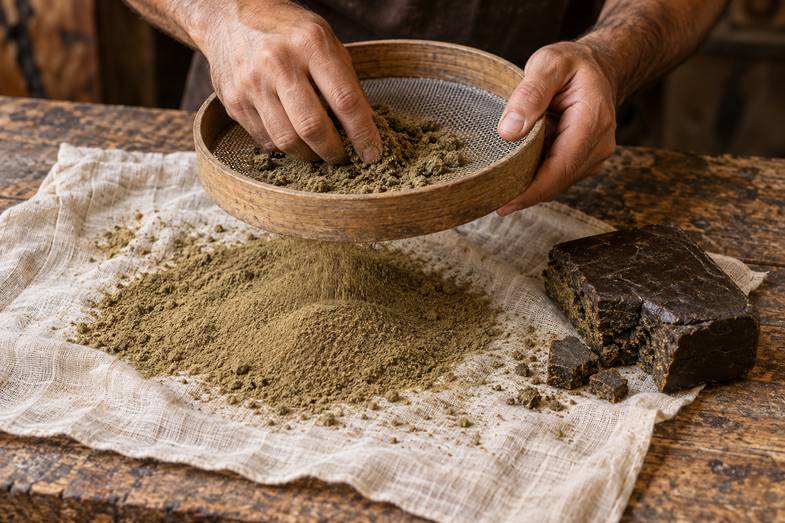
The process begins after the harvest, once the plants have been dried and aged. The dried flower and leaf are then sieved, usually over fine screens or cloth, so the tiny resin heads fall away from the plant matter as a loose powder. This dry powder is the raw material for the block.
Pressing is where the block takes shape. The sieved resin is worked with warmth and steady hand pressure, and makers traditionally add a little heat and sometimes a touch of moisture to help the powder bind. Pressed and folded again and again, the loose resin turns into a solid, pliable slab with a dark skin.
The traditional method breaks down into a handful of steps:
- Drying and ageing: the harvested plants are dried and rested before anything else.
- Sieving: the dried material is passed over screens so the resin powder separates out.
- Pressing: the powder is worked with warmth and hand pressure until it binds.
- Finishing: the slab is folded and pressed further until the surface turns dark and firm.
What Afghan hash looks like: reading the colour
On the outside, Afghan hash is usually a deep brown to near-black, with a firm, slightly matte skin. Break a piece open and the inside is often a shade lighter, running from chocolate brown to a dark olive, and it looks dense and faintly glossy rather than dry.
Colour is a record of pressing and ageing, as the resin oxidises and darkens with heat, handling and time. A darker skin over a browner core is the typical look, and our guide to what CBD hash looks like shows how the same colour and surface cues apply to the compliant European product. Colour hints at how a block was made and aged; it is no reliable measure of quality.
Texture and how it behaves
A good Afghan block is firm but pliable. At room temperature it keeps its shape, softening under gentle warmth and turning harder and more brittle in the cold. This dense, pliable feel comes straight from the pressing method and the resin content.
Reviews and strain databases put the aroma as earthy and spiced, with a heavy, resinous depth and sometimes an incense-like note. It usually reads as rich and warm, which fits a resin pressed and aged by hand.
What reviewers look for in Afghan hash
Because the block is hand-pressed from dry-sieved resin, reviewers tend to judge it on the surface, the break and the smell. A well-made one has an even, firm skin with no dry, crumbly patches, and it softens a little under gentle warmth. Inside, the body is dense and slightly oily, an even colour throughout with no streaks of leftover plant matter.
Smell is the final check. Off notes are what give a block away: a flat or musty smell points to old stock or careless pressing, while a well-kept block stays clean and resinous. When a block is badly made it turns brick-hard or dusty and loose, losing the pliable feel the traditional style is known for.
The resin behind the block
In every case, the material sieved and pressed is the plant’s resin. Cannabis produces it in tiny resin glands on the female flowers, and dry sieving is simply a way to shake those heads free from the dried material. The powder that collects is then pressed into the familiar block.
Starting from dried and sieved material, Afghan hash carries a different character from fresh hand-rubbed resin. The CBD Extracts and pressed hemp products sold here come off EU processing lines, a world away from a sieve and a hand press.
How Afghan hash differs from other kinds of hash
Afghan hash belongs to a broader family of resins, and what separates them is how the resin is gathered and shaped. Here is how the main types line up:
| Type of hash | How the resin is collected and formed |
|---|---|
| Afghan-style pressed | Dry-sieved from dried plants, then pressed into dark, dense slabs |
| Temple ball (charas) | Rubbed by hand from living plants into a glossy sphere |
| Dry-sift / kief | Sieved from dried flower, left as a loose powder |
| Ice-water (bubble) hash | Cold water lifts the resin, which is then dried to a loose crumble |
The dry sieving and the firm press are what set Afghan hash apart. A temple ball is worked from fresh, living-plant resin, while dry-sift and kief stop at the loose powder that an Afghan block is pressed from.
Read also: What is hashish made from?
Afghan hash THC versus the European hemp line
Here the traditional product and the European one part ways entirely. Afghan hash is pressed from high-resin recreational cannabis, and strain databases and grower notes put its THC anywhere from roughly 20 to 40 per cent, far above what dried flower carries. Those figures belong to the recreational hashish, in places where it is legal.
The European product stands on completely different ground. EU producers make the CBD Hash sold here from certified hemp, hold it under the legal THC threshold, and publish a batch certificate for each lot. Those Afghan percentages simply do not describe it.
Read also: Types of hash: here are the most famous varieties of the world
Why Afghan hash is still a benchmark
Afghan hash has held on as a reference point for dark, hand-pressed hashish, even as factories turn out pressed resin in bulk. For many people the firm, near-black block still stands for resin worked slowly by hand.
That fame cuts both ways. Producers now borrow the word “Afghan” for almost any dark pressed block, so a label on its own no longer says where a piece was actually made. Today “Afghan” marks a style at least as much as a place.
Frequently asked questions
What is Afghan hash?
Afghan hash is a block of pressed cannabis resin made in the tradition of Afghanistan and the Hindu Kush. The resin is sieved from dried plants, then pressed by hand with warmth into a dark, dense slab. That is the traditional recreational product; the European CBD Hash on this site is made and tested separately.
How is Afghan hash made?
It is made by drying and ageing the plants, then sieving the dried material over fine screens so the resin powder separates out. That powder is pressed and folded with a little warmth and hand pressure until it binds into a firm, dark block.
What colour is Afghan hash?
Afghan hash is usually deep brown to near-black on the outside, with a slightly lighter chocolate to dark olive interior. The colour comes mainly from pressing, heat and ageing, as the resin oxidises and darkens over time.
How is Afghan hash different from a temple ball?
A temple ball is hand-rubbed from living plants and rolled into a glossy sphere, while Afghan hash is sieved from dried material and then pressed into a firm slab. The two methods give very different colours and textures.
Is Afghan hash the same as CBD hash?
No. Afghan hash is a pressed recreational resin from high-THC plants; the CBD Hash sold here is a European hemp product made under EU rules, with its THC checked batch by batch. Same plant family, different product and different legal frame.