
Published on: 06/12/2025
The sudden shift from open access to strict control reveals a deeper mix of political recalculations, social anxieties, and unfinished regulation.
Thailand has made a sharp U-turn on cannabis, and this time the change is real.
After two years of legal dispensaries, booming tourism, and thousands of small businesses entering the market, the Thai government has decided to ban recreational cannabis again.
In June 2025, the Ministry of Public Health issued an emergency order that immediately restricted cannabis to medical-only use, forcing every dispensary in the country to stop selling to ordinary consumers unless they present a doctor’s prescription.
-
 Max CBD
AMNESIA CBD BOOST
Glasshouse | CBD<40%
Starting from:WINTER SALE - 10%
0,85€0,75€/gGrams5 10 20 50 100 200 400 - Max CBD
AK47 CBD BOOST
Indoor | CBD<47%
Starting from:SUPER SALE -20%
1,45€1,15€/gGrams5 10 20 50 100 200 - Max CBD
CHARAS
Starting from: 0,90€/gCBD HASH | CBD<45%
Grams5 10 20 50 100 200 -
JB OIL 25%
Starting from: 14,90€CBD Oil 25%


The move doesn’t officially put cannabis back on Thailand’s narcotics list yet, but in practice the outcome is the same: no more casual purchases, no more tourist-friendly weed shops, and no more unregulated marketplace.
The government is now drafting a new law that will fully reclassify cannabis flowers as a narcotic, introduce prison sentences for recreational possession, and turn most existing dispensaries into illegal businesses unless they transform into licensed medical clinics. For a country that became the region’s most cannabis-friendly destination almost overnight, this sudden reversal has left entrepreneurs stunned and locals divided.
In this overview on Justbob, we walk through the essentials: how Thailand got here, what triggered the U-turn, who’s reacting the most, and why the story matters well beyond Bangkok.
How Thailand got from legalization to reversal
When Thailand decriminalized cannabis in 2022, it wasn’t a half-measure.
The government removed the plant from its narcotics list entirely, touching off a nationwide surge of dispensaries, growers, and entrepreneurs. Within months, the country went from zero to thousands of shops, and cannabis became a new symbol of Thai soft power.
The tourism industry leaned in, businesses flourished, and millions of people, from small farmers to urban retailers, saw an opportunity that felt both fresh and surprisingly accessible. It was, in short, a moment powered by economic optimism and policy experimentation.
But behind the enthusiasm, a political storm was already forming.
The decriminalization arrived before a proper regulatory framework, which meant Thailand had cannabis on every corner but no rules to shape how it should be sold, who could use it, or how it should be advertised.
For a while, the confusion was brushed off as a transitional phase.
By 2023, though, the lack of structure became impossible to ignore. Critics pointed to stories of teens experimenting more than before, communities frustrated by public smoking of weed and hashish, and differing interpretations of what “legal” actually meant. Rather than backing down, entrepreneurs kept opening shops and by the time national elections rolled around, cannabis had become a political talking point rather than a simple health policy shift.
Read also: How cannabis social clubs work in Germany: structure, membership and legal framework
Why Thailand is reversing course
From the government’s perspective, the decision to re-ban recreational cannabis isn’t just ideological. It’s a combination of public pressure, political repositioning, and concerns about a market that outpaced the state’s ability to control it.
The biggest argument officials make is about youth protection. They contend that the rapid spread of cannabis shops made the product too accessible, not just to tourists, but to minors, and that families and schools were reporting more anxieties than before.
Alongside this, there’s a recurring theme in the government narrative: public order. Complaints about the smell, about people smoking in inappropriate places, about dispensaries popping up near temples or schools. Whether these issues were widespread or amplified politically is still debated, but they carried weight.
Add to that the fact that some political factions felt blindsided by the 2022 decriminalization, and it becomes clear that reversing course was also a way of restoring authority after a reform that moved faster than some in power ever wanted.
There is also another, quieter reason: regional diplomatic pressure. Thailand was the only exception in a Southeast Asia that remains deeply prohibitionist, even towards CBD-based products, despite the fact that they have no narcotic effects. While the government hasn’t said this outright, aligning again with regional norms makes international coordination on drug issues smoother and saves Thailand from having to constantly defend an outlier policy to its neighbors.
Parties, alliances, and shifting agendas
Thailand’s cannabis reversal didn’t happen in a vacuum. Political parties have been arguing over this issue since before decriminalization was even implemented.
The party that had championed legalization, Bhumjaithai, found itself clashing with its own coalition partners after the elections. Their vision was a regulated but open market; the ruling Pheu Thai party favored tightening the rules and scaling back the freedoms granted in 2022.
Eventually, this tension helped push Bhumjaithai out of the coalition and gave the government the political room needed to enforce a stricter line.
Reactions across the political spectrum have reflected this divide. Reform-minded groups argue that the new ban undermines Thailand’s credibility as an innovator and risks pushing cannabis back into the shadows. Conservative lawmakers, on the other hand, frame the reversal as responsible governance, proof that the state has listened to communities uncomfortable with how visible cannabis had become. For them, the new restrictions represent policy correction rather than prohibition.
This tug-of-war between progressive and traditional forces is far from new in Thailand. But cannabis has become a symbolic battleground because it touches everything at once: tradition, modernity, health, economics, and identity. In that sense, the political drama is as much about the future direction of the country as it is about the plant itself.
How Thai society is responding
Talk to ten Thai people and you’ll likely hear ten different opinions on cannabis.
What’s striking is how split public perception has been. Many families and community leaders welcomed the reversal, saying the open market had made them uneasy and that Thailand wasn’t socially prepared for such rapid change. Others, especially younger adults and urban consumers, saw the ban as unnecessary and heavy-handed.
On the streets, the loudest voices have been those of activists and small business owners. After experiencing two years of legal freedom, they argue that the rollback punishes responsible adults and undermines Thailand’s reputation as an innovative and culturally open country.
Some emphasize that the answer wasn’t a ban, but clear rules: age limits, business licensing, zoning, and quality standards. In their view, the abrupt U-turn creates more problems than it solves by driving demand back underground and erasing hard-won progress in the open market.
Even among those who support stricter controls, there’s frustration with how chaotically the policy has shifted. Many people feel caught between moral concern and practical confusion, unsure of what’s legal today and what will be illegal next year. This atmosphere of uncertainty has shaped much of the public reaction: not outright anger, not satisfaction either, but a kind of collective bewilderment.
The economic shockwave
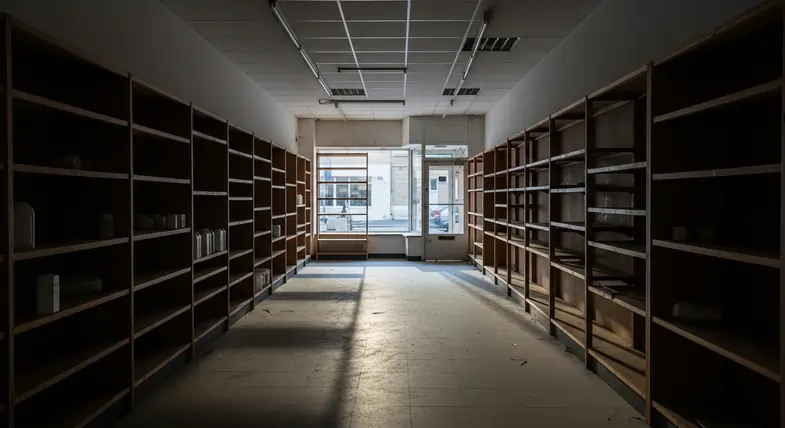
If there’s a group feeling the Thai cannabis reversal most acutely, it’s the businesses that sprang up after 2022. What looked like one of the most exciting new industries in Asia is now shrinking at high speed.
Thousands of dispensaries opened in less than two years, and many of them invested heavily in renovations, staff, supply contracts, branding, and compliance tools that turned useless overnight. Small retailers are bracing for closures, and larger companies are scrambling to pivot toward medical-only models that require far stricter licensing.
The agricultural side tells a similar story.
Farmers who had switched from low-margin crops to cannabis cultivation now face an uncertain future. Many had placed their hopes on a market that seemed both promising and democratizing, but with the new rules, only a small number of licensed producers will likely survive. The broader ecosystem (tourism operators, packaging companies, wellness brands) is also feeling the squeeze.
From a macroeconomic standpoint, Thailand hasn’t lost its entire cannabis sector. Medical cannabis is here to stay, and research-oriented companies may still find opportunities. However, the most dynamic part of the industry, the consumer market, will shrink dramatically.
For a country that once saw cannabis as a path to rural revitalization and international differentiation, the reversal marks a significant turning point.
Thailand and the ASEAN landscape
One thing that often gets overlooked is that Thailand was the only country in Southeast Asia willing to experiment with widespread cannabis access. Its neighbors (Singapore, Malaysia, Indonesia, Vietnam, Laos, Myanmar, Brunei) maintain some of the strictest anti-drug laws in the world.
The idea of a fully legal market next door created friction, especially when tourists began flying into Bangkok for cannabis while flying home to countries where that same behavior could lead to severe punishment.
This made Thailand a regional anomaly, and anomalies always attract scrutiny. Thailand’s policy shift now brings it closer to regional norms, whether intentionally or not. It also highlights how deeply conservative Southeast Asia remains on drug issues. While countries like Germany, Malta, and parts of the U.S. move toward more liberalisation, much of Asia still leans toward caution.
At the same time, international observers view Thailand as a case study. The lessons cut both ways: rapid legalization without strong regulation can backfire, but so can a rapid prohibition that ignores consumer demand. Thailand’s experience shows how delicate cannabis policy can be when culture, law, and public opinion aren’t aligned.
What happens next: the legal path forward
Legally, Thailand is entering another transitional phase. Recreational use will be outlawed again once the new legislation is fully passed, while medical cannabis will remain legal under stricter conditions. This means prescriptions, licensed clinics, medical-grade cultivation standards, and tighter oversight on marketing. It also means everyday consumers, tourists, and small growers will have far fewer legal avenues than before.
Whether this approach succeeds depends on how well the government enforces the rules and how much the public accepts them. If the ban pushes cannabis consumers back into the black market, a market that never truly disappeared, Thailand may end up fighting the same battles it faced before 2022, just under a different political banner.
On the other hand, if medical cannabis remains robust and research continues to advance, the country could retain a meaningful role.
What’s certain is that Thailand’s cannabis story isn’t over. The next few years will reveal whether the country stabilizes under a medical-only model or whether the pendulum swings yet again as public attitudes evolve.
Read also: Is weed illegal in Jamaica? All the truths and legends about it
Why this isn’t the final chapter in Thailand’s cannabis story
Thailand’s decision to re-ban recreational cannabis isn’t a simple case of a government changing its mind. It’s the product of overlapping pressures: political shifts, community concerns, economic miscalculations, and a regional environment that has never been friendly to cannabis reform. The country moved quickly in 2022, perhaps too quickly, and is now navigating a complicated correction that leaves many people wondering what the long-term vision really is.
For outside observers, Thailand’s story serves as a reminder of how important clear regulation and public communication are when it comes to any cannabis policy, whether it concerns the psychoactive variety or legal weed.
When the rules are vague, politics tends to fill the gaps. And Thailand’s abrupt U-turn shows what happens when an industry grows faster than the framework meant to support it.
Whether you see the ban as necessary or disappointing, one thing is undeniable: Thailand has just given the world one of the most interesting, messy, and revealing cannabis case studies in recent memory. And if history is any guide, this won’t be the last chapter.
Thailand bans cannabis: takeaways
- Thailand’s reversal from open cannabis access to a medical-only model stems less from a single problem and more from a collision of political pressure, public anxiety, and regulatory gaps. The government legalized cannabis before building a coherent framework, creating an industry that grew faster than the state could manage. Rising concerns about youth access, public disorder, and regional diplomatic isolation amplified the push toward re-criminalization, turning cannabis into a symbolic arena for broader political realignment.
- The sudden policy shift has created deep social and economic fractures. Communities are split between those relieved by stricter controls and those frustrated by the abrupt rollback, while thousands of small businesses—dispensaries, farmers, and supply-chain operators—now face closures or costly transitions to medical-only models. The economic shock illustrates how vulnerable emerging industries are when regulatory clarity is lacking, and how quickly optimism can collapse when political consensus breaks.
- Thailand’s U-turn carries regional and global significance. As the only Southeast Asian nation that experimented with widespread access, its retreat highlights the conservative stance of the ASEAN region and offers a cautionary tale for countries considering rapid liberalization. The next phase—a stricter medical-only framework—will determine whether Thailand stabilizes the sector or drives consumers back underground. Either way, the episode stands as one of the most revealing case studies in modern cannabis policymaking, showing how culture, politics, and public communication must align for reform to endure.
Thailand bans cannabis: FAQ
Why is Thailand banning recreational cannabis again?
Thailand is reversing course because the cannabis boom that began in 2022 expanded faster than the government could regulate it. Officials point to concerns about youth access, public smoking, community complaints, and the lack of a clear legal structure. Political pressure also played a role, as some factions saw the earlier decriminalization as too sudden and poorly controlled. The move reflects an attempt to restore authority over a market that grew rapidly and unpredictably, while also aligning Thailand more closely with the strongly prohibitionist stance of neighboring countries.
How are Thai society and local businesses reacting to the cannabis reversal?
Reactions are mixed and often sharply divided. Many families and community leaders support the return to stricter rules, arguing that the rapid spread of dispensaries made them uneasy. Others, especially small business owners and younger consumers, view the ban as disruptive and unnecessary. Entrepreneurs who invested heavily in dispensaries now face closures or costly transitions to medical-only operations, and farmers who switched to cannabis cultivation are left uncertain about their prospects. For much of the public, the dominant feeling is confusion as policies shift faster than people can adjust.
What does Thailand’s reversal mean for the future of cannabis policy in the region?
Thailand’s decision brings it back toward the strict norms of Southeast Asia, where most countries continue to enforce harsh penalties for drug use. It underscores how unusual Thailand’s brief experiment with open access was and shows the political risks involved in moving too quickly without a solid regulatory foundation. At the same time, the reversal has made Thailand a global case study in rapid policy swings, raising questions about how to balance public safety, economic opportunity, and cultural acceptance. The future depends on how well the new medical-only framework functions and whether public opinion eventually pushes for another shift in direction.