
Published on: 20/12/2025
Often romanticized or misused, ego death blends neuroscience, altered states, and ancient teachings in ways that challenge how we define personal identity
Ego death is one of those expressions that seems to live halfway between psychology, philosophy, and spiritual folklore.
Depending on who you ask, it can describe a profound experience of self-transcendence, a frightening loss of identity, or simply a catchy metaphor that people throw around too easily. What’s clear is that the concept fascinates people because it sits at the crossroads of inner transformation and human vulnerability.
-
 Max CBD
AMNESIA CBD BOOST
Glasshouse | CBD<40%
Starting from:S. VALENTINE -14%
0,85€0,70€/gGrams5 10 20 50 100 200 400 - Max CBD
AK47 CBD BOOST
Indoor | CBD<47%
Starting from:S. VALENTINE -14%
1,45€1,25€/gGrams5 10 20 50 100 200 - Max CBD
CHARAS
Starting from: 0,90€/gCBD HASH | CBD<45%
Grams5 10 20 50 100 200 -
JB OIL 25%
Starting from: 14,90€CBD Oil 25%



This article aims to unpack ego death without mystifying it, exploring where the idea comes from, how psychologists interpret it, why many cultures have their own version of it, and why the term remains both controversial and oddly attractive today.
What people usually mean by “ego death”
When someone mentions ego death, they’re rarely talking about a literal disappearance of the self. Instead, they’re referring to a temporary breakdown of the familiar sense of “I”, that mental narrator we rely on from morning to night. This can feel like losing your internal boundaries, stepping outside yourself, or seeing your thoughts without identifying with them.
For some people, this experience is deeply freeing; for others, it’s intense and disorienting.
The term gained popularity through the psychedelic movement, where users described moments of identity dissolution and a feeling of merging with everything around them. But the idea didn’t start with psychedelics.
Various spiritual traditions have long described states in which the self becomes transparent, silent, or secondary. What’s changed today is that these experiences are discussed more openly, sometimes celebrated, and sometimes misunderstood.
The key thing to remember is that ego death isn’t about disappearing. It’s about temporarily suspending the internal framework that usually shapes how we interpret reality. For people seeking new insights or emotional clarity, that suspension can be powerful, as long as it’s approached with respect and awareness.
The psychological view: identity, boundaries, and altered states
From a psychological standpoint, ego death isn’t an official diagnosis or scientific category, but it overlaps with several well-studied mechanisms. When researchers break it down, they often talk about self-boundary weakening and altered states of consciousness. These can arise during meditative absorption, high stress, trauma responses, near-death experiences, or under the influence of certain substances.
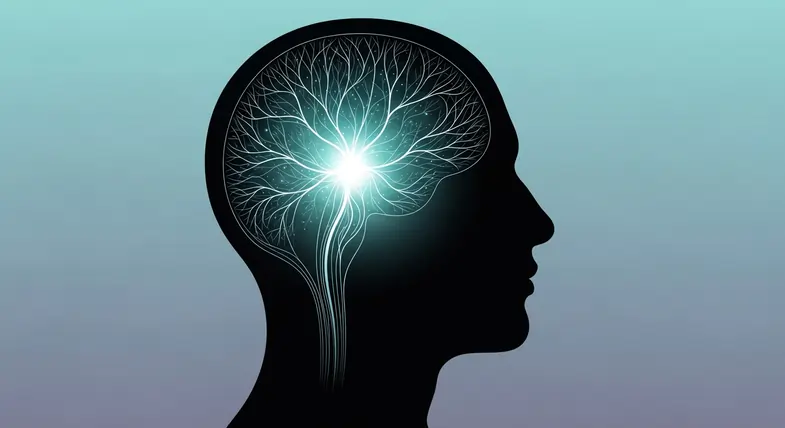
Modern neuroscience suggests that parts of the brain responsible for constructing the narrative self, particularly the default mode network, may quiet down during these experiences. When the brain reduces the constant chatter about who we are, what we want, and how others see us, the result can feel like stepping out of yourself.
Clinical psychologists approach these states with caution. A temporary shift in self-perception can be helpful, especially in therapeutic settings that aim to unlock rigid thinking patterns. But when the boundary dissolves too quickly or without support, the experience can feel overwhelming. That’s why professionals emphasize integration and context: the self is elastic, but that elasticity needs structure to avoid becoming destabilizing.
Read also: Discovering the powerful link between yoga and CBD for mind-body wellness
Ego death and psychoactive substances: where the modern association comes from
While ego dissolution has existed in cultural and spiritual contexts for centuries, its modern popularity is closely tied to psychoactive substances, especially classic psychedelics like LSD, psilocybin, mescaline, and DMT. These compounds can temporarily disrupt brain systems that maintain a stable sense of self, creating experiences that feel boundary-less or expansive.
For many people, this is their first encounter with something resembling ego death, even if the description is messy or imprecise. Psychedelic-induced shifts can feel insightful, overwhelming, or confusing. The variability is high, and the outcome depends heavily on mindset, emotional state, and environment.
Researchers working in psychedelic-assisted therapy emphasize that the meaning of the experience matters more than the intensity. Without guidance or context, ego dissolution can feel chaotic rather than constructive, and that difference shapes whether the moment ends up empowering or destabilizing.
THC and ego dissolution: can cannabis trigger ego death?
Although ego death is more commonly associated with classic psychedelics, high doses of THC (which, remember, is virtually absent in so-called legal weed which contains only CBD) can sometimes produce experiences that resemble a mild ego dissolution. This is more common with edibles or potent concentrates, where the intensity increases rapidly and unpredictably. People may report losing track of time, feeling disconnected from their usual identity, or observing themselves from the outside, especially if they are inexperienced or anxious.
But the quality of these experiences is different. Psychedelics often produce expansive or “unitary” sensations; THC tends to provoke disorientation rather than transcendence. Instead of clarity, many people experience racing thoughts, anxiety spikes, or a temporary disconnect from their normal sense of self.
This doesn’t mean cannabis can’t deepen introspection. It can.
Some individuals, especially when combining gentle THC doses with meditation or introspective practices, describe moments of soft ego loosening. But it’s rarely the structured, transformative ego death people associate with psychedelics. THC’s effect is more variable and less tied to profound insight.
In short: THC can nudge the self-boundary, but it’s not typically the pathway to the dramatic ego dissolution described in psychedelic literature.

Ego death across cultures: an idea older than psychology
Long before the term “ego death” existed, many cultures had their own way of describing experiences that blur the boundaries of the self.
In Buddhist traditions, there’s the concept of “no-self,” where understanding the non-permanent nature of identity is considered a step toward wisdom. In shamanic practices, initiatory rituals often include symbolic or imaginative death-and-rebirth sequences meant to dissolve the old self. Even Western mysticism has narratives about unity, surrender, and ego transcendence that echo the same fundamental idea.
These traditions generally frame ego dissolution as a transformative process rather than a crisis. It’s something that unfolds gradually through discipline, ritual, or guidance, not a sudden rupture. The Western fascination with ego death, especially in the last decades, often skips this slow, intentional aspect and jumps straight to the peak experience. That’s part of why modern discussions sometimes feel incomplete or unbalanced.
Looking across cultures helps us see that losing the self is rarely the end goal. It’s a tool, a moment, a passage: something meant to reshape how a person relates to life afterward, not something to chase for its own sake. And that distinction matters more than it seems.
Why the concept is so controversial today
Ego death provokes strong reactions because it sits on a fine line: for some people, it’s a source of clarity; for others, it sounds like psychological danger.
The controversy mostly revolves around two issues.
The first is the common misconception that ego death is always desirable. In reality, dissolving the self can be destabilizing if someone isn’t in the right emotional state or lacks support. Identity, with all its flaws and complexities, is also our anchor. Removing it abruptly can trigger fear, dissociation, or confusion. That’s why mental health professionals often warn about interpretation and readiness.
The second issue is that of cultural appropriation. Many critics argue that Western pop culture has taken profound spiritual concepts and flattened them into aesthetic slogans, a dynamic that in some ways mirrors what happened with hashish, which went from being a substance with an important cultural role to a taboo that is frowned upon in much of the West. Instead of cultivating long-term practices or inner discipline, people are encouraged to pursue ego death as a dramatic moment. This creates unrealistic expectations and oversimplifies teachings that were meant to unfold over years, not minutes.
So the controversy isn’t about whether ego death exists: it’s about how casually the term is used and how easily it can overshadow the actual inner work that real transformation requires.
Ego death in modern culture: symbolism, memes, and misunderstandings
In the digital age, ego death has become something of a cultural symbol. It appears in memes, social media stories, music lyrics, and self-help discussions. But this mainstream presence often distorts its meaning.
Online, the term is sometimes treated like a badge of honor, a shorthand for being “deep,” spiritually advanced, or emotionally evolved.
This casual framing creates a paradox. On one hand, it makes introspective ideas more visible. On the other, it turns a complex psychological event into a simplified trope or viral aesthetic. People may claim they’ve had ego death simply because they had a novel emotional moment or a difficult night out, which dilutes the meaning further and creates unrealistic expectations for others.
Pop culture also tends to glamorize the shocking or dramatic aspects of ego dissolution while ignoring the slow, unglamorous inner work that actually changes someone over time. So while ego death has gained visibility, it has lost nuance. Understanding it requires stepping past the memes and taking a more balanced view of what the experience really involves.
How to approach the topic responsibly
Given how emotionally charged and culturally varied ego death can be, the healthiest way to approach it is with a mix of curiosity and caution. Curiosity allows space for exploring new perspectives, while caution keeps expectations realistic. That means recognizing that ego dissolution isn’t inherently positive or negative: it’s context-dependent.
For anyone reading about ego death in hopes of personal insight, the best starting point is building a stable foundation: practices like meditation, reflection, or therapy that gradually strengthen self-awareness. These methods foster resilience, making it easier to navigate states where the sense of self shifts. They also help distinguish between meaningful introspection and overwhelming disorientation.
Ultimately, the idea is not to chase ego death but to understand the self-structure that gives life coherence. When that structure loosens temporarily, it should ideally lead to greater clarity, not confusion. That requires patience, grounding, and a willingness to explore the quieter aspects of inner life, not just the dramatic peaks.
Read also: The 6 best movies based on marijuana
What ego death really teaches us about identity
Ego death is a concept that attracts attention because it challenges something fundamental: our everyday sense of who we are. Whether seen through the lens of psychology, spirituality, or modern culture, the idea reflects a deep human curiosity about identity and its limits.
Sometimes, stepping outside the familiar self can offer perspective; other times, it can feel like too much, too fast.
The key is approaching the topic with nuance. Instead of treating ego death as a goal, it helps to see it as a moment within a larger journey, one that requires self-understanding and context to be genuinely helpful. When framed this way, the idea becomes less about losing yourself and more about rediscovering how flexible, complex, and resilient the self can be.
If you enjoyed this article, be sure to check back in with the Justbob blog. We regularly dive into themes worth reading, reflecting on, and returning to.
Ego death: takeaways
- Ego death is best understood as a temporary suspension of the familiar sense of self, not a literal disappearance of identity. Whether it emerges through meditation, psychedelics, or intense emotional states, the phenomenon reflects a short-lived loosening of the mental structures that normally anchor our perception. Its impact depends heavily on context: in supportive environments it can feel insightful, while in ungrounded situations it may become disorienting or overwhelming.
- The concept spans psychology, neuroscience, and centuries of cultural traditions. Modern research links ego dissolution to reduced activity in the brain’s default mode network, while spiritual lineages—from Buddhism to shamanic rites—describe parallel experiences framed as transformation rather than disruption. This broader perspective highlights that ego death is not a goal in itself but part of a slow, guided process aimed at reshaping how a person relates to life.
- Contemporary culture often romanticizes or trivializes ego death, turning it into a meme or a marker of “depth,” which obscures its complexity. Psychoactive substances, particularly classic psychedelics, can induce powerful shifts in self-perception, but the experience is meaningful only when integrated. THC, by contrast, tends to provoke disorientation more than true ego dissolution. Approaching the topic responsibly means avoiding sensationalism, grounding oneself in stable practices, and recognizing that genuine inner change arises from ongoing reflection rather than dramatic peak moments.
Ego death: FAQ
What does the term ego death usually refer to?
Ego death refers to a temporary suspension of the familiar sense of self, in which the usual boundaries, inner narration, and identity markers become less defined or momentarily dissolve. People often describe the experience as observing themselves from the outside or perceiving reality without the filter of their usual “I.” Although commonly associated with psychedelics, similar states can appear through meditation, emotional intensity, or spiritual practices.
Why is ego death considered both intriguing and controversial?
Ego death fascinates people because it touches the core of personal identity and reveals how flexible or constructed the self can be. At the same time it is controversial because the concept is frequently romanticized or used casually, masking the psychological risks that may arise when identity boundaries shift abruptly. Some critics point to cultural appropriation, while mental health professionals warn that such experiences can be destabilizing if they occur without context, preparation, or integration.
How do different cultures interpret experiences similar to ego death?
Across many traditions, experiences resembling ego dissolution are understood as part of a meaningful transformation. Buddhist teachings explore the impermanence of the self, shamanic rituals use symbolic death and rebirth to reshape identity, and Western mystical writings describe states in which the self becomes quiet or transparent. These interpretations typically emphasize gradual practice and guidance, showing that ego loosening is framed as a stage within a larger process rather than a dramatic moment to seek in isolation.