Published on: 19/03/2026
Advanced formulation techniques reshape cannabinoid delivery while maintaining compliance with European standards and quality controls
Over the last decade, CBD has evolved from a niche botanical compound to a widely discussed ingredient in wellness, research, and industrial hemp applications. As the European market for cannabidiol derivatives continues to mature, consumers have become increasingly sophisticated. They no longer ask only “what is CBD?” but rather “how does it work?” and, even more importantly, “how can it be delivered more efficiently?”
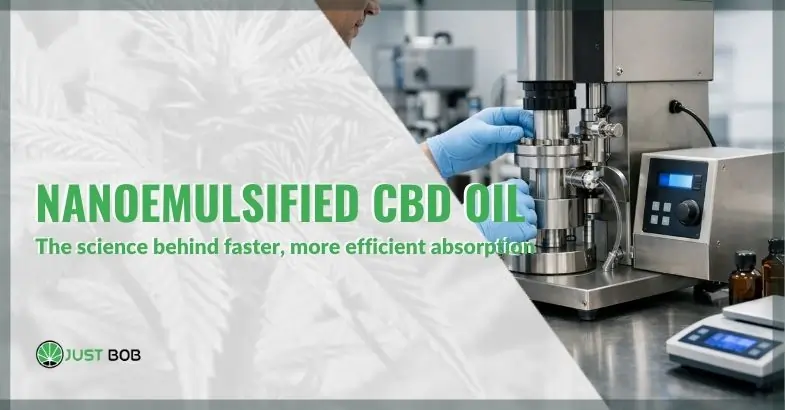
This is where nanoemulsified CBD oil enters the conversation. Behind this term lies a fascinating intersection of plant chemistry, pharmaceutical technology, and colloidal science.
While traditional CBD extracts rely on conventional oil-based carriers, nanoemulsification seeks to address a fundamental biological challenge: absorption. Cannabinoids are lipophilic molecules, meaning they dissolve in fats, not water. The human body, however, is largely water-based. This mismatch affects how efficiently CBD is absorbed and utilized.
-
 Max CBD
AMNESIA CBD BOOST
Starting from: 0,85€/gGlasshouse | CBD<40%
Grams5 10 20 50 100 200 400 - Max CBD
AK47 CBD BOOST
Starting from: 1,45€/gIndoor | CBD<47%
Grams5 10 20 50 100 200 - Max CBD
CHARAS
CBD HASH | CBD<45%
Starting from:EASTER SALE - 15%
0,90€0,75€/gGrams5 10 20 50 100 200 -
JB OIL 25%
Starting from: 14,90€CBD Oil 25%
In a landscape that includes everything from classic full-spectrum hemp extracts to refined products derived from canapa legale, nanoemulsified formulations represent a technological evolution. But what does “nano” really mean in this context? Does smaller truly equal better? And what does science actually say about faster uptake and bioavailability?
In this in-depth guide, we’ll explore the chemistry of cannabinoids, the mechanics of nanoemulsions, the biological pathways of absorption, the regulatory and safety context in Europe, and what all of this means for those interested in high-quality, compliant CBD products.

The chemistry of CBD and the challenge of bioavailability
To understand nanoemulsified CBD oil, we must begin with the molecular nature of cannabidiol itself.
CBD is a lipophilic phytocannabinoid, naturally produced by Cannabis sativa L. Unlike THC, which is restricted above legal limits in Europe, CBD derived from compliant hemp varieties contains negligible or non-intoxicating levels of tetrahydrocannabinol and is widely studied for its interaction with the endocannabinoid system.
The key issue is bioavailability. Bioavailability refers to the proportion of a substance that enters circulation when introduced into the body and is therefore available for physiological interaction. In traditional oil-based formulations, CBD is typically dissolved in carriers such as MCT oil or hemp seed oil. This format works, but absorption can vary depending on digestion, metabolism, and individual physiology.
Because CBD is not water-soluble, it tends to aggregate in larger oil droplets when ingested. These droplets must be broken down through digestion before the compound can cross biological membranes. This process can reduce efficiency and slow onset time.
In contrast, nanoemulsification reduces oil droplet size dramatically, often to particles measured in nanometers, increasing surface area and theoretically enhancing interaction with the body’s absorptive tissues.
This concept is especially relevant when discussing refined derivatives such as CBD oil, where formulation quality can influence overall performance. The science does not claim miracle transformations, but it does suggest that particle size plays a measurable role in dispersion and potential uptake. Smaller droplets mean more surface exposure relative to volume, which can facilitate faster integration in aqueous biological environments.
The chemistry here is not marketing hype; it is rooted in colloid science. When oil droplets shrink below approximately 100–200 nanometers, they behave differently from larger emulsions. They remain suspended longer, resist separation, and distribute more evenly in water-based systems. In the context of CBD, this translates to improved stability and potentially improved bioavailability.
Read also: No, CBD oil (and other cannabidiol products) is not addictive. This is why
What nanoemulsification really means: colloidal science in action
The term “nanoemulsion” can sound futuristic, but it describes a well-established technological process.
An emulsion is a mixture of two immiscible liquids, typically oil and water, stabilized by surfactants. Milk, for example, is a natural emulsion. In CBD formulations, nanoemulsification involves breaking CBD-infused oil into extremely fine droplets dispersed in water, stabilized to prevent coalescence.
The defining feature is droplet size. Traditional emulsions may have droplets measuring several micrometers. Nanoemulsions reduce these droplets to tens or hundreds of nanometers. This reduction is achieved through high-energy methods such as high-pressure homogenization or ultrasonic processing, or through low-energy chemical techniques that manipulate interfacial tension.
Why does this matter?
The answer lies in surface area-to-volume ratio. As droplet size decreases, total surface area increases exponentially. More surface area allows digestive enzymes and biological membranes greater access to the CBD molecules contained within the droplets. This is one of the scientific foundations for claims of faster absorption.
In the broader hemp industry, including segments focused on CBD cannabis products for technical and aromatic purposes, nanoemulsification represents a crossover between nutraceutical innovation and botanical extraction. It reflects a shift from simply extracting cannabinoids to engineering how they interact within biological systems.
Importantly, nanoemulsions are thermodynamically stable only under specific conditions. Stability depends on surfactant choice, pH, ionic strength, and storage environment. High-quality manufacturing is therefore essential. A poorly formulated nanoemulsion may separate or degrade over time, undermining the theoretical benefits of the technology.
From a safety standpoint, nanoemulsions are not inherently risky; they are widely used in food, cosmetics, and pharmaceuticals. However, transparency in ingredient sourcing and manufacturing processes remains crucial, particularly in the evolving European regulatory environment surrounding hemp-derived compounds.
Biological pathways: how nanoemulsified CBD interacts with the body
To evaluate claims of “faster absorption,” we need to look at human physiology. When traditional CBD oil is ingested orally, it undergoes first-pass metabolism in the liver. This means a significant portion may be metabolized before reaching systemic circulation. The onset time can therefore be slower, and bioavailability can vary widely between individuals.
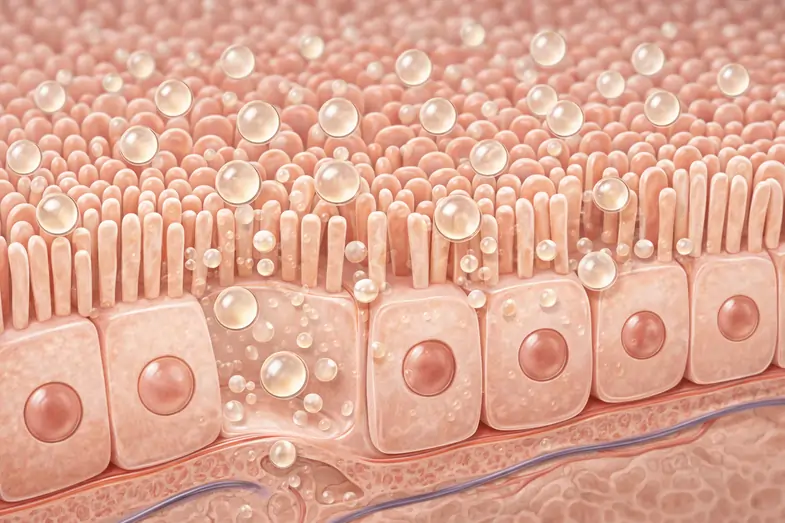
Nanoemulsified CBD oil aims to optimize this process by improving dispersion in the aqueous environment of the gastrointestinal tract. Smaller droplets can form more stable micelles during digestion, potentially facilitating more efficient transport across intestinal epithelial cells.
Some research suggests that nano-sized lipid carriers may enhance permeability through biological membranes. The mechanism is not magical; it is physical. Smaller particles can more easily interact with the mucosal layer and increase contact with absorptive surfaces. This may contribute to more consistent plasma levels compared to larger oil droplets.
It is important, however, to approach these findings with scientific caution. While preliminary studies indicate improved pharmacokinetic profiles for nano-formulated cannabinoids, outcomes depend on formulation specifics and individual variability. Not all nanoemulsions are equal, and not all delivery systems bypass metabolic pathways entirely.
In markets centered around compliant CBD weed and related derivatives, discussions about absorption often intersect with consumer expectations. It is essential to separate evidence-based claims from exaggerated marketing narratives. Nanoemulsification does not transform CBD into a different molecule; it simply modifies how it is physically delivered.
Another point to consider is sublingual administration. Some nanoemulsified products are designed for enhanced mucosal absorption under the tongue. Because the sublingual area contains dense capillary networks, smaller droplets may penetrate more efficiently than traditional oil formulations. Again, efficiency depends on contact time, formulation, and user technique.
Stability, shelf life, and formulation integrity
Beyond absorption, nanoemulsification also affects product stability. Traditional CBD oils can separate over time, especially if exposed to temperature fluctuations. Nanoemulsions, when properly engineered, demonstrate enhanced physical stability due to smaller droplet size and optimized surfactant systems.
This stability is not only aesthetic but functional. Uniform distribution ensures that each dose contains a consistent amount of active compound. In regulated segments of the hemp market, where precise cannabinoid content matters, consistency is a hallmark of quality.
However, nanoemulsions are sensitive systems.
Exposure to extreme heat, light, or pH changes can destabilize the emulsion, leading to aggregation or phase separation. Manufacturers must conduct rigorous stability testing to confirm that droplet size remains within the nano range over time.
In the context of legal cannabis, formulation integrity becomes even more critical. When cannabinoids are isolated or concentrated, the physical properties of the final product depend heavily on carrier systems and emulsifiers.
Consumers often equate “nano” with innovation, but innovation without quality control is meaningless. The true advantage lies in combining advanced colloidal engineering with transparent sourcing, laboratory testing, and compliance with European regulations. This is particularly relevant as authorities increasingly scrutinize labeling accuracy and novel food classifications.
Market evolution, regulation, and informed consumer choice
The rise of nanoemulsified CBD oil reflects broader trends in the European CBD sector. As markets mature, competition shifts from basic extraction to delivery optimization. Innovation becomes a differentiator. Yet regulatory frameworks remain cautious, especially regarding ingestible CBD products.
In the European Union, CBD used in food or supplements may fall under Novel Food regulations unless specifically exempted. This means that any nano-formulated product must comply not only with hemp cultivation laws but also with food safety and authorization standards. Claims regarding absorption must be carefully worded and supported by data.
This regulatory context is essential when discussing products derived from hemp, like legal hash. The distinction between compliant CBD products and THC-rich preparations remains clear. Nanoemulsification does not alter legal classification; THC content must still remain within statutory limits.
Read also: How long does cbd oil take to work?
Smaller particles, bigger understanding: what nanoemulsified CBD really means
Nanoemulsified CBD oil sits at the intersection of botany, chemistry, and advanced formulation science. By reducing oil droplet size to the nanometer scale, manufacturers aim to enhance dispersion in water-based environments, increase surface area, and potentially improve absorption efficiency. The underlying science draws from well-established principles of colloidal chemistry and pharmacokinetics rather than speculative innovation.
We have explored how CBD’s lipophilic nature presents a bioavailability challenge, how nanoemulsification modifies droplet behavior, how the body processes these smaller particles, and why stability and regulatory compliance remain central to product quality. While early data and theoretical models suggest improved efficiency, outcomes depend heavily on formulation precision and responsible manufacturing.
In a European landscape shaped by strict THC limits and evolving Novel Food oversight, technological advances like nanoemulsification demonstrate how the sector continues to mature. From classic extracts to refined oil of CBD formulations, innovation now focuses as much on delivery systems as on cannabinoid profiles.
For those curious about the evolving world of compliant CBD derivatives, understanding the science behind nanoemulsified CBD oil provides a deeper appreciation of how far the industry has progressed.
And if you’d like to explore carefully selected products designed with quality and transparency in mind, you can always take a look at the JustBob shop and discover certified varieties and technical formulations crafted for today’s informed audience.
Nanoemulsified CBD oil: takeaways
- Nanoemulsification addresses CBD’s core bioavailability challenge by reducing oil droplet size to the nanometer scale, dramatically increasing surface area and improving dispersion in water-based biological environments without altering the molecule itself.
- Smaller droplets may support more efficient interaction with digestive and mucosal tissues, potentially contributing to faster onset and more consistent uptake, but real-world outcomes depend on formulation quality, manufacturing precision, and individual physiology.
- Beyond absorption, nanoemulsified systems enhance product stability and dosing consistency, yet their effectiveness ultimately relies on rigorous quality control, compliant ingredient sourcing, and alignment with European regulatory standards governing hemp-derived compounds.
Nanoemulsified CBD oil: FAQ
What does nanoemulsified CBD oil mean?
Nanoemulsified CBD oil refers to a formulation in which CBD-infused oil is broken down into extremely small droplets, typically measured in nanometers, and dispersed in a water-based system. This reduction in particle size increases surface area and improves dispersion stability, potentially supporting more efficient interaction with the body’s absorptive environments.
Does nanoemulsified CBD absorb faster than traditional CBD oil?
Nanoemulsified CBD is designed to improve dispersion in aqueous environments, which may contribute to faster absorption compared to conventional oil-based formulations. Smaller droplets provide greater surface area and can interact more efficiently with biological membranes. However, actual absorption rates depend on formulation quality, individual metabolism, and method of administration.
Is nanoemulsified CBD oil compliant with European regulations?
Nanoemulsified CBD oil must comply with the same European legal standards that apply to all hemp-derived products. This includes adherence to THC limits and, for ingestible products, compliance with applicable Novel Food regulations. Nanoemulsification changes the delivery system, not the legal classification of the cannabinoid itself.