
Modified on: 17/07/2026
What CBD Hash Hemp Traditions Cover On A Product page
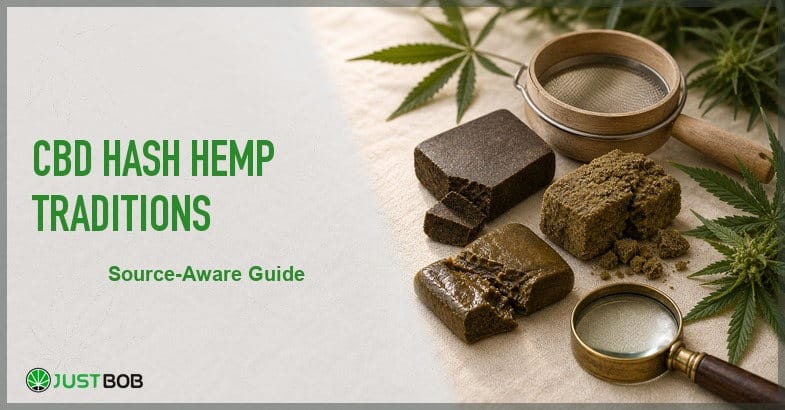
CBD hash brings together two distinct stories. On one side is the modern EU industrial hemp framework, built around registered hemp varieties, the harmonised 0.3% THC thresholdand, and certificates of analysis that document every production batch. On the other is the long international history of resin craft, with techniques such as dry sieving and hand rubbing that are often referenced by European producers when describing their hemp resin products today. This Justbob guide walks through how those craft references appear on a product page without turning into origin claims.
-
 Max CBDAMNESIA CBD BOOSTStarting from: 0,85€/g
Glasshouse | CBD<40%
Grams5 10 20 50 100 200 400 -
Max CBDAK47 CBD BOOSTStarting from: 1,45€/g
Indoor | CBD<47%
Grams5 10 20 50 100 200 -
Max CBDCHARAS
CBD HASH | CBD<45%
Starting from:SUMMER SALE - 10%
0,90€0,80€/gGrams5 10 20 50 100 200 -
JB OIL 25%Starting from: 14,90€
CBD Oil 25%

The aim is to help you read product information with confidence. By the end of this guide, you’ll be able to recognise references to traditional resin-making techniques at a glance, while understanding that every JustBob CBD hash product is made from EU-registered hemp varieties, produced within the European Union, and accompanied by the appropriate certificate of analysis.
How hemp resin traditions appear on a CBD catalog
Traditional resin-making techniques typically appear in a CBD hash catalog through three main elements: the production method (dry sieve, hand-rubbed, ice water sieve), the texture that results from that technique (sandy, pliable, crumbly), and the aroma profile, which reflects the resin chemistry of the registered hemp variety. A well written CBD hash product page may draw on one or all of these elements, while clearly distinguishing the production technique from the product’s origin.
A careful description might read: “CBD hash produced in the EU using a dry sieve technique inspired by traditional resin sieving”. This wording makes it clear that the product is manufactured within the EU framework, while acknowledging the global craft history behind the technique. By contrast, describing the product itself as Moroccan-style hash or Afghan-grade hash, can imply a geographic origin or production heritage that does not reflect the actual supply chain.
Read also: Cannabis resin: here’s what you can use for
Hand-rubbing and dry sieving: two crafts behind the resin
The two most cited traditions in resin work are hand rubbing and dry sieving. Hand rubbing is historically associated with the Himalayan foothills, where fresh cannabis flowers are gently rubbed between the palms to collect the sticky resin that gradually accumulates into a dark, pliable mass. In South Asian craft terminology, this type of resin is commonly known as Charas.
Dry sieving, by contrast, has long been practiced in the Mediterranean and Atlas Mountain regions. In this method dried plant material is passed through fine mesh screens that separate the trichome heads from the rest of the plant. The collected resin is then compressed into blocks or slabs.
Today, both terms describe resin-collection techniques rather than product origin. European producers may accurately refer to their products as dry sieve or hand-rubbed when those labels genuinely reflect the manufacturing process, even though the techniques themselves have historical roots outside the EU.
The legal status of a CBD hash lot depends on compliance with the EU regulatory framework and the use of registered hemp varieties; the production terminology simply describes the craftsmanship involved.
Hemp resin texture vocabulary: soft, firm, crumbly
Hemp resin is commonly described using a small set of recognizable texture terms, and most CBD hash product pages rely on at least one of them to help characterize the product. Soft or pliable resin can be easily shaped between the fingers without crumbling and typically retains a moderate level of moisture. Firm resin holds its shape well and breaks cleanly when pressure is applied. Crumbly resin, by contrast, fractures into small pieces under light pressure and generally feels drier to the touch.
The texture vocabulary is partly a function of the technique behind the resin. A dry-sieve resin pressed lightly tends toward the soft and pliable end; the same resin pressed harder and aged tends to firm up; an older dry-sieve lot stored under low humidity drifts toward the crumbly register. Hand-rubbed resin starts soft and pliable from the collection stage, and ages toward firm with extended storage.
Aroma traditions in the hemp resin family
Resin aroma carries a vocabulary that traces back to the same craft history. Earthy and woody notes often appear in dry-sieve resin from drier-climate registered varieties; spicy and herbal notes can appear in hand-rubbed resin from cool-climate registered varieties; floral and sweet notes appear in newer registered hybrids that combine the two style traditions.
The aroma family on a label maps onto the cannabinoid and terpene profile of the registered variety, and the resin technique adds its own subtle layer to the overall reading.
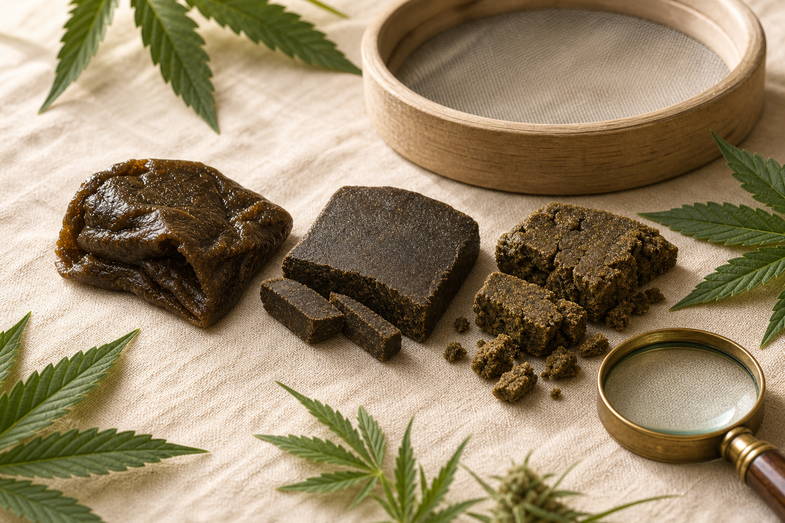
A page that names the aroma family precisely (earthy, citrus, floral, spicy, pine) is using the resin aroma vocabulary in line with the rest of the catalog. A page that drifts into adjective territory (powerful, intense, premium) is using the vocabulary as marketing rather than as description.
The same attention to detail applies to the physical presentation of resin, as explained in our guide to CBD hash shapes, which explores how different forms are connected to production techniques and product descriptions.
Reading a CBD hash label inside the EU framework
A CBD hash label in 2026 sits firmly inside the EU industrial hemp framework. The registered variety appears on the label or the certificate; the cannabinoid percentage is reported; the THC content stays below the 0.3% threshold harmonised at European level; the lot number connects the bottle or jar to the analytical document; the EU producer is identified through the supply chain documentation behind the catalog.
Tradition references on the label work as craft vocabulary inside this framework. A “dry sieve CBD hash from selected EU producers” lot is an EU product made with a sieve-based technique. A “hand-rubbed CBD hash from EU hemp” lot is an EU product made with a rubbing-based technique. The technique is a craft choice; the EU framework is the regulatory frame; the registered variety is the hemp source. The three layers read together on the page.
A page that swaps these layers is mismatched. A label that calls the lot “Moroccan hash” or “Nepalese charas” reads as an origin claim rather than a technique reference, and it sits outside the EU supply chain framework that the catalog operates under.
A short history of hemp resin study
The scientific study of hemp resin has a long European pedigree. Engelbert Kaempfer, the German physician and naturalist who travelled across Persia, India and East Asia between 1683 and 1693 in the service of the Dutch East India Company, published Amoenitatum Exoticarum Politico-Physico-Medicarum Fasciculi V in 1712. The volume is one of the first systematic European descriptions of cannabis preparations observed in those regions, including resin sieving practices, and it brought the craft vocabulary into the European scientific literature.
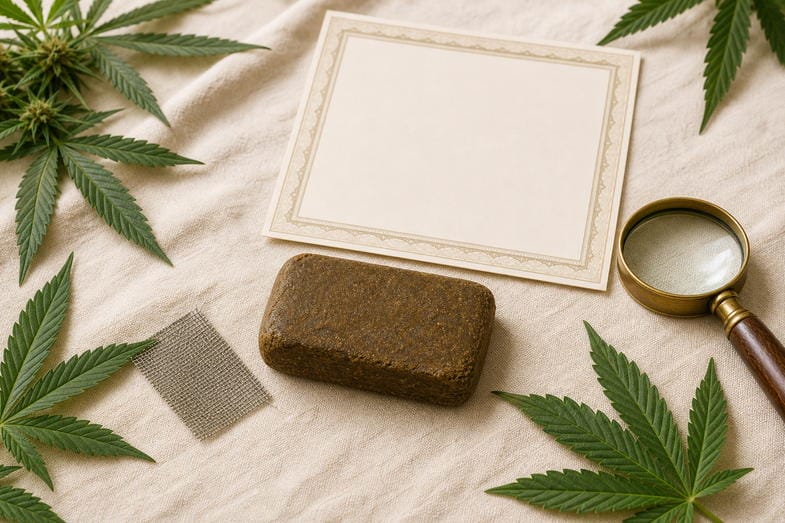
Kaempfer’s work set the precedent for the European botanical and ethnographic study of cannabis that followed across the eighteenth and nineteenth centuries. A 2026 European CBD hash producer who describes a lot as “dry sieve” or “hand-rubbed” stands inside that documentation tradition: the techniques observed by Kaempfer and his successors are now applied to registered EU hemp varieties for technical, scientific and ornamental purposes.
For a reader, this background gives the tradition vocabulary a longer shelf than the label itself might suggest. A short craft reference on a 2026 catalog connects to three centuries of European resin literature.
How tradition references sit next to the lab document
The technique reference on the label and the cannabinoid breakdown on the certificate work as two sides of the same lot record. The label shows how the resin was produced (dry sieve, hand-rubbed, ice water sieve); the certificate tells the reader what the cannabinoid panel reads (CBD percentage, THC threshold compliance, optional terpene panel). The two sides together describe the lot from craft and chemistry angles.
Our reading is that the craft vocabulary is most useful when it lines up with the lab document. A dry-sieve lot that reports a heavy trichome fraction on the certificate matches the technique description; a hand-rubbed lot that reports a darker resin profile and a longer ageing window matches its description in a different way. The certificate confirms what the label suggests.
For readers who want to better understand how resin products are presented and described, our guide on CBD hash bars explores the role of shape, format, and traditional references in the way hash products are identified.
Where the certificate does not include the resin-specific breakdown, the texture and aroma descriptions on the label take over. A reader can usually estimate the resin character from the description and the photo, and the EU industrial hemp catalogue framework keeps the rest of the lot on standardised ground.
How Justbob keeps the hemp resin reading honest
Justbob carries out constant analyses on all commercialised products and on every batch. The relevant documents are available inside each commercialised product page, so a reader who wants to confirm the cannabinoid breakdown, the THC threshold compliance or the hemp resin composition (where the analytical panel includes the breakdown) for a specific lot can open the certificate of analysis without leaving the catalog.
The framework around the whole catalog is the EU industrial hemp register, with THC kept below the 0.3% threshold harmonised at European level. The registered variety contributes the cannabinoid baseline; the EU producer contributes the production craft, which may reference a historical sieving or rubbing tradition; the certificate contributes the analytical reading that closes the lot record.
The combination keeps the catalog page consistent with the supply chain documentation behind it. A reader who follows the resin label, the technique reference and the certificate together has all three layers in view at the same time.
Compliance-safe wording on CBD hash hemp traditions pages
Compliance-safe wording for a CBD hash tradition page stays strictly descriptive of craft and EU framework. “CBD hash produced in the EU by selected EU producers using a dry sieve technique inspired by traditional Mediterranean resin sieving, with a 14 percent CBD reading per lab document” describes the product. “Authentic Moroccan-style hash with unbeatable craft heritage” describes the marketer, and it drifts into the origin-claim territory that the EU supply chain framework does not support.
Hemp resin products are sold for technical, scientific and ornamental purposes only, in line with the EU industrial hemp framework. The technique vocabulary, the texture description and the cannabinoid percentages are part of how the product is positioned on the catalog. They are not directives, not benefits and not alternatives to other regulated product categories.
The test is simple. If the tradition reference helps a reader understand the craft behind the resin, the page is using the words as craft vocabulary. If the reference reads as an origin label for the product itself, the page has stepped outside the EU framework lane.
A short reading routine for a CBD hash listing
Reading a CBD hash listing inside the tradition vocabulary is a quick discipline. Find the registered variety on the label or certificate; identify the technique reference (dry sieve, hand-rubbed, ice water sieve); read the texture description (soft, firm, crumbly); check the aroma family if listed; open the certificate of analysis for the cannabinoid breakdown and the THC threshold compliance; confirm that the EU producer is identified through the supply chain documentation. The routine takes about a minute once the craft vocabulary is familiar.
🌿Ready to explore these details in practice? Discover our CBD hash collection and learn how each product is presented through its variety, technique, and laboratory profile.
Frequently asked questions about cbd hash hemp traditions
What do tradition references mean on a CBD hash label?
Tradition references on a CBD hash label name the technique behind the resin: dry sieve (Mediterranean and Atlas region tradition), hand rubbing (Himalayan foothills tradition), or ice water sieve (a newer technique with mixed origins). On a 2026 EU catalog, these references describe the craft method used by EU producers on registered hemp varieties, not the geographic origin of the product itself.
Is the CBD hash on a Justbob page from a foreign country?
No. Justbob CBD hash is produced in the EU by selected EU producers, using registered hemp varieties from the EU industrial hemp catalogue. Where the label or the description references a historical sieving or rubbing tradition, the reference describes the craft method, not the production location. The lot certificate identifies the EU supply chain behind the product.
Why does a CBD hash label sometimes name a sieving tradition?
The technique behind the resin shapes the texture, the aroma profile and the visual character of the lot. Naming the tradition (dry sieve, hand-rubbed, ice water sieve) gives a reader a quick way to picture the production craft, in the same way that a wine label can mention a fermentation technique without claiming a particular vineyard origin.