

Published on: 28/10/2026
Cereal Milk strain: what Leafly and SeedFinder record, and what they leave out
Look up the cereal milk strain and you get a lot of text quickly. This article works from two entries only, Leafly and SeedFinder, and reports what each of them actually says: where they line up, where they do not, and which questions neither of them answers.
-
 Max CBDAMNESIA CBD BOOSTStarting from: 0,85 €/g
Glasshouse | CBD<40%
Grams5 10 20 50 100 200 400 -
Max CBDAK47 CBD BOOST
Indoor | CBD<47%
Starting from:HALLOWEEN SALE -10%
1,45 €1,30 €/gGrams5 10 20 50 100 200 -
Max CBDCHARAS
CBD HASH | CBD<45%
Starting from:HALLOWEEN SALE -10%
0,90 €0,80 €/gGrams5 10 20 50 100 200 -
JB OIL 25%Starting from: 14,90 €
CBD Oil 25%


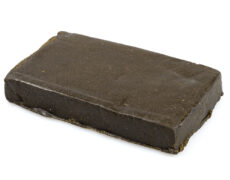

That last part matters more than it sounds. A strain name carries whatever a database has decided to write next to it, and the gaps in those records are as informative as the figures. One thing sits outside both entries entirely. They are describing a recreational cannabis variety, and that is a different object from the European hemp we sell, whatever name the label carries.
The two entries this article uses
Leafly is a review platform, and its entry is built around user data. It files the plant as a hybrid, gives 25 per cent THC and 1 per cent CBG, lists three terpenes, and shows an average of 4.5 from 759 ratings. It publishes no flowering time, no yield and no height.
SeedFinder is a genetics database, and growing is what its entry is organised around. A dedicated section describes the plant’s morphology, the THC is quoted as a range of 22 to 25 per cent, and there is a flowering window plus a terpene list of its own. No yield figure, no star rating, and two direct comparisons uploaded by its users.
The lineage: Y Life crossed with Snowman
On the cross itself the sources agree, and Leafly words it most precisely. It writes that Cereal Milk “is made by crossing Y Life (Cookies x Cherry Pie) and Snowman, a sativa-dominant Cookies pheno”.
Two things in that sentence are worth slowing down for. The first is that both parents come out of the same family: Leafly describes Snowman itself as a Cookies pheno.
The second is the word “Cookies”, which is doing two jobs at once. It is the name of the brand that released the plant, and it is also the everyday short form of Girl Scout Cookies, the strain. That is why the same cross is written as Cookies crossed with Cherry Pie in one place and GSC crossed with Cherry Pie in another.
The breeder credit works the same way. Leafly calls Cereal Milk “a hybrid marijuana strain from Cookies”. SeedFinder files it under Cookie Fam Genetics in its breeder field, then says in its own text that the variety “was created by Powerzzzup Genetics, a collective breeding effort led by Ken The PieGuy and Jason Mejia”. Three names, in three different places, and neither page explains how the credits relate to one another.
Read also: Which Gorilla glue strain is the strongest?
The classification: three statements, and no split from Leafly
Leafly does not split the plant at all. It files a hybrid and leaves it there.

Ask the SeedFinder page a single question, indica or sativa, and it answers three times in three different places:
- the summary line reads “Cereal Milk is an mostly sativa from Cookie Fam Genetics”, and the same paragraph adds that it “is only available as feminized seeds”;
- the section on physical characteristics says the original Cereal Milk by Cookies “exhibits some indica-leaning traits in its morphology”;
- the section on growing says that “in general, however, these plants are slightly (roughly 60%) indica dominant”.
The page carries the three statements without reconciling them, and this article is not going to reconcile them either. In our view the likeliest reading is that they do not all describe the same material, the breeder’s own cut on one side and purchased seed on the other. But the entry never says so, and a guess is not a source. If a listing quotes you a split for this name, the useful question is which of the three it is quoting.
The two entries side by side
| Field | Leafly | SeedFinder |
|---|---|---|
| Type | Hybrid, no split given | Summary line: mostly sativa. Physical characteristics: indica-leaning morphology. Growing: roughly 60 per cent indica |
| THC | 25 per cent | 22 to 25 per cent |
| CBG | 1 per cent | Some varieties may contain up to 1 per cent |
| CBD | Not published | Not published |
| Parents | Y Life crossed with Snowman | Y Life crossed with Snowman |
| Breeder | Cookies | Field: Cookie Fam Genetics. Text: Powerzzzup Genetics |
| Terpenes | Caryophyllene, limonene, humulene | Caryophyllene, limonene, myrcene, reported |
| Appearance | Dense nugs dripping with trichomes | Stem, nodes, leaves, dark hues, glazed milky sheen |
| Flowering | Not published | Roughly ten weeks under lights |
| Yield | Not published | Not published |
| User data | 4.5 from 759 ratings | 2 user-uploaded comparisons |
Read as a table rather than as two web pages, the two entries agree on more than they disagree on.
THC and CBG: closer than they look
The THC figures are the clearest case. Leafly’s single number sits inside SeedFinder’s range, so the two differ in how precisely they report, not in what they report.
The CBG figures need more care, because they are not the same kind of statement. Leafly gives a flat 1 per cent. SeedFinder says some varieties may contain up to 1 per cent, and adds that the strain “has been bred to be predominantly rich in THC”. One is a value, the other is a ceiling attached to some versions only, and treating them as the same number would flatten a real difference.
Neither entry publishes a CBD figure at all.
The terpene lists, and the one name they do not share
Both entries put caryophyllene first and limonene second. Leafly’s third name is humulene. SeedFinder’s third is myrcene, and SeedFinder hedges the whole list: it says that “according to some reports” the variety is rich in those three.
Both entries also describe the smell in ordinary words, and they land close together. Leafly gives butter, vanilla and sweet as the three dominant reported notes, and summarises the variety as having a sweet milk and ice cream nose. SeedFinder describes a creamy and fruity aroma with hints of gas and vanilla, attributing that to reports as well. Vanilla is the note both put in writing, and the gas note appears on SeedFinder only.
Read also: White Widow marijuana: all you need to know about it
What the flower looks like
Both entries describe the flower, at very different levels of detail. Leafly does it in one clause: you can expect dense, quality nugs dripping with trichomes.
SeedFinder gives a paragraph. It reports a strong central stem, tightly spaced nodes, few side branches and broad dark leaves. It adds that the plants take on dark hues as they finish, under a thick layer of trichomes that gives the flowers a glazed, milky sheen.
Both descriptions lean on resin, and that is the part a photograph flatters most easily. Trichome density reads as a quality signal, and on its own it is not one, because the condition of those heads matters as much as their number. Growers watching trichomes that are not maturing know how many things other than genetics can hold a plant at the milky stage.
Flowering time, and what the entry does not say
Only SeedFinder carries agronomic data, and it carries very little of it. It gives roughly ten weeks of flowering under lights. Leafly gives no flowering time, no yield and no height, so there is nothing to check it against.
That ten-week figure sits in the section on growing, alongside the discussion of the versions sold by seed banks, so it is not offered as a measurement of the breeder’s own cut. The same page then makes two statements about availability that pull in different directions. It says Cereal Milk by Cookies is not available in seed or clone form, at least not to the public, and that it is grown by Cookies and its affiliated breeders and brands. It also says the strain is only available as feminised seeds.
So a precise gram-per-square-foot number attached to this name is coming from somewhere neither entry can back up, because neither publishes a yield at all.
What Leafly’s 759 raters reported
Leafly’s effects data is an aggregate of what 759 raters picked from a fixed set of options. The top three reported effects are aroused, relaxed and giggly, and the page summarises the reported experience as mostly calming.
Those are reported experiences of a recreational cannabis variety, collected by a review platform from people who were not being measured. They are not properties of any product, they were not tested, and no source in the record connects the parents of this cross to the effects its reviewers describe. SeedFinder has no ratings of its own against the strain, only the two comparisons its users uploaded, against Gary Payton and The OG #18.
What neither entry publishes
Setting the gaps out plainly is the fastest way to see what a strain name can and cannot tell you:
- neither page carries a CBD figure;
- yield is missing from both;
- height and the outdoor harvest window are absent as well;
- there is no laboratory terpene analysis, only a list Leafly presents flat and SeedFinder attributes to reports;
- the ten-week flowering figure is guidance for the seed-bank versions, not a measurement anyone publishes.
There is a reason to be careful with the parts that are published, too. A 2022 study in Frontiers in Psychology, Human olfactory discrimination of genetic variation within Cannabis strains, bought 32 retail samples from 21 licensed dispensaries across six Colorado cities, all sold under four familiar strain names. The samples were genotyped, 15 of them went to a panel of 55 people, and the panel worked from a list of 40 odour descriptors. Samples that were genetically distinct while carrying the same commercial name produced aroma profiles the authors call strikingly atypical, and untrained people could tell them apart by smell.
Reading a name like this on a hemp listing
On a hemp listing, a name of this kind names an aroma family and does nothing else. It carries no recreational strain sheet with it and makes no claim about the plant’s genetics. What we sell is hemp from EU Common Catalogue varieties, held under the 0.3 per cent THC threshold that applies to industrial hemp in the EU. That is a different plant from the one these two entries describe, and nothing reported above belongs to it.

A dessert name works here the way a tasting note works on a wine label: it points at a register, and it is not a specification. That holds for the CBD hash range exactly as it holds for the flowers.
Where the figures do belong is next to the product. A listing in our CBD extracts range puts its cannabinoid content beside the name, so the name never has to carry the description on its own.
If you only read one paragraph
The two entries agree on the cross, Y Life with Snowman, and on the first two terpenes, caryophyllene and limonene. They differ on the third terpene, humulene against myrcene, and on how they report the cannabinoids. Leafly gives a flat 25 per cent THC and 1 per cent CBG, while SeedFinder gives a range of 22 to 25 per cent and a ceiling of up to 1 per cent CBG in some versions. On type they do not line up at all, because Leafly declines to split and SeedFinder carries three statements it never reconciles. Neither publishes a CBD figure or a yield.
Frequently asked questions about the Cereal Milk strain
What is the cereal milk strain?
Cereal Milk is a cannabis variety associated with the Cookies brand, made by crossing Y Life with Snowman. Leafly files it as a hybrid, gives 25 per cent THC and 1 per cent CBG, and shows an average of 4.5 from 759 ratings. SeedFinder, a genetics database, puts the THC at 22 to 25 per cent, gives roughly ten weeks of flowering under lights, and describes the plant’s morphology in a section of its own. The two entries agree on the cross and on the leading terpenes, and they part company on how the plant should be classified. Neither of them publishes a CBD figure or a yield.
Who bred the Cereal Milk strain?
Three names appear across the two entries, in different places, and neither page explains how they relate. Leafly calls Cereal Milk a hybrid marijuana strain from Cookies, the brand that released it. SeedFinder lists Cookie Fam Genetics in its breeder field. The text on that same SeedFinder page then credits the creation to Powerzzzup Genetics, described as a collective breeding effort led by Ken The PieGuy and Jason Mejia. A structured field and the prose beneath it can carry different credits without either being false, which is worth remembering whenever a database looks like it is arguing with itself.
What does Cereal Milk smell like?
The two entries agree on the first two terpenes and part company on the third. Leafly lists caryophyllene, limonene and humulene, while SeedFinder reports caryophyllene, limonene and myrcene, hedging its list as coming from reports rather than from measurement. Both describe the smell in ordinary words too, and they land close together. Leafly gives butter, vanilla and sweet as the three dominant reported notes, summarising the variety as having a sweet milk and ice cream nose, while SeedFinder describes a creamy and fruity aroma with hints of gas and vanilla. No laboratory terpene analysis is published on either page.
Is Cereal Milk indica or sativa?
There is no single answer, and one SeedFinder page gives three. Its summary line calls the variety “an mostly sativa from Cookie Fam Genetics”, adding in the same paragraph that it “is only available as feminized seeds”. Its section on physical characteristics says the original Cereal Milk by Cookies “exhibits some indica-leaning traits in its morphology”, while its section on growing says that “in general, however, these plants are slightly (roughly 60%) indica dominant”. The page never reconciles the three. Leafly avoids the question and files the strain as a hybrid with no split given.
What is the flowering time of Cereal Milk?
SeedFinder gives roughly ten weeks of flowering under lights, and that is the only agronomic figure on either of the two entries checked here. Leafly publishes no flowering time for the variety, no yield and no height, so there is no second source to compare it against. That figure sits in the section on growing, alongside the discussion of the versions sold by seed banks, so it is not presented as a measurement of the breeder’s own cut. The same page also makes two statements about availability that pull in different directions. Cereal Milk by Cookies is said not to be available in seed or clone form, at least not to the public, while the strain is also said to be available only as feminised seeds.